Why You Are the Words You Use

The words you use can change your reality. Language actually generates changes in your brains and changes your perception of the environment around you.

Language is linked to emotions. Your words are constantly sending messages to your brain. According to neuroscientists Andrew Newberg and Mark Robert Waldman, negative words cause the increase of cortisol, the stress hormone. Therefore, adopting a negative attitude and using phrases like “I cannot do it”, “I will fail” or “it is impossible” could weaken your personal physical and mental health.

Nowadays, many techniques associated with changing the language to treat various psychological disorders are used. An example of this is the cognitive-behavioural therapy, which demonstrate that promoting positive thinking through the language used by the patient improves their mental state.

This therapy aims to replace patients’ negative views about themselves and their surroundings with more positive ones. The applied techniques have proven to be an effective treatment for disorders such as depression, phobias, addictions or anxiety, as the activity of the brain amygdala increases when you perceive a more prosperous future through positive words. On many occasions, these therapies have proven to be as effective as medicines.

Research has shown that the brain improves when you start using three to five positive expressions for each one negative. Language has a powerful ability to change your world. It affects you negatively when you use a poor, defeatist language but it also works the other way around, namely, when you use positive phrases they will help you change your perception of the world.

person doing thumbs up
Photo by Donald Tong on Pexels.com

Start adopting a series of simple but very effective techniques. For example, use “yet” instead of using only “not”. Saying “I cannot do it” is not the same as saying “I cannot do it yet“. “Yet” leaves the doors open, arouses hope, evokes motivation.

You should not use “but” or, at least, you should build your phrases differently. “But” does not have the same effect when you say, “You did a good job, but you gave it to me late” compared to when you say, “You gave it to me late, but you did a good job.”

Tenses also give you a great opportunity to change your emotions. Instead of using the conditional, try using the future. You change a hypothetical scenario for a true one. It is not the same as saying: “When I write a book, I would speak of happiness” rather than “When I write a book, I will speak of happiness”. Doubt lives in the conditional, certainty in the future.

At the same time, you should avoid words like failure, problem, impossible or guilt in your language and replace them by more inspiring words like challenge or responsibility. The latter not only pushes you to grow and open more doors, but also makes you interact better with others.

Words are not harmless. They can build or tear down walls. By changing your language, you will improve your image, as language is a way to reach others. Remember that the words you use also improve the environment around you.

What do you think about the language you use with others?

key with trinket in shabby door
Photo by Andrea Piacquadio on Pexels.com

How to Cope with Heatwaves

If you live in Southern Europe heatwaves you find yourself more and more exposed to heatwaves. Actually, such heatwaves are becoming more and more common all over the world. Coping with heatwaves can be difficult during the day but heat may become unbearable during the night.

Actually, sleeping in the heat is tough, especially if you don’t have adequate air conditioning or a fan at a minimum.

But there are some tips you can use to help you sleep better.

  1. take a warm, not cold, bath or shower about an hour before going to sleep. Your body cooling down will help better prepare you for sleep;
  2. if you don’t have air conditioning, use a fan or something to circulate air around you;
  3. if you already are experiencing difficulties in falling asleep regardless of the heatwaves, you should consider buying a Chili Sleep device;
  4. you may want also to add some magnesium to your diet if you are sweating a lot more than usual or experiencing cramping at night.

Tell me about your experience of sleeping during heatwaves! Is it difficult? Can you cope with it?

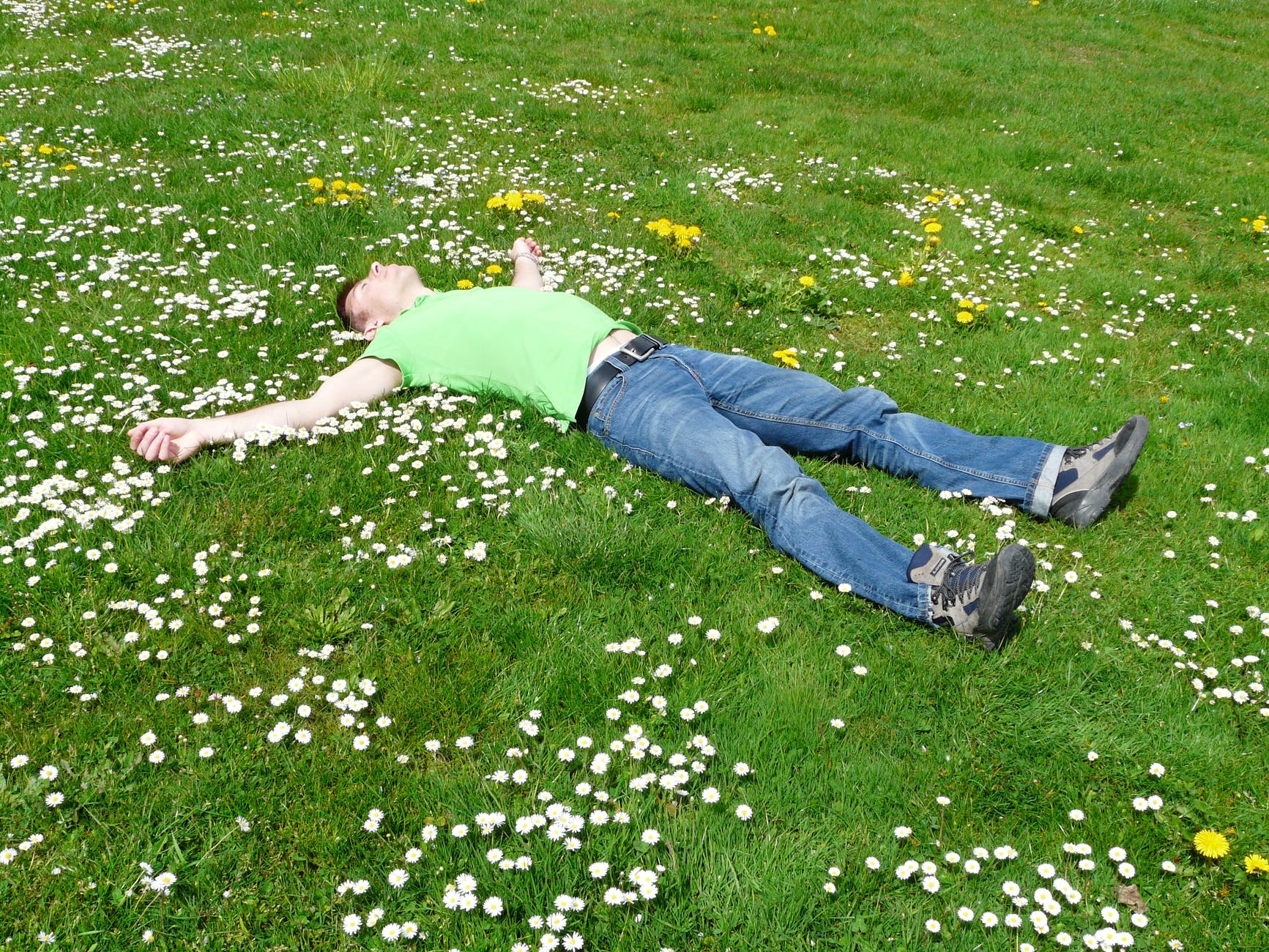
high angle view of lying down on grass
Photo by Pixabay on Pexels.com

Summer Quotation no. 1

Nobody can teach me who I am.

You can describe parts of me, but who I am – and what I need –

is something I have to find out myself.

Chinua Achebe

Chinua Achebe was an eminent Nigerian poet, critic, professor and novelist. He shot to fame with his first novel titled, ‘Things Fall Apart’, which is still widely read and is the most sought after book in modern African literature. In 2007, he won the ‘Man Booker International Prize’.

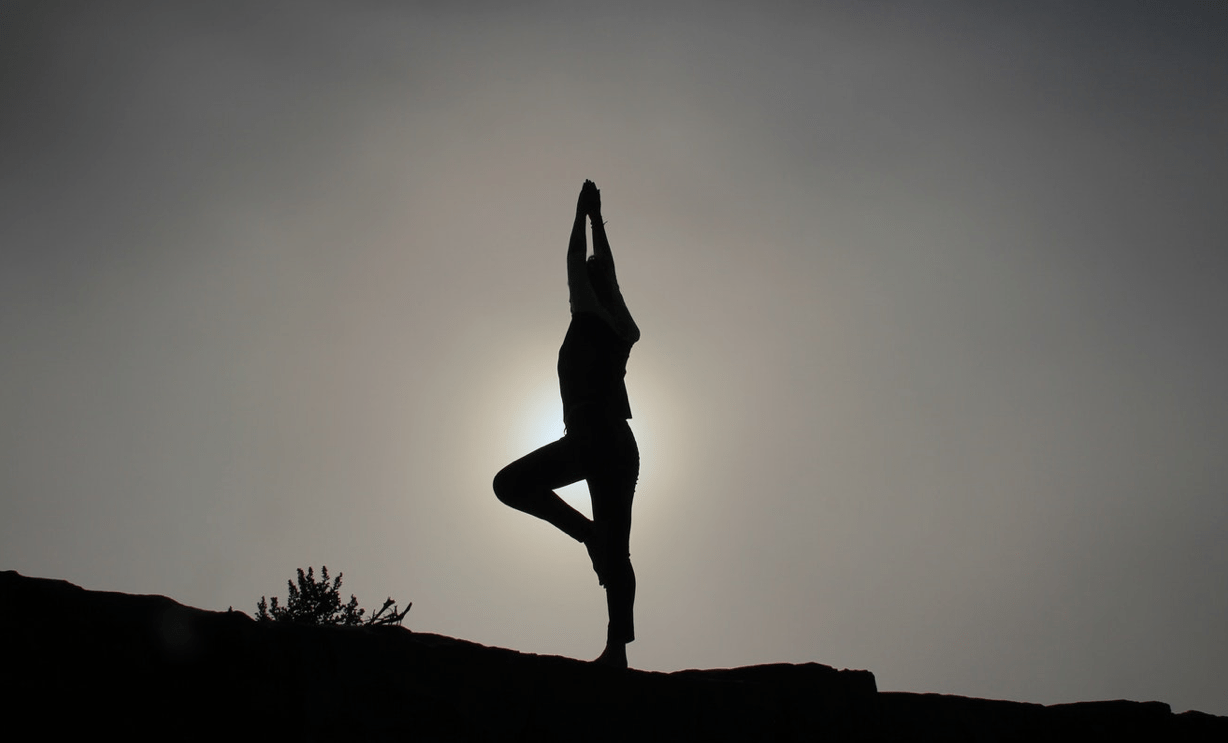
How and Why Yoga Helps You Maintain Physical and Mental Balance

Over the last few years, a very old practice has become the subject of scientific studies: yoga. Positive effects on the brain have begun to be measured, such as anti-stress and anti-depressant effects.

The studies began thanks to the spectacular spread of yoga. Millions of people practice yoga regularly. Positions (asanas) such as the warrior or the cobra are increasingly known among different people and age group. The reasons are mainly that persons want to learn how to relax, how to get rid of several kinds of pain (back, neck, shoulders, etc.) manage stress, and maintain good physical shape.

Traditional yoga (from the Sanskrit “yuga” which means “union”) comes from India and is a discipline more than five thousand years old. An important source of this spiritual school, which should guide us towards the divine, is a writing by Patañjali: Yoga Sutra, which contains the essential foundations of the discipline.

According to this essay, the purpose of yoga is to attain a higher form of self-knowledge, which can be achieved with inner contemplation. In addition to specific physical exercises, and breathing techniques, traditional yoga also includes meditation, a vegetarian diet and an entire philosophy of life. The modern and western form of yoga omits many of these elements. The development of strength and plasticity, meditation and breathing exercises play the most important role today.

At the beginning of the twentieth century, a small group of Indian yoga teachers began to spread the teachings of yoga in the Western world. After the explosion of fitness in the 1980s, which focused above all on the cult of the body, the spiritual part has been lost a little. Therefore, in the Western world mainly hatha yoga began to spread.

Photo by Mor Shani on Unsplash

The effects of hatha yoga on health are: improving body consciousness and coordination, strengthening muscles and enhancing blood circulation. Moreover, yoga is also beneficial to stress management.

From experience, I can say that after a yoga session I feel relaxed and rested. It takes longer to reach a similar state with meditation, while hatha yoga produces effects immediately, probably thanks to the more marked physical component. It is actually proved that physical exercise is good for your spirit. Perhaps, this is why yoga is a fast-acting cure-all, as it associates physical exercise with meditative practice.

In fact, by associating postures (asanas) with breathing (pranayama), we act on the body by relaxing the muscles, and on the spirit because the sympathetic nervous system (the nervous system that is stimulated when we rest or sleep) is activated.

Yoga allows you to find calm despite the limits imposed by everyday life. With regular practice, even 5 minutes a day is enough, you will sleep better, your self-confidence will increase, as well as your ability to make decisions and manage stress.

Considering all those positive aspects, are you planning to start practising yoga?

balance blur boulder close up
Photo by Pixabay on Pexels.com

How and Why You Should Learn to Forget

Letting go of the burden of the past is important to your happiness.

Many people live in the past; they remember what they were, the love stories that did not go well, their failures and disappointments.

Such a burden takes away space and energy from the present, which is actually the only time you can live actively.

I read somewhere that happiness consists in enjoying good health and having a bad memory.

Actually, you should learn to let go of the past, forget about the insults received, the bad events and the mistakes, in short, all the bad memories, and learn to focus more on the present.

Photo by Ian Dooley on Unsplash

Here are some tips you could follow.

  1. The best antidote to guilt, resentment, or anger that takes you back to the past is to devote energy to building the life you want.
  2. Stop playing the victim and become an active protagonist of your life
  3. Your memories change while time passes by, they may distort, and they do not really reflect what happened. Try asking a person who shared an event with you to tell you about their memory and then compare it with your memory. You will see that you and that person remember different aspects of the same fact.
  4. Prioritize your well-being. Life is too short to spend arguing and complaining. What happened could be a source of stress and even discomfort. Continuing to feel anger at a past event drains up your energy. It is more important for your physical and mental health to live quietly than to be right at all costs.

The past, however, also brings with it good memories and lessons learned, which shape your personality.

Have a look at what Buddhism teaches: “Joy and happiness arise from letting go. Sit down and take an inventory of your life. There are things you have been hanging on to that really are not useful and deprive you of your freedom. Find the courage to let them go.”  

What about you? Would you find the courage to let go of your past?

accomplishment action adventure challenge
Photo by Pixabay on Pexels.com

How and Why to Prevent a Recurring Thought from Turning into an Obsession.

You have thought – and rethought – if you locked the door when you went out? Are you on the street and you wonder if you turned off the light; or the gas? This is not as serious as it looks like. Moreover, you are not the only person it happens to. The thoughts that come to your mind are normal; they are not obsessions … yet.

Thoughts don’t turn into obsession overnight. At first, they are imperceptible, then they grow, but they don’t seem so serious to you; when you start having problems at work, in the family, with friends, you may have developed an obsession. Recognizing the degree of frequency and intensity is crucial to avoid that one of your recurring thoughts starts to be harmful.

If you don’t get major problems in your daily life, you can let your recurring thoughts flow and unlock them with relaxation techniques, and by becoming aware of their cause.

Imagine a grandmother lighting a candle in the Church so that her grandson succeeds the exam. Or the songs you hum in your brain and can’t get rid of them. Or the cultures that pray to get some rain. They are examples of small obsessions that do not harm anyone or give problems in everyday life. Therefore, in similar cases, you do not need to take actions.

However, there are other kinds of thoughts that trap the mind in a vicious circuit and catch your attention very often. They are called OCD (Obsessive Compulsive Disorder).

There are some tricks you can use to keep them under control.

Let’s see some of them.

Photo by Claudio Schwarz on Unsplash

If, for example, you wash your hands too often, try to actually count how many times you’ve washed them. Then, think about the absurdity of doing it so often because washing your hands well once should be enough, and doing it twice should reassure you that they are really clean.

If your fear is to get infected on the public transport, because you touch knobs, bars, doors, use gloves every time you take them or take a hydro-alcoholic gel with you to be used as soon as you get off (very useful also during Covid times).

The important thing is to be able to rationalize your recurring thoughts and find solutions to control them. If you really cannot manage to do it, however, you should consult a professional (doctor, psychologist, coach) who can help you keep your thoughts from becoming obsessions.

Also be aware that genetics can be a cause of your recurring thoughts. If you are very emotional and have difficulty controlling your impulses, you are somewhat predisposed. Exposure to obsessive models in the family, which transmit the values ​​of order, norms, not making mistakes, can also be a cause. Highly demanding, perfectionist, rigid, excessively ordered, inflexible and reluctant to delegate tasks personalities are also more prone to developing OCD.

Recurring thoughts are normal until they become fixations. In addition, remember that most of the things that worry us never happen. Try to notice it and let me know.

Photo by Brett Jordan on Unsplash

The Trap Of High Expectations

Our brain does not like uncertainty. We are programmed for survival but we cannot move on if what surrounds us is not clear. To reduce the uncomfortable feeling that a lack of certainty generates, we create expectations. However, relying on our expectations does not always help us feel better. Our expectations affect us more than we imagine. They affect our learning, our perception, and how we treat those around us.

Our expectations can become a source of frustration. For example, you definitely want to see a movie because you have heard great comments about it but after watching it you find out that you actually did not like it that much, so you feel disappointed. If you go to eat in a famous restaurant, then the food does not seem to you so well prepared, you are disappointed (and you may have spent a fortune).

Expectations are said to be anticipated resentments, because when reality does not match your expectations it causes you frustration.

In marketing, customer satisfaction is defined as the result of perception minus expectation. The higher the expectation, the higher you will have to set the bar of experiences or relationships in order to be satisfied. This is an unconscious mechanism, but there are ways to act on your way of thinking, so that it could play in your favour.

Let’s see how they can help you in the context of the current pandemic.

1. Trust that soon the pandemic will end, thanks to the progress of vaccination. Do not get obsessed by setting an end date though. Now in Europe they are talking about mid-July, but can how you be sure? Do not let your happiness depend on the end of Covid.

2. Replace expectations with gratitude. Be grateful that you did not get sick, that you have a house to live in, that someone loves you. Look at the little details of your daily life and you will surely find something to be grateful for.

Living without so many expectations is easier because you value what happens to you in that moment without being influenced by the idea you created before. This does not mean abandoning your dreams or desires. You must keep them as a beacon that guides you in the decisions about your future, but you shall not make your happiness depend on external factors that are beyond your control.

Can you let go any of your expectations?

Photo by Cortney Corlew on Unsplash

10 Ideas For Spending Your Holidays At Home.

In this period of mobility restrictions caused by the pandemic, the time when we could travel freely seems a long ago. Last year for Easter, I had planned a trip to Berlin and I would not have expected to cancel it. This year too, I would have liked to leave for the Easter break, but the virus is still among us and it is better to stay where we are.

Covid has changed many aspects of our life and going on vacation is one of them. It is obvious that going on vacation is very important for physical and mental health. You should think about taking rest periods even without being able to travel.

When we work we look forward to the weekend but it is not long enough to fully recharge ourselves. To be able to really disconnect from work we need more time.

Holidays are a period of time that we need, we need it as well as sleep, eat, drink, in short, they are a necessity. If we want to stay healthy, we have to take vacations.

Waiting for the pandemic to pass and then taking a long vacation is not a good idea. It is better to take shorter vacations but more often.

Of course, we cannot travel now, it is strongly discouraged, but this does not mean that a period of rest at home or close to your place, depending on what you can do in the country where you live, will do some good. Holidays allow us to recover and when we come back, we often feel better, full of energy and even more creative.

Photo by Wee Lee on Unsplash

It does not matter where you go on vacation. The main thing is that you can rest and put aside your daily worries. Choose what to do, with whom and when to do it. Not everyone likes travelling. Some like to have time to read more, do more physical activity, spend time outdoors. Others like to take small hikes, without straying too far from home. Some people enjoy long trips, some other like only short ones.

With the health crisis, many of us had their vacations at home. Let us see the positive aspects of it: definitely less pollution, you saved some money and also the stress of travelling.

However, there are people who do not like being at home. They do not know what to do, they get bored, they do not want to tidy up the house (but for this one could call someone to help), and the children (when they are there) need care and attention. They have to think about many things, as if they were working. On the other hand, they may simply want to change air and get to know new places, or return to places they have loved before.

If, however, you are forced to stay at home due to travel restrictions, take some days off and try to take advantage of your free time anyway, as doing so will make you feel better. Moreover, think that the pandemic will be hopefully over soon.

If you find yourself in the position of having to stay at home during your holidays, try these tips:

1. Don’t read professional emails;

2. Do little housework;

3. Establish rules and times for being at the computer or television (both for you and your children, if you have any);

4. Look for new places to discover in your neighbourhood;

5. Spend time in nature because nature is a source of energy;

6. Make a list of what you would normally do on vacation, eliminating the things you cannot do due to anti-Covid rules. For example, in Belgium, where I live, you can ride a bike, but you cannot go to a restaurant;

7. Organize a movie marathon with friends and discuss with them to find out which ones you all liked the most;

8. You can do the same thing with a book. Choose with your friends a book you all would like to read. When finished, you gather together (on-line if not possible a real gathering together) to comment on it;

9. Why do not you sign up for an online course to learn new things? There are many possibilities even for free!

10. Indulge yourself with little vices: buy some chocolate (soon it will be Easter, the best moment to buy it), a good bottle of wine, or have a three-course meal delivered.

What kind of vacation do you like? Do you prefer to travel far away or stay closer?

Photo by Emma Simpson on Unsplash

10 idee per passare le vacanze a casa

In questo periodo di restrizioni alla mobilità causate dalla pandemia, ci sembra così lontano il tempo in cui si poteva viaggiare liberamente.

L’anno scorso per Pasqua avevo programmato un viaggio a Berlino e non mi sarei aspettata di doverlo annullare. Anche quest’anno avrei voluto fare un viaggetto per le vacanze di Pasqua, ma il virus è ancora tra di noi e ci dicono che è meglio non muoversi.

Il Covid ha cambiato molti aspetti della nostra vita e andare in vacanza è uno di questi.

È ovvio che andare in vacanza é molto importante per la salute fisica e mentale. Dovresti pensare a prendere dei periodi di riposo anche senza poter viaggiare.

Quando si lavora aspettiamo il weekend con impazienza ma non è abbastanza lungo per poter ricaricare completamente le batterie. Per poter staccare dal lavoro abbiamo bisogno di più tempo.

Le vacanze sono un periodo di tempo del quale abbiamo bisogno, ne abbiamo bisogno come di dormire, mangiare, bere, insomma sono una necessità. Se vogliamo restare in buona salute dobbiamo prenderci delle ferie.

Aspettare che passi la pandemia per poi prendere un lungo periodo di vacanza, non è una buona idea. È meglio fare delle ferie più brevi ma più spesso.

Certo adesso non possiamo viaggiare, è fortemente sconsigliato, ma ciò non significa che un periodo di riposo a casa o vicino a casa, dipende da quello che puoi fare nel luogo dove abiti, ci possa fare bene. Le ferie ci consentono di recuperare e al rientro spesso ci sentiamo meglio, pieni di energia e persino più creativi.

Photo by Wee Lee on Unsplash

Non importa dove vai in vacanza. La cosa principale è che tu ti possa riposare e mettere da parte le preoccupazioni quotidiane. Scegli cosa fare, con chi e quando farlo. Non a tutti piace viaggiare. Ad alcuni piace avere il tempo per leggere di più, fare più attività fisica, passare del tempo all’aperto. Ad altri piace fare delle piccole escursioni, senza allontanarsi troppo da casa. Ad altri ancora, invece, piace fare viaggi lungi, mentre ci sono persone a cui piacciono solo viaggi brevi.

Con la crisi sanitaria, molti di noi hanno dovuto passare le vacanze a casa. Ci sono alcuni aspetti positivi: meno inquinamento ambientale, sicuramente hai speso meno soldi e ti sei risparmiato lo stress del viaggio.

Tuttavia, ci sono persone alle quali non piace stare a casa. Non sanno cosa fare, si annoiano, non hanno voglia di riordinare casa (ma per questo si potrebbe chiamare un’agenzia di pulizie), i tuoi figli (se ne hai) fanno confusione, insomma devi pensare a tante cose, come se stessi lavorando. Oppure semplicemente hanno voglia di cambiare aria e conoscere posti nuovi, o ritornare in posti che hanno amato.

Se, però, sei obbligato a restare a casa a causa delle restrizioni di viaggio, prendi dei giorni di ferie e cerca di approfittare comunque del tempo libero, perché così facendo starai meglio. E pensa che, prima o poi, questa pandemia finirà.

Se ti trovi nelle condizioni di dover restare a casa, prova a seguire questi consigli:

  1. Non leggere le email professionali;
  2. Riduci al minimo i compiti casalinghi;
  3. Stabilisci delle regole e dei tempi per stare al computer o alla televisione (sia per te che i tuoi figli, se ne hai);
  4. Cerca dei posti nuovi da scoprire nelle vicinanze della tua abitazione;
  5. Passa del tempo in mezzo alla natura perché la natura è fonte di energia;
  6. Fai una lista di quello che faresti in vacanza normalmente, eliminando le cose che non puoi fare a causa delle regole anti-Covid. Ad esempio, in Belgio, dove abito, puoi andare in bicicletta ma non al ristorante;
  7. Organizza con amici una maratona di film e discuti con loro per scoprire quelli che sono piaciuti di più;
  8. La stessa cosa la puoi fare con un libro: tu e i tuoi amici scegliete un libro da leggere poi vi ritrovate (on-line se non é possibile diversamente) per commentarlo;
  9. Perché non iscriverti a un corso on-line per imparare qualcosa di nuovo? Ci sono tante possibilità anche gratuite!
  10. Concediti dei piccoli vizi: compra della cioccolata (tra un po’ é Pasqua, quale momento migliore?), una buona bottiglia di vino, oppure fatti consegnare un pasto di tre portate.

Tu che tipo di vacanziere sei? Preferisci viaggiare lontano o restare vicino?

Photo by Emma Simpson on Unsplash