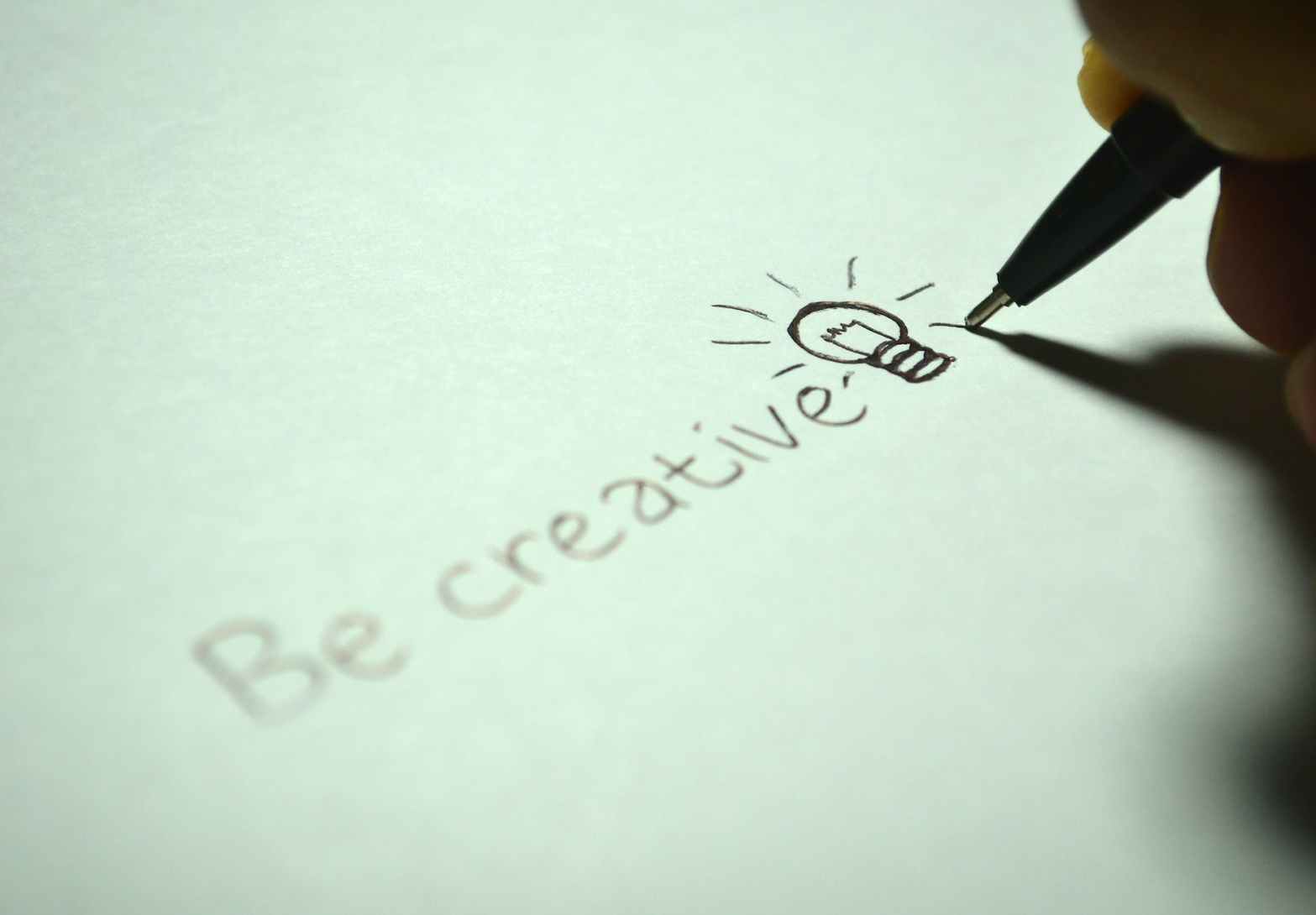
Nurturing Creativity: Unleashing the Vital Skill for the Future

In the fast-paced world of tomorrow, creativity stands tall as one of the essential skills. In this article, I aim to demystify the concept of creativity and provide you with valuable resources to delve deeper into this skill.

Beyond the conventional perception of creativity being limited to artists and innovators, I explore its universal relevance, the process it entails, and how anyone can harness and enhance their creative capabilities.

Unveiling the Real Essence of Creativity

Commonly, creativity is associated with individuals possessing extraordinary artistic or inventive talents. However, this narrow view is debunked by creativity expert Sir Ken Robinson. In his immensely popular TED talk, Robinson reshapes our understanding of creativity, emphasizing:i

  • Creativity’s significance across all spheres of life and work.
  • The inherent creativity we are born with but tend to outgrow.
  • The misconception that creativity thrives only when boundaries are absent; in reality, it often thrives within constraints.
  • Viewing creativity as an ongoing process, not a singular event, and thus, acquirable by all.

Creativity, Imagination, and Innovation Distilled

Distinguishing creativity from imagination and innovation is crucial. The following definition outlines the two fundamental phases of the creative process:

  • Generating ideas.
  • Making judgments to evaluate the value of those ideas.

This dual-phase approach sheds light on the myriad factors that foster creativity, including cognitive abilities, knowledge, thinking styles, motivation, personality traits, and environment.

Fostering Creativity: Techniques and Strategies

While no foolproof formula exists to boost creativity, several techniques can be beneficial:

Empowering Resources for Unleashing Creativity

A wealth of online resources awaits those seeking to enhance their creative prowess:

Embrace the exciting journey of nurturing your creativity, a skill pivotal for the future. Shedding the misconception of creativity being exclusive, the universal relevance is unveiled and the process demystified. With an array of techniques and resources at your disposal, you’re empowered to unlock your creative potential and contribute meaningfully to the ever-evolving world. So, dive in, explore, and enjoy the transformative power of creativity!

5 Ideas to Feel Good at Work (Without Looking for Perfection)

There are some problems to address to feel good at work, without wanting to be perfect, also because we would like to avoid that pursuing perfection at work, but also in private life, turns into an obsession.

Problem 1

The work I do is not recognized for what is worth.

Who hasn’t felt this way at work? Who doesn’t like to receive an appreciation, like “Job well done”? But, honestly, isn’t it a bit risky to base our motivation on the appreciation received from others?

Try this exercise: Every day take note of a positive thing you did at work. A well-written report, an effectively managed meeting, a productive coffee break… Then celebrate this success. Go out to dinner with colleagues, or friends, or your partner, but if no one has time, go out alone or prepare a special dinner for yourself. Success is not necessarily having a villa in a posh place or a Ferrari. Success is measured in the small daily things you do and should always be celebrated. Buy yourself some flowers and take them to the office. If they ask you why, answer because you are good and nice. Then, watch how colleagues react.

Problem 2

My life turns around my work.

In French they say “Metro, boulot, dodo”, which means “subway, work, sleep”. That’s not exciting, is it? Often, unfortunately, this is the case. What do you do to change this? Do you ever take time to devote to yourself? Not a day shall go by without you taking the time for yourself. Read that article in your favorite magazine or on your friend’s blog (which could be mine…), go to the gym or take a walk in the park near home, call your mother or that friend you haven’t heard from for a long time… You should devote yourself at least half an hour a day. If you think about it, it’s not much.

Problem 3

I don’t learn anything new anymore.

If you’ve been doing a job for a long time, at some point it’s normal for you to feel like you’re not learning anything new. You get bored and are not happy, even if you manage to work very well, knowing exactly what you have to do. But that’s not enough to motivate you, so what can you do? You have to get out of your comfort zone, you have to accept new challenges. Tell your boss about it, maybe they have ideas.

Problem 4

They will never promote me

So, in my entire career I’ve been promoted only once, last year. And I’ve been working for more than twenty years! Why? In some cases definitely because I didn’t spend much time in the same workplace. Yes, I admit, I’m not that person who sticks to the employer. Indeed, I feel I need fresh air quite often.

But why? Probably because I haven’t found my way yet and so I’m leaving because I have to get back on the road to find it.

Even if you feel “forced” into your workplace, ask yourself what would be your ideal job, the job of your dreams. If you don’t find it in the place where you’re working, start looking around. And make an action plan (if you don’t know how to make an action plan, I can help you  do it). Or ask if you can work part-time, so you can cultivate that passion or hobby that you have been neglecting for too long.

Problem 5

I don’t have time to do anything.

Here we go, this is one of the most common problem nowadays. We have the feeling of not being able to manage our time, and that we are overwhelmed. Family, work and time lost in traffic, there is not much left for us. But isn’t it an excuse? Make an analysis of your day, see the useless things you do and start eliminating them. Then, there are certainly things that you can postpone, for example, it is not necessary to vacuum clean every night even if you have a cat at home like me (I vacuum clean at most twice a week).

It is a matter of choice and priority, you cannot do everything: there are things that you absolutely have to do, others that you can avoid and postpone them (knowing how to postpone things is a science, even if not a precise one …).

For example, while working full time, I dedicate myself to writing this blog because I go out a little in the evening, but when the opportunity arises I do not hesitate to go out. So, when I go out I decide to postpone writing my article.

In conclusion, choice is the basis of change, and action is the basis of positive thinking. Take life into your own hands. Act now, don’t wait!

Why Your Brain Will Be Affected if You Procrastinate

To procrastinate is a fashionable word nowadays that you may have heard. We procrastinate for invoices to be paid, for the dentist, to take the trash out to the bin…

Procrastination is the act of delaying or putting off tasks until the last minute, or even past the deadline. 

Waiting too much can have serious consequences. Think of climate change, for instance. Or illnesses. If you don’t try to find out what you have as soon as you notice the first symptoms, it might become too late. The doctor could say: “You would have come at the beginning, it would have been different. We would have been able to deal with it, the chances would have been better… ”

Cras in Latin means tomorrow, pro means for. Therefore, pro-cras means: it is for tomorrow.

Statistics show that in the United States about 20% of the population, postpone the boring tasks to the next day, as if the tasks in question had then the virtue of disappearing or becoming less boring (seriously, isn’t it rather the opposite)?

A study carried out by Chinese researchers shows very interesting results: procrastinators have certain hyperactive intellectual regions, that are a part of a network of mental wandering: when it is time to take an appointment with the dentist, to pay the invoice or to take the trash out to the bin, these centers make the person think at something else. And, let’s say it, to try to find excuses on how unpleasant it would be carrying out these tasks.

Besides, in procrastinators’ brains, another zone is weak. It is the zone that blocks the activity of wandering and that allows one to remain focused.

People who work in advance according to a planning, in order not to be taken by surprise at the time of an examination, or of the fiscal term, have a high activity in this area, so that the wandering zone is blocked.

When the mind gets loose from the planned purpose and begins to wander, the brain gets vulnerable in that area, which is very sensitive to all that is uncomfortable or disagreeable.

What to do?

The brain is a muscle, let’s train it and exploit its plasticity!

Are you a procrastinator? Let me know!

Sharing the Little Good Things

The publication on Facebook or other Social Media provokes a contagious phenomenon. Both positive or negative news generate a reaction from the followers. That’s why I think that sharing little good things would bring positivity to your life.

I rarely publish negative things on Facebook, with the exception of some situations that happen in big cities, like a poor waste collection. I definitely prefer to publish positive news because I think that generally speaking the media report mainly about bad news. I am convinced that both positive and negative things happen in the world. Honestly, I think that more good things happen and that they are worth sharing. By sharing good things, you will help the world be a better place as positive energy will spread all over around you. Bad news attracts the attention of the public because of their morbidity but they only contribute to the creation of a spiral of negativity.

Social Crisis

It is true that our society has been in crisis for many years now and that politics does not offer adequate solutions to problems that are increasingly complex. There are too many homeless people, salaries are low and life is expensive. But despite this I am sure that life reserves us moments of joy that we should not hide, rather we should celebrate!

I am happy about my life overall. Of course, the environment that surrounds me is not ideal; sometimes things do not go as they should; I see injustices, I have my intolerance and suffering, but I don’t let myself be involved in this negative spiral. If I think about the life that our grandparents used to live, then there is nothing else to do than rejoice. We have food every day, running water, electricity and heating in our homes. In Maslow’s hierarchy of needs we surely passed the first two levels. What if you were a woman born in Afghanistan and had to wear the burka? Or if you were born in a country at war? Or if you were forced to pay a fortune to heal yourself?

Therefore, do not hesitate to share your moments of joy, your successes, small or big, because this will spread and create positivity all around you. Of course, not every day will be spring, but I’m sure you can always find a small good thing to share.

This does not mean that you should not try to improve yourself, but it does mean that your personal development would be easier if you looked at the glass half full instead of the glass half empty.

So, are you ready for positivity? Let me know!

You Are an Agile Person If You Are Adaptive, Proactive, and Resilient

You are agile if you can manage yourself and you have three main attributes: adaptability, proactivity and resilience. 

Indeed, according to the article Networking, Adaptability And Resilience As Some Of Agility Dimensions, the profile of an agile person is someone who is:

1. Adaptive – able to adjust to different organisational conditions (new equipment, new ways of working, projects, teams);

2. Proactive – able to respond promptly and to look for opportunities in the changed environment, and

3. Resilient – able to cope under changing or unknown conditions or when facing difficulty or failure.

 How does one develop personal agility? Adopting these behaviours can help:

1. Expect change to happen

2. Embrace ambiguity

3. Learn to reframe your thoughts 

4. Accept failure and learn from mistakes

5. Be curious

6. Develop a can-do attitude

7. Distinguish between two main groups of stressors: those that are out of your control and those that you can confront

Being agile does not mean saying ‘yes’ to everything. On the contrary, while this may be a self-management concept, whether one is agile or not will be influenced by the organizational context. 

Nevertheless, there is plenty we can do to develop agility. But above all, try to adopt an agile mindset, like the one of children.

What do you think about the agile concept? Let me know!

Per il tuo benessere fermati, ascolta il silenzio e la tua voce interiore

Quando e-mail, messaggi di testo, chiamate in video conferenza, Whatspp, FB, Instagram, Tweeter, Google e  qualsiasi altra cosa, dal tuo partner al tuo capo, invadono la tua vita, diventa necessario per la tua sopravvivenza e il tuo benessere fermarti per un po ‘e tacere. Ascolta il silenzio e la tua voce interiore.

Le nostre menti sempre connesse ci allontanano dal meglio di noi stessi e dal nostro potenziale creativo.

Facendo costantemente riferimento a ciò che l’uno o l’altro ha detto o ha fatto, dimentichiamo di connetterci al nostro essere essenziale, che è unico e prezioso.

Siamo diventati individui guidati dal cambiamento tecnologico che ci ha allontanato da noi stessi, dalla nostra consapevolezza di essere umani, dalla prima componente dell’Intelligenza Emotiva (EI). L’EI è riconosciuta oggi come una condizione di successo in un mondo Volatile, Incerto, Complesso e Ambiguo (VUCA), come è quello che viviamo oggi.

Rifocalizzarsi, guardarsi dentro, ascoltare il silenzio e la nostra voce interiore. Nel profondo di noi stessi troviamo un’enorme quantità di risorse e la nostra creatività più autentica: è il nostro tesoro, un luogo unico, ricco  e colorato, magico dove tutto è aperto e possibile.

In questo spazio, possiamo trovare sincronicità, messaggi e intuizioni che ci permetteranno di prendere le decisioni giuste per le nostre vite. Qui possono sorgere relazioni reali e autentiche tra persone sincere che ora sono mascherate dall’ego che continua a governarci.

Cosa fare allora?

Regalati momenti di silenzio! Stai per un po’ senza il tuo cellulare. Esci a fare una passeggiata senza il telefono, cammina senza direzione nella natura e respira a pieni polmoni, guarda, ascolta, usa tutti i tuoi sensi al massimo.

Sii presente in questo momento unico e lasciati pervadere dall’armonia che ti circonda.

Pratica il tuo hobby preferito e, se non ce l’hai, pensa a trovarne uno. Cucina tranquillamente a casa, lavora a maglia, dipingi, disegna, fai giardinaggio e ogni altra attività che potrebbe appassionarti.

Fermati un attimo e smetti di passare da un’attività all’altra, da un’informazione all’altra. Il tuo cervello non ce la fa, ha bisogno di riposo. Concediti il tempo di approfondire le ragioni delle tue scelte e scoprire la ragione del tuo essere, il tuo scopo.

Oggi tante persone si sentono perse. Molto probabilmente sono davvero perse perché si sono disconnesse da se stesse per vivere in connessione con i social network.

Non è mia intenzione condannare i social network e le fonti di informazione, li uso anch’io. Il problema è il loro uso eccessivo: molte persone al giorno d’oggi vivono costantemente con un riferimento esterno e lontano dalla loro vita reale.

Ecco perché é importante ascoltare il silenzio e la tua voce interiore.

How Discipline Can Lead to Success

Self-discipline is the ability to train your body and mind. Successful people are masters in this art. Sportsmen, stars of the showbiz, great doctors, inventors, researchers, managers, but also parents, teachers, nurses, all those who have achieved important results during their career and their lives, practice fundamental techniques to train their body and mind. They know that thought generates habit and by disciplining their thinking they create the attitude to do better and better. Let’s see some techniques to learn how discipline can lead to success.

  1. Visualization – Listen to audio that explains what visualization is and how to practice it. You will learn to condition your mind to relaxation, and in this state, you will be more receptive and therefore more creative. Write down your goals (not many, maximum three) and read them aloud. Listen to energizing music repeating your goals like a mantra.
  2. When you visualize your goals, visualize them exactly as if they were already achieved. For example, if you want to see yourself slimmer, visualize yourself in a dress that you have not been able to wear for a long time.
  3. Do this exercise daily: repeat to yourself several times that you have already achieved your important goals. Observe yourself in your new “version”. Persevere in wanting to achieve your goals, do not abandon them, take care of them.
  4. Make a list of some important and essential things that you don’t feel like doing because you don’t like them, they’re demanding, or you don’t have time to do them. Set a deadline and comply with it. The action dedicated to performing unpleasant tasks reduces stress and tension (I know, it sounds strange, but that’s how our brain works).
  5. Remember that you need to improve your body’s discipline as well. So practice sports activities, walk at least three times a week for half an hour, rest and sleep regularly, eat healthy, nutritious and balanced meals, try to always maintain the same weight.

Finally, don’t forget that both losing and winning are mental attitudes that can be learned, but it takes days, weeks, and even months of consistent practice to achieve your goals. Discipline can lead to success if you are determined to follow these fundamental steps.

If you want, you can read in my blog more articles about discipline.

6 consigli per evitare lo stress del periodo natalizio

A me piace molto il periodo natalizio. Mi porta indietro al periodo della mia infanzia quando aspettavo con impazienza l’apertura dei pacchi regalo la mattina di Natale. Oggi, che abito lontano dai miei cari, rappresenta per me un momento di condivisione e di serenità.

Capisco, tuttavia, che possa diventare stressante. Comprare i regali all’ultimo minuto, preparare cena o il pranzo (a seconda della tradizione a cui appartenete, noi facciamo tutti e due, tanto per non farci mancare nulla…), fare gli auguri a tutti, sperando di non dimenticarsi nessuno.

Ecco alcuni consigli per cercare di vivere al meglio questo natalizio senza stress:

  1. Se non riesci a vedere tutti per fare gli auguri di persona, fai una telefonata o invia un messaggio. Ti assicuro che fa questo fa la differenza perché non ti sentirai in colpa.
  2. Non rifiutare la tradizione ma nemmeno le cose nuove: cerca di stare bilanciata tra l’osservanza della tradizione e non farti mancare esperienze nuove. La tua curiosità va soddisfatta e farai delle cose diverse
  3. Non farti influenzare dalla pubblicità. Sei sicuramente circondata da immagini e idea di come sia perfetto il Natale. Per te, però, potrebbe essere stressante a livello emotivo e forse anche a livello finanziario. Non immergerti in questa finzione e non paragonarti a queste rappresentazioni assolutamente irreali.
  4. Cerca di andare in posti in cui sai che starai bene, che ti danno gioia. Cerca di passare del tempo con le persone che ti piacciono di più.
  5. Se stai attraversando un periodo difficile, sei più vulnerabile e sperimenti uno stress emotivo maggiore durante le feste. È importante per te non ignorare i tuoi sentimenti, le tue sensazione. Non aver paura a cercare il supporto di specialisti che possono aiutarti ad analizzare quello che ti sta accadendo.
  6. Trova il tuo equilibrio. Prenditi il tempo per riflettere e pensare a quello che funziona meglio per te. Se vuoi andare a trovare qualcuno fallo solo se ti va, non devi farlo per forza. E non inventare nemmeno delle scuse (per te e gli altri), non te la senti e basta. Trovare il tuo equilibrio è essenziale per la tua salute.

Buone Feste!

Anch’io vado in vacanza, il prossimo articolo sarà nel 2023!