Time Management: the Eisenhower Matrix

London, February 1944. The bombing alarms sound throughout all the city.

In a small room, however, everything is calm, extremely calm. In this room, Dwight Eisenhower is preparing the “OverLord” operation, an operation of capital importance. Eisenhower is an important general in the US military. The decisions he makes will have an unprecedented impact on his life, his career and the whole world. Europe has been suffering from Nazism for too long.

“OverLord” has as its objective the landing of allied troops on the coast of Normandy to free Europe from Hitler’s Nazism. It is a historic moment: it is the largest landing of military troops. The fate of Europe and the whole world are at stake. Eisenhower’s staff are pessimistic. The King of England, George VI, wrote him a letter telling him that the more the project progresses, the more frightening it becomes. His organization does not hold. Eisenhower is in his quiet room in London and the bombs don’t stop falling. It seems that the weight of the whole world is on his shoulders. Work on the final preparations by drinking tea. He has faith in his plan. History will prove him right a few months later. Eisenhower is part of that group of heroes of which little is said, despite being the author of one of the greatest military successes in history. On 6 June 1944 he saved Europe from nazi-fascism.

Eisenhower is at the same time a brilliant strategist, a peerless organizer and a charismatic statesman. His successes are numerous. In 1953 he became the 34th President of the United States. During his tenure, he launched several reform programs, including the modernization of all road infrastructure in his country. We remember him as a man with an infallible organization. A man who is not afraid of challenges, of whatever size they may be. Among the lessons we can learn from Eisenhower, there is the management of time according to the matrix that takes his name, the Eisenhower matrix in fact.

“What is important is rarely urgent and what is urgent is rarely important.”

This phrase was a kind of mantra for Eisenhower. He analysed all his actions according to this principle. Therefore, he has built this matrix, which teaches us to make choices.

It’s very simple. Imagine 4 boxes on a table (in the picture here below they are called quadrants):

  1. one containing urgent and important things;
  2. a second box containing important but not urgent things;
  3. a third box containing urgent but not important things;
  4. a last one containing non-urgent and unimportant things.

I would like to point out that this matrix can help you in both private and professional life.

For all the things we have to do, we need to ask ourselves these two questions:

  1. How urgent is it? When do I absolutely have to do this?
  2. What level of importance does it have? What happens if I don’t do it?

For example, I have a medical appointment that I have been waiting for a long time. It’s urgent? Yes, I booked it a long time ago and so now it’s urgent. It’s important? Yes, because I have to understand the origin of this health problem that has been bothering me for some time.

Therefore, I will put it into the top left “Urgent and Important” box (quadrant I).

In the top right box (quadrant II) I put the activities that are important but not urgent because they are things I can do later. Right now they are not crucial to achieving my goals. For example, I want to promote my business on social media or translate my site into English. They are activities to be planned.

Then, there are some activities that are urgent but not important (quadrant III). For example, replying to an email that does not concern me directly, or attending a meeting that I consider superfluoud that it is important that someone from my team participate. I can delegate this activity.

In the lower right box (quadrant IV) I put everything that is neither urgent nor important. Actually, for everything that is inside this box, I should ask myself: shall I keep it?

According to Eisenhower, such a drastic choice is difficult. However, if after a few weeks, the things inside this box have not been done yet, they must be eliminated.

This matrix is ​​very useful because it forces us to distance ourselves and question ourselves about our situation.

Here are 5 questions that you have to ask yourself:

  1. What really matters to me / to my project?
  2. What do I like about this thing / that project?
  3. Why do I procrastinate on that?
  4. What is blocking my personal development / my project?
  5. What should I stop doing right away so that I don’t waste any more time on that?

What about you? Have you ever used the Eisenhower Matrix?

August Blues

I look forward August with impatience as for me it represents the top of summer time, that is my favourite period of the year. July prepares myself to August that comes full of expectations and good intentions.

However, at the end of the summer I find myself dealing with what I have actually achieved and I am not always happy with the results.

It happens that often my expectations are misaligned with reality and this causes me frustration and distress that reaches its top at the end of the summer. The idea of ​​not having enjoyed the summer period as I wanted and the thought of the “going back to work” around the corner might turn the last days of vacation into moments of anxiety and suffering.

The August melancholy is known as “August Blues”, the boredom and the dissatisfaction that may become a real malaise of the season.

Therefore, this year I decided to anticipate it and I identified four suggestions so to avoid being overwhelmed by it:

  1. spending time outdoors: natural light, fresh air and nature help psychophysical well-being and allow us to look at situation with more detachment and serenity;
  2. thinking about the positive moments: we all have had for sure beautiful experiences that brought us some benefits, even though small ones. They will help us to add value to the time spent. Sometimes our mind plays with us and makes us not very objective;
  3. scheduling your time: we are all different and there are people who can go back to work straight after their flight back home but there are others who need some time to recover from the shock of returning home from holidays. Listen to your needs and plan your time accordingly;
  4. last but not least, show awareness: learning to recognize the first signs of your distress will help you to manage it better and to prevent it from overwhelming you.

What about you? Have you ever experienced the August Blues?

Photo by Jan Tinneberg on Unsplash

Dispel Those 7 Beliefs About Solutions For Heatwaves

During heatwaves like the one we are going through, being in fresh areas, not going out during the central hours of the day and drinking lot of water (not iced water) is surely recommended. However, there are practices that are bad ideas, wrong beliefs and that you should avoid.

Photo by Massimiliano Martini on Unsplash
  1. I do not feel hungry so I do not eat. During periods of strong heat, it is recommended to eat foods with a high water content, such as strawberries (in Belgium we still have them and they are very good!), cucumbers, watermelon, melon, salad, courgettes, tomatoes and peppers. Everything that the summer season offers us. Nature always provide us with the best solution for every period of the year. You can also eat sorbets, yoghurt and white cheese. What you must avoid are fatty meals, because the digestion of fats involves an effort of the body that increases body temperature and consequently the perceived heat.
  2. Using the air conditioning at its maximum power. Using air conditioning is recommended but the temperature must be adjusted to a maximum of 10 degrees C lower than the outside one. Of course, if the outside temperature is 40 degrees C, 30 will be still a high temperature. However, a big gap between the outside and the insider temperatures weakens the body. And don’t forget to clean the filters.
  3. Drinking very hot drinks. A legend tells that people living in the desert use to drink very hot teas to fight the heat. However, this is not necessarily a good idea, actually it is what it is: a legend. The body temperature is around 37 degrees. Consuming a hotter drink would mean forcing the body to sweat and therefore going forward dehydration to eliminate the accumulated heats. Ideally, you should drink liquids between 12 and 14 degrees C.
  4. While sleeping, directing the fan to your face. A person who directs the fan towards the face in the morning will have dry nose, mouth and eyes. This is likely to give you a headache but you will definitely have a stuffy nose. It is recommended to put the fan a little further away from the bed and not to direct it to your face.
  5. Drink at least three litres of water a day. Actually, drinking a quantity of water between one and a half and two litres is more than enough. In case of over consumption the body will be forced to eject more through sweating or peeing, in this latter case overloading the kidneys.
  6. Nothing better than a beer to stay hydrated. Actually, alcohol dehydrates. If you drink a glass of beer, you must then drink water to compensate for the loss of water. Coffee and tea are also drinks that you do not want to drink too often for the same reason. Obviously, all carbonated and sugar-containing drinks are absolutely to be avoided.
  7. I wait for being thirsty before drinking. When you feel thirsty, it is already late. Your body is warning you that you have lost water. Experts recommend drinking small amounts of water often rather than a lot of water in a few moments of the day. It is important to keep the body hydrated throughout the day to avoid headaches, dizziness or feelings of fatigue.
Photo by Clint McCoy on Unsplash

And you, what habits have you adopted to fight heat waves like that one of this summer?

Would More Money Make You Happier?

Markus Persson, a Swedish 36-year-old business man, spends his time on Twitter, where he talks about his life and that of his company. One day, he twitted something that will change his life.

Markus created in 2009 the video game called Minecraft, a kind of virtual Lego game that has become a social phenomenon. But, all of a sudden, he ends up getting tired of running his business, Mojang.

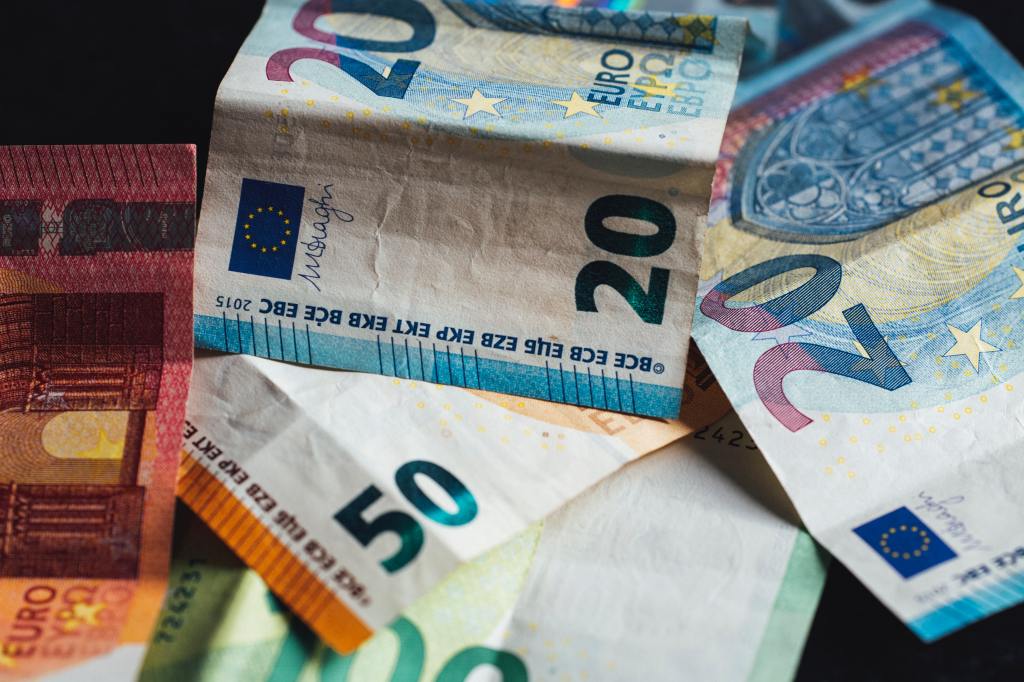
So, one evening in June 2014, he announced on Twitter that he would sell Mojang. In no time one IT giant contacted him and bought it for 2.5 billion dollars (2.2 billion euros).

Photo by Markus Spiske on Unsplash

On permanent vacation or lying in his luxury villa, he continues to tell about his life on Twitter: he complains that he no longer sees his friends, that parties in Ibiza have become boring…to make a long story short, he gets depressed.

Markus may be the victim of what is called the “Easterlin Paradox“, after the name of the economist who demonstrated it. Richard Easterlin has observed over several years that while the per capita income in the US increased, the proportion of people saying being “very happy” did not increase at the same time.

Later, other researchers found that the more money you made, the happier you felt but there was a limit: up to 75,000 dollars (about 68,000 euros) per year per household. Over this amount of money, the extra money would not make you happier!

Markus earned far more than 75,000 dollars but he has no friends, no plans for the future, and he is also depressed. He even ends up arguing with lots of people on Twitter, making comments deemed racist and misogynist.

As a result, in 2019 the big IT company who bought his business does not invite him to the 10 year anniversary of Minecraft, and deleted his name from the credits of the game. Markus gained a lot of money, but he also lost a lot.

Do you agree with the Easterlin Paradox? Would you be happier with more money? Would 75,000 dollars be enough to have a happy life? In my case, I would be definitely happy with 75,000 dollars a year!

Photo by Lidya Nada on Unsplash

Exchange of Things: I Give Something to You, You Give Something to Me

Summer 1959, Moscow. During an official meeting, the head of the Soviet Union, Nikita Khrushchev, drinks a Pepsi Cola. Yes, victory! A member of the meeting discreetly welcomes.

The happy man is a representative of the famous American brand of drinks, Donald Kendall. That evening, Kendall had one goal: to convince the Russians to sell their drink in that immense country.

But Kendall shouted victory too early. If Khrushchev likes Pepsi, we are still in the times of the “cold war”. We don’t really talk about consuming a product from capitalist America!

But a few years later, when relations between the two countries improve, Pepsi tries again. And this time the Russians also see an interest in them because they can sell vodka to the Americans.

The deal can only be done without using the currency: Russia rejects the dollars of the American capitalists and cannot bring out the rubles from the country.

Then we return to the oldest form of exchange: bartering. The Russians authorize Americans to sell their drink on their soil in exchange for selling vodka on American soil.

This Pepsi exchange for vodka has continued for years, but in 1979 the US no longer wants to exchange Pepsi for vodka.

So Pepsi finds an alternative. Instead of regulating trade in vodka, the Russians will be able to pay with their old warships. Pepsi thus resells the old scrap metal to make a good profit.

Photo by Nick Jio on Unsplash

What do you think about it? Have you ever exchanged items with your friends? Would you like to do it, like when you were a child and you exchanged stickers?

Do you know that there are Local Exchange Trading Systems (LETS) where you can trade not only things but also services?

In times of crisis, it would be good to start applying new economic models, like the sharing economy, where individuals can hire out things like their cars, homes and time to others in a peer-to-peer modality. We exchanged our home for vacation for many years through a website called Home Based Holidays, and on the Web you can find many more. No worries about your belongings: they come to you place, but you go to theirs!

Once, at a second hand market I bought a sweater made by a famous French brand for 2 euros. I was astonished and the lady told me: What I don’t like any longer, you may like it.

Actually this is the principle: instead of buying things that we maybe use only once, or we get tired of soon, like children with their toys, we could start exchanging them.

It will be a step towards a more sustainable economy, that will bring us some benefits like reducing negative environmental impacts by decreasing the amount of goods needed to be produced, and cutting down on industry pollution. It will also increase recycling items and grant access to people who can’t afford buying certain types of goods or use them only from time to time.

All this is also in the perspective of the degrowth theory, that will let us go towards strengthening our belonging to our local community.

By the way, I have been using that sweater since then!

Photo by Norwood Themes on Unsplash

Coping with Cabin Fever

A few days ago, listening to the news updating on the Covid-19 outbreak in Belgium, I heard that they were talking about the Cabin Fever. Since what they were saying sounded familiar to me, I decided to do some research. Having spent 9 weeks at home, without going to work and without seeing people other than my family, I must admit that I also felt something strange. I don’t feel like going back to a so-called normal life (then I should also know what it is the meaning of this normal life and see if I like it).

Actually, I don’t want to go back to work, I mean to my office premises, as I have been tele-working very well since the beginning of the crisis. It wasn’t clear to me why, so I decided to try to find it out and I drove nearby my office place. I found out with great relief that I did not feel anything in particular, neither stress nor anxiety, or fear.

However, this did not change my wish to continue teleworking.

Photo by Ella Jardim on Unsplash

What is it about?

The Cabin Fever is a syndrome that you may develop as a reaction to being isolated or confined for an extended period of time. It is not a real mental disorder, but it is associated with a particular condition linked to a long period of being lockdown, such as a disease, or a pathological condition, or in the case that we have been just experiencing, with the Coronavirus pandemic. We can feel anxiety, insecurity, fear of the future and of those we don’t know. You don’t want to leave your own place and only there you feel safe.

This syndrome, first described in the early twentieth century, is not fully recognised at a scientific level because there are not enough literature and case studies. At the time, they referred to people who, for example, worked in the high mountains and spent a lot of time within their home. It was discovered that these people found it difficult to go out, because they felt that they could not control the external space. This may also happen to prisoners when they go out of prison (that is why it is also called prisoner syndrome). You may feel infinitely small in front of a big world, out of your reach.

What to do then?

We spent about two months locked in our apartment or house, worried about the spread of the virus, fearing of ourselves getting sick, fearing that one of our loved ones would get sick and fearing of losing our job.

The media have also played a bit with our fears: put on the mask when you go out (but there were no masks available), don’t touch anything when you’re out if you don’t have disposable gloves (also unavailable on the market), above all do not touch your face (do you know how many times are we tempted to touch our face in an hour? On average 60 times, that is once a minute. Try to pay attention to it). It doesn’t matter then if on the street you see people wearing the mask in an absolutely inappropriate way which could also be more harmful than useful (wearing the mask around the neck, putting it on and taking it off maybe with unwashed hands, leaving the nose uncovered – I know it is difficult to breathe with something on your nose and mouth).

And now that, all of a sudden, they tell us that we can get out, we wonder if the danger has really passed. Our mind is still focused on everything that has just happened and it is normal to think that there may be a situation of danger and / or insecurity outside (think only if you have to use public transport for example).

Photo by Clément Falize on Unsplash

Now, however, it is time to plan the future, calmly. Did you appreciate the quietness found during the time spent at home? I have appreciated it very much and I would like teleworking from home to become a regular working pattern. I wish that we could choose to stay at home to tele-work (it is obvious that it is not a possible option for all types of job, but big companies like Twitter have already adopted this policy and have decided that only those who want will go back to their office). I list only some of the advantages that this choice entails: your ecological footprint will decrease, your quality of life will improve because you find yourself with “freed” time, for example from avoiding the journey home-work-home. This time could be dedicated to your well-being.

Then you can arrange a meeting with some (a few) friends and pay a visit to your family (though without being able to hug each other yet).

A few days ago it has been announced that from June 3 we can return to Italy without having to spend 14 days in quarantine. So, we can start planning vacations. You could start too.

What you shouldn’t do is listening obsessively and compulsively (transforming or even adding obsessive-compulsive disorder – OCD – to the Cabin Fever) the continuous updates on new infections, number of deaths, and the news coming from other continents. Don’t watch catastrophic movies, they don’t help you but rather will increase your anxiety. Then, try to think positive, because as the law of attraction teaches you, if you think negative then what happens to you will be negative. Also be aware that most of the bad things you think won’t happen, and that’s statistics.

Above all, try to be courageous, patient and safe: step by step the world will start to turn again, more or less well, but I hope better than before.

However, if you experience a sense of terrible anxiety, a malaise that paralyses you and you feel like being surrounded by flames, or by monsters, or by dangerous animals, you should go to a professional, such as a psychologist for example, if you don’t want this syndrome to turn into post-traumatic stress disorder (PTSD).

Photo by Petra Heryanova on Pexels.com

Vivere la giornata

In questi tempi difficili, condivido un brano tratto da “Furore” di John Steinbeck, che per me rappresenta un esempio di forza e di coraggio, oltre che di prospettiva. Steinbeck é noto per il realismo dei suoi romanzi e per le caratteristiche di humor che si aggiungono alle sue descrizioni. Racconta di un America perduta senza però perdere la speranza nell’umanità e in una rinascita.

“Mi sa che la nostra vita è bell’e finita.” “Macché finita,” disse Ma’ con un sorriso. “Non è finita per niente, Pa’. E c’è un’altra cosa che sanno le donne. Me ne sono accorta. Per l’uomo la vita è fatta a salti: se nasce tuo figlio e muore tuo padre, per l’uomo è un salto; se ti compri la terra e ti perdi la terra, per l’uomo è un salto. Per la donna invece è tutto come un fiume, che ogni tanto c’è un mulinello, ogni tanto c’è una secca, ma l’acqua continua a scorrere, va sempre dritta per la sua strada. Per la donna è così che è fatta la vita. La gente non muore mai fino in fondo. La gente continua come il fiume: magari cambia un po’, ma non finisce mai.” “Come fai a saperlo?” domandò Zio John. “Chi te lo dice che un giorno non si ferma tutto, che la gente non ce la fa più e si butta a terra per sempre?” Ma’ rimase qualche istante a pensare. Si sfregò il dorso lucido delle mani, poi infilò le dita della destra tra le dita della sinistra. “Non lo so,” disse. “A me mi pare solo che tutto quello che facciamo serve per continuare. Per me è così che vanno le cose. Pure la fame… pure la malattia: qualcuno muore, ma gli altri si fanno più tosti. Uno deve solo cercare di viversi la giornata, la giornata e basta.

Ti auguro una giornata luminosa.