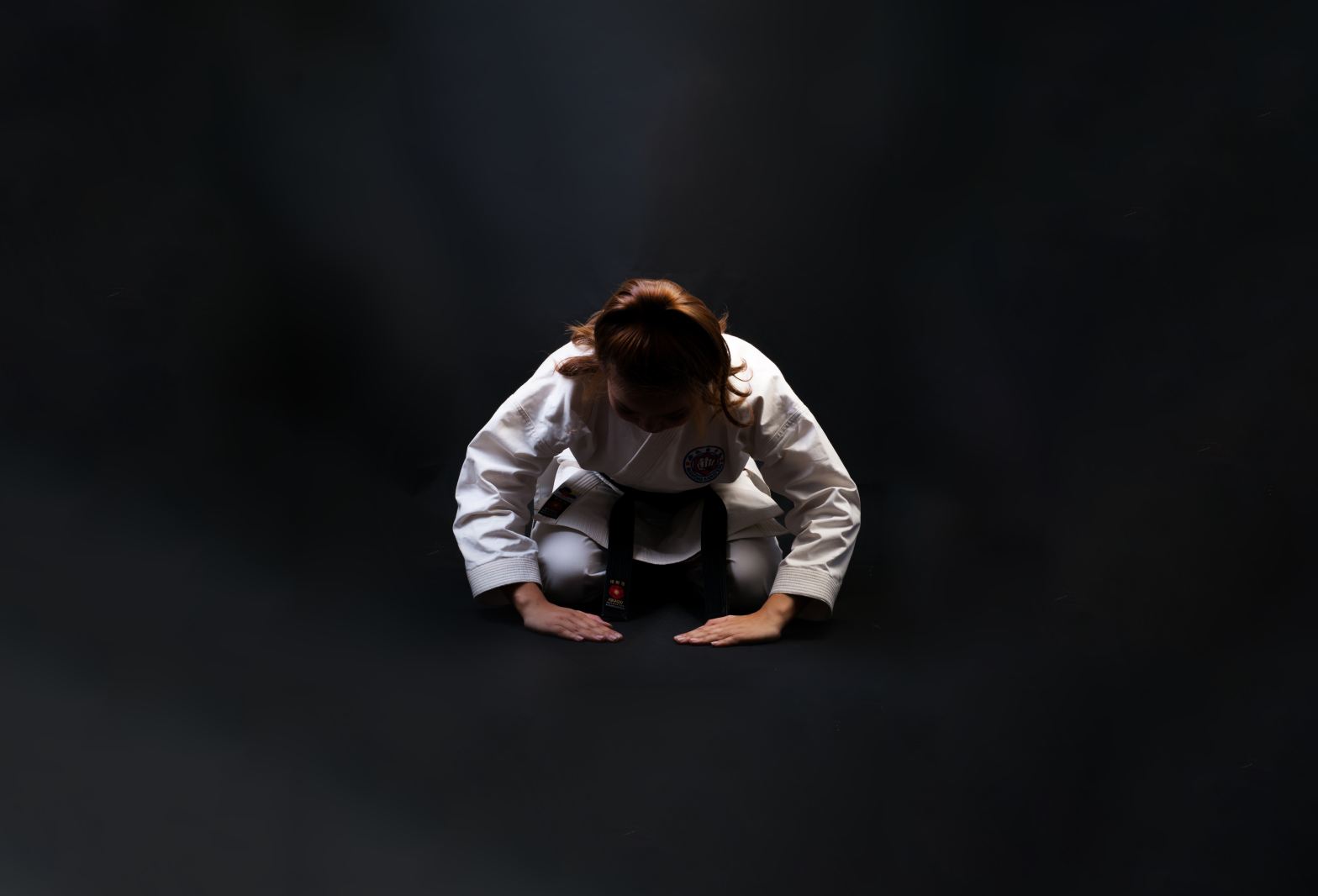
How Discipline Can Lead to Success

Self-discipline is the ability to train your body and mind. Successful people are masters in this art. Sportsmen, stars of the showbiz, great doctors, inventors, researchers, managers, but also parents, teachers, nurses, all those who have achieved important results during their career and their lives, practice fundamental techniques to train their body and mind. They know that thought generates habit and by disciplining their thinking they create the attitude to do better and better. Let’s see some techniques to learn how discipline can lead to success.

  1. Visualization – Listen to audio that explains what visualization is and how to practice it. You will learn to condition your mind to relaxation, and in this state, you will be more receptive and therefore more creative. Write down your goals (not many, maximum three) and read them aloud. Listen to energizing music repeating your goals like a mantra.
  2. When you visualize your goals, visualize them exactly as if they were already achieved. For example, if you want to see yourself slimmer, visualize yourself in a dress that you have not been able to wear for a long time.
  3. Do this exercise daily: repeat to yourself several times that you have already achieved your important goals. Observe yourself in your new “version”. Persevere in wanting to achieve your goals, do not abandon them, take care of them.
  4. Make a list of some important and essential things that you don’t feel like doing because you don’t like them, they’re demanding, or you don’t have time to do them. Set a deadline and comply with it. The action dedicated to performing unpleasant tasks reduces stress and tension (I know, it sounds strange, but that’s how our brain works).
  5. Remember that you need to improve your body’s discipline as well. So practice sports activities, walk at least three times a week for half an hour, rest and sleep regularly, eat healthy, nutritious and balanced meals, try to always maintain the same weight.

Finally, don’t forget that both losing and winning are mental attitudes that can be learned, but it takes days, weeks, and even months of consistent practice to achieve your goals. Discipline can lead to success if you are determined to follow these fundamental steps.

If you want, you can read in my blog more articles about discipline.

6 consigli per evitare lo stress del periodo natalizio

A me piace molto il periodo natalizio. Mi porta indietro al periodo della mia infanzia quando aspettavo con impazienza l’apertura dei pacchi regalo la mattina di Natale. Oggi, che abito lontano dai miei cari, rappresenta per me un momento di condivisione e di serenità.

Capisco, tuttavia, che possa diventare stressante. Comprare i regali all’ultimo minuto, preparare cena o il pranzo (a seconda della tradizione a cui appartenete, noi facciamo tutti e due, tanto per non farci mancare nulla…), fare gli auguri a tutti, sperando di non dimenticarsi nessuno.

Ecco alcuni consigli per cercare di vivere al meglio questo natalizio senza stress:

  1. Se non riesci a vedere tutti per fare gli auguri di persona, fai una telefonata o invia un messaggio. Ti assicuro che fa questo fa la differenza perché non ti sentirai in colpa.
  2. Non rifiutare la tradizione ma nemmeno le cose nuove: cerca di stare bilanciata tra l’osservanza della tradizione e non farti mancare esperienze nuove. La tua curiosità va soddisfatta e farai delle cose diverse
  3. Non farti influenzare dalla pubblicità. Sei sicuramente circondata da immagini e idea di come sia perfetto il Natale. Per te, però, potrebbe essere stressante a livello emotivo e forse anche a livello finanziario. Non immergerti in questa finzione e non paragonarti a queste rappresentazioni assolutamente irreali.
  4. Cerca di andare in posti in cui sai che starai bene, che ti danno gioia. Cerca di passare del tempo con le persone che ti piacciono di più.
  5. Se stai attraversando un periodo difficile, sei più vulnerabile e sperimenti uno stress emotivo maggiore durante le feste. È importante per te non ignorare i tuoi sentimenti, le tue sensazione. Non aver paura a cercare il supporto di specialisti che possono aiutarti ad analizzare quello che ti sta accadendo.
  6. Trova il tuo equilibrio. Prenditi il tempo per riflettere e pensare a quello che funziona meglio per te. Se vuoi andare a trovare qualcuno fallo solo se ti va, non devi farlo per forza. E non inventare nemmeno delle scuse (per te e gli altri), non te la senti e basta. Trovare il tuo equilibrio è essenziale per la tua salute.

Buone Feste!

Anch’io vado in vacanza, il prossimo articolo sarà nel 2023!

A Zen Story – The Quality of Our Effort

Do you know the Zen story of the young man who crosses Japan to reach the school of a famous martial arts master?

When he arrives at the dojo, the teacher asks him:

What can I do for you?”

The boy replies: “I want to study with you and become the best fighter in the whole region.”

How long will it take me?

10 years at least,” the teacher replies. “10 years is a very long time – replies the boy – What if I study two times more than all your students?

20 years then” – the master replies.

The boy, puzzled, replies “and if I train all day and night long with all of myself?

“30 years,” the teacher replies.

At this point the young man replies: “How is it possible that the more I say that I will work hard, the longer it will take me?

The answer is simple – concludes the master – “when you have one of your eyes fixed on the goal, you have only the other one left to find the way. »

How would you interpret this story?

Personally I consider it an important reminder of how it is not necessarily a more intense effort that can help us get sooner to the destination we have in mind, but rather an attention to the quality of our effort.  
Doing better step by step than trying to do more by burning down the steps will put less stress and anxiety in our lives.

It’s a bit like when we train our body. Practising intensive sports from time to time will only serve to traumatize your body. While a constant but carefully calibrated effort allows us not only to achieve lasting results, but to make each step of the journey much more enjoyable.

How could you reduce the intensity of the effort by improving its quality?

Alan Turing and the Pride

Alan Turing ended his life on June 7, 1954.

He ate a piece of apple with cyanide.

He did so because the British government had chemically castrated him, humiliated him and tried him because he was gay.

For this reason there is a bitten apple on the Apple logo, in honor of Alan Turing.

Alan Turing invented computer science and using his first drawings deciphered the Enigma code  – the encrypted machine that the Nazis and the German army used to communicate secret commands with each other during World War II.

Thanks to this, he saved millions of human lives and with him began the modern era of computer science.

Alan Turing’s story should remind us that Pride is not just about dancing on floats and waving a rainbow flag.

Above all, it must remind us that everyone has the right to be happy, to love everyone who wants to love and to recognize the remarkable contribution that we all can make in a society free from fear or prejudice.

The Black Dot

“Energy goes where your focus is” Tony Robbins

This is what the story of the black dot is about.

One day, a professor entered the classroom and asked the students to get ready for a surprise test.

They all waited anxiously at their desks for the exam to begin.

The professor handed out the exams with the text facing down, as usual. Once he handed them all out, he asked the students to turn over the papers.

To everyone’s surprise, there were no questions – just a black dot in the middle of the paper sheet.

The professor, seeing the expression on everyone’s faces, told them the following: “I want you to write about what you see there.”

The students, confused, got started on the inexplicable task.

When the given time was over, the professor took back all the papers, and started reading each one aloud, in front of all the students.

All of them, with no exception, defined the black dot, trying to explain why it was in the middle of the sheet.

After all had been read, and the classroom was silent, the professor started to explain: “I’m not going to give you a note on this, I just wanted to give you something to think about. No one wrote about the white part of the paper. Everyone focused on the black dot. The same happens in our lives.”

Life is like a piece of paper to write on, observe and enjoy, but we always focus on the dark spots.

Life is a gift, and we always have reasons to celebrate – nature renewing itself daily, friends around us, the job that provides us money to live, the love of our partner, our children, and much more.

The dark spots are very small when compared to everything we have in our lives, but they’re the ones that pollute our mind.

Take your eyes away from the black dots in your life. Enjoy each one of your blessings and each moment that life gives you. Be happy and just live!

Do you think you are living your life fully?

woman in white long sleeve shirt standing near white and gray house during daytime
Life – Photo by Julian Jagtenberg on Pexels.com

How to Find Happiness

We all seek happiness because we think that when we are happy, we have everything. When joy fills our souls, life lights up, our hearts open up and our hands stretch out. On the contrary, when our soul is darkened, when sadness pervades our lives, everything becomes more difficult. Where and how to find happiness?

Where to find happiness

We often seek happiness outside of ourselves. Of course, the joy that comes from the outside brings us joy as well. Dinner with friends, a successful exam, a new experience…

Unfortunately, these are ephemeral moments that will not last long. It would be good for you if you can remember them with nostalgia.

However, there is also a type of joy that does not depend on external events, it does not have elements that have triggered it, in short, it does not depend on anything.

It can be said that this is a free happiness, as Jean Klein defined it, namely a form of joy without object. To quote some of his words: “spontaneous state of interior silence that we can open ourselves to our true nature: the ‘I Am’ of pure consciousness.”  

It is a joy without object because it does not come from the world, it has another origin. This happiness comes from pure existence, from our being in the here and now.

How to find happiness

We knew this joy very well when we were children. Then, slowly, growing up, we miss it.

Sometimes it returns when we do not have worries, we are particularly relaxed and in a good mood.

But if you can transcend everyday life, stay silent and focus on your breathing even for a few minutes, you find yourself and the essence of life in the here and now.

Among the positive affirmations, you can find the affirmation “I am” that does not mean identifying with oneself as a person with name, surname, date of birth, etc.

Transcending yourself means stripping yourself of your individual identity so that you can quickly experience the happiness of your pure being.

Where and how do you find happiness?

underwater photography of clear water
Pure Water – Photo by Tyler Lastovich on Pexels.com

Non-Violent Communication

Non-Violent Communication (NVC) developed by Marshall Rosenberg is a form of philosophy of life that seeks on the one hand to strengthen relationships (starting with the one with yourself) and on the other it is a way to begin a dialogue favouring mutual understanding, open mind and kindness.

NVC aims to connect people in a peaceful way, using words without offending people, without attacking them and at the same time without annihilating yourself. It is an assertive way of communication. We listen to understand.

In these times of uncertainty and difficulty due to the persistence of the Covid emergency, we are super stressed and sometimes we can have excessive verbal reactions, which we may regret later.

We can consider the NVC as a real tool for maintaining a healthy relationship with ourselves and with others. Who hasn’t ever wanted to express themselves so as not to hurt or attack the other?

NCV consists of a simple method of clear and empathic communication, based on these four steps.

Observation of the facts.

Try to identify the fact without expressing any judgement. E.g. “It’s two o’clock in the morning and I hear music coming from your room” (fact) is different from saying: “It’s too late to make all that noise” (judgement).

Feelings.

Express the feelings that accompany the observation. Or, imagine what the other person feeling is and ask them. E.g. “You are about to take an exam and I see you walking back and forth (observation). Are you nervous?”

Recognition of needs.

Express the needs that give rise to certain feelings. E.g. “I am a bit upset and would like to talk. Is this the right time for you?”

Formulation of requests.

Ask clearly and precisely what you want. E.g. “I noticed that you are very silent today (fact). Are you bored? (feeling).” If the answer is yes, try to communicate your feelings and make a proposal: “Well, I’m bored too. How about going out for a walk?”.

Finally, the ultimate purpose of NVC is to find a way in which each person can express what they consider important without blaming, humiliating, embarrassing, or threatening others. It serves to resolve conflicts, get in tune with people and live in a conscious and attentive way of their needs, finding a compromise with your own.

NCV helps us to discover our experiences and our aspirations and to express them with firmness and kindness.

Furthermore, it also allows us to make ourselves better understood and to understand others better, by easing intra and interpersonal tensions. NVC offers keys to understand our limits and to welcome the actions and reactions of others without letting ourselves be overwhelmed!

Thanks to this tool you can lose the fear of expressing yourself and gain more confidence in your abilities.

What do you think about NVC?

ground group growth hands
Trust – Photo by Pixabay on Pexels.com

Positive Affirmations

Our mind is fascinating. It has its own rhythm, unique perceptions and we are not aware of all its possibilities yet. Waves of thought run through our mind but I must say that unfortunately most of them are negative. However, you need to know that there is a way out to go around your negative inner monologue: positive affirmations.

I read about the importance of positive affirmations in one book of Louise Hay.

Affirmations are short positive sentences that motivate you, inspire you and encourage you to take action to achieve your goals. To make them work you have to repeat these phrases several times throughout the day, to make them stay etched in your unconscious mind.

Repetition can change your habits, behaviour, and point of view. As you may know, words are powerful. Regular repetition, aloud, but also within you, turns into thoughts that create your reality. Positive thoughts have the power to overcome internal negative speech. You may find it odd to say phrases like “I choose to be happy” in front of a mirror, but I assure you that these statements really help you reinforce the good vibes. Regular repetition of affirmations becomes your truth.

A statement firmly and confidently declares a positive thought and transforms it as a truth. By integrating these positive statements into your daily routine, you help your mind prioritize positivity.

According to some researchers, affirmations can help you work better. Spending a few minutes reflecting on your abilities before a stressful meeting, for example, can calm your nerves, increase your confidence, and improve your chances of success. Affirmations can also help you relieve stress.  

Here are some of the benefits you can get from practising affirmations regularly:

Become happier. Affirmations allow you to recognize the things that keep you from being happy, because you focus on what you really want in life. In addition, your mood will get better.

See things in perspective. We often take the simplest things for granted. Using affirmations allows you to remind yourself that the simplest things are the most important. For example, if you are in good health, by using the statement “I am in good health” you can focus on this point and appreciate it more.

Reduce negative thoughts. Since most of our thoughts are unconscious (and negative), positive affirmations allow you to become more aware of your thought patterns and feelings, thereby reducing the risk of creating a recurring negative thought.

illustration of woman analyzing financial line graphic
Photo by Monstera on Pexels.com

To get the best out of affirmation practice, you need to observe these three basic rules:

  1. Plan repetition during specific moments throughout the day. Good times could be in the morning as soon as you get up or in the evening before going to bed. Each of us will find the best time to devote to repeating affirmations.
  2. Use the verb in the present, because you want results now and not in the future. Furthermore, the brain only understands the present tense.
  3. Do not use the negative form (for instance, do not say “I don’t take into account judgements from the others” but “judgements from the others are irrelevant to me”).

There are no strict rules on the frequency of repetitions. Nevertheless, according to psychotherapist Ronald Alexander of the Open Mind Training Institute, the statements can be repeated three to five times a day to reinforce the positive effect.  

Do you like to write? Perfect! Writing your affirmations in a journal and reading them in front of a mirror is an effective way to make them more powerful.

Here are some affirmations you could practice if you want to try if they work for you too:·     

  • I believe in myself and I trust my abilities.
  • I am the creator of my thoughts.
  • I am a successful person.
  • I choose to be happy.
  • An amazing family and very good friends surround me.
  • I am strong and courageous.
  • When I go to bed, everything is as it has to be and I fall asleep peacefully.
  • I love and accept myself as I am.

Do you think you could control more your negative thoughts by starting to make positive affirmations?

photo of person holding cup
Photo by Alina Vilchenko on Pexels.com

Let It Go

Three monks were bringing oil jars to their monastery. For some days, they had practised inner silence following the advice of the senior monk.

As they walked, a stranger who was lost in the forest came by and asked for directions to the nearest village. The three monks looked at each other. The younger monk decided to interrupt the vow and showed the man the shortest way to get to the village. The stranger thanked him and left.

The three monks started walking again and, after a short stretch of road, one of the two monks broke the silence by scolding the young man for speaking. The other monk, meanwhile, continued to mutter within himself.

Arriving at the monastery, he blurted out asking the two why they had interrupted the vow of silence.

The elderly monk of the community was observing and heard what had happened.

He then approached the three monks, saying: “Venerable brothers, it is true that the younger monk spoke and answered that stranger, but it was an act of kindness and it stopped there. You, on the other hand, had no reason to speak. Moreover, you carried a grudge throughout the journey, while you should let it go.”

According to you, why is it important to let go ?

river between green leafed tree
Photo by Baskin Creative Studios on Pexels.com