Towards the end of the 19th century, a group of economists from the University of Lausanne in Switzerland studied the social inequalities in Europe. Analysing the tax data of several European countries, they found out that in each of them about 20% of the population owned 80% of the wealth.
This discovery was a real springboard for the career of an economist, Vilfredo Pareto, who gave his name to a principle, the Pareto principle, also known as the law of 20-80.
Some examples of the application of this principle:
• to optimize production, some industries in Japan focus on 20% of the causes that generate 80% of production problems;
• customer services of most companies focus on 20% of customers who generate 80% of turnover;
• finance professionals agree that 20% of their investments represent 80% of the benefits.
What does this principle make us understand? The message of Pareto’s principle is that we need to focus on 20% of the actions that lead us to 80% of the results.
Photo by Austin Distel on Unsplash
In practice, we must focus on high value-added actions because they are the ones that make us move forward.
This principle is very important because it deals with a precious resource: time.
To avoid being stuck on a goal and slowly losing sight of it, it would be beneficial to use this perspective (20-80).
However, how can we identify what are the essential things to our goal? Moreover, how to choose high valuable actions?
Try to answer these two questions for each action you have planned but are hesitating to take:
1. Is this action vital in moving me towards my goal?
2. Am I the only one who can do this action?
The first question allows you to separate essential actions from those that can wait.
The second allows you to identify what are the actions that others can do in your place and that, therefore, you can delegate.
Once this is done, you will know 20% of the actions you need to take to advance towards achieving your goal.
Photo by Nick Fewings on Unsplash
Now you could estimate the time required for each action but it is not ideal, because you would end up putting it on your “to-do-list” and you could continue to shift the priority order. Therefore, in the end you would have wasted some time.
Once again you have to ask yourself some questions:
1. What problems are stopping you from really moving forward with your goals?
2. What do you need to do to solve these problems?
3. What are the elements that allow you to understand if the problems have been solved?
You will be surprised to see how well these questions work. The 20-80 rule allows you to focus on actions that have a visible and direct impact. You will see that they will soon become a habit to you, and that you will use them every time you feel stuck with something.
Verso la fine del XIX secolo, un gruppo di economisti dell’Università di Losanna in Svizzera studiano le diseguaglianze sociali in Europa. Analizzando i dati fiscali di diversi paesi europei scoprono che in ciascun paese circa il 20% della popolazione possiede l’80% della ricchezza.
Questa scoperta fu un vero trampolino di lancio per la carriera di un’economista, Vilfredo Pareto, che ha dato il nome a un principio, il principio di Pareto appunto, conosciuta anche come la legge dell’20-80.
Alcuni esempi dell’applicazione di questa legge:
per ottimizzare la produzione alcune industrie in Giappone si focalizzano sul 20% delle cause che generano l’80% dei problemi di produzione;
i servizi clientela della maggior parte delle imprese si concentrano sul 20% dei clienti che generano l’80% del fatturato;
i professionisti delle finanze sono d’accordo nel dire che il 20% dei loro investimenti rappresentano l’80% dei guadagni.
Cosa ci fa capire questa legge? Il messaggio della legge di Pareto è che ci si deve concentrare sul 20% delle cose che ci porta all’80% dei risultati.
Photo by Austin Distel on Unsplash
In pratica, ci si deve concentrare sulle azioni ad alto valore aggiunto perché sono quelle che ci fanno avanzare.
Questa legge è molto importante perché ha a che fare con una risorsa preziosa: il tempo.
Per evitare di bloccarci su un obiettivo e piano piano perderlo di vista, sarebbe veramente importante utilizzare questa prospettiva (20-80).
Ma come fare ad individuare quali sono le cose essenziali al nostro obiettivo? E come scegliere le azioni a forte valore aggiunto?
Cerca di rispondere a queste due domande per ciascuna azione che hai previsto ma che esiti a realizzare:
questa azione è vitale per farmi avanzare verso il mio obiettivo?
sono l’unico/a a poter fare questa azione?
La prima domanda ti permette di separare le azioni essenziali da quelle che possono aspettare.
La seconda ti permette di individuare quali sono le azioni che altri possono fare al tuo posto e che, quindi, puoi delegare.
Una volta fatto questo, avrai scoperto il 20% delle azioni che devi portare avanti per raggiungere il tuo obiettivo.
Photo by Nick Fewings on Unsplash
Ora potresti fare una stima del tempo necessario per ciascuna azione ma non è il metodo migliore, perché finiresti per metterlo nella tua “to-do-list” e potresti continuare a spostare l’ordine di priorità. Quindi, alla fine avresti perso del tempo.
Ancora una volta devi farti delle domande:
Quali problemi ti impediscono di raggiungere davvero con i tuoi obiettivi?
Cosa devi fare per risolvere questi problemi?
Quali sono gli elementi che ti permettono di capire se i problemi sono stati risolti?
Sarai sorpreso/a di vedere come funzionano bene queste domande. Vedrai che presto diventeranno un’abitudine, te le porrai tutte le volte che ti senti bloccato/a con qualcosa, perché la regola del 20-80 ti permette di concentrarti sulle azioni che hanno un impatto visibile e diretto.
The Japanese people have an incredible ability to recover from catastrophes of any kind. After World War II that left the country in ruins, in just thirty years Japan became the second largest economy in the world, becoming leaders in the electronics sector in the eighties and nineties. How could the Japanese economic miracle happen? The answer has to do with an expression that we should use too: “ganbatte” which means “try your best”.
Here lies one of the differences between the fragility of the Western culture and the resilience of Japanese culture: how they deal with crisis’ situations.
In Japan, when they have to take an exam, they say “Ganbatte kudasai“, which is the best way to tell others to do their best. In this case, there is no external factor on which the outcome of your exam depends on. According to the Japanese, if you try your best, you will get a result, which even if not the best ever, it will be the best for you, because it represents your maximum effort.
Another Japanese saying, also very useful to all of us, is: “if you want to warm a rock, sit over it for a hundred years”, which means that to overcome great difficulties you need to be patient. However, this doesn’t mean sitting down and waiting for circumstances to change, it means actually working to create new situations and opportunities.
The “ganbatte” is present in the individual and collective activities of the Japanese, and it is very much linked to the Ikigai, that is simply the priority around which everything else (often unconsciously) turns.
In 1995, when the disastrous earthquake happened in Kobe causing enormous damages, the slogan that circulated in Japan was: Ganbaro Kobe. The meaning of the message was: strength and courage from all of us; united and with efforts we will get out of this situation.
Later on, in 2011, on the occasion of another great earthquake that caused the nuclear catastrophe in Fukushima, the slogan that encouraged all Japanese was: Ganbaru Nippon! This encouraged all Japanese to join in the collective effort to help all those involved in the catastrophe. A collective effort was required, and this spirit manifested heroically when retired workers from the nuclear power plant, volunteered to control it. The reason presented by those people was that it was better for the radiation to affect people who had already lived a good part of their lives rather than young people with a future ahead.
A good lesson for all of us in these difficult times. We could try to do as the Japanese do by following these four practical tips.
Do and not complain. Don’t complain with your arms crossed: do something. Value your actions, even if they seem of little importance to you, in reality everything you do is important. As the Kaizen philosophy says, modest but continuous progress ends up in a great transformation.
Hope instead of despair. An attitude of hope focused on day after day rather than on “when this will end” helps to keep morale high.
Don’t waste energy. Don’t venture into endless arguments, which get you nowhere. It is necessary to keep all your strengths (mental and physical) to keep moving forward.
Seek the company of enthusiastic people. We are friends by affinity. This does not, however, exclude that we can surround ourselves with people with a ganbatte spirit, who strive to improve rather than seeing only the negative side.
I giapponesi hanno una capacità incredibile di recuperare di fronte alle catastrofi di qualsiasi tipo. Dopo la II guerra mondiale, che lasciò il paese in rovina, in appena trent’anni il Giappone si trasformò nella seconda economia del mondo, diventando leader nel settore dell’elettronica negli anni ottanta e novanta. Come si realizzó il miracolo economico giapponese? La risposta ha a che fare con una espressione che dovremmo usare anche noi: “ganbatte” che significa “sforzati al massimo”.
Qui risiede una delle differenze tra la fragilitá della cultura occidentale e la resilienza della cultura nipponica: il modo in cui affronta una crisi.
In Italia, quando devi affrontare un esame, ti dicono “in bocca al lupo”, come se dipendesse dal povero lupo la riuscita del tuo esame. Praticamente, collochi fuori da te la possibilità di riuscita del tuo esame.
Photo by Margot Noyelle on Usplash
In Giappone, invece, si dice “Ganbatte kudasai”, che è il migliore modo di dire all’altro di fare del suo meglio. In questo caso non c’è un fattore esterno da cui dipende l’esito del tuo esame. Secondo i giapponesi, se ti sforzi al massimo, otterrai un risultato, che, anche se non il migliore in assoluto, sarà il migliore per te, perché rappresenta il tuo sforzo massimo.
Un altro modo di dire giapponese, molto utile a noi tutti, è: “se vuoi scaldare una roccia, siediti sopra cento anni”, che significa che per superare grandi difficoltà bisogna avere pazienza. Tuttavia, questo non vuol dire sedersi ed aspettare che le circostanze cambino, significa invece lavorare per creare nuove situazioni.
Il “ganbatte” é presente nelle attività individuali e collettive dei giapponesi e puó essere collegato all’Ikigai, che é una forma di adattamento all’ambiente circostante.
Nel 1995, quando ci fu il disastroso terremoto che causó degli enormi danni a Kobe, lo slogan che circolava in Giappone fu: Ganbaro Kobe. Il significato del messaggio era: forza e coraggio da parte di tutti, uniti e facendo del nostro meglio usciremo da questa situazione.
Successivamente, nel 2011, in occasione di un altro grande terremoto che provocò la catastrofe nucleare a Fukushima, lo slogan che incoraggiava tutti i giapponesi era: Ganbaru Nippon! Con questo si incitava il popolo giapponese a unirsi nello sforzo collettivo per aiutare tutti coloro coinvolti nella catastrofe. Era necessario uno sforzo collettivo e questo spirito si manifestò in maniera eroica quando dei lavoratori in pensione della centrale nucleare si offrirono come volontari per controllarla. Le ragioni presentate da questi pensionati furono che era meglio che le radiazioni colpissero delle persone che avevano già vissuto una buona parte della loro vita, piuttosto che delle persone giovani con un futuro davanti.
Una bella lezione per tutti noi in questi tempi difficili. Potremmo emulare lo spirito giapponese seguendo questi quattro suggerimenti pratici.
Fare e non lamentarsi. Non lamentarti stando con le braccia incrociate: fai qualcosa. Valorizza le tue azioni, anche se ti sembrano di poca importanza, in realtà tutto quello che fai è importante. Come dice la filosofia Kaizen, un progresso modesto ma continuo, si conclude in una grande trasformazione.
Sperare invece di disperare. Un’attitudine di speranza focalizzata nel giorno dopo giorno anziché nel “quando finirà questo”, aiuta a mantenere alto il morale.
Non sprecare energia. Non avventurarti in discussioni senza fine, che ti non portano da nessuna parte. E’ necessario conservare tutte le tue forze (mentali e fisiche) per continuare ad andare avanti. Ricorda che per ogni minuto di discussione ad alto coinvolgimento emotivo, ti occorre un’ora per recuperare l’energia persa.
Cercare la compagnia di persone entusiaste. Di solito si è amici per affinità. Questo non esclude, però, che possiamo circondarci di persone con spirito di ganbatte, che si sforzano di migliorare anziché di vedere sempre solo il lato negativo.
Potresti pensare a questo metodo come a un esperimento mentale, un nuovo modello mentale per affrontare il pensiero negativo.
Miguel lo chiama il paesaggio del pensiero.
Attenzione: se hai problemi a usare la tua immaginazione o soffri di afantasia, non sarà facile implementare questo approccio.
Il concetto è abbastanza semplice da capire ma più difficile da padroneggiare.
Funziona così:
A: Tutti i giorni i abbiamo tanti tipi di pensieri (negativi, positivi, neutri).
B: In un dato istante, possiamo pensare solo a una cosa.
C: Possiamo scegliere cosa pensare in quell’istante (focus).
D: Pertanto, possiamo scegliere di sostituire qualsiasi pensiero di quel momento con qualsiasi altro pensiero disponibile.
Elaboriamo un po’ ogni punto.
A: Su questo dovremmo essere tutti d’accordo. Il numero di pensieri che un essere umano può avere è compreso tra zero e molti. Molti potrebbero essere migliaia o milioni, tantissimi.
Se hai un cervello funzionante, dovresti sempre avere molti pensieri.
B: Questo potrebbe essere discutibile. Tuttavia, possiamo tranquillamente presumere che ci si possa concentrare solo su un pensiero alla volta. Non è possibile pensare a due cose contemporaneamente. Ad esempio, non puoi pensare simultaneamente al blu o al nero.
C: Questo potrebbe essere ancora di più discutibile, ma se ti dico di pensare a un elefante bianco, di solito penserai a un elefante bianco, non a un ornitorinco viola. Quindi sei stato in grado di cambiare il tuo pensiero deliberatamente.
D: Se le tre affermazioni precedenti sono vere, allora deve essere vero che possiamo controllare ciò che pensiamo in un dato momento.
E se D è vero, allora è una buona notizia per tutti noi!
Ciò significa che pensare in modo negativo è, nella maggior parte dei casi, una scelta.
Quindi, se ti ritrovi bloccato su pensieri negativi, ora sai che è perché hai scelto di farlo.
Bene, e quindi?
Quindi puoi scartare il pensiero negativo, fare un passo indietro e guardare quali altri pensieri sono disponibili nella tua mente.
L’obiettivo di fare questo passo indietro è acquisire una nuova prospettiva per vedere quali altri pensieri potresti scegliere.
In A, abbiamo stabilito che potrebbero esserci molti altri pensieri disponibili. Questa gamma di pensieri è ciò Miguel chiama il paesaggio del pensiero.
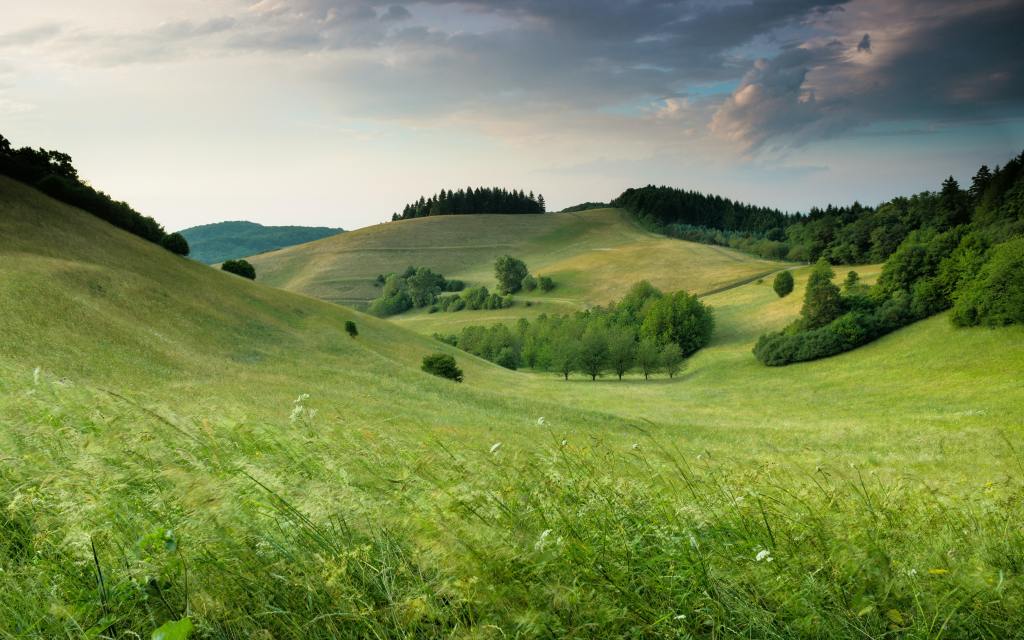
Foto di Claudio Testa su Unsplash
Come in un paesaggio reale, potrai vedere valli e colline.
Cosa vedi? Ora è il momento di scegliere.
Vediamo un esempio concreto.
Sto pensando di non essere abbastanza bravo, abbastanza intelligente, che la gente fa schifo, che la pandemia fa schifo, che i politici fanno schifo, ecc.
Mi sento una merda. Non è divertente. Poi mi rendo conto che posso scegliere cosa pensare.
Faccio un passo indietro e guardo quali altri pensieri sono attualmente disponibili nel mio panorama di pensiero.
All’inizio è difficile vedere oltre pochi metri perché i pensieri negativi sono prevalenti e offuscano la vista.
Cerco allora di salire un po’ più in alto e di guardare oltre questa nebbia scura di pensieri negativi. So che ci sono altri pensieri nell’oscura valle dei pensieri di merda.
Ecco qua … vedo un po’di luce.
A circa 2 km di distanza, vedo un paio di verdi colline che fanno capolino tra le nuvole.
Guardo più da vicino.
Vedo la mia famiglia. Mi amano. Sono felice di sapere che sono vivi e che mi amano.
Vedo del cibo. Vedo che ho cibo in abbondanza e potrei permettermene anche di più se ne avessi bisogno.
Questo mi rende felice.
Un’altra collina. Wow! Sto bene, godo di buona salute. Quanto sono fortunato! Posso ancora camminare, fare sport, ballare, usare il mio corpo. Le mie mani lavorano … posso costruire cose!
Un’altra collina più lontana.
Vedo persone bisognose. Persone che potrei aiutare. Mi rende felice poter aiutare altre persone. È importante.
Questo esercizio ha richiesto solo un paio di minuti e la mia prospettiva è completamente cambiata.
Provo gratitudine. Mi sento vivo. Mi sento felice.
Il mio panorama di pensieri è pieno di pensieri meravigliosi tra cui scegliere.
Non voglio discriminare i pensieri negativi. Semplicemente non voglio che dettino come mi sento il 90% delle volte.
Non so tu, ma non ricordo un solo giorno della mia vita in cui non ho avuto un momento in cui la mia mente non fosse imprigionata dal pensiero negativo.
Il pensiero negativo è inevitabile. È lì per la nostra sopravvivenza. Dobbiamo solo imparare a tenerlo a bada.
Il panorama del pensiero ti offrirà sempre molti pensieri alternativi, altrettanto validi o anche più validi dei pensieri negativi che hai in quel momento nella tua mente.
Dai ai tuoi pensieri positivi una possibilità di vivere.
Meritano anche loro un po’ di attenzione.
Peace. Love. Happy-Cookies.
Miguel @ Grumo.com
Traduzione e editing a cura di Cristiana Branchini
I have been receiving Miguel’s emails for some time, cannot really say how long. Recently, I received this article in my mail box that perfectly matches with the purpose of my blog. Actually Miguel, also published a video, in case you prefer watching to reading. Enjoy it!
Photo by Nick Fewings on Unsplash
Humans have a natural tendency to gravitate towards negative thinking.
We could assume that tendency is there because it gave our ancestors a small survival advantage.
Those that were happy-go-lucky optimists got eaten by wolves.
Those that were pessimists and hoping for the worst didn’t get eaten as much.
So here we are today with a lizard brain primed to expect the worst.
Although there might be an evolutionary advantage to being pessimistic, living your life pestered by gloomy doomy thoughts is no fun.
The truth is today we live in a much more safe environment than hundreds of thousands of years ago.
It’s very rare for people to succumb to hungry tooth sabre tigers and such.
Yet, we live in a constant state of alert and fear triggered in part by nature only exacerbated by the news and social media.
So how do we escape negative thoughts?
Besides recreational drugs, alcohol, mindless social media binging, and meditation, I dare to propose a new way to lead happier mental lives.
You could think of this method as a thought experiment, a new mental model to deal with pessimistic thinking.
I call it the thought landscape.
Disclaimer: if you have trouble using your imagination or suffer from aphantasia, it won’t be easy to implement this approach.
The concept is quite simple to understand but tricky to master.
It goes like this:
A: There is a large number of thoughts we can have (negative, positive, neutral)
B: However, at any given instant, we can only think of one thing.
C: We can choose what we think at any given instant (focus)
D: Therefore, we can choose to substitute any current thought with any other available thought from A.
These are vast assumptions so let me elaborate a bit on each point.
A: This one everyone should agree. The number of thoughts a human can have is between 0 and Many. Many could be thousands or millions, a lot.
If you have a working brain, A should always be many. 0 is only for dead people.
B: This could be debated. However, we could safely assume that we can only hold one thought at a time. Thinking two thoughts simultaneously is not possible. I.e., you cannot think blue or black simultaneously (“Bluk” is not a colour!)
C: This could be more debatable, but If I tell you to think of a white elephant, usually you’ll think of a white elephant, not of a purple platypus. So you were able to change your thinking deliberately.
D: If the three statements above hold true, then it has to be true that we can control what we think at any given moment.
And if D is true, then it is good news for all of us!
This means that thinking negatively is, for the most part, a choice.
So, if you catch yourself stuck on negative thinking, now you know it’s because you chose to do so.
Great, and then what?
Then you can discard that thought, take a step back and look at what other thoughts are available from A.
The goal of taking this imaginary step back is to gain a new perspective.
Is to gain some altitude and contemplate which other thoughts you could choose from.
In A., we established that there could be many other thoughts you could have.
The range of available thoughts is what I call the thought landscape.
Like a physical landscape, you’ll see valleys and hills.
Photo by Claudio Testa on Unsplash
Now that you’ve momentarily elevated yourself over your thought landscape, it’s time to choose.
What other thoughts do you see that you could choose to think next?
Let me give you a concrete example of how this would play out for me.
So here I am, thinking I’m not good enough, smart enough, that people suck, that the pandemic sucks, that politicians are hypocrites, etc.
I’m feeling like shit. This is no fun. Then I realize I can choose what to think.
I take a step back and look at what other thoughts are currently available across my thought landscape.
In the beginning, it’s hard to see past a few meters because all the negative thoughts are fighting for attention, clouding my vision.
I try to rise a bit higher, past the dark fog.
I know there are other thoughts across the dark valley of shitty thoughts.
There you go… I see some light.
About 2 km away, I see a couple of green hills peeking through the clouds.
I take a closer look.
I see my family on one of them.
They love me. I feel happy to know they are alive and they love me.
I see food. Yum! I can see I have plenty of food, and I can afford more if I need to.
That makes me happy.
Another hill. Wow! I’m relatively healthy. How lucky I am! I can still walk, play sports, dance, use my body. My hands work… I can build things!
Another hill further away.
I see people in need. People whose lives I could make better. It makes me happy I could help other people. That’s important.
This exercise took only a couple of minutes, and my outlook has completely changed.
I feel gratitude. I feel alive. I feel happy.
My thought landscape is full of wonderful thoughts to choose from.
I don’t want to discriminate against negative thoughts. I just don’t want them to dictate how I feel 90% of the time.
I don’t know about you, but I don’t remember a single day of my life where I didn’t have a moment where my mind wasn’t imprisoned by negative thinking.
Negative thinking is inevitable. It’s there for our survival. We just need to learn how to keep it at bay.
The thought landscape will always offer you plenty of alternative thoughts, equally or even more valid than the negative thoughts you currently hold in your mind.
Leonardo da Vinci was the most creative genius in history. Of course, saying that I learned things from Leonardo is perhaps a bit risky, because in fact Leonardo is the very embodiment of genius.
As we know, Leonardo lived in a particular era for humanity, the Renaissance, when literature, philosophy, science and the fine arts experienced an unprecedented splendour. Italy was in full economic momentum and Florence became the capital of fine arts.
Leonardo was born not far from Florence, in Vinci in 1452. In Florence, he learned painting, sculpture, architecture, music, nature, science, geography, poetry and who knows what else. After all, we know he was a genius, right?
Let’s see some of his main masterpieces:
1. The Last Supper, a mythical painting, difficult to preserve because Leonardo used a technique of his own invention that, however, proved to be inappropriate.
2. The Vitruvian Man, a drawing that illustrates the proportions of the human body.
3. The Gioconda, also known as the Mona Lisa, one of the most famous and seen artworks in the world.
Photo by Markuns Baumeler on Pixabay
Other works are less famous but not less important:
The Codex Atlanticus, which brings together the largest collection of Leonardo’s writings and drawings.
His futurist inventions such as the helicopter, the plane and the submarine.
The huge statue depicting a horse: 70 tons of bronze and 7 metres high.
Why Leonardo wanted to make these works, so different from each other?
I think he was mainly driven by the curiosity to experiment and discover new horizons. He loved creating and doing things with his hands. He loved dreaming, designing, building and putting wings to his ideas.
Taking care of all his projects, one after the other and sometimes even in parallel, represented for Leonardo his life’s purpose.
The lesson that Leonardo taught me is that in life you have to try, make mistakes, do not give up and start over again to move forward. It does not matter how many difficulties you may face. Surely, Leonardo had to go through a series of failures to achieve his project. I am sure that determination and perseverance were also some of his skills. Look at what he left us, all the works that gave him the title of genius of all time.
You may not forget your failures, but to progress you can learn from them.
Leonardo da Vinci è stato il genio più creativo della storia. Certo dire che io ho imparato delle cose da Leonardo è forse un po’ azzardato, perché in effetti Leonardo è l’incarnazione stessa del genio.
Come sappiamo, Leonardo ha vissuto in un’epoca particolare per l’umanità, il Rinascimento, quando la letteratura, la filosofia, le scienze e le belle arti hanno conosciuto uno splendore senza precedenti. L’Italia era in pieno slancio economico e Firenze era diventata la capitale dell’arte.
Leonardo nasce non lontano da Firenze, a Vinci nel 1452. A Firenze impara la pittura, la scultura, l’architettura, la musica, la natura, la scienza, la geografia, la poesia e chi più ne ha più ne metta, perché Leonardo non si è fatto mancare nulla. Del resto abbiamo detto che è un genio, no?
Vediamo alcuni dei suoi principali capolavori:
L’ultima cena, dipinto mitico di difficile conservazione perché Leonardo utilizzò una tecnica di sua invenzione che però nel tempo si rivelò poco adatta.
L’uomo vitruviano, il famoso disegno che illustra le proporzioni del corpo umano.
La Gioconda, ovvero la Monna Lisa, una delle opere più famose e viste al mondo.
Photo by Markus Baumeler on Pixabay
Altre opere sono meno famose ma non meno importanti:
Il Codice Atlantico, che raggruppa la più ampia collezione di scritti e disegni di Leonardo.
Le sue invenzioni futuriste come l’elicottero, l’aereo e il sottomarino.
L’immensa statua raffigurante un cavallo: 70 tonnellate di bronzo e 7 metri d’altezza.
Cosa spingeva Leonardo a fare queste opere, così diverse tra loro? Io penso che sia stato mosso principalmente dalla curiosità di sperimentare e scoprire nuovi orizzonti. Adorava creare e fare delle cose con le sue mani. Amava sognare, progettare, costruire e mettere gambe alle sue idee.
Occuparsi di tutti i suoi progetti, uno dopo l’altro e a volte anche in parallelo, rappresentava per Leonardo lo scopo della sua vita.
La lezione che Leonardo mi ha insegnato è che nella vita bisogna provare, sbagliare e ricominciare per andare avanti. Non importa quante difficoltà incontri. Sicuramente Leonardo è dovuto passare attraverso una serie di sconfitte per arrivare dove é arrivato, ma con determinazione e impegno si é guadagnato il titolo di genio di tutti i tempi. Non ci si dimentica delle sconfitte, ma per potere progredire bisogna imparare da esse.
It is undeniable that the restrictions imposed by the ongoing pandemic have drastically changed our habits and our lifestyle. There is no doubt that the stress produced by uncertainty, prohibitions and lockdowns, whether partial or total, have prompted us to search for distractions that can give us some relief. As Ovid said, human beings seek what is forbidden and desire what is denied them.
There is a thread that links excessive behaviors (drinking too much, smoking too much, overeating, spending too much time on the computer or watching television) to stress.
Photo by Christin Hume on Unsplash
Clearly, the pandemic puts our desires on hold and it is normal to wish for what cannot be done. Only when we go back to a more or less normal life and our desires will be satisfied, our lives will be brighter. The pursuit of pleasure is an absolutely human behaviour, there is nothing to worry about.
Our brain identifies and reinforces beneficial behaviours such as eating well, socializing, having fun. This complex reward circuit that generates pleasure is the result of the evolution that guarantees our survival, that orients us in daily life and that keeps us going on. The more we can produce dopamine (the pleasure and reward hormone), the more we can generate pleasant sensations in a natural way. As a consequence, we would not need to adopt excessive behaviours that can lead to addictions.
However, the situation we have been experiencing for about a year has affected and affects motivation and self-control. We are no longer able to generate pleasant sensations and situations naturally and we have to look for different means to improve our life condition. The sudden lack of dopamine results in a short circuit of pleasant sensations which then pushes us to seek pleasure in another way.
It is important to be careful that these behaviours do not turn into addictions. Luckily, few people drive themselves to the point of becoming addicted to new harmful habits.
To prevent addiction it is necessary to put in place strategies that favour self-control, especially anti-stress strategies. Practising physical exercise, walking in the nature, trying not to isolate yourself but to maintain contact even remotely, are just some suggestions.
E’ innegabile che le restrizioni imposte dalla pandemia in corso abbiano cambiato drasticamente le nostre abitudini e il nostro stile di vita. Non ci sono dubbi che lo stress prodotto dall’incertezza, dalle proibizioni e dal lockdown, parziale o totale che sia, ci abbiano spinto alla ricerca di distrazioni che ci possano dare un po’ di sollievo. Come diceva Ovidio, gli esseri umani cercano quello che é proibito e desiderano quello che viene loro negato.
C’é un filo che lega i comportamenti eccessivi (bere troppo, fumare troppo, mangiare troppo, passare troppo tempo al computer o guardando la televisione) allo stress.
Photo by Christin Hume on Unsplash
Chiaramente, la pandemia tiene i nostri desideri in sospeso ed é una cosa normale desiderare ció che non si puó fare. Solo quando tornemo a una vita piú o meno normale e i nostri desideri saranno soddisfatti, staremo meglio. La ricerca del piacere é un comportamento assolutamente umano, non c’é nulla di cui preoccuparsi.
Il nostro cervello identifica e rafforza i comportamenti benefici come mangiare bene, socializzare, divertirsi. Questo circuito complesso di ricompensa che genera piacere é il risultato della evoluzione che garantisce la nostra sopravvivenza, che ci orienta nella vita quotidiana e che ci fa andare avanti. Piú siamo capaci di produrre dopamina (l’ormone del piacere e della ricompensa), piú siamo in grado di generare sensazioni piacevoli in modo naturale e avremo perció meno bisogno di ricorrere a comportamenti eccessivi che possono portare a dipendenze.
Tuttavia, la situazione che stiamo vivendo da circa un anno ha influito e influisce sulla motivazione e l’autocontrollo. Non riusciamo piú a generare piacere in modo naturale e dobbiamo ricorrere a mezzi diversi per provare a migliorare la nostro condizione. La mancanza improvvisa di dopamina si traduce in un cortocircuito di sensazioni piacevoli che ci spinge quindi a cercare piacere in altro modo.
E’ importante stare attenti che questi comportamenti non si trasformino in dipendenze. Per fortuna solo poche persone si lasciano andare fino al punto di diventare dipendenti da queste nuove abitudini nocive.
Per prevenire la dipendenza occorre mettere in atto delle strategie che favoriscano l’autocontrollo, soprattutto strategie anti-stress. Praticare esercizio fisico, camminare nella natura, cercare di non isolarsi ma di mantenere i contatti anche a distanza, sono solo alcuni suggerimenti.













 Crisbie Coach