Work-Life Balance

Our well-being should be our priority. But nowadays the society we live in often puts pressure on us so that we reverse priorities in a way that can seriously compromise our quality of life and our physical, mental and emotional health.

According to the international classification of diseases, burn-out is considered to be a work-related phenomenon but this is not the only cause.

With the increasing cost of living and the bills that accumulate, we are increasingly inclined to work harder and harder to earn a salary that allows us to live a decent life. However, this leads us to put aside other fundamental needs.

We spend many hours a day working for a company, or for ourselves, reducing the time for good meals, for resting, for spending time with our family and we do not understand the impact this can have on our life.

Certainly, many among us cannot afford to work less because they are responsible for their family and they shall provide for their needs.

However, even in such cases, a work-life balance should be found, because life is much more than our work.

The excessive time spent at work and the short time dedicated to ourselves practicing sports, walking in a forest or simply being lazy, in the long run will harm our health up to a level that it would be difficult to recover.

More and more often people suffer from post-traumatic stress, over-fatigue, nutrition problems, relationship difficulties due to exhausting and stressful days spent at work that do not leave us time to live and do activities that really make us happy.

If you think you are in this situation, you should understand one thing: no salary is worth your health, no benefit rewards you for the wear and tear you have at the end of a working day that has drained off your energy and your joy of living.

If you currently have no other choice than continuing with your present work, try to do something that is good for you every day to find your work-life balance. If everything you do daily is stressful and exhausting, the time will come when you won’t be able to go on any longer and the consequences will be more serious. It will take you longer to regain your optimal well-being.

Work is an important part of life but of course life is not just work. As you know, there is more: family, friends, health, in short, enjoying life. Don’t let work be your whole life!

Nothing is worth your being unhappy. Your work will continue even without you, while relationships and health must be taken care of, and followed up carefully.

You can find another job, but you cannot replace your family, your friends and above all your health. Remember to take care of yourself in order to live a better life.

5 Steps towards Positive Thinking

Our thoughts are very powerful. They contribute largely to our mood. When negative thoughts creep into our mind without asking for permission, we can easily fall into a pattern of negativity that reflects on our life and well-being. It seems difficult to get out of the vicious circle of negative thoughts, but there are simple solutions that take us towards positive thinking and drive out negative ideas. It can be enough to carefully observe the pattern of our thoughts and try to change them.

Here are 5 steps that will guide you towards positive thinking.

  1. Write down your negative thoughts. Realising how critical we are to ourselves is the first step towards indulgence. Maybe you don’t notice how many times your inner voice says “I am really incapable” or “I will never be able to do it”. When a thought like that gets in your mind, write it down. It will help you understand how you (badly) treat yourself from time to time (or maybe often?).
  2. Fight negative thoughts with positive thoughts. Once you have written down your negative thoughts, fight them with positive ones. Try replacing some of your negative thoughts with positive thoughts. For example, don’t think that you are incapable, think you are sensitive. And even if you have not reached your goal yet, remember that your determination will allow you to get there.
  3. Put sticky notes on the mirror congratulating yourself. This may make you smile, but writing love messages to yourself can really work. Starting the day with small positive notes will allow you to feel better. It will also help you fight the negative inner voice during your day.
  4. Speak to yourself as if you were talking to a friend. Could you ever tell a friend how ugly they are, that they will never succeed in life, or that they are incapable? So why would you do it to yourself? Treat yourself with more kindness and don’t judge yourself. Do not seek perfection and remember that we learn from our mistakes.
  5. Practice, practice, practice. Maybe these techniques will not come naturally to you at first. Perhaps you will not believe in positive thinking or you will not be able to replace negative thoughts with positive ones. But if you try some techniques every day, after a while it will become easier. So, practice, practice, practice.

Remember that you cannot change a situation but you can change your approach to it. By changing your thoughts, you will also change your life.

The Triple Filter Test

This story is attributed to the famous philosopher Socrate but the source is not that sure. As I think that the message it puts forward is very important, especially nowadays in the age of fake news, I would like to share it with you.

One day in ancient Greece, Socrates was visited by an acquaintance of his. Eager to share some juicy gossip, the man asked if Socrates would like to know the story he’d just heard about a friend of theirs.

Socrates replied that before the man spoke, he needed to pass the “Triple-Filter” test.

The first filter, he explained, is Truth

Have you made absolutely sure that what you are about to say is true?”

The man shook his head.“No, I actually just heard about it, and …

Socrates cut him off.

“You don’t know for certain that it is true, then. Is what you want to say something good or kind?”

Again, the man shook his head.“No! Actually, just the opposite. You see …”

Socrates lifted his hand to stop the man speaking.

“So you are not certain that what you want to say is true, and it isn’t good or kind. One filter still remains, though, so you may yet still tell me. That is usefulness or necessity. Is this information useful or necessary to me?” 

A little defeated, the man replied,“No, not really.”

“Well, then,”Socrates said, turning on his heel.“If what you want to say is neither true, nor good or kind, nor useful or necessary, please don’t say anything at all.”

What do you think about it? Do you think it would be good doing this test before speaking about anything or anyone?

Working Very Hard: a Zen Story

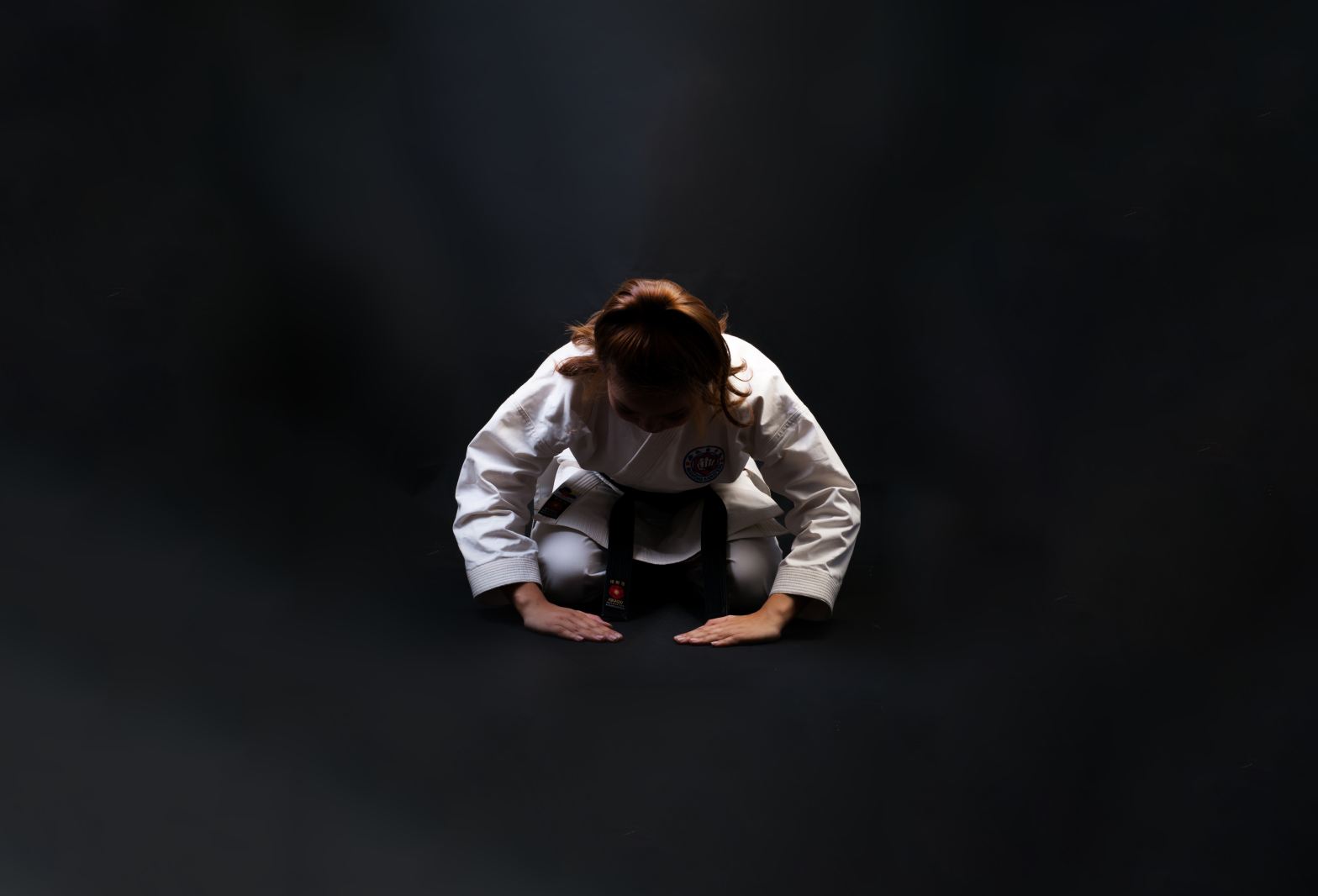
A young boy went to an old teacher to learn martial arts. That teacher was one of the best teachers in the country at that time.

Teacher, can I be the best martial artist in the country if I trained under you?” asked the student.

Certainly …” replies the teacher.

How many years would it take?”

About ten years.

That’s too long. If I practice with you daily, how many years would it take?”

Twenty years.”

If I train with you three times a day on each day, how many years would it take?

Thirty years.

How could it be … If I am training longer, it must be shortened.” the student asked with wonder.

You are watching your final goal with one eye. So, how could you go along your journey with one single eye only?” 

What would you learn from this story? Let me know!

4 Tips for Your Wellbeing

Here you go with four tips to kick off the new decade that has just started:

1. Learn to say no: to assert yourself is first of all to respect your own values and to listen to your own needs. While managing your priorities in your private and professional life you become more productive/a but also more available. The result is that there is little time left for what really matters to you.

2. Have more fun: a healthy lifestyle includes healthy eating and also trying to limit sedentary life. What if we put together the useful and the enjoyable? If you want to move, take a nice walk or go dancing!

3. Smile more often: getting angry or criticising? What a waste of time! Do you know that for every minute of anger you spend energy that you will recover in an hour? Cultivate your happiness by relativizing what happens to you and taking advantage of what life offers. Let’s try with an exercise: write on a piece of paper three positive things that happened to you or that you liked each day. Put the paper in a jar and, when you’re down, pick up one and read it again to remind yourself of pleasant memories. How do you like it?

4. Take advantage of the silence: in a very noisy world that constantly urges us to do things, it is important to disconnect by getting rid of the noisesthat surrounds us. Program some moments of digital detox to take advantage of the silence by walking in the woods, taking a a siesta during the work break or enjoying a meditation session. Everything will be all right!

Let’s Try to Love Ourselves in 2020!

Say stop to resolutions that soon turn into constraints!

To avoid bad habits coming back, don’t set objectives that are too ambitious.

Consider your resolutions as a positive challenge to make your life more enjoyable! It is useless aiming at changing all in once. Use a stop-by-step approach and set a list of priorities among your resolutions.

Start with simple things, like sorting your clothes and choose the ones you have not been using for the last two years (and give them away. This is a good practice according to the Feng shui). Then replace a bad habit with a good one, like drinking more green tea instead of coffee.

Be kind to yourself and indulge yourself from time to time. The goal is not to become more stressed but to love yourself.

Happy 2020!

Understanding Karma

Karma is one of the most known concepts of Buddhism. At the same time, it is also one of the least understood. You may hear speaking about having a good or a bad karma without really knowing what it is about.

What is karma then?

Karma is a Sanskrit word meaning “act” or “action”. According to Buddhism, karma is a cause-and-effect law: to each action corresponds a reaction. For Buddhists karma is part of the natural forces of the universe, such as the gravity force, for instance. According to the principle of karma, all our actions, thoughts and intentions create energy: they are causes that have consequences. If we let go positive energy, we will receive positive energy. At the same way, if you send negative energy to the world, you may get problems and difficulties. Karma is simply an echo of what we do, say and think.

This does not mean that karma takes revenge! Karma does not take revenge when we emit negative waves. However, this is the general Western understanding of karma. We think that it is a kind of punishment from the universe for our bad deeds of the past. But karma does not work that way, it is neither a revenge nor a justice. Karma is reflected energy.

How to live according to karma.

To create a good karma, you have to send positive vibrations to the world. This does not necessarily mean that you have to donate all you savings to an NGO or quit your job to work as a volunteer. It is the small gesture of daily generosity that count, such us giving up your seat on the bus, inviting that friend you have not seen for a while to drink something, or helping a colleague in difficulty.

Do not forget to express gratitude when others take care of you. What matters is to act selflessly, not to expect anything in return. Simply appreciate doing a good deed without a hidden agenda, even if you just keep the door open for your neighbour.

Do you think you spread positive energy?

Senbazuru: How 1000 Origami Cranes Can Let Happiness Unfold

Folding 1000 origami cranes is believed to bring good fortune. Today, this ancient Japanese practice has spread around the world, embodying faith, hope and peace. 

According to an ancient Japanese belief, folding 1000 paper cranes can bring good fortune in your life. According to the legend, the crane may live for a thousand years; each paper crane represents one year in the majestic bird’s life. After you complete 1000 origami cranes, your wish will become truth. The 1000 origami cranes suspended in the air are often made by groups of people who join forces to achieve this goal. This tradition often supports a good cause or a special occasion like a marriage. The latter is popular with the Japanese American community, which assigns meanings to different colours: red is love, white is purity, gold is wealth, green is health, yellow is creativity, blue is loyalty, and purple is spirituality.

The custom has spread all over the world thanks to Sadako Sasaki, who was just two years old when the atomic bomb was dropped on Hiroshima. She developed leukaemia and, inspired by the senbazuru story, began folding cranes – first for her health, then, when she realised that she would not survive, for world peace. She made 644 origami, and her family and classmates completed the task and folded the missing cranes in her honour. To remember Sadako and the other children victims of the nuclear bomb, the Children’s Peace Monument has been built within the Hiroshima’s Peace Memorial Park. Around 10 million paper cranes are sent to the monument from all around the world every year – proof of how Sadako’s message of peace has widely flown, and an example of how one person can make a difference.

Enjoy a Moment of Paper-folding

The beauty of origami is not only a practice. Ultimately, you will make something personal that you can give to someone you care about. Moreover, not only you can share the physical gift of origami, but also you can use the making process to think of your beloved ones.

What do you think about it? Would you try it?

La leggenda di senbazuru, i mille origami a forma di gru

Realizzare mille gru in origami porterebbe fortuna e prosperità. Oggi, questa antica tradizione giapponese si è diffusa in tutto il mondo ed è diventata un simbolo di speranza e di pace.

Secondo una tradizione giapponese, fare mille gru di carta porterebbe fortuna. Secondo la leggenda, la gru è un uccello che vive mille anni. Ogni gru di carta rappresenta perciò un anno della vita di questo uccello. Dopo aver realizzato mille gru d’origami, il tuo desiderio sarà realizzato.

Generalmente questa tradizione è volta a sostenere una buona causa o un matrimonio. Questa cerimonia è molto comune nella comunità giapponese degli Stati Uniti, che attribuisce significati diversi ai colori: il rosso è l’amore, il bianco la purezza, l’oro la ricchezza, il verde la salute, il giallo la creatività, il blu la lealtà e il viola la spiritualità.

Questa tradizione si è diffusa nel mondo grazie a Sadako Sasaki, che aveva solamente due anni quando la bomba atomica colpí Hiroshima. Malata di leucemia, Sadako si ispira alla leggenda delle mille gru e le vuole realizzare in origami. Comincia a formulare dei desideri di guarigione, poi, quando si rende conto che non vivrá a lungo, augura pace al mondo. Lei riuscì a realizzarne solo 644, ma la sua famiglia e i suoi amici finiranno l’opera e piegarono 1000 gru in suo onore. Per commemorare Sadako e le migliaia di bambini vittime di Hiroshima, il Monumento della Pace dei Bambini è stato costruito all’interno del Memorial della Pace di Hiroshima. Ogni anno, circa 10 milioni di gru di carta vengono inviati al Monumento della Pace da tutto il mondo, dando così senso al messaggio di pace di Sadako.

Prova a fare anche tu gli origami

La bellezza dell’origami risiede nel creare noi stessi un oggetto da donare a una persona a noi cara. Questo atto di creazione e di generosità permette di connetterci alle persone che contano per noi.

Che ne pensi, ci proverai?

The Challenges of Communicating Across Cultures

I live and work in an real multicultural environment.

The city where I live is Brussels that hosts about 150 different nationalities. The place I work with is the European Commission where all the 28 European Union nationalities are represented.

Sometimes it is difficult to communicate to each other, as you have to pay much attention to other’s sensitivity, emotions and feelings.

Day after day, I learned that each culture has their own approach to communication. 

I found a very interesting the book of the anthropologist Edward HallBeyond Culture. He identified the importance of context in communication and raised the attention on the “invisible” type of communication, by which groups of people understand and interpret the world.

The framework proposed by Hall for approaching intercultural communication is high-context and low-context cultures, which refer to the values cultures place on indirect and direct communication.

It is important to note that no culture is completely high-context or low-context, since all societies contain at least some parts that are both high and low. For example, the United States is a low-context culture while doing business, but during family gatherings tend to be high-context.

Let us see now the main features of the two cultural types.

High-Context Cultures

A high-context culture relies on implicit communication and nonverbal cues. In high-context communication, a message cannot be understood without a great deal of background information. Asian, African, Arab, central European and Latin American cultures are generally considered to be high-context cultures.

With people belonging mainly to high-context cultures, you may encounter the following:

  1. Misunderstanding when exchanging information
  2. Impression of a lack of information
  3. Large amount of information is provided in a non-verbal manner, e.g. gestures, pauses, facial expressions
  4. Emphasis on long term relationships and loyalty
  5. Unwritten rules that are taken for granted but can easily be missed. 

Low-Context Cultures

A low-context culture relies on explicit communication. In low-context communication, more of the information in a message is spelled out and defined. Cultures like the Germans, Scandinavians, Americans and Australians are generally considered to be low-context cultures.

Dealing with people belonging mainly to low-context cultures, you may find the following:

  1. All meaning is explicitly provided in the message itself
  2. Extensive background information and explanations are provided verbally to avoid misunderstandings
  3. People tend to have short-term relationships
  4. People follow rules and standards closely.

To avoid “diplomatic incidents”, I try to pay much attention to my interlocutor languages and “imitate” them using the technique of the mirror, namely, repeating the body language, the type of words they use, how they overall handle the conversation.

What about you? Which culture do you think you belong to? Which technique do you use to better communicate across cultures?