Why Saying No To Temptations

How can you resist the temptation to drink a good glass of wine, eat a piece of cake or skip the gym and go to the cinema instead?

“The only way to get rid of temptation is to yield to it” said Oscar Wilde.

Diet, sport, sleeping enough are fine, but sometimes indulging in the breach of the rule helps your psycho-physical well-being and eases the performance anxiety that often accompanies a healthy lifestyle.

However, in addition to giving in to temptations, we can learn to control them.

Have you ever heard of the “Marshmallow test“?

The “Marshmallow test” is a curious experiment, carried out by Professor Walter Mischel in the sixties at Stanford University.

yummy marshmallows heaped on white table
Photo by Arina Krasnikova on Pexels.com

A child is left alone in a room in front of a Marshmallow: they can choose whether to eat it immediately or wait 15 minutes and get two as a reward. Some children will know how to wait; others, unable to resist, will throw themselves on that inviting sugar candy.

The professor compared throughout the years the self-control skills shown by children with the successes achieved in their adult age and found out that those who did not eat the marshmallow achieved more goals in life.

Is self-control therefore the secret of success? Is it postponing rewards really more likely to bring success in life?

The Mischel experiment actually explains how self-control is fundamental in studying, in sport, at work and in many other circumstances of your life.

Self-control means knowing how to make decisions in the right time and in the right place to improve your skills to not yield to the temptation of a marshmallow.

People who are best at mastering their decision-making are generally people who are better off. They eat well, play sports, get enough sleep. These people structure their lives around good habits and build routines that are easy to follow.

Good news are that you can learn new habits.

Eating a piece of pie is not a moral failure, even if you have decided to go on a diet. Giving up on the piece of cake may cause you more stress and therefore cause you more harm than eating it. The trick is rather to avoid buying a cake or passing in front of a cake! But don’t feel guilty if you eat a slice. Don’t forget that an excess of willpower can also be more harmful because, as mentioned before, it can cause additional stress.

Self-control depends on your choices and it is your responsibility. Stress has become a personal burden, which you are called to manage alone with the help of techniques, like meditation, coaching, yoga.

Remember that it is important to recognize your own limits because it makes you become aware of the fact that you cannot be perfect and control everything.

Do you think that you can learn how you can control yourself?

assorted colorful lollipops on pink background
Photo by Karolina Grabowska on Pexels.com

Why Cultivating a Garden or a Vegetable Garden Is Good for Your Health

Plants improve the air we breathe and can be a place to grow vegetables. Therefore, green spaces have been increasing recently in urban spaces thanks to the creation of rooftop gardens.

For those who live in the city, the importance of having a green space close to home has become necessary during the lockdown due to Covid. From London to New York, parks and public gardens have always offered a precious refuge in the asphalt jungle of the streets, shops and offices that make up the typical urban landscape. But apart from these oases of peace, there is not much room left to become “greener”, which is why we are witnessing the development of rooftop gardens.

From improving physical and mental health to bringing communities closer passing by fighting pollution, the creation of green spaces at the top of the buildings can be truly seductive.

low angle photo of four high rise curtain wall buildings under white clouds and blue sky
Photo by Philipp Birmes on Pexels.com

Here are some benefits you can get from growing a rooftop garden.

They help purify the air

All cities in the world face the same challenge: maintaining quality of life despite the high pollution rate and rising CO2 concentrations. For this reason, planting trees or shrubs on the roofs can be useful to exchange carbon dioxide for pure oxygen. In addition, roof gardens can also improve the insulation of the building, reducing heat loss in winter and maintaining a cooler temperature in summer. In this way, besides making a gift of oxygen to the environment, you will lower the consumption of electricity and heating, paying less expensive bills.

They offer shelter to wildlife

Loss of natural habitat is a threat to wild animals in general.

A roof garden can quickly become a refuge for bees, butterflies and birds, where they can rest and nest, thus keeping the pollination cycle active, which is essential for human nutrition.

They allow you to grow your own vegetables

Tomatoes, courgettes, peas and strawberries, all organic. The fact of sowing and growing your own vegetables is an incredibly rewarding activity that allows you not only to save money but also to eat healthier.

They inspire engaging actions for communities

Why not thinking about involving the primary school close to home by inviting children to discover your garden or vegetable garden? You will be surprised to see the enthusiasm of the little boys and girls. Gardening is a real contribution to integration into the local community. Where I live in Brussels there is an association called Parck Farm that has taken over a greenhouse and created a botanical garden. In addition, it offers small plots of land to cultivate. We share the land together with Belgians of several origins, Poles, Portuguese, … The association also offers the possibility of organising team building activities there. Participants can help members of associations to remove weeds, collect garden products, prepare the soil for winter. Educational activities for boys and girls are regularly scheduled to make them discover the wonders of flowers and plants. Workshops for the preparation of creams and syrups are other events organized by the association to promote integration among the inhabitants of the neighbourhood.

They improve physical and mental health

We all know that spending time in nature revitalises the body, spirit and soul. This practice is known as shinrin-yoku (forest bath) in Japan and has been validated by scientific research. In 2019, a study revealed that spending at least 120 minutes a week (the equivalent of about 17 minutes a day) in nature can have a significant impact on our health and general well-being. Other research has established a link between regularly visiting green spaces, improving sleep and decreasing negative thoughts.

Do you think that those benefits are a good reason to launch yourself into the cultivation of a green space?

a couple in a vegetable garden
Photo by Kampus Production on Pexels.com

Listening to Your Body with Qi Gong

Qi Gong is an ancestral discipline born in China about 5000 years ago. It has been influenced by various philosophies, such as Taoism, Buddhism and Confucianism.

After having developed within religious and spiritual fields, Qi Gong has been contaminated by fighting techniques becoming in this way also part of martial arts.

photo a man and woman doing martial arts
Photo by Craig Adderley on Pexels.com

Today, more than a thousand forms of Qi Gong are known. Actually, each teacher develops his own technique observing though the same principles and purposes: to stay healthy by keeping the body, spirit and energy in balance.

According to Chinese medicine, good health is the result of a good circulation of energy in the body. Qi Gong is considered a prevention measure.

The search for balance, the precision of intention (Yi), the fluidity of gestures represent not only a path towards self-knowledge but also the pleasure of encountering oneself. With Qi Gong, we learn to love ourselves, to open up to the universe, to live in harmony with everything around us.

In the search for balance, you will experience moments when you focus and moments when you rest. Feeling too much or what is missing, for example when you go from one foot to the other, allows you to become aware of your own fragility. When, on the other hand, you stand on two feet, well anchored to the ground, you feel then balanced, and stronger.

Working on balance brings a feeling of lightness and freedom, without forgetting that through the movements and stimulation of the meridians (energy circulation paths), organic functions improve (circulation, digestion, breathing).

The body is at the centre of the relationship with oneself, with others and with the environment. Body awareness passes through listening to your body at first, by observing muscle tone, tensions, balance, posture and the direction of movements.

Qi Gong can be considered above all as a search for energy balance and harmony between body and spirit. By paying attention to the gestures, we realize that our way of thinking also changes and we get a more peaceful look at the world.

Have you heard about Qi Gong before? What do you think about it?

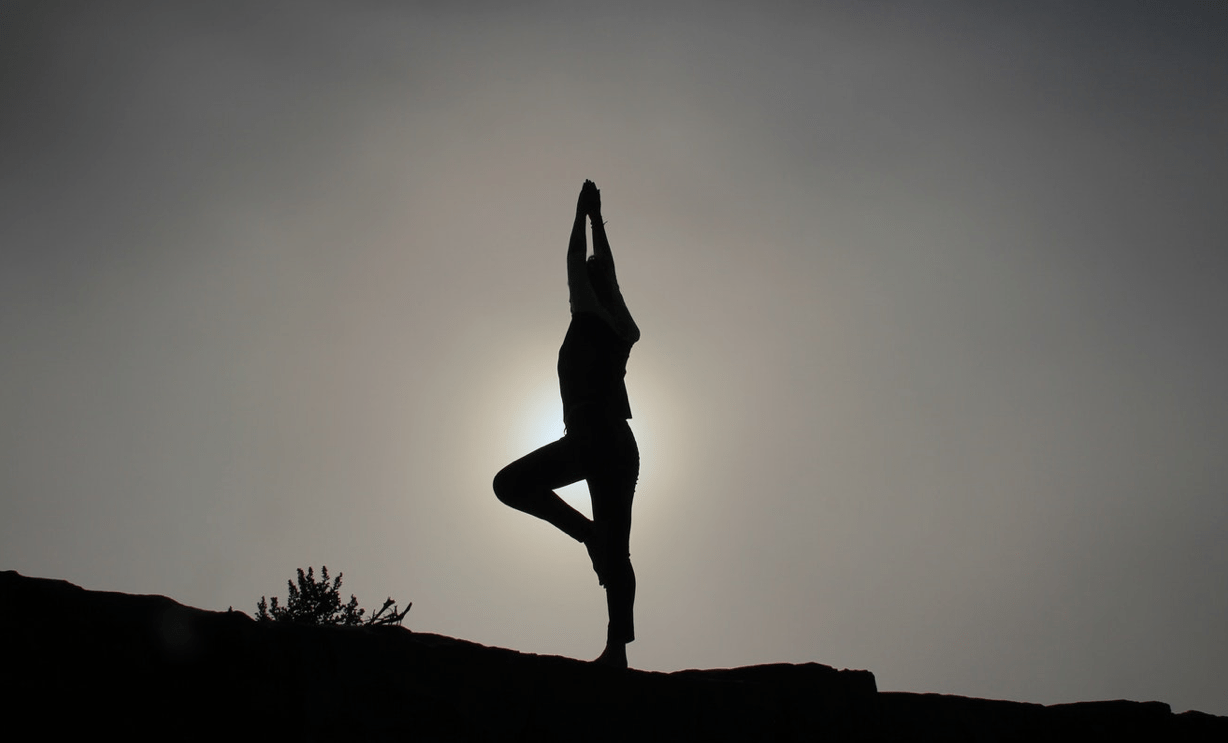
silhouette of person raising its hand
Photo by Pixabay on Pexels.com

How to Improve the Quality of Your Life with Relaxation Techniques

As you may know relaxation techniques are simple practices you can do to help yourself calm down, cope with stressful situations, and relieve stress. The warning signs are out there: headaches, stomach knots, and racing thoughts. They are all signalling you to take action. The good news is that you can. The resources are here. They can also help you fall asleep, and go to sleep (or back to sleep) faster. 

Try out the different tips and techniques listed here and see what works best for you.

1. One Hour to Let Go

This technique allows you to finish your daily tasks and help you get ready for sleep an hour before bedtime. This exercise is done in three 20-minute sessions.

  • In the first 20 minutes, take care of any simple tasks, for instance preparing the dishwasher or feeding your cat.
  • In the second 20 minutes, do some relaxing activities like talking with family members, doing an additional relaxation technique, or thanking for three things that have happened in your day. Avoid scrolling on your phone though, as the blue light on your screen can inhibit your natural melatonin production and make it harder for you to fall asleep.
  • In the last 20 minutes, take care of your personal hygiene. Take a warm bath or shower.

Creating consistent and healthy rituals is really a good way to getting a good night’s sleep each night.

2. Guided Visualisation

Guided Visualisation uses your imagination to engage your senses. This simple exercise can be done on your own, or with the help of a therapist or a guided imagery practitioner. Here are some questions you can ask yourself:

  • What can you see? Look close and far, colours, shapes, and light.
  • What can you hear? Hear as many sounds as you can and keep looking for new ones, don’t focus on anyone for too long.
  • What can you taste? This is less fun as you are not eating, but try to imagine yourself eating something you love.
  • What can you smell? Focus on the smells around you – what are they and how many can you find?
  • What can you feel? Send your attention to the parts of your body that have contact with something, like the floor or a chair or table.

Through this technique, you can connect your conscious mind to your unconscious mind and help direct your body and brain towards a desired goal response. Guided imagery helps you relieve stress, reduce feelings of anxiety, and encourage healthy sleep.

fashion people woman relaxation
Photo by PNW Production on Pexels.com

3. Self-Hypnosis. If you are only familiar with hypnosis that you might have seen on films, forget about it. Hypnosis is a state of consciousness where someone is intensely focused on an idea, which can make their brain more receptive to new thoughts or ideas. If you want to try it, there are apps or tutorials on YouTube available.

4. Breathing Exercises

You probably know that a deep breath can help you stabilize your breath when you are anxious or worry about something deeply. A breathing exercise can help encourage relaxation, reduce muscle tension, and even lower your heart rate and blood pressure. Repeat this as many times as you need. By practising deep breathing, you reproduce your breathing patterns as you fall asleep. In doing so, you encourage your body to enter that state of restfulness and get itself ready for sleep.

5. Progressive Relaxation

This technique allows you to become more familiar with your body and any of the places you may be holding onto stress or tension.

Progressive relaxation involves working with your body in different areas and each muscle group, first by tensing the muscles and then relaxing them. Usually you start with your feet and go your way up to the top of the head. In this way you will be aware of how the parts of your body feel when they are tense, as well as when they are relaxed. You can use this technique to address any tension or stress you may have.

6. Yoga Nidra

Yoga Nidra is also known as yogic sleep. It helps the body relax while the mind is alert and awake. The goal is to guide yourself through the main four stages of brain wave activity— beta, alpha, theta, and delta— and achieve a state of being between wakefulness and sleep.

To practice Yoga Nidra, all you need is a comfortable place to lie down. Begin then by lying face-up and set an intention for that session, for example stress relief or relaxation. Watch your body and notice any tension or sensations you feel. You can always find apps or tutorial on the Internet to guide you through this practice.

One study has shown that Yoga Nidra can be a very effective supplemental treatment for insomnia. In participants practicing Yoga Nidra, regular participation improved their sleep quality and reduced their insomnia severity, anxiety symptoms and their stress levels. This improvement even continued 3 months after they began practising.

Remember not to practice any of these relaxation techniques while operating machinery, driving a car, or doing anything that requires your full attention.

Have you ever heard of any of these techniques before?

photo of woman laying on ground
Photo by Natalie on Pexels.com

Why You Are the Words You Use

The words you use can change your reality. Language actually generates changes in your brains and changes your perception of the environment around you.

Language is linked to emotions. Your words are constantly sending messages to your brain. According to neuroscientists Andrew Newberg and Mark Robert Waldman, negative words cause the increase of cortisol, the stress hormone. Therefore, adopting a negative attitude and using phrases like “I cannot do it”, “I will fail” or “it is impossible” could weaken your personal physical and mental health.

Nowadays, many techniques associated with changing the language to treat various psychological disorders are used. An example of this is the cognitive-behavioural therapy, which demonstrate that promoting positive thinking through the language used by the patient improves their mental state.

This therapy aims to replace patients’ negative views about themselves and their surroundings with more positive ones. The applied techniques have proven to be an effective treatment for disorders such as depression, phobias, addictions or anxiety, as the activity of the brain amygdala increases when you perceive a more prosperous future through positive words. On many occasions, these therapies have proven to be as effective as medicines.

Research has shown that the brain improves when you start using three to five positive expressions for each one negative. Language has a powerful ability to change your world. It affects you negatively when you use a poor, defeatist language but it also works the other way around, namely, when you use positive phrases they will help you change your perception of the world.

person doing thumbs up
Photo by Donald Tong on Pexels.com

Start adopting a series of simple but very effective techniques. For example, use “yet” instead of using only “not”. Saying “I cannot do it” is not the same as saying “I cannot do it yet“. “Yet” leaves the doors open, arouses hope, evokes motivation.

You should not use “but” or, at least, you should build your phrases differently. “But” does not have the same effect when you say, “You did a good job, but you gave it to me late” compared to when you say, “You gave it to me late, but you did a good job.”

Tenses also give you a great opportunity to change your emotions. Instead of using the conditional, try using the future. You change a hypothetical scenario for a true one. It is not the same as saying: “When I write a book, I would speak of happiness” rather than “When I write a book, I will speak of happiness”. Doubt lives in the conditional, certainty in the future.

At the same time, you should avoid words like failure, problem, impossible or guilt in your language and replace them by more inspiring words like challenge or responsibility. The latter not only pushes you to grow and open more doors, but also makes you interact better with others.

Words are not harmless. They can build or tear down walls. By changing your language, you will improve your image, as language is a way to reach others. Remember that the words you use also improve the environment around you.

What do you think about the language you use with others?

key with trinket in shabby door
Photo by Andrea Piacquadio on Pexels.com

Happy Ferragosto to All!

Do you know that today in Italy, and in some other Catholic countries, the 15 August is a holiday?

We call it Ferragosto. Today it is a religious day when the Catholics celebrate the Assumption of the Virgin Mary into Heaven (the Assumption Day).

However, the most famous Italian summer day derives from the Roman day called Feriae Augusti (rest of Augustus), established by the emperor Augustus in 18 BC. to grant a period of rest and celebrations to the Consalia, the end of agricultural work. The days of the Feriae Augusti were used precisely to recover from the work on the fields, and to celebrate the harvest.

It is typical in Italy to spend this day by taking a picnic, at the seaside or in the mountains, with your family and friends.

It is a very happy day for us, even though sometimes, despite August is traditionally the hottest month of summer, some thunderstorms may happen.

Whatever the weather will be, it is going to be a great day!

crop unrecognizable woman serving delicious snacks on plaid for picnic
Photo by Rachel Claire on Pexels.com

Why Sleeping Less than 6 Hours Is Not Good for Your Health

A few days ago, I came across an article on the Internet that recommended sleeping three consecutive hours and then taking three 20-minute naps throughout the day. This sleeping pattern was indicated as a model for obtaining success inspired by great world managers or businessmen, in particular they referred to Elon Musk. 

As a person who has trouble with sleeping, I can tell you that science warns that too little sleep affects cognitive performance, behaviour and metabolism. With this strategy, you may be successful at the price of your health.

Sleeping is also productive. To get enough energy and focus to devote to work or another productive activity such as studying, you need to sleep at least 7 and half hours.  

person in beige long sleeve shirt using macbook pro
Photo by cottonbro on Pexels.com

One of the functions of sleep is to process and consolidate learning, focus and memory. Sleeping implies continuing to work, because the brain clears up the bombing of information accumulated during the day that is generally very intense due to the different sources available today. Our biology is prepared for short periods of sleeplessness in stressful or urgent situations.  

Several studies have revealed that the habit of dedicating a few hours to sleep reduces cognitive performance, causes focusing deficit and loss of the ability to make decisions, as well as increases states of stress, anxiety and depression. Humans are ‘circadian animals’, programmed for 24-hour sleep-wake cycles. Sleeping for a few hours is a physiological assault on our body and, in particular, on the brain. If sleeping little is your choice, know that this alters the neuron-hormonal pattern which can cause:

1. emotional problems;

2. difficulty in acquiring new learning;

3. problems in storing new information;

4. increased nervousness and anxiety.  

Thinking that sleeping is a waste of time is wrong because it has health consequences. Sleepiness and loss of focus are evident the next day, while other problems could arise in the long term, such as an increased risk of cancer, cardiovascular disease, hypertension, neurodegenerative disorders and metabolic disorders. Actually, sleeping for short time also increases appetite, with obvious consequences on your weight. Lack of sleep, in fact, leads to have frequent snack and drink sugary or caffeinated beverages.  

Another important question is whether these negative health effects also occur when you wake up very early. Studies show that getting up too early does not necessarily cause alterations, as long as your sleep has been restorative enough. Remember that it is very important to complete five or six sleeping cycles every night (a sleep cycle lasts an average of 90 minutes).

What about you? Do you sleep enough to be productive?

back to school flatlay
Photo by olia danilevich on Pexels.com


How and Why Yoga Helps You Maintain Physical and Mental Balance

Over the last few years, a very old practice has become the subject of scientific studies: yoga. Positive effects on the brain have begun to be measured, such as anti-stress and anti-depressant effects.

The studies began thanks to the spectacular spread of yoga. Millions of people practice yoga regularly. Positions (asanas) such as the warrior or the cobra are increasingly known among different people and age group. The reasons are mainly that persons want to learn how to relax, how to get rid of several kinds of pain (back, neck, shoulders, etc.) manage stress, and maintain good physical shape.

Traditional yoga (from the Sanskrit “yuga” which means “union”) comes from India and is a discipline more than five thousand years old. An important source of this spiritual school, which should guide us towards the divine, is a writing by Patañjali: Yoga Sutra, which contains the essential foundations of the discipline.

According to this essay, the purpose of yoga is to attain a higher form of self-knowledge, which can be achieved with inner contemplation. In addition to specific physical exercises, and breathing techniques, traditional yoga also includes meditation, a vegetarian diet and an entire philosophy of life. The modern and western form of yoga omits many of these elements. The development of strength and plasticity, meditation and breathing exercises play the most important role today.

At the beginning of the twentieth century, a small group of Indian yoga teachers began to spread the teachings of yoga in the Western world. After the explosion of fitness in the 1980s, which focused above all on the cult of the body, the spiritual part has been lost a little. Therefore, in the Western world mainly hatha yoga began to spread.

Photo by Mor Shani on Unsplash

The effects of hatha yoga on health are: improving body consciousness and coordination, strengthening muscles and enhancing blood circulation. Moreover, yoga is also beneficial to stress management.

From experience, I can say that after a yoga session I feel relaxed and rested. It takes longer to reach a similar state with meditation, while hatha yoga produces effects immediately, probably thanks to the more marked physical component. It is actually proved that physical exercise is good for your spirit. Perhaps, this is why yoga is a fast-acting cure-all, as it associates physical exercise with meditative practice.

In fact, by associating postures (asanas) with breathing (pranayama), we act on the body by relaxing the muscles, and on the spirit because the sympathetic nervous system (the nervous system that is stimulated when we rest or sleep) is activated.

Yoga allows you to find calm despite the limits imposed by everyday life. With regular practice, even 5 minutes a day is enough, you will sleep better, your self-confidence will increase, as well as your ability to make decisions and manage stress.

Considering all those positive aspects, are you planning to start practising yoga?

balance blur boulder close up
Photo by Pixabay on Pexels.com

How and Why You Should Learn to Forget

Letting go of the burden of the past is important to your happiness.

Many people live in the past; they remember what they were, the love stories that did not go well, their failures and disappointments.

Such a burden takes away space and energy from the present, which is actually the only time you can live actively.

I read somewhere that happiness consists in enjoying good health and having a bad memory.

Actually, you should learn to let go of the past, forget about the insults received, the bad events and the mistakes, in short, all the bad memories, and learn to focus more on the present.

Photo by Ian Dooley on Unsplash

Here are some tips you could follow.

  1. The best antidote to guilt, resentment, or anger that takes you back to the past is to devote energy to building the life you want.
  2. Stop playing the victim and become an active protagonist of your life
  3. Your memories change while time passes by, they may distort, and they do not really reflect what happened. Try asking a person who shared an event with you to tell you about their memory and then compare it with your memory. You will see that you and that person remember different aspects of the same fact.
  4. Prioritize your well-being. Life is too short to spend arguing and complaining. What happened could be a source of stress and even discomfort. Continuing to feel anger at a past event drains up your energy. It is more important for your physical and mental health to live quietly than to be right at all costs.

The past, however, also brings with it good memories and lessons learned, which shape your personality.

Have a look at what Buddhism teaches: “Joy and happiness arise from letting go. Sit down and take an inventory of your life. There are things you have been hanging on to that really are not useful and deprive you of your freedom. Find the courage to let them go.”  

What about you? Would you find the courage to let go of your past?

accomplishment action adventure challenge
Photo by Pixabay on Pexels.com

How and Why You Should Listen to Your Body

In our times, we receive information from many sources: emails, social networks, television, people we know and colleagues. Our mind is over-stimulated for the duration of the day and this can cause stress and anxiety, which can also cause a real burn-out.

The excessive exposure to those information is detrimental to the activity of our body which is relegated to a mere container of organs that allow us to move (even if sometimes less than what we should).

Too many hours spent in front of the screen (mobile phone, computer or television) do not allow the body to tone up and therefore regenerate. During the pandemic, it has become even worse, because of the restrictions imposed to avoid the spreading of the virus. We could go out less often, or not at all.

Furthermore, it can happen that we ignore the pain from the body by using analgesics or other types of medicines to avoid feeling sick.

crop patient taking pill from table
Photo by Artem Podrez on Pexels.com

If you do this, know that you are waging war to yourself, because silencing your body will not help you solve the problem.

Our body is sending us important signals that we will need to start considering. By continuing to ignore the messages it sends us, there may come a time when the pain becomes unbearable and it might be too late.

As soon as you hear a strange noise coming from your car, you take it to the mechanic before it breaks down. The same thing you should do with your body.

For example, if you experience often back pain, it means that you need to change your position, adopt a more adequate posture, maybe change chairs or just go for a walk.

Try to think that pain is actually your ally because it wants to tell you that there is something wrong with you and which you should take care of.

Let’s see four techniques that you can use every day to learn listening to your body.

Mental scanner. This is a mindfulness technique that involves mentally scanning of your body from the top of your head to the bottom of your toes to check if each part is healthy.

Daily walks. This is the best way to get up of your chair. Usually all mobile phones have an app to calculate steps. I signed up for a monthly “race” with colleagues to take at least 6,000 steps a day. At the end of the race, there will be an award for the walker who has taken the most steps. Run a race with your friends or colleagues too!

Feeding your body and mind. The Japanese eat up to 80% of their hunger in order not to get heavy (this is a principle of Ikigai). Therefore, eat less but eat healthy, and sleep at least six hours a night so that your body and mind can do a complete “reset”.

Respect the messenger. Instead of taking medicines at the first symptom of discomfort or pain, try listening to your body, what it is communicating to you. Think that your body needs to be considered and looked after. Don’t wait for your body to ask you for help when you are in extreme pain, as remember that it might be too late.

When you don’t feel well, what do you do? Do you listen to your body or you take medications?

namaste sign on wall
Photo by Mikhail Nilov on Pexels.com