Sleeping Well Is One of The Secrets for Your Well-being

Sleeping well is one of the secrets for your well-being that has been confirmed by science several times.
Find out what a good night’s sleep can bring in terms of well-being.

In the past people would go to bed at sunset and get up at sunrise. Our ancestors had no alarm clocks, they did not have neither a schedule to stick to, nor morning meetings to participate in. Their sleep rhythm was simply based on the natural day/night cycle, basically on the light.

Maintaining a healthy and regular sleep pattern is one of the (many) challenges of modern life. With our busy schedules, long working hours and smartphones always on, it may happen that we don’t get enough sleep.

Yet even though we all have a schedule to stick to, cutting back on your sleep hours is never a good idea. Sleep really has fabulous benefits, and getting enough sleep is vitally important for your overall health and well-being. Sleeping well doesn’t just serve to look good: it keeps you healthy.

Discover six benefits of sleep for your happiness and health.

1. Sleep makes you look good

Sleep is perhaps the closest thing to a fountain of youth. During deep sleep, the brain secretes a growth hormone responsible for cell renewal and repair of damaged tissue. This growth hormone is only released at night and can work miracles for your skin. The skin cells themselves go into repair mode when you sleep. Their metabolism accelerates and they regenerate faster than at any other time of the day.

In addition to these freshly renewed and healthy cells, sleep also has the effect of increasing blood flow to your skin, which is why your cheeks are warm and pink when you sleep. Lack of sleep can make the skin dull or chalky.

Thanks to a good night’s sleep you will look naturally throughout the following day.

2. Sleep strengthens the immune system

Researchers are only confirming what your mom has always told you: when you’re sick, the best thing to do is stay in bed and sleep as much as possible. Sleep helps fight the flu and other similar conditions, because the body produces disease-fighting proteins called cytokines when you sleep. If you’re sick often, maybe you’re not getting enough sleep. To strengthen your immune defences, try going to bed earlier or napping during the day.

3. Sleep helps solve problems

When faced with a dilemma, a good night’s sleep can help make the right decision. Researchers have observed that sleep helps solve problems creatively, because it provides access to the mass of knowledge and memories stored in your brain. At rest, your brain looks for associations that are not obvious when you are awake. This makes it possible to imagine creative solutions to solve the most difficult problems using information you didn’t even know you had. 

stress handwritten text on white printer paper
Photo by Pedro Figueras on Pexels.com
4. Sleep reduces stress

Sleep and stress are back-feeding. Stress can cause a lack of sleep and lack of sleep can generate stress. It’s a vicious circle that can be hard to get out of. But by managing your sleep well, you learn to fight stress too. Better quality sleep helps your body and mind recover, but you’ll also be less sensitive to stress if you’ve slept well. All challenges are easier to face after at least 6 hours of good sleep!

5. Sleep helps to lose weight

If you’re looking to get back on your ideal weight, a good nap can be as effective as a workout. A study published by the American Journal of Clinical Nutrition claims that people who sleep well burn more calories during the day than people who don’t get enough sleep. According to researchers at the University of Chicago, sleep promotes weight loss, and another study in the journal Obesity shows that tired people tend to consume more caloric foods.  

6. Sleep is good for your social relationships

Sleeping well is not only good for your physical and mental well-being, it is also a way to keep healthy relationships. Lack of sleep makes us more irritable, less patient, and with less energy to devote to others. It also impacts our capacity for empathy, and prevents us from being sensitive to the emotions of our loved ones. In short, we are much more pleasant for others when we are well rested. A nap may not solve all your relationship problems, but sometimes all that’s missing is a few hours of sleep.

What do you think about your sleeping pattern? Do you sleep longer enough to be healthy?

alone bed bedroom blur
Sleeping – Photo by Pixabay on Pexels.com

Working Four Days a Week

In Iceland they carried out an experiment. From 2015 to 2019, 2,500 people (equal to 1% of the inhabitants) participated in a very ambitious project: to reduce working time without reducing wages. Public sector employees, with different profiles and working in different sectors (schools, hospitals, social and administrative services), worked 4 days a week following their working hours, not necessarily during the day.

Objective

Analyse positive changes in professional and personal life.

How it was achieved

Communication mainly via emails, reduced time of breaks and daily activities redistributed in order to optimize the available time.

Results

The results speak for themselves. In 4 years, participants’ productivity and well-being have increased, while stress and risk of burn-out has decreased considerably.

The results show that the 2,500 workers involved used their free time to recover their energy, to spend more time with their families, or to practise their hobbies. This has led unions to renegotiate employment contracts and now 86% of Icelandic employees have chosen to work less for the same salary.

Benefits

A marked improvement in the quality of life has been noticed. In fact, it is often the work environment that increases states of anxiety and malaise.

This research could be replicated in the UK, because, according to a survey, 63% of the population would be in favour. In addition, 45 deputies voted a motion to ask the government to study this proposal.

Would you like to work 4 days a week? I think this is an inspiring model to be exported without hesitation!

person holding white stylus
Working Week – Photo by Jess Bailey Designs on Pexels.com

How to Find Happiness

We all seek happiness because we think that when we are happy, we have everything. When joy fills our souls, life lights up, our hearts open up and our hands stretch out. On the contrary, when our soul is darkened, when sadness pervades our lives, everything becomes more difficult. Where and how to find happiness?

Where to find happiness

We often seek happiness outside of ourselves. Of course, the joy that comes from the outside brings us joy as well. Dinner with friends, a successful exam, a new experience…

Unfortunately, these are ephemeral moments that will not last long. It would be good for you if you can remember them with nostalgia.

However, there is also a type of joy that does not depend on external events, it does not have elements that have triggered it, in short, it does not depend on anything.

It can be said that this is a free happiness, as Jean Klein defined it, namely a form of joy without object. To quote some of his words: “spontaneous state of interior silence that we can open ourselves to our true nature: the ‘I Am’ of pure consciousness.”  

It is a joy without object because it does not come from the world, it has another origin. This happiness comes from pure existence, from our being in the here and now.

How to find happiness

We knew this joy very well when we were children. Then, slowly, growing up, we miss it.

Sometimes it returns when we do not have worries, we are particularly relaxed and in a good mood.

But if you can transcend everyday life, stay silent and focus on your breathing even for a few minutes, you find yourself and the essence of life in the here and now.

Among the positive affirmations, you can find the affirmation “I am” that does not mean identifying with oneself as a person with name, surname, date of birth, etc.

Transcending yourself means stripping yourself of your individual identity so that you can quickly experience the happiness of your pure being.

Where and how do you find happiness?

underwater photography of clear water
Pure Water – Photo by Tyler Lastovich on Pexels.com

How to Deal with Eco-anxiety

Eco-anxiety or climate anxiety can be defined as the stress that some people feel due to environmental events even though they have not had to deal with them (yet).

Melting glaciers, fires that more and more often happen worldwide, unbelievable heat waves, just to mention some major events, could really cause eco-anxiety.

The dire effects of climate change are hard to miss, and they instil fear in many people who are worried about the future of the Earth and obviously of the human kind.

If these fears sound familiar to you, you are not the only one.

A recent survey, conducted by The Harris Poll on behalf of the American Psychological Association (APA), found that over two-thirds of respondents suffer at least some “eco-anxiety” and more than a quarter perceive stress.

Respondents between the ages of 18 and 34, who are likely thinking about what the meaning to inherit the Earth on the brink of environmental collapse, were more likely to say they were concerned about climate change, and actually nearly half said the anxiety affects their life every day.

The online survey, which involved 2,017 adults in the United States, covered ecological anxiety and changing habits to reduce the impact on the climate.

The survey results were weighted to reflect the national adult population, taking into account factors such as age, sex, education, region, family income, and ethnicity. 60% of respondents said they had made changes to their behaviour.

The most popular, adopted by over three-quarters of participants, included reducing waste through reuse and recycling of items. In addition to improving the insulation of your home, limiting the use of services such as water, heat and electricity and consuming less in general.

Not all respondents, however, could change daily transport or eating habits. Only two-thirds said they had or would do things like carpool, walk, cycle, eat less red meat, or become vegetarians or vegans.

People who suffered from ecological anxiety were much more likely to feel motivated to change their behaviour than those who didn’t.

While climate change anxiety may seem demoralizing, there are practical ways to manage this stress. It is especially important to gain control because anxiety can increase psychological distress.

woman sitting on wooden planks
Photo by Keenan Constance on Pexels.com

Here are 4 tips on how to deal with eco-anxiety:

Finding concrete ways to make a difference

The APA survey found out that half of adults did not know where to start to combat climate change. While it is true that governments and the private sector have the power to make the most radical changes, every citizen can change their habits. Eating less red meat, for example, can reduce carbon emissions. Participating in strikes and protests, such as those held by Greta Thunberg’s Fridays for Future, draws attention to the issue and helps get others to act. Asking local politicians to do more on climate change is also a good rule of thumb.

Re-framing negative thoughts

Overall, research shows that re-framing negative thoughts can help relieve stress, anxiety, and depression. If apocalyptic thoughts keep creeping into your mind, or even prevent you from making plans, it can be helpful to focus your attention on the present.

Addressing all the stressors

It is important to think about climate change-related stress as part of overall mental health. You may also experience financial, relationship, professional or physical stress, which can alter feelings about climate change and vice versa. It is essential to analyse the other stressors as well and, if necessary, seek the help of a professional, like a coach or a psychologist.

Building your resilience

Greater resilience can help resist eco-anxiety. You could increase your resilience by developing a close network of friends and family. Strong social and emotional support is linked to well-being, material aid during times of adversity, and lower rates of psychological distress following a disaster.

Do you think you suffer from eco-anxiety?

art abstract typography business
Photo by Ann H on Pexels.com

Why Physical Activity Is Essential to Your Health

During the lock-down, the gym clubs have been closed (at least in Europe) and not all of us were able or willing to workout in our homes, perhaps following a video on YouTube. However, to prevent not only weight gain but also stress and anxiety from increasing, it is essential to exercise regularly.

Rhythmic physical activity (dancing, walking, cycling) alone is not enough, you need to maintain muscle mass which with ageing will be decreasing.

Maintaining muscle mass is particularly important in the case of a diet. In fact, thanks to a well developed muscle mass, you can avoid regaining fat and stabilize your weight. To do that, you should eat protein, do some resistance training, increase your Omega 3 intake, and check out your vitamin D levels.

In addition, there are at least 12 other benefits of moderate and regular physical activity. Let us see them.

1. More physical, mental and emotional well-being.

2. Reduce hunger.

3. Improve “bad” cholesterol and reduces triglycerides.

4. Decrease the risk of cardiovascular diseases.

5. Decrease resting heart rate.

6. Reduce abdominal fat.

7. Improve sleep quality.

8. Reduce the time to fall asleep.

Change your habits! Run, cycle, walk in the nature but also in the city, take a yoga or Pilates class even online or take a sports coach. You will see that you will soon get back your shape and motivation!

Are you willing to start or restart going to the gym?

photo of woman doing yoga
Photo by Li Sun on Pexels.com

How to Face Autumn in Perfect Shape

As trees are losing their leaves in the fall, we are losing our hair.

A plant that slows down hair loss is nettle. Re-mineralizing thanks to the silicon it contains, rich in iron, vitamin B and other minerals, nettle helps in the prevention of anaemia, slightly drains the kidneys and strengthens hair, nails and skin.

Using it in powder or capsules for the duration of autumn, you will find yourself with more voluminous hair, stronger nails and new radiance of your skin.

autumn autumn leaves branch bright
Photo by Pixabay on Pexels.com

During the autumn, the days get shorter and you may lack some motivation.

You can try rhodiola. It will help you adapt to the different types of stress you experience. It is a plant with antidepressant properties and increases the production of dopamine in the brain, thus helping you to regain some motivation and enthusiasm to start projects. It can also prevent burnout, professional but also personal. In the autumn period, when you need more energy, the rhodiola will help you not to yield to the progressive lack of light.

Orange leaves are a panacea for the soul because it gives you comfort and calms down anxiety, stress and nervousness. They say that it can reconnect you to your inner child. It is a first-rate nervous rebalancing, also with antispasmodic properties if the spasms are of nervous origin (cough, stomachache).  

Pay attention that if you have any particular health conditions or if you are pregnant, you shall consult your doctor. Plants have powerful properties and you have to be careful.  

What about trying one (or more) of those natural remedies?

flat lay photo of alternative medicines
Photo by Nataliya Vaitkevich on Pexels.com

Why Cultivating a Garden or a Vegetable Garden Is Good for Your Health

Plants improve the air we breathe and can be a place to grow vegetables. Therefore, green spaces have been increasing recently in urban spaces thanks to the creation of rooftop gardens.

For those who live in the city, the importance of having a green space close to home has become necessary during the lockdown due to Covid. From London to New York, parks and public gardens have always offered a precious refuge in the asphalt jungle of the streets, shops and offices that make up the typical urban landscape. But apart from these oases of peace, there is not much room left to become “greener”, which is why we are witnessing the development of rooftop gardens.

From improving physical and mental health to bringing communities closer passing by fighting pollution, the creation of green spaces at the top of the buildings can be truly seductive.

low angle photo of four high rise curtain wall buildings under white clouds and blue sky
Photo by Philipp Birmes on Pexels.com

Here are some benefits you can get from growing a rooftop garden.

They help purify the air

All cities in the world face the same challenge: maintaining quality of life despite the high pollution rate and rising CO2 concentrations. For this reason, planting trees or shrubs on the roofs can be useful to exchange carbon dioxide for pure oxygen. In addition, roof gardens can also improve the insulation of the building, reducing heat loss in winter and maintaining a cooler temperature in summer. In this way, besides making a gift of oxygen to the environment, you will lower the consumption of electricity and heating, paying less expensive bills.

They offer shelter to wildlife

Loss of natural habitat is a threat to wild animals in general.

A roof garden can quickly become a refuge for bees, butterflies and birds, where they can rest and nest, thus keeping the pollination cycle active, which is essential for human nutrition.

They allow you to grow your own vegetables

Tomatoes, courgettes, peas and strawberries, all organic. The fact of sowing and growing your own vegetables is an incredibly rewarding activity that allows you not only to save money but also to eat healthier.

They inspire engaging actions for communities

Why not thinking about involving the primary school close to home by inviting children to discover your garden or vegetable garden? You will be surprised to see the enthusiasm of the little boys and girls. Gardening is a real contribution to integration into the local community. Where I live in Brussels there is an association called Parck Farm that has taken over a greenhouse and created a botanical garden. In addition, it offers small plots of land to cultivate. We share the land together with Belgians of several origins, Poles, Portuguese, … The association also offers the possibility of organising team building activities there. Participants can help members of associations to remove weeds, collect garden products, prepare the soil for winter. Educational activities for boys and girls are regularly scheduled to make them discover the wonders of flowers and plants. Workshops for the preparation of creams and syrups are other events organized by the association to promote integration among the inhabitants of the neighbourhood.

They improve physical and mental health

We all know that spending time in nature revitalises the body, spirit and soul. This practice is known as shinrin-yoku (forest bath) in Japan and has been validated by scientific research. In 2019, a study revealed that spending at least 120 minutes a week (the equivalent of about 17 minutes a day) in nature can have a significant impact on our health and general well-being. Other research has established a link between regularly visiting green spaces, improving sleep and decreasing negative thoughts.

Do you think that those benefits are a good reason to launch yourself into the cultivation of a green space?

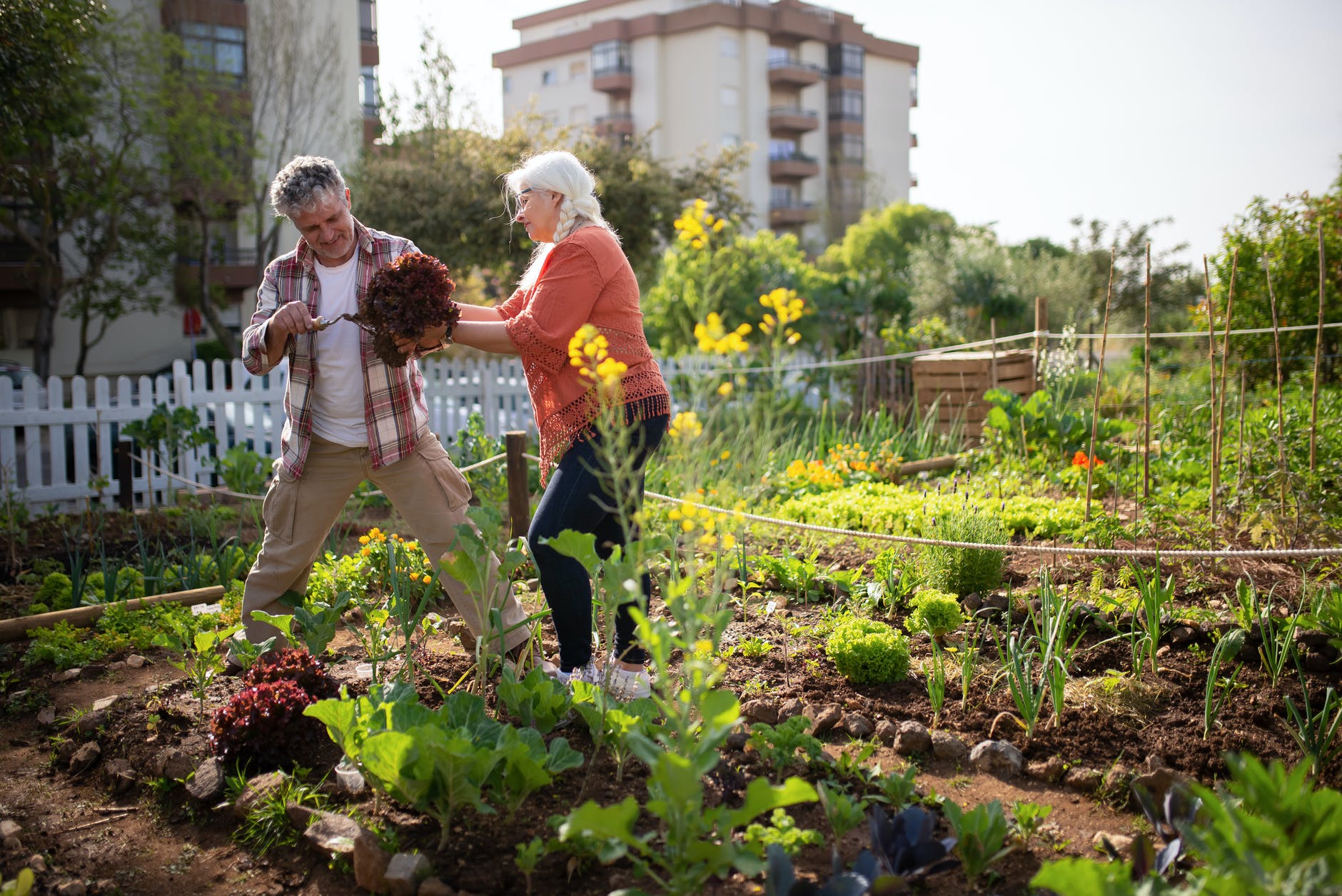
a couple in a vegetable garden
Photo by Kampus Production on Pexels.com

How and Why You Should Learn to Forget

Letting go of the burden of the past is important to your happiness.

Many people live in the past; they remember what they were, the love stories that did not go well, their failures and disappointments.

Such a burden takes away space and energy from the present, which is actually the only time you can live actively.

I read somewhere that happiness consists in enjoying good health and having a bad memory.

Actually, you should learn to let go of the past, forget about the insults received, the bad events and the mistakes, in short, all the bad memories, and learn to focus more on the present.

Photo by Ian Dooley on Unsplash

Here are some tips you could follow.

  1. The best antidote to guilt, resentment, or anger that takes you back to the past is to devote energy to building the life you want.
  2. Stop playing the victim and become an active protagonist of your life
  3. Your memories change while time passes by, they may distort, and they do not really reflect what happened. Try asking a person who shared an event with you to tell you about their memory and then compare it with your memory. You will see that you and that person remember different aspects of the same fact.
  4. Prioritize your well-being. Life is too short to spend arguing and complaining. What happened could be a source of stress and even discomfort. Continuing to feel anger at a past event drains up your energy. It is more important for your physical and mental health to live quietly than to be right at all costs.

The past, however, also brings with it good memories and lessons learned, which shape your personality.

Have a look at what Buddhism teaches: “Joy and happiness arise from letting go. Sit down and take an inventory of your life. There are things you have been hanging on to that really are not useful and deprive you of your freedom. Find the courage to let them go.”  

What about you? Would you find the courage to let go of your past?

accomplishment action adventure challenge
Photo by Pixabay on Pexels.com

How and Why You Need to Learn to Take Better Care of Yourself

The education we have received has taught us that we must treat well the others. But why the others and not ourselves?

Are you your own worst critic? Do you sometimes insult yourself for something you did wrong or wanted to do better? Do you eat poorly, sleep little, abuse of harmful substances (alcohol, tobacco)? Or are you simply worried about pleasing others? Know that you are not alone. This is a common problem and normal to a certain extent. Because of this, it would be useful to pay attention to some daily details to learn how to look better after yourself.

As I was saying before, we have not been taught to take good care of ourselves. We put often aside our well-being. How many times have your parents told you to look well after the others or do things for the others? How many times, on the other hands, have you been told that you must also take care of yourself?  

The way you look after yourselves is a kind of extension of what you have learned from your parents, teachers or caregivers.

For a very young person this may seem exaggerated, as some basic principles of self-esteem are taught in schools today. Some parents also try to instil some self-care virtues in their children.

However, for an adult or elderly person, taking care of themselves well and being truly respectful of themselves is not always something they have consciously internalized. In the past, it was not so easy to find someone who could help you cultivate a certain self-love without it being considered selfish.

In fact, this is precisely the basis: self-love, not to be confused with narcissism or egocentrism. To better understand this concept, we can first imagine what we do when we really love someone: we seek their happiness, we help them, we try to make them feel good, and we accept them as they are, with all their imperfections and qualities. Actually, looking well after yourself means really accepting yourself for who you are.

Becoming kind towards yourself, means understand yourself, especially when you face failures and mistakes.

Photo by Klimkin on Pixabay

That attitude can be a great ally. You can challenge yourselves in a healthy way, taking into account your possibilities, your desires, and not the desires that others have for you.

The use of language is very important to achieve the goal of taking good care of yourself. It is common, and to some extent normal, that on some occasions you speak “badly” to yourself, you do it unconsciously. You cannot talk to yourself always in a loving way, as you could enter into toxic positivity (when a positive attitude is used to mask negative emotions, namely pretending that all is well when it is not).

However, you must not use words that hurt yourself. Nobody insults those who truly love, right? Talking to yourself and thinking badly about some personal aspects (physical or mental), and constantly reiterating it, can in the end make you really believe it.

Taking care of yourself is essential. This implies developing a healthier and more suitable lifestyle. Sleeping and resting enough hours, for example, as well as eating well based on our weight, age and lifestyle, not abusing alcohol or tobacco, are all ways to take care of yourself. Taking time to relax, reconnect with what you really like to do, keep your hobbies, follow your passions and interact with people who bring you something positive in your life means being respectful of yourself.

What about you? Do you take good care of yourself?

Photo by Freestocks on Unsplash

Why Your Well-being Must Be a Top Priority

The society we live in often leads us to reverse priorities and put work first. This can negatively affects our quality of life and physical, mental and emotional health.

According to researches carried out in France, physical suffering related to work affects 3.1% of women and 1.4% of men, but according to some experts, the figures are higher. The international classification of diseases identifies burn-out as a work-related phenomenon but in reality work is not the only cause.

With the cost of living constantly rising, we are likely to work longer hours to earn a salary that allows us to provide for our own needs and those of our family. Because of this, many elements of our private life are put aside.

We spend many hours working, reducing the time to eat, to rest, to be with the family, and we do not realize how much this can harm us.

While most of us cannot afford to leave their job, a balance must be found between work and private life to prevent stress from building up in a worrying way.

Photo by Christin Hume on Unsplash

In this period of forced tele-working, it is even more difficult to put boundaries between work and private life. For this reason, many governments have been drafting directives that establish the right to “disconnect”. We need to have the time to do sports, to walk, to take care of our dear ones, to follow our passions or simply to rest.

More and more people suffer from stress, feel exhausted, have problems with nutrition, addictions, or relationship difficulties, and all that because of the long working days, which do not leave us the time to do activities for our well-being.

If you feel you are in one of those situations, know that no salary is worth your health, no job is worth the wear and tear that comes from working days that annihilate your energy and happiness.

If you have no other alternatives to the work you are currently doing, find something positive to balance your life, because otherwise, there may come a time when you will start making mistakes at work and your overall performance will suffer. Start looking for another job but put your health in the first place, because if you get ill it may take a long time to recover.

Your job is an important part of your life, but it is not your life. There is much more: family, health, and friends. Do not allow work to take up all the space in your mind and body, taking the joy away from you.

Remember always taking care of yourself first, because this is the only way you can live a better life.

How do you take care of yourself?

Photo by KT on Unsplash