Why You Shouldn’t Just Sit: Embracing STUFF for Better Health

In today’s sedentary world, sitting has become synonymous with a host of health risks, akin to the dangers associated with smoking. Prolonged periods of sitting have been linked to an increased risk of chronic health conditions such as heart disease, diabetes, certain cancers, and even mental health issues. This phenomenon has led to the emergence of the saying, “Sitting is the new smoking.”

For individuals like myself who struggle to be seated for more than two hours in a row, the idea of sitting for extended periods is not only uncomfortable but often impossible. The urge to move becomes overwhelming, making it challenging to remain seated for long periods. As a result, I’ve adopted a lifestyle that prioritizes standing and walking throughout the day. Not only does this help alleviate my pain in the legs, but it also contributes to better sleep quality, though occasional bouts of insomnia may still occur, often stemming from anxiety or stress.

However, even if you don’t feel pain in your legs because of sitting long hours, breaking up long periods of sitting is essential for maintaining overall health. Research suggests that interrupting sitting every 30 to 45 minutes with short breaks, such as standing for 10 to 15 minutes, can significantly reduce the negative effects of prolonged sedentary behavior.

Even if you consider yourself an active individual, spending more than six hours a day sitting can still have detrimental effects on your health, which cannot be offset solely by exercise. Incorporating movement into your daily routine is key to mitigating these risks. Here are some simple strategies to embrace STUFF (Stand-up for Fitness) and combat the hazards of prolonged sitting:

  • Opt for walking meetings: Instead of gathering around a conference table, take your discussions outdoors and incorporate movement into your brainstorming sessions.
  • Take a stroll during lunch: Use your lunch break as an opportunity to stretch your legs and get some fresh air. Even a short walk can help break up prolonged periods of sitting.
  • Invest in a sit-stand desk: Consider switching to a desk that allows you to alternate between sitting and standing throughout the day. This can help reduce the amount of time spent in a sedentary position and promote better posture and circulation.

Remember, the key is to avoid prolonged periods of inactivity and find creative ways to incorporate movement into your daily routine. Whether it’s through STUFF or other forms of physical activity, prioritizing movement is essential for maintaining optimal health and well-being.

So, are you ready to embrace STUFF and take a stand against the dangers of prolonged sitting? Don’t just sit there—get moving and reap the benefits of a more active lifestyle.

Thank you for reading! Please sign up for my blog crisbiecoach so you don’t miss out on any posts.
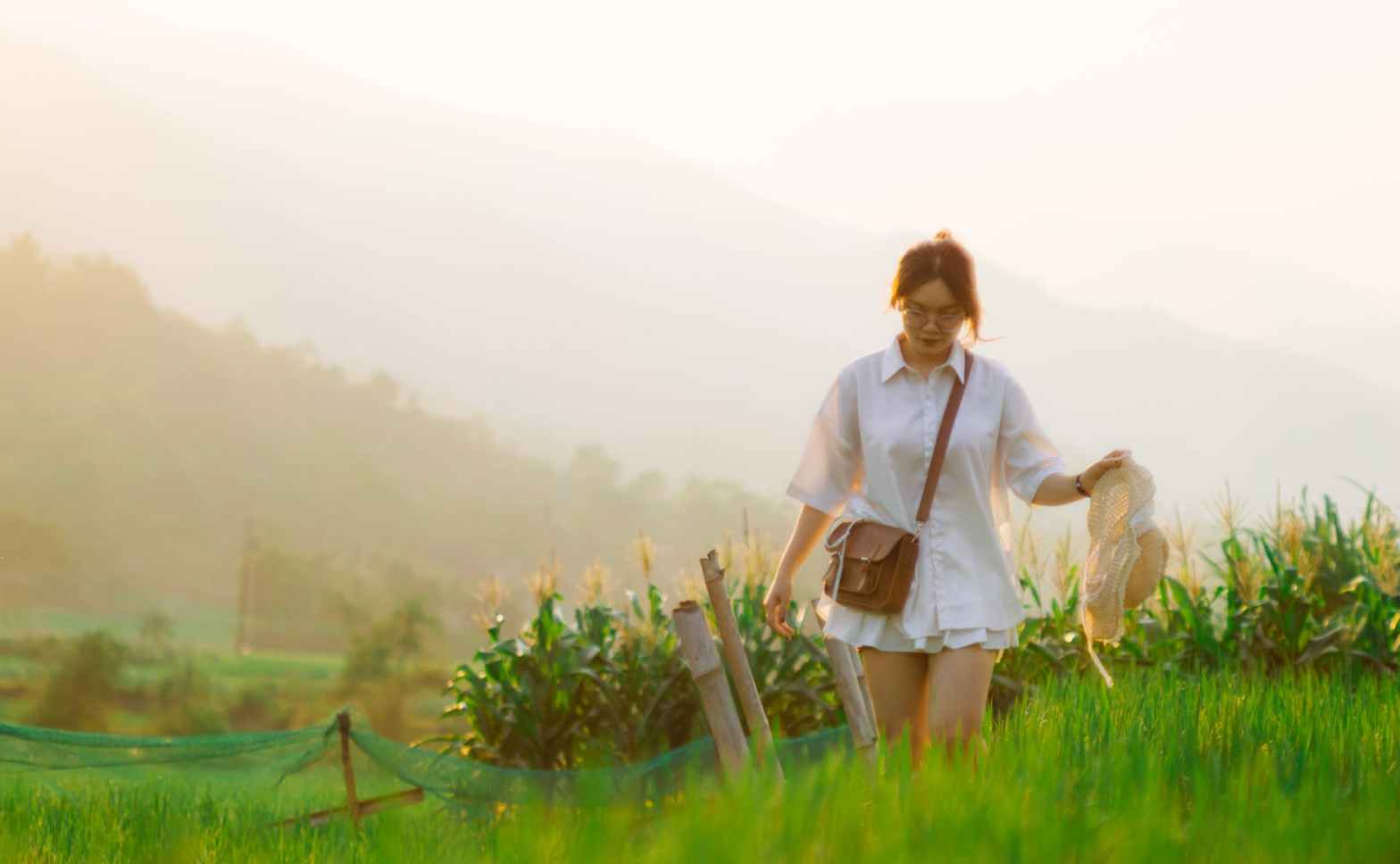
Why Walking Meditation Helps Regenerate the Brain

Walking meditation is an act of personal liberation because it offers you the simple pleasure of freeing yourself from daily obligations. You can see the benefits already after the first week you started to walk, and it is becoming a habit of your life. 

According to some research, people living in large cities, which usually are big urban areas highly polluted, suffer from extreme stress also because they tend to spend very little time in nature.

If you add to your routine walking meditation practice, you will get a really powerful anti-stress remedy. Practicing it brings enormous physical and psychological benefits. Ten minutes a day are enough, and you can practice walking meditation at any time of day.

A meditative walk in nature will allow you to free yourself from everyday stress.

Walking by itself is good for your health. It allows to reduction the risk of cardiovascular diseases and back pain, for example. Why not combine this practice with meditation?

Here are 6 tips on how to do it.
  1. Keep your back straight.
  2. Synchronize the breath on your steps, by keeping a quiet walking pace.
  3. Become aware of your body. Focus on your feet, on your legs, on the movement, on the contact with the soil. Try to eliminate tensions and concentrate only on the steps.
  4. Focus on the feelings this practice gives you. Are they pleasant? Is your body relaxing? And your mind, is it calming down?
  5. Then move your attention to your emotions. What do you feel? Do not judge the emotions you feel, let them go, observe them as if they were in front of you.
  6. Finish your practice by standing, contemplating the feeling of fullness, and thanking your body and mind for the beautiful meditative walk.

Do not try to stop thinking, because thinking is the activity of the brain and it is impossible to stop! On the other hand, try to take advantage of the moment of relaxation you are experiencing, to become aware of your body and your emotions without this affecting your mood and without judging.

By regularly practicing the meditative walk, you will feel more and more balanced and at peace with yourself.

Here are some results:

1. When you walk, your brain stops worrying. Walking is an activity within everyone’s reach and allows you to receive an extra dose of oxygen and clean air from nature. This is when we begin to stimulate our frontal lobe, the one that is related to creativity and mood. If we add to this the natural release of endorphins, magic happens. The brain feels more euphoric and optimistic.

2. Thanks to a better mood, you will be more creative. When you are not under pressure, you drop negativism and the hormone cortisol produced by stress disappears. You will feel more relaxed, more enthusiastic, and more confident.

3. You are used to moving in small spaces. Your home, your work, public transport, supermarkets, and other places you regularly go, are limited spaces in which tensions may ignite. Therefore, just starting to meditate and walk in a natural, open space is a wonderful act of liberation and relaxation.

4. According to research, you must seek, above all, contact with nature. The idea is to fill your lungs with pure oxygen, and your eyes discover new horizons, and stimulating landscapes thanks to which the brain is enriched.

Be aware that walking is much more effective than a painkiller or any vitamin! And a meditative walk is an experience you cannot miss!

Would you give it a try?

Six Tips to Make Physical Activity (and Continue Doing it)

We hear from all sides that we need to do more sports, that we have to move at least half an hour or take at least 10,000 steps a day. We would need that especially if we sit all day long at a desk, because “sitting is the new smoking”. But if we already have super busy days, how do we engage in a physical or sport activity?

Let’s first clarify what physical activity may be. It could simply be a matter of moving regardless if you do housework or sport.

Therefore, you can consider the activities you do every day, such as climbing stairs, walking, cycling and house cleaning.

Here are six tips on how to fit some physical exercise into your schedule:

  1. Look at your agenda and find the best time for you to play sports or go to the gym. Write it down and you won’t forget it. After some time it will be part of your daily routine. And if you have a friend who comes with you, it is even better because you will be more motivated.
  2. Create a calendar of your activities. Take a calendar and write down the days you managed to achieve your goals in terms of minutes of physical activity. At the end of the month you will be able to see your progress and you will be more motivated and satisfied! The ideal time per week is 150 minutes of moderate activity. A moderate activity is an activity that allows you to talk to someone and that makes you sweat slightly. An example of this activity could be also walking out your dog.
  3. Distribution. Three to five times a week would be ideal. 30 minutes of daily activity would be even better. You can distribute activities throughout the day like this, for example:
    • 5 minutes to go to the subway or bus stop;
    • 5 minutes walking to your office by getting off one stop before;
    • 10 minutes at lunch break to walk around the neighborhood;
    • 5 minutes walking from your office to the subway or bus stop;
    • 5 minutes to your place by getting off one stop before your place.
  4. Find the activity you really like. If you haven’t found it yet, try some and you’ll find it soon. Jogging, boxing, dancing or swimming are just a few examples of activities you could practice.
  5. Put your guilty feelings aside. The long-term goal is to make physical exercise a habit. If one evening when you come back home from work you feel tired and you want to be at home alone or with your family, do it without feeling guilty. Relaxing is just as important as moving. Moreover, if you’ve already followed your daily distribution, you’re okay, you don’t need to add more activity.
  6. Strengthen your muscles. You don’t necessarily have to lift weights. A Pilates or yoga session will help you strengthen your abs, for example.

What do you think? Could you make it?

Why By Walking You Will Lose More Weight Than By Running

Regular physical activity is essential for a person’s well-being. It helps with relaxation, it fights stress, chases away fatigue and it is even effective with light depression. Many people opt for cardio training to burn fat and lose weight. However, these exercises do not aim to gain muscle mass but only to increase endurance. Walking is the real cure-all activity.

You may know that cardiovascular exercises can influence the functioning of the thyroid. This gland produces a hormone called T4 which, in combination with iodine, turns into the hormone T3. The latter stimulates the body’s metabolism.

Unfortunately, during the production of cortisol while you are running, the thyroid gland does not produce the hormone T4. Therefore, it disrupts the process of metabolism, weakens the body and reduces the ability to burn fat. Because of this, excessive cardiovascular exercise can reduce your muscle mass and metabolism and, as a consequence, lead to weight gain instead of weight loss.

When running, the body burns calories and muscle mass. Therefore, you don’t not get rid of fat but you produce cortisol, which gives a feeling of hunger because the body feels the need to recover the calories burned. Overweight people should avoid running as it could damage their knees and joints.

Walking doesn’t have the same effect as running when it comes to burning calories. Actually, you burn much less calories. However, this activity is much more beneficial because it produces cortisol in small amounts. Therefore, the feeling of hunger won’t take over as much as if you were running.

The physical activity of walking is well known for its benefits because you can get a lot of muscles to work (thighs, calves, buttocks, back, abdominal belt) and by that you may refine your silhouette. It draws on fat and muscle reserves gently. To have satisfactory results, you should walk at least 30 minutes a day. It is preferable to walk in places without traffic and not too polluted, such as beaches, parks or the forests.

This exercise is also recommended for people who suffer from heart disease because it tones the heart muscle. It is also recommended for diabetics and people suffering from osteoporosis. Moreover, by walking 30 minutes, you will burn about 125 calories. I know, it’s not a lot but day after day you will see good results.

As of today, will you start walking more?

Why Unplugging Your Mind Is Important to Find Yourself

When e-mails, text messages, conference calls, Webex, Whatspp, FB, Instagram, Tweeter, Google and anything else from your partner to your boss invade your lives, it becomes necessary for your survival to stop for a while and be silent. That’s why unplugging your mind is crucial.

Our always connected minds take us away from the best of ourselves and our creative potential.

Referring constantly to what one or the other has said, we forget to connect to our essential being, which is unique and precious.

We have become individuals driven by technological change that moved away from ourselves, from our awareness of being human, from the first component of Emotional Intelligence (EI). EI is recognized today as a condition of success in a Volatile, Uncertain, Complex and Ambiguous (VUCA) world, as it is the one we live in today.

Refocusing, looking inside, listening to silence and our inner voice. In the depths of ourselves we find an enormous amount of resources and our most authentic creativity: it is our treasure, a unique, rich and colorful, magical place where everything is open and possible.

In this space, we can find synchronicity, messages and insights that will enable us to make the right decisions for our lives. Real relationships can arise, authentic relationships between sincere people who are now masked by the ego that continues to rule us.

What to do then?

Give yourself moments of silence! Be for a while without your mobile phone. Go out for a walk without it, walk with no direction in nature and feel, look, listen, use all your senses to the maximum.

Be present in this unique moment and let yourself be pervaded by the harmony that surrounds you.

Practice your favorite hobby, and if you do not have it, think about finding one. Quietly cooking at home, knitting, painting, drawing, gardening and all the other activities that you may be passionate about.

Stop for a moment and stop moving from one activity to another, from one piece of information to another. Your brain can not take it anymore, it also needs a rest. Give yourself time to deepen the reasons for your choices and discover the reason for your being, your purpose.

People feel lost. Most probably they are really lost: they have disconnected from themselves to live in connection with the social networks.

Therefore, unplugging your mind is very important for your wellbeing. Learn to find some space for yourself and your deeper needs. And live your life fully. You deserve it!

Avoid Comparing Yourself to Others

Why does the crow walk limping?

A short time ago I wrote a story about a crow and a dove. In that story, the dove makes a bad impression, while in this story she takes revenge. Let’s see how.

Once a crow saw a dove walking more gracefully than any other bird.

The step of the dove enchanted him and he decided to imitate her. The crow wanted at all costs to be able to move like her. But in that way his bones hurt.

Then, the other birds made fun of him, so the crow, ashamed, decided to return to the previous gait.

However, he did not succeed, because all his attempts to walk like the dove had made him forget his original movements.

That’s why since then crows jump, they cannot walk in either way.

In this case the moral is that you should accept yourself as you are because by comparing yourself to others you may hurt yourself.

What do you think of this story? Have you ever compared yourself to others?

Why Physical Activity Is Essential to Your Health

During the lock-down, the gym clubs have been closed (at least in Europe) and not all of us were able or willing to workout in our homes, perhaps following a video on YouTube. However, to prevent not only weight gain but also stress and anxiety from increasing, it is essential to exercise regularly.

Rhythmic physical activity (dancing, walking, cycling) alone is not enough, you need to maintain muscle mass which with ageing will be decreasing.

Maintaining muscle mass is particularly important in the case of a diet. In fact, thanks to a well developed muscle mass, you can avoid regaining fat and stabilize your weight. To do that, you should eat protein, do some resistance training, increase your Omega 3 intake, and check out your vitamin D levels.

In addition, there are at least 12 other benefits of moderate and regular physical activity. Let us see them.

1. More physical, mental and emotional well-being.

2. Reduce hunger.

3. Improve “bad” cholesterol and reduces triglycerides.

4. Decrease the risk of cardiovascular diseases.

5. Decrease resting heart rate.

6. Reduce abdominal fat.

7. Improve sleep quality.

8. Reduce the time to fall asleep.

Change your habits! Run, cycle, walk in the nature but also in the city, take a yoga or Pilates class even online or take a sports coach. You will see that you will soon get back your shape and motivation!

Are you willing to start or restart going to the gym?

photo of woman doing yoga
Photo by Li Sun on Pexels.com

How and Why You Should Listen to Your Body

In our times, we receive information from many sources: emails, social networks, television, people we know and colleagues. Our mind is over-stimulated for the duration of the day and this can cause stress and anxiety, which can also cause a real burn-out.

The excessive exposure to those information is detrimental to the activity of our body which is relegated to a mere container of organs that allow us to move (even if sometimes less than what we should).

Too many hours spent in front of the screen (mobile phone, computer or television) do not allow the body to tone up and therefore regenerate. During the pandemic, it has become even worse, because of the restrictions imposed to avoid the spreading of the virus. We could go out less often, or not at all.

Furthermore, it can happen that we ignore the pain from the body by using analgesics or other types of medicines to avoid feeling sick.

crop patient taking pill from table
Photo by Artem Podrez on Pexels.com

If you do this, know that you are waging war to yourself, because silencing your body will not help you solve the problem.

Our body is sending us important signals that we will need to start considering. By continuing to ignore the messages it sends us, there may come a time when the pain becomes unbearable and it might be too late.

As soon as you hear a strange noise coming from your car, you take it to the mechanic before it breaks down. The same thing you should do with your body.

For example, if you experience often back pain, it means that you need to change your position, adopt a more adequate posture, maybe change chairs or just go for a walk.

Try to think that pain is actually your ally because it wants to tell you that there is something wrong with you and which you should take care of.

Let’s see four techniques that you can use every day to learn listening to your body.

Mental scanner. This is a mindfulness technique that involves mentally scanning of your body from the top of your head to the bottom of your toes to check if each part is healthy.

Daily walks. This is the best way to get up of your chair. Usually all mobile phones have an app to calculate steps. I signed up for a monthly “race” with colleagues to take at least 6,000 steps a day. At the end of the race, there will be an award for the walker who has taken the most steps. Run a race with your friends or colleagues too!

Feeding your body and mind. The Japanese eat up to 80% of their hunger in order not to get heavy (this is a principle of Ikigai). Therefore, eat less but eat healthy, and sleep at least six hours a night so that your body and mind can do a complete “reset”.

Respect the messenger. Instead of taking medicines at the first symptom of discomfort or pain, try listening to your body, what it is communicating to you. Think that your body needs to be considered and looked after. Don’t wait for your body to ask you for help when you are in extreme pain, as remember that it might be too late.

When you don’t feel well, what do you do? Do you listen to your body or you take medications?

namaste sign on wall
Photo by Mikhail Nilov on Pexels.com

How Our Idea of Life in the City Has Changed During the Pandemic

Covid has radically changed our way of life in the city. Consequently, also our relationship with the city has changed.

If you were willing to pay more for a down-town rent or to buy a small apartment to live in the city, would you do the same today?

Data on home purchases in Belgium show that people during the pandemic wanted to buy or rent properties in the countryside, where homes are cheaper and bigger. Nature is a source of energy that can help us in difficult times such as those of Covid.

If being able to have a quick aperitif after work, to go out for dinner in the evening without having to travel too many kilometres, or going to the cinema or a concert, justified the fact of living in small apartments, where you are exposed to not always easy coexistence with the neighbours and outside noise and traffic, is this still the case now?

Cities during the pandemic have turned into places to mainly work and sleep. Maybe you started asking yourself, what kind of life is it?

If you were able to go to work during the pandemic, didn’t you have the impression of living in the office? If, on the other hand, you have always worked from remote, don’t you think that you have been experiencing difficulty in finding work-life balance?

With the rules of lockdown even using public transport was a problem, due to the fear of contagion. We started to do shopping close to home.

Photo by Matt Seymour on Unsplash

Staying at home all the time and respecting the rules of lockdown have caused spreading of anxiety in a worrying way. In fact, it has been proven that living in the city makes you feel more isolated, even if the opposite would seem to be true.

For a long time we have been deprived of our need and desire for sociability, our walks have been reduced to the tour of the neighbourhood to fulfil our daily commitment to take 6000 steps or not to forget the challenge of staying healthy despite everything.

Things as common as eating with friends or colleagues, going to the cinema or shopping, have turned into extraordinary things.

Is that why living in the countryside has perhaps become more popular? Would spending less on a house with a garden and nature nearby make you change your mind about living in the city?

Photo by Badiuth on Unsplash

Why Your Well-being Must Be a Top Priority

The society we live in often leads us to reverse priorities and put work first. This can negatively affects our quality of life and physical, mental and emotional health.

According to researches carried out in France, physical suffering related to work affects 3.1% of women and 1.4% of men, but according to some experts, the figures are higher. The international classification of diseases identifies burn-out as a work-related phenomenon but in reality work is not the only cause.

With the cost of living constantly rising, we are likely to work longer hours to earn a salary that allows us to provide for our own needs and those of our family. Because of this, many elements of our private life are put aside.

We spend many hours working, reducing the time to eat, to rest, to be with the family, and we do not realize how much this can harm us.

While most of us cannot afford to leave their job, a balance must be found between work and private life to prevent stress from building up in a worrying way.

Photo by Christin Hume on Unsplash

In this period of forced tele-working, it is even more difficult to put boundaries between work and private life. For this reason, many governments have been drafting directives that establish the right to “disconnect”. We need to have the time to do sports, to walk, to take care of our dear ones, to follow our passions or simply to rest.

More and more people suffer from stress, feel exhausted, have problems with nutrition, addictions, or relationship difficulties, and all that because of the long working days, which do not leave us the time to do activities for our well-being.

If you feel you are in one of those situations, know that no salary is worth your health, no job is worth the wear and tear that comes from working days that annihilate your energy and happiness.

If you have no other alternatives to the work you are currently doing, find something positive to balance your life, because otherwise, there may come a time when you will start making mistakes at work and your overall performance will suffer. Start looking for another job but put your health in the first place, because if you get ill it may take a long time to recover.

Your job is an important part of your life, but it is not your life. There is much more: family, health, and friends. Do not allow work to take up all the space in your mind and body, taking the joy away from you.

Remember always taking care of yourself first, because this is the only way you can live a better life.

How do you take care of yourself?

Photo by KT on Unsplash