Nostalgia: Why Reflecting on the Past is Crucial for Mental Health

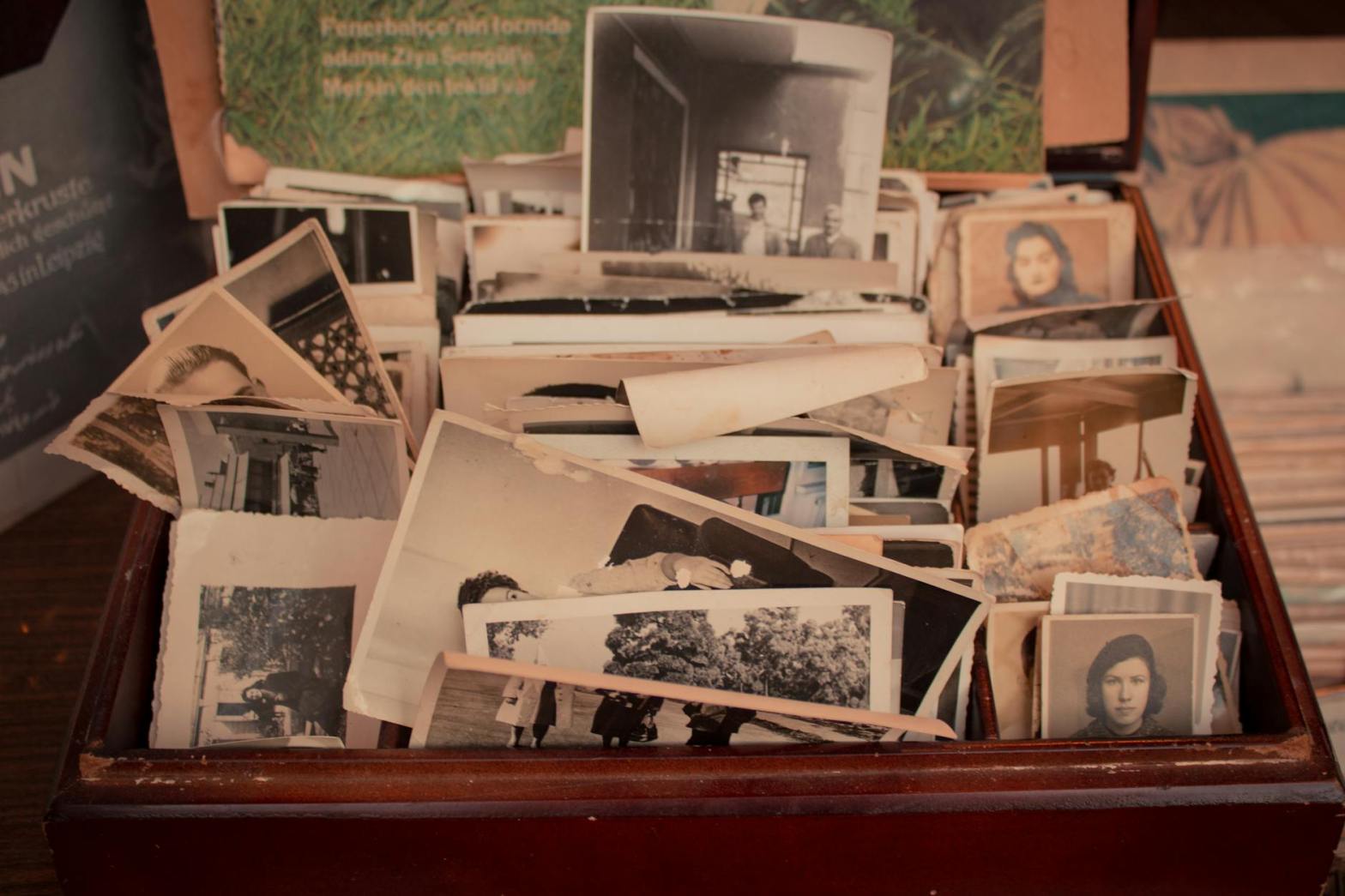
Nostalgia protects against existential challenges, helping us cope with the present and future by evoking positive experiences and feelings from the past. This powerful emotion serves as a rearview mirror, reflecting a particular time, place, or emotion that once brought joy or comfort. Whether it’s the memory of your first love, a yellowed photograph found by chance, or an object that stirs a significant memory, nostalgia plays a crucial role in our mental well-being.

How the Internet Fuels Nostalgia

In today’s digital age, the Internet has become a key driver of nostalgia. With just one click, you can find the soundtrack of a cherished moment from your past, instantly transporting you back in time. Experts suggest that nostalgia is a complex emotion—predominantly positive—that enhances our sensitivity and helps us understand the present.

The Origin of Nostalgia

The term “nostalgia” was coined in 1680 by Johannes Hofer, a student at the University of Basel. He combined the Greek words “nóstos” (homecoming) and “algia” (suffering) to describe the deep longing Swiss soldiers felt to return home from battle. Today, we understand nostalgia as a positive and stimulating emotion, distinct from melancholy, which does not cause illness symptoms but helps combat them.

Nostalgia as a Source of Resilience and Wellbeing

Research from the University of Southampton in the UK highlights nostalgia as a vital mental health component. It motivates us, boosts our self-esteem, and serves as a reservoir of emotions that we can consciously and unconsciously access. These positive memories reinforce feelings from our past, aiding us in coping with current and future challenges.

While nostalgia allows us to recall the past, it does not bring back what we have lost. Instead, it helps us better manage the life we are living. By tapping into nostalgic memories, we can find comfort and strength, making it an essential tool for resilience and well-being.

Does Nostalgia Help You Manage Your Life?

Reflecting on your own experiences, do you find that nostalgia helps you manage your life? Share your thoughts and let me know how nostalgia influences your mental health and daily coping strategies.

Thank you for reading! Please sign up for my blog crisbiecoach so you don’t miss out on any posts and also for Wise&Shine an incredible online magazine!

5 Ideas to Feel Good at Work (Without Looking for Perfection)

There are some problems to address to feel good at work, without wanting to be perfect, also because we would like to avoid that pursuing perfection at work, but also in private life, turns into an obsession.

Problem 1

The work I do is not recognized for what is worth.

Who hasn’t felt this way at work? Who doesn’t like to receive an appreciation, like “Job well done”? But, honestly, isn’t it a bit risky to base our motivation on the appreciation received from others?

Try this exercise: Every day take note of a positive thing you did at work. A well-written report, an effectively managed meeting, a productive coffee break… Then celebrate this success. Go out to dinner with colleagues, or friends, or your partner, but if no one has time, go out alone or prepare a special dinner for yourself. Success is not necessarily having a villa in a posh place or a Ferrari. Success is measured in the small daily things you do and should always be celebrated. Buy yourself some flowers and take them to the office. If they ask you why, answer because you are good and nice. Then, watch how colleagues react.

Problem 2

My life turns around my work.

In French they say “Metro, boulot, dodo”, which means “subway, work, sleep”. That’s not exciting, is it? Often, unfortunately, this is the case. What do you do to change this? Do you ever take time to devote to yourself? Not a day shall go by without you taking the time for yourself. Read that article in your favorite magazine or on your friend’s blog (which could be mine…), go to the gym or take a walk in the park near home, call your mother or that friend you haven’t heard from for a long time… You should devote yourself at least half an hour a day. If you think about it, it’s not much.

Problem 3

I don’t learn anything new anymore.

If you’ve been doing a job for a long time, at some point it’s normal for you to feel like you’re not learning anything new. You get bored and are not happy, even if you manage to work very well, knowing exactly what you have to do. But that’s not enough to motivate you, so what can you do? You have to get out of your comfort zone, you have to accept new challenges. Tell your boss about it, maybe they have ideas.

Problem 4

They will never promote me

So, in my entire career I’ve been promoted only once, last year. And I’ve been working for more than twenty years! Why? In some cases definitely because I didn’t spend much time in the same workplace. Yes, I admit, I’m not that person who sticks to the employer. Indeed, I feel I need fresh air quite often.

But why? Probably because I haven’t found my way yet and so I’m leaving because I have to get back on the road to find it.

Even if you feel “forced” into your workplace, ask yourself what would be your ideal job, the job of your dreams. If you don’t find it in the place where you’re working, start looking around. And make an action plan (if you don’t know how to make an action plan, I can help you  do it). Or ask if you can work part-time, so you can cultivate that passion or hobby that you have been neglecting for too long.

Problem 5

I don’t have time to do anything.

Here we go, this is one of the most common problem nowadays. We have the feeling of not being able to manage our time, and that we are overwhelmed. Family, work and time lost in traffic, there is not much left for us. But isn’t it an excuse? Make an analysis of your day, see the useless things you do and start eliminating them. Then, there are certainly things that you can postpone, for example, it is not necessary to vacuum clean every night even if you have a cat at home like me (I vacuum clean at most twice a week).

It is a matter of choice and priority, you cannot do everything: there are things that you absolutely have to do, others that you can avoid and postpone them (knowing how to postpone things is a science, even if not a precise one …).

For example, while working full time, I dedicate myself to writing this blog because I go out a little in the evening, but when the opportunity arises I do not hesitate to go out. So, when I go out I decide to postpone writing my article.

In conclusion, choice is the basis of change, and action is the basis of positive thinking. Take life into your own hands. Act now, don’t wait!

Easter at home? Don’t worry and try these 10 ideas to enjoy your free time

Going on vacation is very important for your physical and mental health. You should think about taking rest periods during Easter even without being able to travel.

When you work you look forward to the weekend but it is not enough time to fully recharge. To be able to really disconnect from work you need more time.

Vacations are a period of time that we all need, as much as we need to sleep, eat, drink, if we want to stay healthy.

Vacations allow us to recover and when we come back, we often feel better, full of energy and even more creative.

It does not matter whether you go on vacation or not. The main thing is that you can rest and put aside your daily worries. Choose what to do, with whom and when to do it. Not everyone likes travelling. Some like to have time to read more, do more physical activity, and spend time outdoors. Others like to take small hikes, without straying too far from home. Some people enjoy long trips, some others like only short ones.

There are also people who do not like being at home. They do not know what to do, they get bored, they do not want to tidy up the house, and they think about many things, as if they were working. But they would enjoy to get to know new places, or return to places they have loved before.

Whatever you prefer, if you have to stay at home during this Easter, try these tips:

1. Don’t read professional emails;

2. Do little housework;

3. Establish rules and times for being at the computer or television (both for you and your children, if you have any);

4. Look for new places to discover in your neighbourhood;

5. Spend time in nature because nature is a source of energy;

6. Make a list of what you would normally do on vacation;

7. Organize a movie marathon with friends and discuss with them to find out which ones you all liked the most;

8. You can do the same thing with a book. Choose with your friends a book you all read. Then, gather together to comment on it;

9. Why don’t you start with that hobby you have been thinking about for a long?

10. And, above all, indulge yourself by buying some chocolate (it’s Easter, the best moment to eat it)!

Have you decided what to do today?

How to Keep Your Resolutions

Today is the first of January and many of us have decided about their resolutions for 2023, or are about to do so. The new year brings the desire for a change, the need for renewal. We would like to spend more time with our family, to take that trip that we have been dreaming about for so long, to change our job, to enrol in a gym club, to lose weight, to stop smoking…the main goal is feeling better with ourselves and with others.

Why does it happen then that along the way we forget about our resolutions or we abandon them?

Here are some questions you should ask yourself.

Are your resolutions too ambitious, vague or simply they are too many? In this case you are putting too much pressure on yourself. If you have decided to stop smoking or to lose 10 kilos, you must ask yourself why you have started smoking and why you are always hungry. Are they ways for relieving the daily tensions?

Are you positive in comparison to the achievement of your resolutions? If you think that you will never make it, it is sure that you will never make it. Henry Ford used to say: “If you believe you can make it or if you believe you cannot make it, you will always be right”.

Are your resolutions appealing? You have decided to lose weight or to stop smoking. As such, they are great objectives. But find a bigger reason for which you want to achieve these objectives. For instance, you want to stop smoking to be able to recover breath faster when you go jogging or you want to lose weight to put on those beautiful pants that suited you very well.

Bad habits are difficult to lose, above all you need time. If you have been sticking to them for years, you have your good reasons (to protect yourself from stress, for example). You cannot change your habits in some weeks. Some time ago, studies stated that you could take up a new habit in 21 days. Now, neuroscience has found out that you need at least 60 days! Take your time then, establish a new habit with calmness, don’t stretch your body too far, your body is comfortably used to the old habit and it doesn’t feel like changing it. You must make it understand, day after day, that another way is possible and it is also healthier!

Besides, remember that the path won’t always be linear and you may find obstacles. There will be some easy moments and some difficult ones but losing a battle doesn’t mean losing the war. Accept the ups and downs: your body will learn to adapt slowly.

Choose an objective that won’t sound like an obligation, in the sense that it must represent a real choice, a thing that you want to do, not that you must do. Control your thoughts, remember what Henry Ford said. Don’t focus on what you still have to achieve, but celebrate what you have already achieved. List the small victories and congratulate yourself. Stay positive!

Think about the strength that a seed has to become grass. It must come out from the soil to be able to live and flourish. It works slowly under the soil, up to when one day it comes out and sees the light! For you it is kind of the same thing. Work slowly and one day you will see the results, because you are stronger than you think.

And now four tips:

1. set one objective at the time, but define it well, use the SMART model (specific, measurable, attainable, relevant and time bound). Even though this model has been created for organisations, it may be helpful also to individuals engaged in goal setting.

2. Adopt the strategy of small steps by dividing your objective into smaller objectives.

3. Celebrate achievements: the first kilo you have lost, the first whole day without smoking. Put some post-it all over your place with your success on it. Tell yourself “Well done!”.

4. Inform your family and friends about your goals and ask them to help you with this. Getting their support will help you in achieving the results. Look for some groups on Facebook that share your same goals, and participate in forums on the Internet. Remember that you are not alone, there are other thousands of people that may have your same goals and exchanging ideas with them can be helpful to you. You can create a blog that can become your journal (a journal on paper is also okay).

I wish you a successful 2023!

Photo by Cristiana Branchini

A Zen Story – The Quality of Our Effort

Do you know the Zen story of the young man who crosses Japan to reach the school of a famous martial arts master?

When he arrives at the dojo, the teacher asks him:

What can I do for you?”

The boy replies: “I want to study with you and become the best fighter in the whole region.”

How long will it take me?

10 years at least,” the teacher replies. “10 years is a very long time – replies the boy – What if I study two times more than all your students?

20 years then” – the master replies.

The boy, puzzled, replies “and if I train all day and night long with all of myself?

“30 years,” the teacher replies.

At this point the young man replies: “How is it possible that the more I say that I will work hard, the longer it will take me?

The answer is simple – concludes the master – “when you have one of your eyes fixed on the goal, you have only the other one left to find the way. »

How would you interpret this story?

Personally I consider it an important reminder of how it is not necessarily a more intense effort that can help us get sooner to the destination we have in mind, but rather an attention to the quality of our effort.  
Doing better step by step than trying to do more by burning down the steps will put less stress and anxiety in our lives.

It’s a bit like when we train our body. Practising intensive sports from time to time will only serve to traumatize your body. While a constant but carefully calibrated effort allows us not only to achieve lasting results, but to make each step of the journey much more enjoyable.

How could you reduce the intensity of the effort by improving its quality?

The Power of Intuition

Intuition has always been a fascinating subject of study. It is generally associated with genius, because the greatest scientific discoveries happened thanks to moments of intuition.

Einstein wrote:

Intuition is a sacred gift of which reason is a faithful servant. We have created a society that honours the servant and forgets the gift.

In addition, we all know that it is thanks to our intuition that we make some of the decisions of our lives, even if we consider ourselves rational and Cartesian beings.

From the point of view of the Eastern religions (Buddhism, Hinduism, Taoism) there is no mystery. In the traditional languages of these millennial wisdoms, the terms designating knowledge, consciousness, lucidity are often identical.

Attachment to mental constructions, beliefs, and concepts, as well as the mental agitation that accompanies it, are seen by them as a veil over primordial intelligence. Buddhists explain it like that:

if we do not stir water, it will become clear by itself. In the same way, if we leave unchanged the nature of the spirit, and we do not manipulate it, it will find peace and clarity on its own.

But let’s go back to the West and see that to make a decision we will evaluate three elements:

  1. rational analysis,
  2. emotional aspect,
  3. intuitive wisdom.

However, if we practise meditation, thoughts and emotions would calm down, and intuition would manifest. In fact, there are several testimonies from practitioners who tell that the most creative ideas came at the end of their meditation.

In a linear, predictable, and orderly environment, a rational analysis is often more effective for deciding and planning an action.

On the contrary, in a volatile, unpredictable, or chaotic environment, when the human element predominates, intuitive intelligence becomes useful.

Therefore, meditation is more and more used in our times, as we live in an ever-increasing insecurity and instability.

How intuition works

Intuition draws on three main resources.

  1. Like a tree, the first source is the ramification of its roots. It is the entirety of information, of experiences lived in the past and stored in the unconscious.
  2. The second source is comparable to the leaves of a tree. These are the strong or weak signals, picked up in the present instant.  All these signals are undefined and cannot be evaluated by rational analysis.
  3. The third source is collective intelligence. In fact, our personal intuition can go beyond temporal and spatial limitations. Intuitive intelligence can tap into a nearly unlimited source, outside the limits of time, space, and the individual. All this is normal according to Buddhist philosophy where, for example, the individual, time, and space are conceptual categories created by the mind.
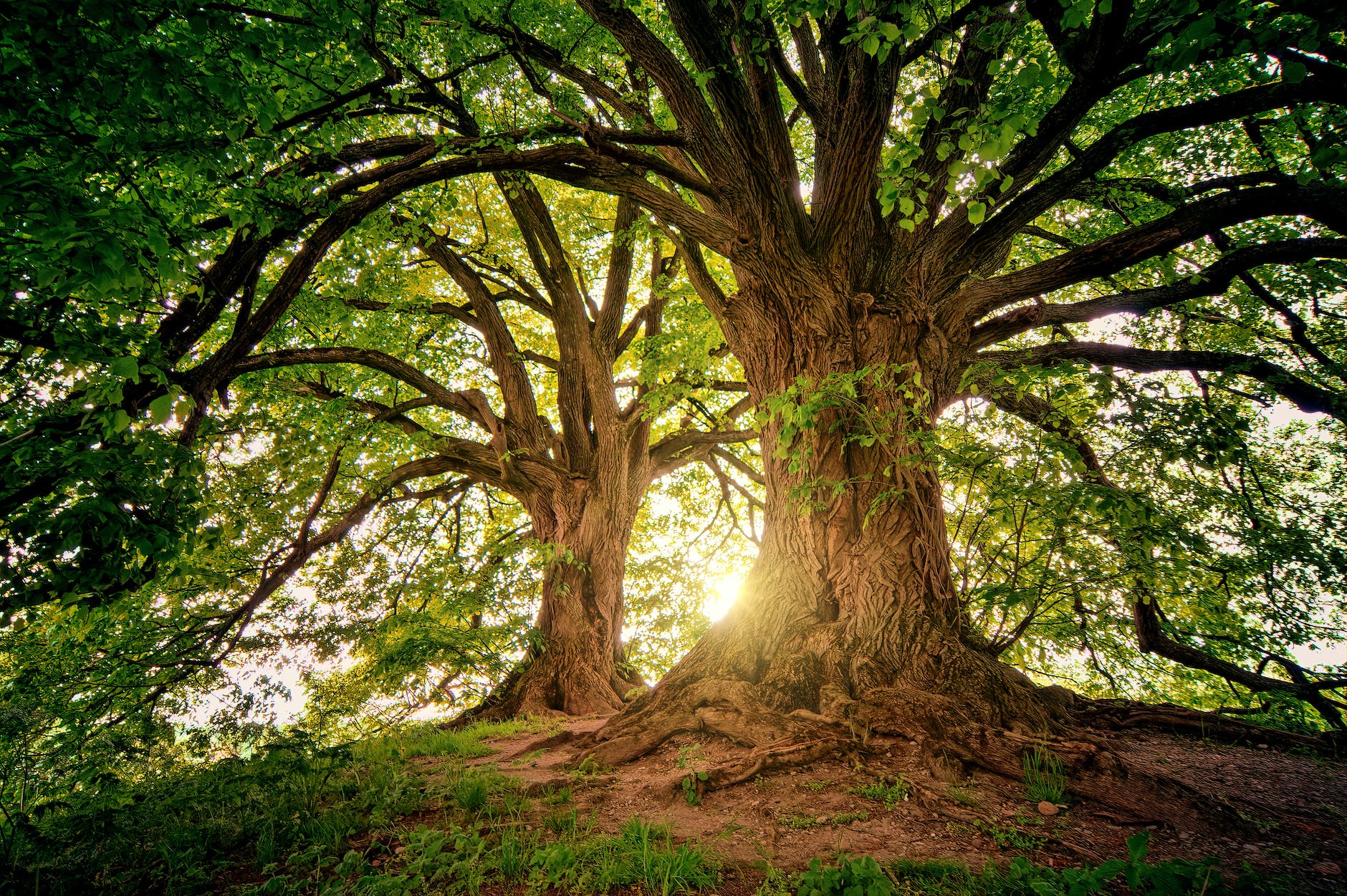
two brown trees
Trees – Photo by Johannes Plenio on Pexels.com
How do you synthesize these sources of information?

Cognitive science researchers have tried to answer.

Just before an intuition, there is a “letting go” moment, a descent within us. Then, suddenly, the presence increases, there is a kind of awakening, a feeling of unity and inner agreement. There is also a feeling of evidence, of surprise, of amazement and wonder.

These are the elements that we also find in a meditative experience: letting go, increased presence, awakening, unity.

It is necessary to emphasize the essential place occupied by the body in intuitive intelligence.

How many times have you made rational or emotional decisions while your body opposed it? Did you regret this decision a few days, months or years later? It happened to me several times in my life. I should have listened to the signals that my body sent me and taken them into account when making my decision.

In this regard, body scan meditation can help to develop this sixth sense of intuition. We shall also consider that if we constantly ignore the body’s messages, we might experience illness, pain, or disorder. Which is what happened to me.

Intuition, beyond the help it provides us in making decisions, is our deep inner voice, our wisdom, our most precious guide. It is important to learn to listen to it and to look after it.

To conclude if you hesitate to follow your intuition, try asking yourself these two questions, which will help you clarify what is at stake:

  1. What do I risk following my intuition?
  2. What do I not risk following my intuition?

What do you think about intuition? Do you agree with me that it is powerful?

This article has been previously published on Wise&Shine magazine.

Seven Simple Rules to Follow

We are approaching the end of summer. For those who have already returned from vacation it may be difficult to go back to everyday life, to start over with the usual routine.

So, I would like to share with you seven simple rules to follow for a quiet and less stressful life:

1. Make peace with your past so that it won’t disturb your future.

2. What other people think of you is none of your business.

3. The only person responsible for your happiness is you.

4. Don’t compare yourself to others, you may get hurt.

5. Time heals almost everything. Give yourself more time.

6. Stop thinking so much. Accept not to know all the answers.

7. Smile. You cannot control all the problems in the world.

Would you consider following these simple rules? Do you have any other to add? Let me know!

two yellow emoji on yellow case
Smile – Photo by Pixabay on Pexels.com

Becoming Older, Becoming Wiser

Becoming older means also becoming wiser. You realize what really matters in your life, what you privilege and who you choose to spend your time with.
Priority goes to what really matters in your life

During your youth, you felt almost always excited and you believed that the world was in your hands. You thought you had all the time ahead to realize and live your dreams. Becoming older makes you understand that time is limited and therefore precious. 

Because of that, you want to enjoy every minute and every second with what is essential for you. Going out in the evening and getting home very late (or also very early the day after), nights spent drinking, dancing until your feet would hurt, no longer interest you. What matters is enjoying the time spent with your family, dedicating them qualitative time, that is time of exchange, time that counts and that is not forgotten. You realize that time flies, so you want to favour the present moment. Looking at photos together, savouring the small magical moments of hugs, or playing with your children are moments of unforgettable happiness.

Avoiding self-righteous people

Hypocrisy is no longer part of your life as an adult (at least it should be). Sincerity is what you are looking for. Instead of uttering an uninteresting sentence to someone you barely know or don’t particularly like, you’d rather be sincere, kind but sincere. At the same time, you will be attracted to people who are honest in their gestures, words and actions; people who bring a positive note to your life.

Respecting the lives of others.

Time and experience are great teachers when it comes to knowing oneself and the others. Wisdom teaches you to turn away from the problems and conflicts that don’t concern you, so as to avoid getting involved with bad energy. Therefore, respecting the lives of others becomes a fundamental principle. 

Restricting your circle of friends

By ageing, the idea of making new friends doesn’t interest you any longer. Your priorities are more related to your family. You seek good friends rather than many friends. You try to build healthy relationships and you want to avoid toxic people.

Becoming older means crossing many paths with pitfalls. However, the difficulties that life presented you, allowed you to become stronger, more determined and wiser. 

You have learned to know the difference between a person who is harmful to your well-being and a person full of positive energy who brings you joy and good mood.

Which other advantages would you see in becoming older?

photo of pathway surrounded by fir trees
Pahts in Life – Photo by James Wheeler on Pexels.com

How to Help a Friend in Need

It hurts to see a loved one who is not psychologically well. How to help a friend need then?

Nobody taught you how to help a friend and you don’t know what to do. You celebrate successes with them but you would like to be able to listen to their anxieties, fears, frustrations and problems in general. It really depends on your sensitivity and empathy.

You have noticed that a friend of yours no longer looks like the one you used to know. They seem sad, dull, speak little, they are isolated and blocked in their thoughts. They may be also restless, nervous, hyperactive, anxious, irritable, and have started drinking a lot of alcohol.

You wonder if it was due to the pandemic. Maybe, but they were like that also in the summer, when the Covid situation had improved. They continue to see everything black, they don’t want to go out, see anyone or even talk to anyone.

Moreover, they sleep badly, and are not motivated to go to work.

The first thing that comes naturally to do is trying to reassure them, saying that they don’t need to worry, it will pass quickly, we all have problems and maybe you start telling them about yours, as if this could cheer them up. The result is that your friend is getting worse and worse.

Actually, this diminishing other people’s state of discomfort only contributes to making them feel worse.

Once a psychologist told me that when a person is agitated, you should never tell them to stay calm, because this would have the opposite effect. It is more or less the same thing. If a person is in distress, you should not underestimate their discomfort.

stormy sea with splashes and waves
Photo by Pok Rie on Pexels.com

Therefore, how to help a friend in need?

First, you have to listen to them, in an active and empathic way. Listening in this way is not easy, but you can learn. Validate what the friend feels; don’t underestimate their situation and make them understand that they are not alone.

Sometimes, giving advice is not useful. On the other hand, it may be useful to offer practical help, such as shopping for example.

Alternatively, you can propose to go out together, for a drink or to a restaurant, so that your friend can get distracted and maybe they relax and tell you about the difficult time they are going through. A walk in nature or a short hike are also activities that can prove useful. Visiting an art exhibition or a museum can really help raise the moral.

You don’t have to force them to do anything they don’t want to, you have to give your friend space and time, conveying hope that they will feel better later on. You can also tell them to remember some good times from the past that might be comforting. Or, you can tell them to think of other difficult moments they went through and ask themselves how they overcame them.

In addition, you don’t have neither to put pressure on them nor judge them. Only be available.

Obviously, you must not take responsibility for the mental health of the other person. If you are not a psychologist, you cannot know if what the person is going through is temporary or if it is a real mental disorder.

Therefore, if you see that your friend’s health does not improve, you should try to convince them to go to the doctor to explain the situation. Maybe you could even offer to accompany them, because friendship also means helping each other.

What are your strategies for helping a friend to overcome a difficult situation?

gray asphalt road surrounded by tall trees
Photo by Pixabay on Pexels.com

How to Face Autumn in Perfect Shape

As trees are losing their leaves in the fall, we are losing our hair.

A plant that slows down hair loss is nettle. Re-mineralizing thanks to the silicon it contains, rich in iron, vitamin B and other minerals, nettle helps in the prevention of anaemia, slightly drains the kidneys and strengthens hair, nails and skin.

Using it in powder or capsules for the duration of autumn, you will find yourself with more voluminous hair, stronger nails and new radiance of your skin.

autumn autumn leaves branch bright
Photo by Pixabay on Pexels.com

During the autumn, the days get shorter and you may lack some motivation.

You can try rhodiola. It will help you adapt to the different types of stress you experience. It is a plant with antidepressant properties and increases the production of dopamine in the brain, thus helping you to regain some motivation and enthusiasm to start projects. It can also prevent burnout, professional but also personal. In the autumn period, when you need more energy, the rhodiola will help you not to yield to the progressive lack of light.

Orange leaves are a panacea for the soul because it gives you comfort and calms down anxiety, stress and nervousness. They say that it can reconnect you to your inner child. It is a first-rate nervous rebalancing, also with antispasmodic properties if the spasms are of nervous origin (cough, stomachache).  

Pay attention that if you have any particular health conditions or if you are pregnant, you shall consult your doctor. Plants have powerful properties and you have to be careful.  

What about trying one (or more) of those natural remedies?

flat lay photo of alternative medicines
Photo by Nataliya Vaitkevich on Pexels.com