A Glass Full of Water

You all know about the half empty or half full glass of water. By saying how you see it, you will understand if you are an optimist or not.

And if you would like another perspective on a half empty or half full glass, you can read Wynne’s post The Glass Is Refillable.

But what you are going to read here is something different that I saw recently in a simple, short but very effective video.

A professor during a lecture surprised his students by showing a full glass of water in his hand.  The students, who thought he would talk about the classic concept of a glass half empty or half full were amazed when he asked them about the weight of the glass. His intention was quite different, in fact he did not want to explain the concept of glass half empty or half full.

The answers were different and most of them could be considered acceptable. However, the explanation given by the professor was different and much deeper.

The weight of the glass depends on the time you will have to hold it. If you hold it in your hand for 5 minutes, it is very unlikely that you will have troubles. However, if you hold it in your hand for 2 hours, the arm will get tired. And if you hold it even longer, let’s say one day, the arm will be as if paralyzed and eventually the glass will fall.

The same happens with stress.  If you are under stress for a relatively short period of time you will have no side effects. But if you experience stress for weeks and months, you may eventually get sick.

The disease in this case would be of psychosomatic origins.

What is a psychosomatic disorder?

The word psychosomatic comes from the Greek psyche “soul” and soma “body”. A psychosomatic illness occurs when the mind creates an alteration of the body.

For example, imagine that you have a colleague, or a person you know, who often criticizes you.

Their criticisms are not sporadic, on the contrary they are recurrent enough to become a habit. This behaviour also creates a negative environment around you.

If you can’t get rid of this stress in time, you’ll accumulate so much negativity that it could cause side effects on your health. It would be like holding a glass full of water for a whole day.

This reality is unfortunately so common that it is even believed that some physical illnesses can worsen due to mental factors such as stress and anxiety. It is believed, for example, that conditions such as psoriasis, eczema, gastric ulcers, hypertension and many heart diseases can occur due to psychosomatic problems such as stress or anxiety.

Would you like to learn some techniques to reduce stress: have a look at the conclusion on this article published on wiseandshinezine.com.

What about you? What are the solutions you adopt to fight your stress?
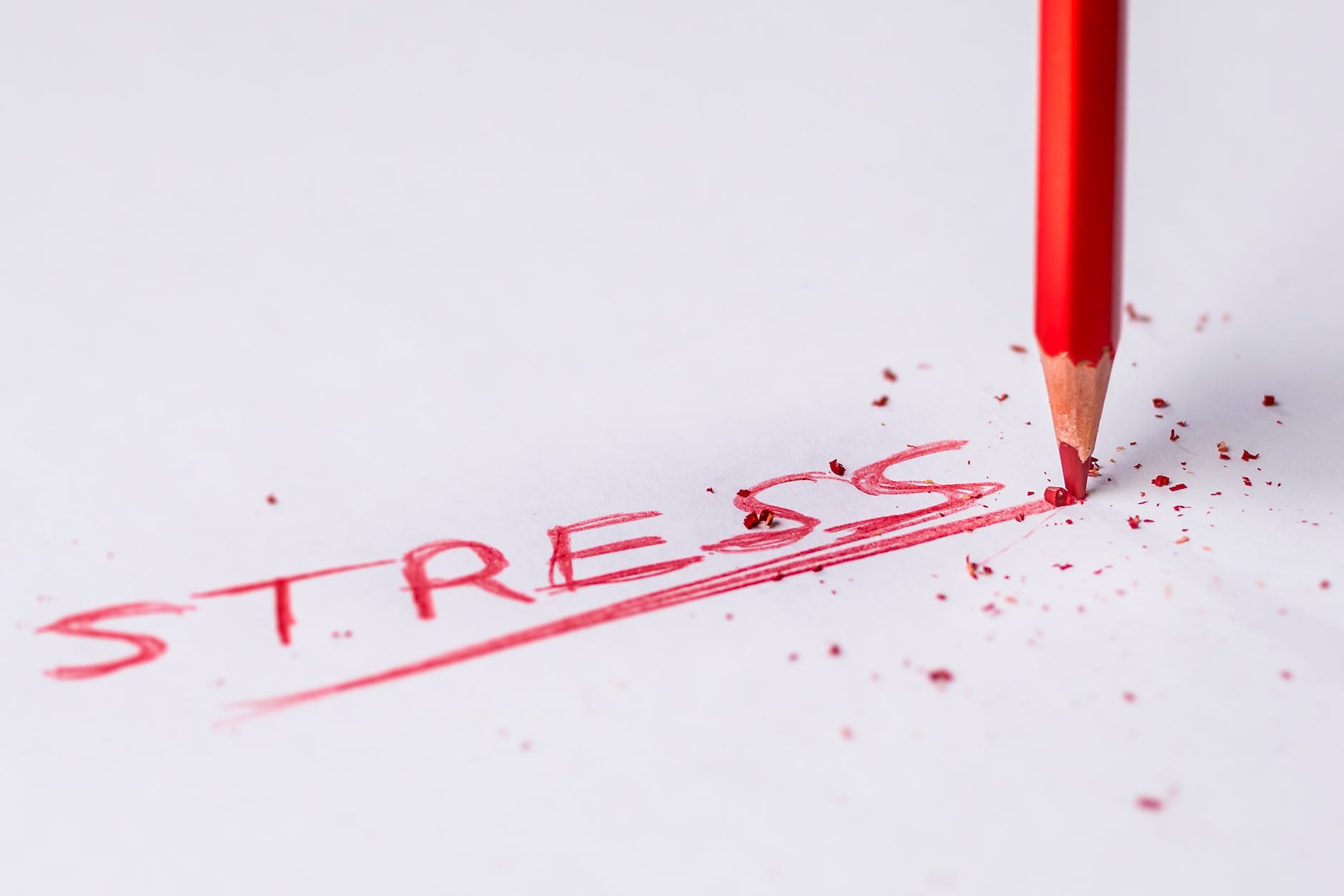
stress handwritten text on white printer paper
Stress – Photo by Pedro Figueras on Pexels.com

Seven Simple Rules to Follow

We are approaching the end of summer. For those who have already returned from vacation it may be difficult to go back to everyday life, to start over with the usual routine.

So, I would like to share with you seven simple rules to follow for a quiet and less stressful life:

1. Make peace with your past so that it won’t disturb your future.

2. What other people think of you is none of your business.

3. The only person responsible for your happiness is you.

4. Don’t compare yourself to others, you may get hurt.

5. Time heals almost everything. Give yourself more time.

6. Stop thinking so much. Accept not to know all the answers.

7. Smile. You cannot control all the problems in the world.

Would you consider following these simple rules? Do you have any other to add? Let me know!

two yellow emoji on yellow case
Smile – Photo by Pixabay on Pexels.com

The Link Between Sleep & Weight

Do you know that sleeping less than 7 hours will make you gain weight? Let’s see how.

It is known that sleep affects overall well-being, but few people know that it also has a direct link to your weight.

This relationship was highlighted by a study conducted by researchers at the University of Chicago, coordinated by Dr. Eva Van Cauter, director of the Center for Sleep and Metabolism. According to scientific research, sleeping less than 7 hours a night would contribute significantly to weight gain. The reason is that less sleep corresponds to a greater appetite during the day because the body automatically tends to feed more to stay awake longer. Sleep is in fact an essential condition for regulating many biological mechanisms, both mental and physical.

While you sleep, your metabolism slows down, allowing your body to consume less and optimize its energy reserves. Sleeping poorly and a few hours interrupts this rhythm, so increased appetite is one of the many ways nature tries to compensate for what it lacks. It is estimated that just one hour less sleep than the recommended average of 7/8 hours translates into a consumption of about 300 extra calories per day and 1 kilogram of extra body weight per week!

All this is due to the decrease in the satiety hormone, while ghrelin, the hunger hormone, increases. That is why, despite attempts to lose weight through exercise, few results are achieved. It is obvious that sleeping more and better is not the only thing you can do, but it is a good habit that should be part of a healthy lifestyle, including a rich and varied diet.

Therefore, to get back in shape, in addition to going to the gym and seeking advice from a nutritionist, you could simply increase the hours and quality of your sleep, thus restoring the balance of your body.

How to avoid arguments with your partner

How to avoid arguments with your partner? It may seem strange to you, but the way you argue with your partner says a lot about the relationship. Arguments demonstrate that you care about each other’s feelings!

Even if you complain, for example, that you are bored, or you are left alone too often, this is a sign that you would like to spend more time with your partner and share intense moments with him/her.

Here are 5 tips to avoid arguments with your partner.

1 – Do not say anything that you will immediately regret, be sure to stick to the topic discussed, and listen carefully to your partner. In the end you may be wrong and it would be wise to admit it.

2 – It is important to recognize when you and your partner can no longer have constructive discussions. If every time you have to debate a topic, you end up getting angry, it’s time to work on managing the conflict.

3 – You shall be ready to see the other person’s point of view, how they feel, what they expect from you and what they want to do to regain happiness.

4 – It is normal to be upset, however, screaming, having vulgar language, and anything else that could hurt your partner mentally or physically is going to have disastrous consequences. Try to remember why the discussion started, what the issue was, why it needed to be addressed, and do your best to see your partner’s point of view.

5 – Finally, keep your emotions under control. Remember that if your emotions take over it may be destructive. You should try to make a strong and reasonable case. If the topic of the dispute is particularly sensitive, it is even more important for you to control your emotions. The purpose of an argument is not to hurt each other, but rather to reconnect with each other in ways you didn’t do before.

Don’t hesitate to share these simple tips with people around you, you may save a couple in trouble!

unrecognizable couple holding hands at sunset
Reconnection – Photo by Trung Nguyen on Pexels.com

Would You Recognize Anxiety in One of Your Friends?

If you have been lucky enough not to have suffered from anxiety disorders, you may not understand what it means to be in such a situation of psychological distress.

Family or friends, mostly out of fear, tend to think that the person suffering is not strong enough or determined to get out of it.  However, no one chooses to be anxious or depressed, and no one has the magic wand to put an end to such suffering.

Moreover, people who suffer from anxiety are not as easily spotted as you may think. Many victims of anxiety often wear an unconscious mask of confidence and apparent happiness.

They want to hide a disorder that is very difficult to live with because they feel the constant apprehension of revealing it to their loved ones. Anxious people would not want to cause additional worries that could be difficult for their family and friends to deal with. They are also afraid that the relationships could be strongly impacted.

Therefore it may be difficult for families and friends to detect or recognise anxiety disorders.

However, if one of your friends in distress would end up speaking to you about their true condition, then you could try to provide appropriate support. Dialogue, emotional presence and referral to health professionals such as a psychotherapist who would help identify the basic problem are some of the first steps towards healing.

Would you like some tips on getting rid of anxiety? Have a look here!

Sleeping Well Is One of The Secrets for Your Well-being

Sleeping well is one of the secrets for your well-being that has been confirmed by science several times.
Find out what a good night’s sleep can bring in terms of well-being.

In the past people would go to bed at sunset and get up at sunrise. Our ancestors had no alarm clocks, they did not have neither a schedule to stick to, nor morning meetings to participate in. Their sleep rhythm was simply based on the natural day/night cycle, basically on the light.

Maintaining a healthy and regular sleep pattern is one of the (many) challenges of modern life. With our busy schedules, long working hours and smartphones always on, it may happen that we don’t get enough sleep.

Yet even though we all have a schedule to stick to, cutting back on your sleep hours is never a good idea. Sleep really has fabulous benefits, and getting enough sleep is vitally important for your overall health and well-being. Sleeping well doesn’t just serve to look good: it keeps you healthy.

Discover six benefits of sleep for your happiness and health.

1. Sleep makes you look good

Sleep is perhaps the closest thing to a fountain of youth. During deep sleep, the brain secretes a growth hormone responsible for cell renewal and repair of damaged tissue. This growth hormone is only released at night and can work miracles for your skin. The skin cells themselves go into repair mode when you sleep. Their metabolism accelerates and they regenerate faster than at any other time of the day.

In addition to these freshly renewed and healthy cells, sleep also has the effect of increasing blood flow to your skin, which is why your cheeks are warm and pink when you sleep. Lack of sleep can make the skin dull or chalky.

Thanks to a good night’s sleep you will look naturally throughout the following day.

2. Sleep strengthens the immune system

Researchers are only confirming what your mom has always told you: when you’re sick, the best thing to do is stay in bed and sleep as much as possible. Sleep helps fight the flu and other similar conditions, because the body produces disease-fighting proteins called cytokines when you sleep. If you’re sick often, maybe you’re not getting enough sleep. To strengthen your immune defences, try going to bed earlier or napping during the day.

3. Sleep helps solve problems

When faced with a dilemma, a good night’s sleep can help make the right decision. Researchers have observed that sleep helps solve problems creatively, because it provides access to the mass of knowledge and memories stored in your brain. At rest, your brain looks for associations that are not obvious when you are awake. This makes it possible to imagine creative solutions to solve the most difficult problems using information you didn’t even know you had. 

stress handwritten text on white printer paper
Photo by Pedro Figueras on Pexels.com
4. Sleep reduces stress

Sleep and stress are back-feeding. Stress can cause a lack of sleep and lack of sleep can generate stress. It’s a vicious circle that can be hard to get out of. But by managing your sleep well, you learn to fight stress too. Better quality sleep helps your body and mind recover, but you’ll also be less sensitive to stress if you’ve slept well. All challenges are easier to face after at least 6 hours of good sleep!

5. Sleep helps to lose weight

If you’re looking to get back on your ideal weight, a good nap can be as effective as a workout. A study published by the American Journal of Clinical Nutrition claims that people who sleep well burn more calories during the day than people who don’t get enough sleep. According to researchers at the University of Chicago, sleep promotes weight loss, and another study in the journal Obesity shows that tired people tend to consume more caloric foods.  

6. Sleep is good for your social relationships

Sleeping well is not only good for your physical and mental well-being, it is also a way to keep healthy relationships. Lack of sleep makes us more irritable, less patient, and with less energy to devote to others. It also impacts our capacity for empathy, and prevents us from being sensitive to the emotions of our loved ones. In short, we are much more pleasant for others when we are well rested. A nap may not solve all your relationship problems, but sometimes all that’s missing is a few hours of sleep.

What do you think about your sleeping pattern? Do you sleep longer enough to be healthy?

alone bed bedroom blur
Sleeping – Photo by Pixabay on Pexels.com

Working Four Days a Week

In Iceland they carried out an experiment. From 2015 to 2019, 2,500 people (equal to 1% of the inhabitants) participated in a very ambitious project: to reduce working time without reducing wages. Public sector employees, with different profiles and working in different sectors (schools, hospitals, social and administrative services), worked 4 days a week following their working hours, not necessarily during the day.

Objective

Analyse positive changes in professional and personal life.

How it was achieved

Communication mainly via emails, reduced time of breaks and daily activities redistributed in order to optimize the available time.

Results

The results speak for themselves. In 4 years, participants’ productivity and well-being have increased, while stress and risk of burn-out has decreased considerably.

The results show that the 2,500 workers involved used their free time to recover their energy, to spend more time with their families, or to practise their hobbies. This has led unions to renegotiate employment contracts and now 86% of Icelandic employees have chosen to work less for the same salary.

Benefits

A marked improvement in the quality of life has been noticed. In fact, it is often the work environment that increases states of anxiety and malaise.

This research could be replicated in the UK, because, according to a survey, 63% of the population would be in favour. In addition, 45 deputies voted a motion to ask the government to study this proposal.

Would you like to work 4 days a week? I think this is an inspiring model to be exported without hesitation!

person holding white stylus
Working Week – Photo by Jess Bailey Designs on Pexels.com

Non-Violent Communication

Non-Violent Communication (NVC) developed by Marshall Rosenberg is a form of philosophy of life that seeks on the one hand to strengthen relationships (starting with the one with yourself) and on the other it is a way to begin a dialogue favouring mutual understanding, open mind and kindness.

NVC aims to connect people in a peaceful way, using words without offending people, without attacking them and at the same time without annihilating yourself. It is an assertive way of communication. We listen to understand.

In these times of uncertainty and difficulty due to the persistence of the Covid emergency, we are super stressed and sometimes we can have excessive verbal reactions, which we may regret later.

We can consider the NVC as a real tool for maintaining a healthy relationship with ourselves and with others. Who hasn’t ever wanted to express themselves so as not to hurt or attack the other?

NCV consists of a simple method of clear and empathic communication, based on these four steps.

Observation of the facts.

Try to identify the fact without expressing any judgement. E.g. “It’s two o’clock in the morning and I hear music coming from your room” (fact) is different from saying: “It’s too late to make all that noise” (judgement).

Feelings.

Express the feelings that accompany the observation. Or, imagine what the other person feeling is and ask them. E.g. “You are about to take an exam and I see you walking back and forth (observation). Are you nervous?”

Recognition of needs.

Express the needs that give rise to certain feelings. E.g. “I am a bit upset and would like to talk. Is this the right time for you?”

Formulation of requests.

Ask clearly and precisely what you want. E.g. “I noticed that you are very silent today (fact). Are you bored? (feeling).” If the answer is yes, try to communicate your feelings and make a proposal: “Well, I’m bored too. How about going out for a walk?”.

Finally, the ultimate purpose of NVC is to find a way in which each person can express what they consider important without blaming, humiliating, embarrassing, or threatening others. It serves to resolve conflicts, get in tune with people and live in a conscious and attentive way of their needs, finding a compromise with your own.

NCV helps us to discover our experiences and our aspirations and to express them with firmness and kindness.

Furthermore, it also allows us to make ourselves better understood and to understand others better, by easing intra and interpersonal tensions. NVC offers keys to understand our limits and to welcome the actions and reactions of others without letting ourselves be overwhelmed!

Thanks to this tool you can lose the fear of expressing yourself and gain more confidence in your abilities.

What do you think about NVC?

ground group growth hands
Trust – Photo by Pixabay on Pexels.com

Why Being Curious Is Worth

We are all born curious. Think about when you were a child or at children you know. They are extremely curious, aren’t they? They ask a lot of questions and they put themselves in dangerous situations.

Curiosity has great benefits: from rejuvenating your minds to helping you cope with change successfully.

However, we don’t all experience it the same way. There are those who are fascinated by Instagram to look into others’ lives, and there are some people who focus their interest on getting to know how things work, like for instance a car engine.

In both cases they are curious people.

However, the latest research shows that there are different types of curiosity which influence our personality and abilities.

Let’s look at the typology proposed by Todd Kashdan, of George Mason University, and other authors:

Joyful exploration: this is the classic type of curiosity. You look for something related to new knowledge or information, from learning how to cook a dish you liked to knowing who built a particular building. This curiosity, as the name indicates, is linked to the joy of learning something you did not know before.

Anxiety caused by missing something: this dimension has a different emotional tone. While the previous one gives you joy, in this case you get stressed or anxious to know how to solve a problem during an exam or to remember something that does not come to your mind, for example.

Tolerance to stress: it is activated when you accept doubt or anxiety facing new, complex or unknown events. In some ways, it helps reduce resistance to change. It allows you to ask yourself what there may be beyond fear, for example when you experience changes in your job.

Social curiosity: if you are socially curious you tend to observe what others think, or how they behave. It is the desire to learn about others’ lives through the press, TV or social networks.

Thrill-seeking: This is the dimension that leads people to take any kind of risks to seek out new experiences, such as practising extreme sports or travelling to dangerous countries for the pleasure of the adventure.

According to a research conducted in 2018 on over 3,000 workers in the United States, Germany and China, 84% recognized that curiosity allows them to generate new ideas and 64% that it helps them to get a job promotion. Furthermore, according to the study’s conclusions, the first four dimensions of curiosity improve outcomes at work while people with high social curiosity are best at stirring up conflicts and gaining trust.

Ultimately, you can have one or more of the previous dimensions and, depending on this, you will  be a joyful explorer, or you will be more inclined to solve problems, or, thanks to your social curiosity, you will be more empathetic.

Which category do you think you belong to?

black and white boys children curiosity
Children Are Extremely Curious – Photo by Pixabay on Pexels.com