Non-Violent Communication

Non-Violent Communication (NVC) developed by Marshall Rosenberg is a form of philosophy of life that seeks on the one hand to strengthen relationships (starting with the one with yourself) and on the other it is a way to begin a dialogue favouring mutual understanding, open mind and kindness.

NVC aims to connect people in a peaceful way, using words without offending people, without attacking them and at the same time without annihilating yourself. It is an assertive way of communication. We listen to understand.

In these times of uncertainty and difficulty due to the persistence of the Covid emergency, we are super stressed and sometimes we can have excessive verbal reactions, which we may regret later.

We can consider the NVC as a real tool for maintaining a healthy relationship with ourselves and with others. Who hasn’t ever wanted to express themselves so as not to hurt or attack the other?

NCV consists of a simple method of clear and empathic communication, based on these four steps.

Observation of the facts.

Try to identify the fact without expressing any judgement. E.g. “It’s two o’clock in the morning and I hear music coming from your room” (fact) is different from saying: “It’s too late to make all that noise” (judgement).

Feelings.

Express the feelings that accompany the observation. Or, imagine what the other person feeling is and ask them. E.g. “You are about to take an exam and I see you walking back and forth (observation). Are you nervous?”

Recognition of needs.

Express the needs that give rise to certain feelings. E.g. “I am a bit upset and would like to talk. Is this the right time for you?”

Formulation of requests.

Ask clearly and precisely what you want. E.g. “I noticed that you are very silent today (fact). Are you bored? (feeling).” If the answer is yes, try to communicate your feelings and make a proposal: “Well, I’m bored too. How about going out for a walk?”.

Finally, the ultimate purpose of NVC is to find a way in which each person can express what they consider important without blaming, humiliating, embarrassing, or threatening others. It serves to resolve conflicts, get in tune with people and live in a conscious and attentive way of their needs, finding a compromise with your own.

NCV helps us to discover our experiences and our aspirations and to express them with firmness and kindness.

Furthermore, it also allows us to make ourselves better understood and to understand others better, by easing intra and interpersonal tensions. NVC offers keys to understand our limits and to welcome the actions and reactions of others without letting ourselves be overwhelmed!

Thanks to this tool you can lose the fear of expressing yourself and gain more confidence in your abilities.

What do you think about NVC?

ground group growth hands
Trust – Photo by Pixabay on Pexels.com

How and Why Yoga Helps You Maintain Physical and Mental Balance

Over the last few years, a very old practice has become the subject of scientific studies: yoga. Positive effects on the brain have begun to be measured, such as anti-stress and anti-depressant effects.

The studies began thanks to the spectacular spread of yoga. Millions of people practice yoga regularly. Positions (asanas) such as the warrior or the cobra are increasingly known among different people and age group. The reasons are mainly that persons want to learn how to relax, how to get rid of several kinds of pain (back, neck, shoulders, etc.) manage stress, and maintain good physical shape.

Traditional yoga (from the Sanskrit “yuga” which means “union”) comes from India and is a discipline more than five thousand years old. An important source of this spiritual school, which should guide us towards the divine, is a writing by Patañjali: Yoga Sutra, which contains the essential foundations of the discipline.

According to this essay, the purpose of yoga is to attain a higher form of self-knowledge, which can be achieved with inner contemplation. In addition to specific physical exercises, and breathing techniques, traditional yoga also includes meditation, a vegetarian diet and an entire philosophy of life. The modern and western form of yoga omits many of these elements. The development of strength and plasticity, meditation and breathing exercises play the most important role today.

At the beginning of the twentieth century, a small group of Indian yoga teachers began to spread the teachings of yoga in the Western world. After the explosion of fitness in the 1980s, which focused above all on the cult of the body, the spiritual part has been lost a little. Therefore, in the Western world mainly hatha yoga began to spread.

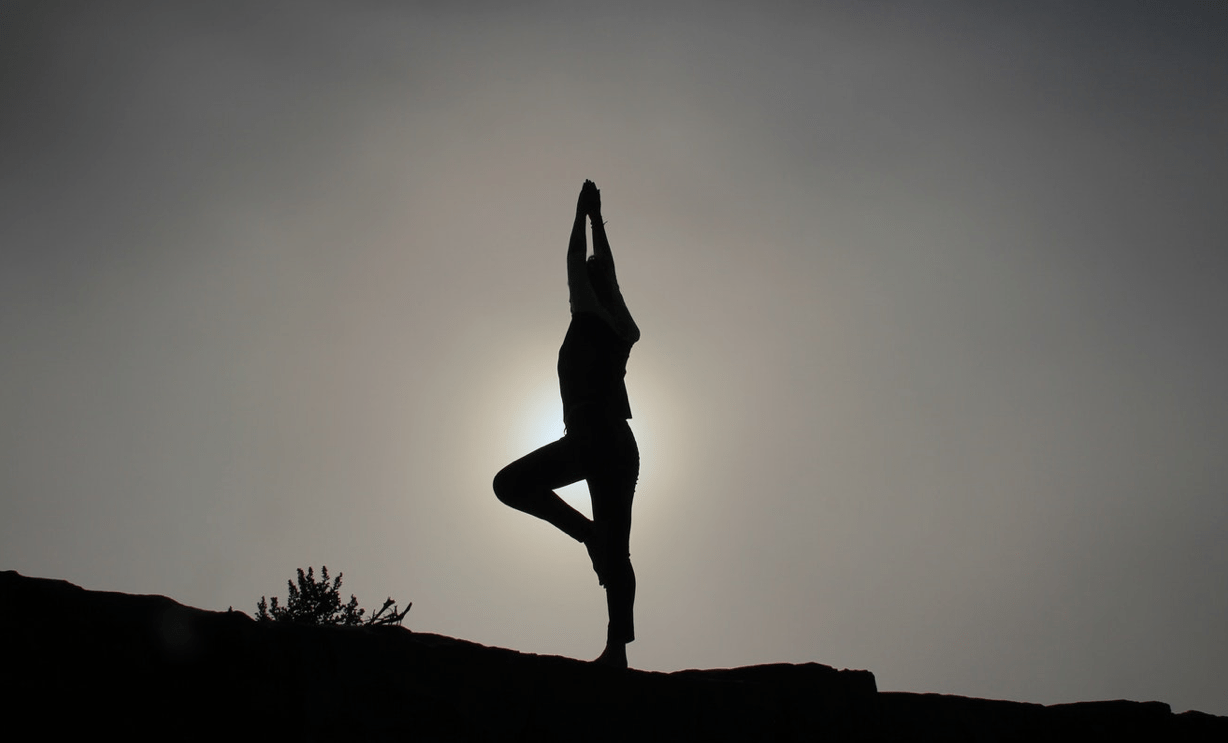
Photo by Mor Shani on Unsplash

The effects of hatha yoga on health are: improving body consciousness and coordination, strengthening muscles and enhancing blood circulation. Moreover, yoga is also beneficial to stress management.

From experience, I can say that after a yoga session I feel relaxed and rested. It takes longer to reach a similar state with meditation, while hatha yoga produces effects immediately, probably thanks to the more marked physical component. It is actually proved that physical exercise is good for your spirit. Perhaps, this is why yoga is a fast-acting cure-all, as it associates physical exercise with meditative practice.

In fact, by associating postures (asanas) with breathing (pranayama), we act on the body by relaxing the muscles, and on the spirit because the sympathetic nervous system (the nervous system that is stimulated when we rest or sleep) is activated.

Yoga allows you to find calm despite the limits imposed by everyday life. With regular practice, even 5 minutes a day is enough, you will sleep better, your self-confidence will increase, as well as your ability to make decisions and manage stress.

Considering all those positive aspects, are you planning to start practising yoga?

balance blur boulder close up
Photo by Pixabay on Pexels.com

How And Why Reinventing Yourself. Find It Out by Following These 6 Steps

Have you ever wanted to reinvent your life? Have you tried several times but failed? Reinventing yourself professionally or personally can be a challenge but also a great adventure. Follow these 6 steps to succeed.

First step: find or wake up one of your passion.

Photo by Braden Collum on Unsplash

Concluding one phase and starting another one is not easy. Reinventing yourself requires more commitment than a simple change. Consequences may impact vital aspects of your daily life and a lot of courage and determination are needed.

The pandemic phase has forced all of us to look within and it is possible that many of us are dealing with the need of reinventing ourselves. There will be some who feel empty and need to do something to fill the empty spaces, others who have been forced to reinvent themselves due to the loss of a family member or a friend, others due to difficulties with their work.

For one reason or another, these are times when you need to stop to reflect and make decisions. Let’s see how to deal with this situation.

Reinventing yourself in a satisfactory way presupposes confronting yourself with one of the most uncomfortable emotions that exist: fear. You will be forced to leave your comfort zone and take a leap in the dark. The best antidote to fear is passion. It is the first success factor in a “reinvention” phase. Finding your passion, or awakening it, is only possible if you are honest with yourself. You have to ask yourself questions like:

  1. who I really am;
  2. what I want to do;
  3. which of my passions can help me in this moment.

An honest reflection and re-discovery your old dreams are the fundamental ingredients to neutralize fear and not fearing the future.

The second factor that will help you is not to assess uncertainty as a danger but as an opportunity. It is a question of letting go nostalgia and opening up to the experience of the “new”, so that to focus on what you want and not on what you fear.

To achieve this, you must be willing to learn with humility. If you think you already know everything, it is difficult to be able to start over in any area of ​​your life in a satisfactory way. The success of those who are successful is only the tip of the iceberg, behind there are hours and hours of training and mistakes that are barely seen.

Facing the future and uncertainty also requires a great deal of creativity and imagination. When reinventing yourself, it is important to keep a compass to map the path you are taking. The future is not written anywhere, it is up to you to create it and to do so you need our imagination and hard work.

Photo by Jamie Street on Unsplash

Reinventing yourself means knowing yourself from another perspective and being surprised by the opportunities that suddenly begin to present themselves. If we want your new self to be successful, you need to go out and make yourself known. For this, it is essential to strengthen your network of contacts.

The final ingredient for your success is to be self-confident, because you are capable of doing things you do not even imagine. But you need to learn to use the resources you have and find others available around you.

To conclude, here are the six ingredients to successfully reinvent yourself:

  1. find / awaken your passion to neutralize fear;
  2. transform difficulties into opportunities;
  3. learn, learn, learn;
  4. use great creativity and imagination;
  5. make yourself known;
  6. be self-confident.

Are you ready to reinvent yourself now?

Photo by Ahmad Odeh on Unsplash

Idee per sopravvivere in un ambiente di lavoro ostile

Ho pubblicato un breve libro che racconta delle mie esperienze negative in ambito lavorativo e di cosa ho fatto per riprendere in mano le redini della mia vita.

Il libro inizia con la parte più importante: i ringraziamenti. Se già ci rendessimo conto di quanto sia fondamentale ringraziare quotidianamente per le cose positive che ci accadono, come, per esempio, vedere un meraviglioso tramonto, stupirsi per il continuo rinnovarsi della natura, l’autista dell’autobus che ti aspetta perché ti vede correre, l’amica che ti telefona per andare al cinema, i pagamenti della fatture, l’acquisto di un paio di scarpe nuove, insomma tutte le piccole cose che rendono grande la vita, avremmo già fatto un passo avanti verso il raggiungimento della serenità.

Nell’introduzione racconto il mio sogno. I sogni ci sono stati rubati. La nostra società ci insegna che sognare é un illusione, che comunque bisogna guardare in faccia alla realtà delle cose, che non sempre é piacevole. Ti ricordi i sogni che avevi da bambino? La fantasia non aveva limiti. Crescendo, il sistema scolastico e sociale ci ha reso cartesiani, cioè razionali e rigorosi sul piano logico. Il che va bene, ma non avremmo dovuto dimenticarci che noi non siamo solo mente e cervello. Siamo anche anima e spirito, oltre che corpo ovviamente. Coltivare un sogno significa coltivare la parte più spirituale di noi stessi, la parte che ci connette alla nostra intimità e che proviene dal nostro inconscio. In altre parole, il sogno rappresenta il nostro desiderio più profondo. Prova a fare l’esercizio dei 101 desideri proposto da Igor Sibaldi e ti renderai conto di quanto sia atrofizzata la nostra capacità di sognare.

Nel mio lavoro (mi occupo della gestione delle risorse umane) ho occasione di leggere testi di psicologia perché mi servono a capire meglio le dinamiche delle persone. Per il mio libro mi sono ispirata a diversi autori:
Viktor Frankl, Man’s Search for Meaning
Rhonda Byrne, The Secret
Deepak Chopra, diversi testi
Albert Ellis, la sua Rational Emotive Therapy
Chris Johnstone, Find your Power

Il racconto delle mie esperienze é sotto forma di diario, anzi sono proprio le pagine del diario che ho tenuto durante cinque anni circa per documentare il mobbing che stavo subendo. Devi sapere che dimostrare il mobbing dal punto di vista legale é molto difficile. Devi raccogliere testimonianze da colleghi (e solo quelli che non hanno paura di ritorsioni da parte dell’autore del mobbing saranno disponibili), email, ogni cosa che mostra che l’atteggiamento intenzionale nocivo nei tuoi confronti é ripetitivo e non occasionale.

Nel primo caso di mobbing che ho subito ero impreparata e mi sono rivolta ad un avvocato, con grosse implicazioni finanziarie. Poi, ho lasciato perdere perché avevo paura di non trovare più lavoro. La paura é una grande nemica.

La seconda volta ho documentato il caso con oltre 100 pagine tra email e scritti vari e l’ho presentato al mio direttore. Io me ne sono andata, ho cambiato lavoro un’altra volta, ma il direttore ha aperto un’indagine verso l’autore del mobbing che successivamente é stata licenziato.

Per concludere il libro, ti propongo delle tecniche e degli esercizi di facile comprensione e immediato utilizzo che mi hanno aiutato a superare questi momenti difficile della mia vita.

Ecco qui i link a due articoli pubblicati sul mio libro:

Mobbing sul lavoro: come fare e come difendersi

Sopravvivere allo stress di lavoro e evitare il burn-out: consigli e risorse

Il libro é in vendita sulle principali piattaforme digitali alla cifra simbolica di 0,99 cent.

Becoming Resilient

What is resilience? Resilience is the capability to recover quickly from difficulties and withstand stress and catastrophe. Resilient people have the optimistic belief that failures can be opportunities to learn, develop new skills, ideas or career options. You can read further on what it means to be resilient here.

According to psychologists, you can develop resilience in several ways. First, exercise regularly and get enough sleep, so that you can control stress more easily. The stronger you feel physically and emotionally, the easier it is for you to overcome challenges. Then, focus on thinking positively, and try to learn from past experiences. Build strong relationships with colleagues and friends, so that you have a support network to fall back on. Set specific and achievable personal goals that match your values and will drive you to achieve your purpose. Work on building your self-confidence.

Have a look at those stories of individuals who have shown resilience to overcome failure and achieve success:

famous entrepreneur stories

23 Incredibly Successful People Who Failed At First

Would you like to learn how to respond to the challenges of your daily lives in a more balanced and sustainable way?

Would you like to understand your own personal feelings, needs and limitations?

Would you like to start thinking positively and to be creative?

Get in touch with me, I will help you to get there!