
Ideas to Try out in Your Free Time

To recharge your batteries, you do not need to go to an exotic place, do a daring trekking, or organize a party with a thousand guests (by the way, this is not the case considering the new variant of Covid.) There are many activities you can explore. Here are some ideas to try out in your free time.

Free time, it speaks for itself, is a time during which you do not do the usual things and you can plan your day without too many constraints or obligations. It is a unique opportunity to listen to your needs, without an agenda to follow, to enjoy and savour your moments of freedom that can allow you to take better care of yourself.

Vacations are certainly a panacea to authorize you to do something you have not had the time or energy to do before.

However, decelerate, take moments to listen to yourself, live the present moment, relearn to live at the rhythm of your body, listen to your heartbeat, do relaxing, creative or spiritual activities are things you can do also on weekends.

Starting today, I’ll be posting from time to time ideas to try out in your spare time.

Let’s start.

  1. Write a song, a poem or a letter. Write a song, a poem or a letter addressed to yourself telling something about your life, or your emotions, or what comes to your mind, no matter the topic. In addition, if you can write and play music, why don’t you try also to compose something for the text you have prepared? Then, when you feel confident, try making a great video to share with friends!
  2. Discover a town or a village near your place that you have never visited. Sometimes we don’t think about the treasures hiding close to where we live. Take a day to go and explore the area near you, eat in a typical restaurant, visit places of cultural and touristic interest, then if it’s worth, take a room at the hotel to continue the visit in complete tranquillity the day after.
  3. Create a time capsule. What is a time capsule? My idea of a time capsule is nothing more than a box (for shoes is absolutely fine) that you can personalize by putting inside photos, newspaper clippings, drawings, the letter you wrote to yourself. Use your imagination to create a box that contains everything that represents your current self. Keep it, and have a look at it in a few years time, to see how you have changed. You may be surprised at the progress you have made!
  4. Learn a new skill. If your old hobbies bore you or you don’t have any real hobbies, why not start one? What about learning a new language, a sport that has always attracted you, or a musical instrument? Listen to your passions and develop your talents. Make a list of the things you’d like to do, then choose what you like best.

I’d like to know your ideas! What do you do in your free time?

See you soon with other suggestions.
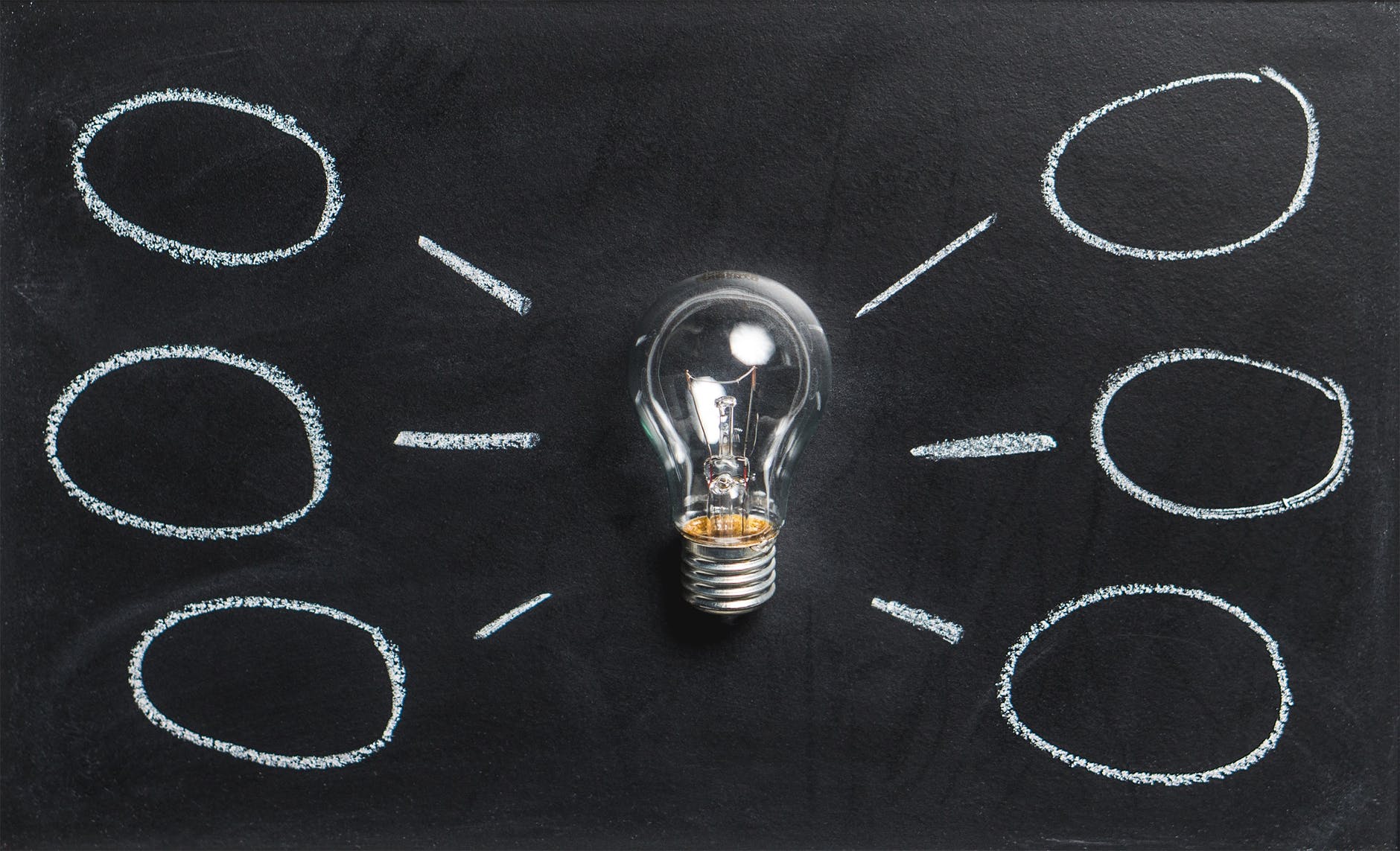
clear light bulb
Ideas to Try out in Your Free Time -Photo by Pixabay on Pexels.com

How and Why You Should Listen to Your Body

In our times, we receive information from many sources: emails, social networks, television, people we know and colleagues. Our mind is over-stimulated for the duration of the day and this can cause stress and anxiety, which can also cause a real burn-out.

The excessive exposure to those information is detrimental to the activity of our body which is relegated to a mere container of organs that allow us to move (even if sometimes less than what we should).

Too many hours spent in front of the screen (mobile phone, computer or television) do not allow the body to tone up and therefore regenerate. During the pandemic, it has become even worse, because of the restrictions imposed to avoid the spreading of the virus. We could go out less often, or not at all.

Furthermore, it can happen that we ignore the pain from the body by using analgesics or other types of medicines to avoid feeling sick.

crop patient taking pill from table
Photo by Artem Podrez on Pexels.com

If you do this, know that you are waging war to yourself, because silencing your body will not help you solve the problem.

Our body is sending us important signals that we will need to start considering. By continuing to ignore the messages it sends us, there may come a time when the pain becomes unbearable and it might be too late.

As soon as you hear a strange noise coming from your car, you take it to the mechanic before it breaks down. The same thing you should do with your body.

For example, if you experience often back pain, it means that you need to change your position, adopt a more adequate posture, maybe change chairs or just go for a walk.

Try to think that pain is actually your ally because it wants to tell you that there is something wrong with you and which you should take care of.

Let’s see four techniques that you can use every day to learn listening to your body.

Mental scanner. This is a mindfulness technique that involves mentally scanning of your body from the top of your head to the bottom of your toes to check if each part is healthy.

Daily walks. This is the best way to get up of your chair. Usually all mobile phones have an app to calculate steps. I signed up for a monthly “race” with colleagues to take at least 6,000 steps a day. At the end of the race, there will be an award for the walker who has taken the most steps. Run a race with your friends or colleagues too!

Feeding your body and mind. The Japanese eat up to 80% of their hunger in order not to get heavy (this is a principle of Ikigai). Therefore, eat less but eat healthy, and sleep at least six hours a night so that your body and mind can do a complete “reset”.

Respect the messenger. Instead of taking medicines at the first symptom of discomfort or pain, try listening to your body, what it is communicating to you. Think that your body needs to be considered and looked after. Don’t wait for your body to ask you for help when you are in extreme pain, as remember that it might be too late.

When you don’t feel well, what do you do? Do you listen to your body or you take medications?

namaste sign on wall
Photo by Mikhail Nilov on Pexels.com

5 Effective Ways to Relax Yourself

Do you feel the need to relax but don’t know which relaxation method to choose? Here are some of my favourite ones! You have to just choose the one that inspires you the most.

Method 1: mindful breathing.
Obviously it is not our normal way of breathing, which consists of inhaling and exhaling without even realizing it. It is a conscious breathing, to which you have to pay attention.

How does it work? Sit where you want, on the floor, on a chair, on the sofa. Begin to inhale through your nose by inflating your belly. Slowly breathe out through your mouth, emptying your belly (it’s also a good exercise for your abs). Just focus on the air flow that passes through your body. You will see that your breathing slows down and your body slowly relaxes. The ideal would be to practice this type of breathing at least three times a day. You can do it everywhere, you always breath, you only need to do it mindfully. One minute of deep, conscious breathing will help you to relax.

Method 2: meditation.
I am not referring here to transcendental meditation, but to meditation in full consciousness (mindfulness), accessible and easy to apply. Meditation helps you take care of yourself and your mind, allowing you to be aware of the “here and now”, moving away from stress and problems.

How does it work? Close your eyes and concentrate on the sensation of the air going in and coming out from your nostrils. Try not to be distracted, and every time you notice that your mind is wandering, focus back your attention on the breath. A meditation session can last a few minutes for beginners and hours for the more experienced. If you are a super technological type, you can try apps that guide and follow you during your meditation journey. It would be ideal practising this type of meditation a few minutes several times a day.

Method 3: massage
Massage eliminates tension and provides a feeling of serenity and super pleasant well-being. So if you have the chance, get a massage. Your stress will disappear. If you don’t find anyone among your family or friends that can massage you (in these confinement times you cannot go to a wellness centre), you can take massage devices, which you can use for the neck, feet, back or head. There are also armchairs that do massages and even a mask that gently massages your eyes and makes you look and feel perfectly rested! A simple solution for the feet could be crushing and rolling tennis balls. It is almost like having a reflexology session. Give it a try!

Method 4: Yoga and Pilates
They are two similar disciplines and are both helpful for your physical and mental health. While Yoga focuses on the physical and mental connection, Pilates is more similar to a sport that, however, makes us use deeply the muscles of our body.

Method 5: aromatherapy
Aromatherapy uses the aromatic essence of plants to prevent, cure or relax. In the latter case, you can use an essential oil diffuser that allows the atomization of the oils and their diffusion in the home environment.

What oils can you use to relax? Here are some that I like very much:

  1. Lavender essential oil: it has sedative and calming properties and allows relaxation.
  2. Neroli essential oil: it reduces stress and fights insomnia and tension.
  3. Marjoram essential oil: it regulates emotions and protects you from fears.
  4. Grapefruit essential oil: it combats stress and helps you resolve doubts.
  5. Mandarin essential oil: it is relaxing and sedative.
  6. Scots pine essential oil: it helps you control emotions.

Here are my favourite relaxation methods. Choose the one you like most and, if you like, let me know. You can even choose more than one because taking care of yourself is the best thing you can do!