
Why You Would Need a Range of Influencing Tactics to Better Communicate

The modern workplace is constantly changing, and you may sometimes struggle to convince your boss or your colleagues of the merits of your idea. This means that you would need a range of influencing strategies, to ensure that you become comfortable with influencing different people at different times and in different situations.

You can use more than one way to convince your colleagues of your idea’s strengths. You can use both logic and emotion strategies or you can demonstrate both the positive aspects of the plan and the negative aspects of the alternatives.

Therefore, you may like to follow one (or more) of these four strategies:
  1. Investigator
  2. Calculator
  3. Motivator
  4. Collaborator

1. Investigators draw on facts and figures to support a logical and methodical approach. To become adept at this style of influencing, it is important to feel comfortable handling data, finding information that supports your strategy, and then using it to form a convincing argument.

Information gathering is the first step. Effective influencers of this type collect two main types of information: background data, which informs their view of the world, and task-related data, that is for a specific purpose. Be sure to chunk your information before delivering, to avoid the audience stopping listening. And sure be also not to pass too many information.

2. Calculators tend to use logic to influence.

This strategy depends on giving time and effort to in-depth analysis and the creation of a well-structured argument. Skills associated with this approach include the ability to weigh options, the capacity to provide feedback, and the understanding of when to offer concessions.

Stick to the facts so that you keep your credibility, but remember to compare your proposal’s benefits with the risks of inaction in a way that your listeners can relate to.

3. Motivators use emotions and the “big picture” to communicate compelling visions of the future. While some people seem to be natural motivators, there are some simple lessons that anyone can learn to influence through motivation.

You can add structure to your enthusiasm, and maximise the impact of any presentation you have to give. You may use the Monroe’s Motivated Sequence. In five steps you will gain your audience’s attention, and leave team members with specific actions that they can take afterwards.

You might think that you lack the natural charisma to be a motivator, but the good news is that this skill can be developed. You can learn to be more engaging, likeable and inspiring. Concentrate on your body language, help others to feel good, and show empathy, assertiveness and confidence.

4. Collaborators use motivation too, but they persuade people by involving them in the decision.

Collaborators are great team builders. They engage people’s hearts and minds. This helps people to own the process of change for themselves. In these circumstances, your role is to be a facilitator rather than trying to convince team members logically.

To be a collaborator, you likely need: the ability to share power, the capacity to listen actively, and the willingness to communicate openly.

Which one of these influencing strategies you think would be the most effective for you?
Do You Often Forget Things?

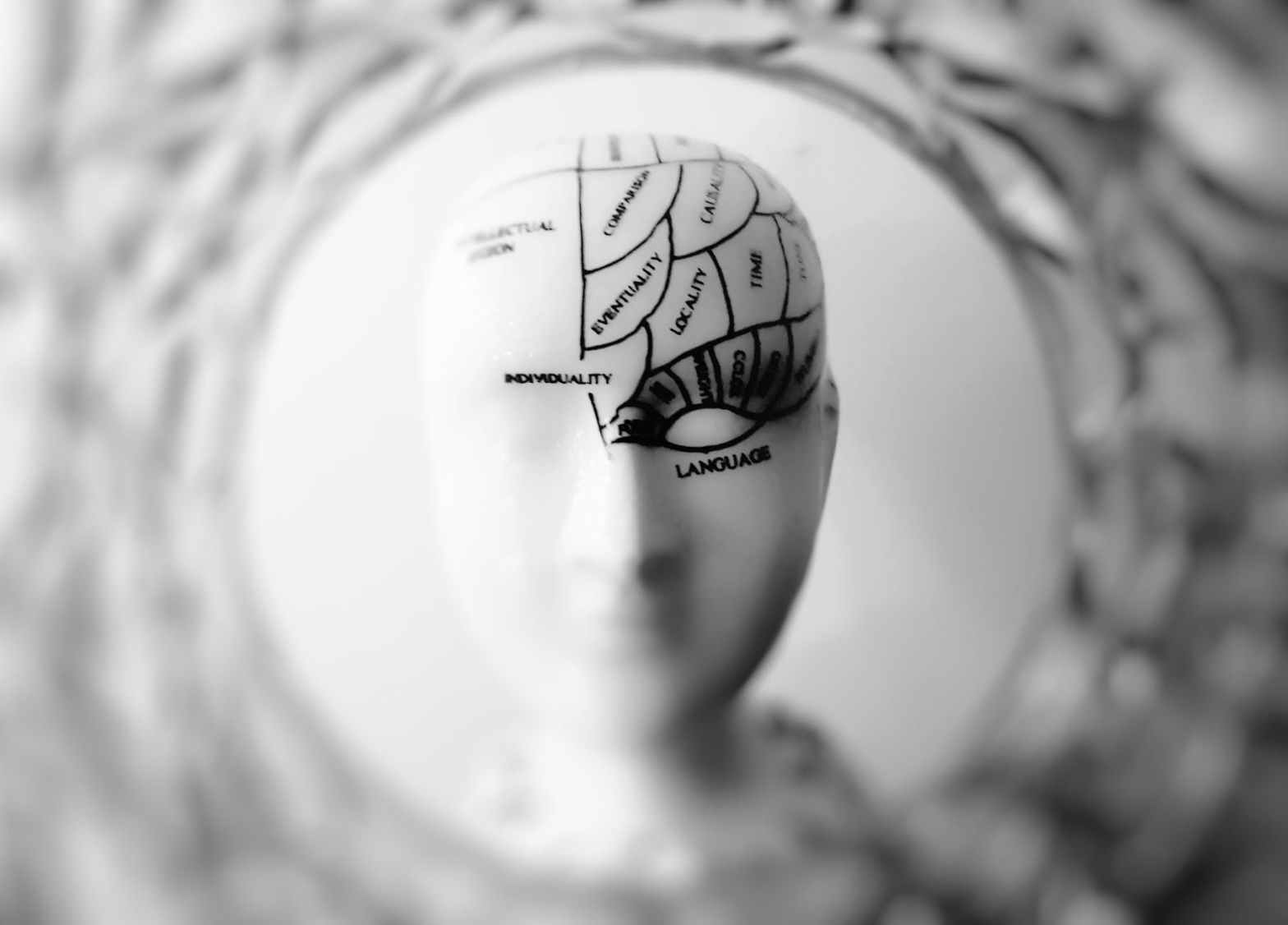
Do you often forget things, from the most trivial trifle to the most important thing you have in mind?

Don’t worry, as one study has found out that:

“The point of memory is not being able to remember who won the Stanley Cup in 1972 but to make you an intelligent person who can make decisions”

While shopping, you may forget one of the most important items you were supposed to buy, or in the middle of a conversation with friends, it’s impossible for you to remember the title or the name of the author of a book you were recommending.

In short, it feels like starting Alzheimer’s because you notice that you have difficulties remembering (almost) everything.

But don’t worry, because a study by two researchers at the University of Toronto (Canada) reveals how important it is to forget.

Paul Frankland and Blake Richards, researchers at the University of Toronto conducted a study that found out that people who are more likely to forget are also the smartest!

“It is of utmost importance that the brain is able to select the information it acquires and eliminates irrelevant details, thus focusing on a more general view to ensure that decisions are made in the most correct way.”

These are the words of Blake Richards denying the belief that those who can remember more things are also the smartest, and confirming almost the opposite. The elimination of unimportant information allows us to increase our analytical abilities, focusing our attention on the fundamental things and avoiding unnecessary work of our brain.

The researchers developed this study after several years of research on memory loss and brain activity, including both humans and animals.

The conclusion is that:

“If you forget occasional details,” Richards says, “it may mean your memory is healthy and doing exactly what it should be doing”.

Are you someone who often forgets things?

You can find more on brain here.

The Power of Intuition

Intuition has always been a fascinating subject of study. It is generally associated with genius, because the greatest scientific discoveries happened thanks to moments of intuition.

Einstein wrote:

Intuition is a sacred gift of which reason is a faithful servant. We have created a society that honours the servant and forgets the gift.

In addition, we all know that it is thanks to our intuition that we make some of the decisions of our lives, even if we consider ourselves rational and Cartesian beings.

From the point of view of the Eastern religions (Buddhism, Hinduism, Taoism) there is no mystery. In the traditional languages of these millennial wisdoms, the terms designating knowledge, consciousness, lucidity are often identical.

Attachment to mental constructions, beliefs, and concepts, as well as the mental agitation that accompanies it, are seen by them as a veil over primordial intelligence. Buddhists explain it like that:

if we do not stir water, it will become clear by itself. In the same way, if we leave unchanged the nature of the spirit, and we do not manipulate it, it will find peace and clarity on its own.

But let’s go back to the West and see that to make a decision we will evaluate three elements:

  1. rational analysis,
  2. emotional aspect,
  3. intuitive wisdom.

However, if we practise meditation, thoughts and emotions would calm down, and intuition would manifest. In fact, there are several testimonies from practitioners who tell that the most creative ideas came at the end of their meditation.

In a linear, predictable, and orderly environment, a rational analysis is often more effective for deciding and planning an action.

On the contrary, in a volatile, unpredictable, or chaotic environment, when the human element predominates, intuitive intelligence becomes useful.

Therefore, meditation is more and more used in our times, as we live in an ever-increasing insecurity and instability.

How intuition works

Intuition draws on three main resources.

  1. Like a tree, the first source is the ramification of its roots. It is the entirety of information, of experiences lived in the past and stored in the unconscious.
  2. The second source is comparable to the leaves of a tree. These are the strong or weak signals, picked up in the present instant.  All these signals are undefined and cannot be evaluated by rational analysis.
  3. The third source is collective intelligence. In fact, our personal intuition can go beyond temporal and spatial limitations. Intuitive intelligence can tap into a nearly unlimited source, outside the limits of time, space, and the individual. All this is normal according to Buddhist philosophy where, for example, the individual, time, and space are conceptual categories created by the mind.
two brown trees
Trees – Photo by Johannes Plenio on Pexels.com
How do you synthesize these sources of information?

Cognitive science researchers have tried to answer.

Just before an intuition, there is a “letting go” moment, a descent within us. Then, suddenly, the presence increases, there is a kind of awakening, a feeling of unity and inner agreement. There is also a feeling of evidence, of surprise, of amazement and wonder.

These are the elements that we also find in a meditative experience: letting go, increased presence, awakening, unity.

It is necessary to emphasize the essential place occupied by the body in intuitive intelligence.

How many times have you made rational or emotional decisions while your body opposed it? Did you regret this decision a few days, months or years later? It happened to me several times in my life. I should have listened to the signals that my body sent me and taken them into account when making my decision.

In this regard, body scan meditation can help to develop this sixth sense of intuition. We shall also consider that if we constantly ignore the body’s messages, we might experience illness, pain, or disorder. Which is what happened to me.

Intuition, beyond the help it provides us in making decisions, is our deep inner voice, our wisdom, our most precious guide. It is important to learn to listen to it and to look after it.

To conclude if you hesitate to follow your intuition, try asking yourself these two questions, which will help you clarify what is at stake:

  1. What do I risk following my intuition?
  2. What do I not risk following my intuition?

What do you think about intuition? Do you agree with me that it is powerful?

This article has been previously published on Wise&Shine magazine.

Why Sleeping Less than 6 Hours Is Not Good for Your Health

A few days ago, I came across an article on the Internet that recommended sleeping three consecutive hours and then taking three 20-minute naps throughout the day. This sleeping pattern was indicated as a model for obtaining success inspired by great world managers or businessmen, in particular they referred to Elon Musk. 

As a person who has trouble with sleeping, I can tell you that science warns that too little sleep affects cognitive performance, behaviour and metabolism. With this strategy, you may be successful at the price of your health.

Sleeping is also productive. To get enough energy and focus to devote to work or another productive activity such as studying, you need to sleep at least 7 and half hours.  

person in beige long sleeve shirt using macbook pro
Photo by cottonbro on Pexels.com

One of the functions of sleep is to process and consolidate learning, focus and memory. Sleeping implies continuing to work, because the brain clears up the bombing of information accumulated during the day that is generally very intense due to the different sources available today. Our biology is prepared for short periods of sleeplessness in stressful or urgent situations.  

Several studies have revealed that the habit of dedicating a few hours to sleep reduces cognitive performance, causes focusing deficit and loss of the ability to make decisions, as well as increases states of stress, anxiety and depression. Humans are ‘circadian animals’, programmed for 24-hour sleep-wake cycles. Sleeping for a few hours is a physiological assault on our body and, in particular, on the brain. If sleeping little is your choice, know that this alters the neuron-hormonal pattern which can cause:

1. emotional problems;

2. difficulty in acquiring new learning;

3. problems in storing new information;

4. increased nervousness and anxiety.  

Thinking that sleeping is a waste of time is wrong because it has health consequences. Sleepiness and loss of focus are evident the next day, while other problems could arise in the long term, such as an increased risk of cancer, cardiovascular disease, hypertension, neurodegenerative disorders and metabolic disorders. Actually, sleeping for short time also increases appetite, with obvious consequences on your weight. Lack of sleep, in fact, leads to have frequent snack and drink sugary or caffeinated beverages.  

Another important question is whether these negative health effects also occur when you wake up very early. Studies show that getting up too early does not necessarily cause alterations, as long as your sleep has been restorative enough. Remember that it is very important to complete five or six sleeping cycles every night (a sleep cycle lasts an average of 90 minutes).

What about you? Do you sleep enough to be productive?

back to school flatlay
Photo by olia danilevich on Pexels.com