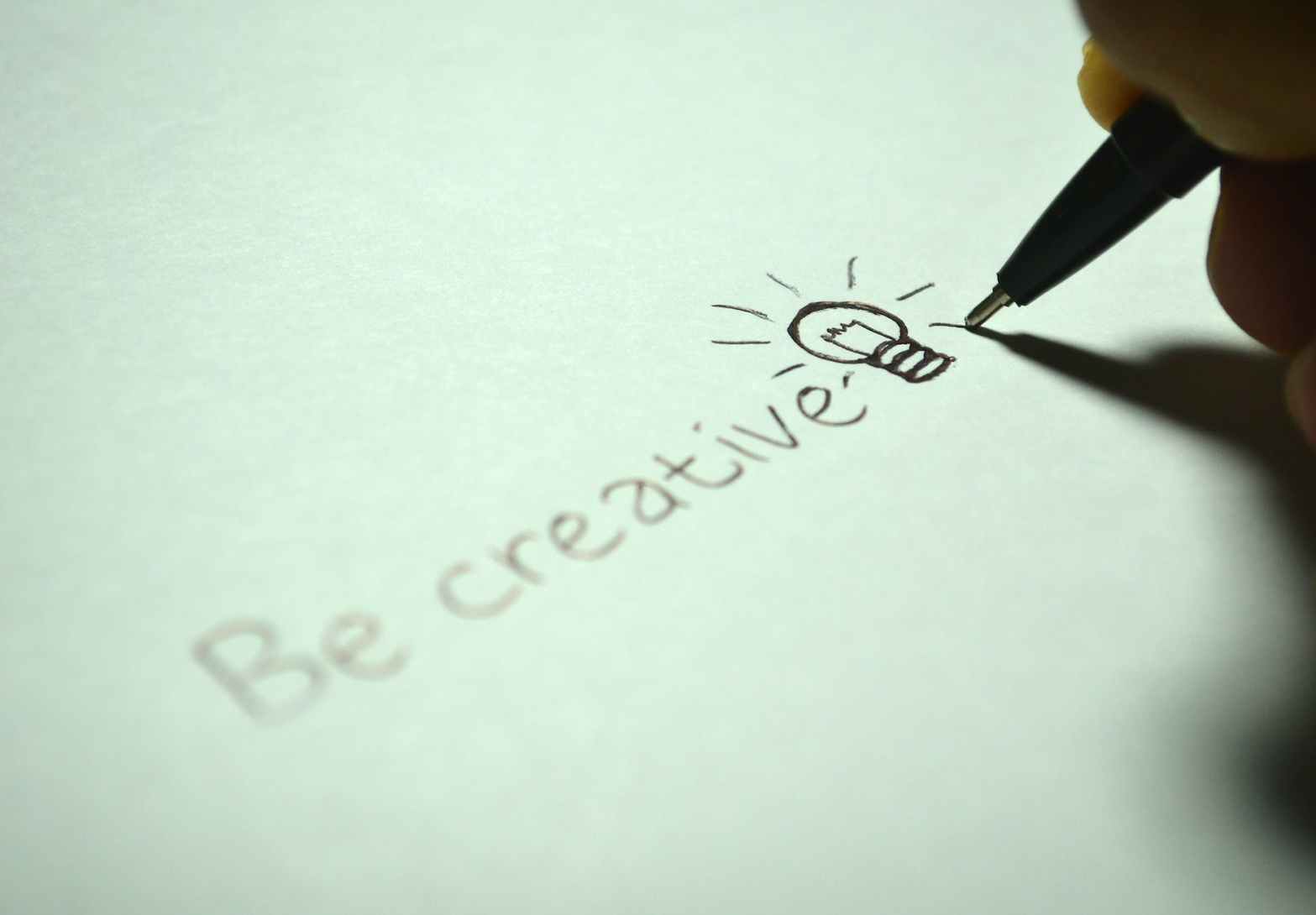
Nurturing Creativity: Unleashing the Vital Skill for the Future

In the fast-paced world of tomorrow, creativity stands tall as one of the essential skills. In this article, I aim to demystify the concept of creativity and provide you with valuable resources to delve deeper into this skill.

Beyond the conventional perception of creativity being limited to artists and innovators, I explore its universal relevance, the process it entails, and how anyone can harness and enhance their creative capabilities.

Unveiling the Real Essence of Creativity

Commonly, creativity is associated with individuals possessing extraordinary artistic or inventive talents. However, this narrow view is debunked by creativity expert Sir Ken Robinson. In his immensely popular TED talk, Robinson reshapes our understanding of creativity, emphasizing:i

  • Creativity’s significance across all spheres of life and work.
  • The inherent creativity we are born with but tend to outgrow.
  • The misconception that creativity thrives only when boundaries are absent; in reality, it often thrives within constraints.
  • Viewing creativity as an ongoing process, not a singular event, and thus, acquirable by all.

Creativity, Imagination, and Innovation Distilled

Distinguishing creativity from imagination and innovation is crucial. The following definition outlines the two fundamental phases of the creative process:

  • Generating ideas.
  • Making judgments to evaluate the value of those ideas.

This dual-phase approach sheds light on the myriad factors that foster creativity, including cognitive abilities, knowledge, thinking styles, motivation, personality traits, and environment.

Fostering Creativity: Techniques and Strategies

While no foolproof formula exists to boost creativity, several techniques can be beneficial:

Empowering Resources for Unleashing Creativity

A wealth of online resources awaits those seeking to enhance their creative prowess:

Embrace the exciting journey of nurturing your creativity, a skill pivotal for the future. Shedding the misconception of creativity being exclusive, the universal relevance is unveiled and the process demystified. With an array of techniques and resources at your disposal, you’re empowered to unlock your creative potential and contribute meaningfully to the ever-evolving world. So, dive in, explore, and enjoy the transformative power of creativity!

How to Free Yourself from the Negative Energy of Others and Be Happy

If you want to be happy or happy again, here are five tips you should remember and use whenever you are surrounded by people spreading negative energy.

1. Find the source – If you want to protect yourself from negative energy, I would suggest you first locate the cause. Don’t be afraid to confront it then. In the end, you will be able to free yourself from all negative influences.

2. Focus on the positive – If you focus on a certain positive thought to help you eliminate negative energy, rather than focusing on the unpleasant things, you will be able to tune into the positive energy and use it to your advantage.

3. You have the power to find the right solution – No matter what happens in your life, you will always be able to improve things. Believe in your potential and power to become happy and satisfied with your life. This way, you will understand that you are not a helpless victim.

4. Meeting positive people – The best way to avoid negativity is to meet positive people. It’s important that you have a friend who can support you, be there for you, and help you with life’s tough challenges. If you don’t want to go out, you can always suggest other ideas.

5. Negative energy isn’t always addressed to you – You might think that all negativity is targeting you directly. But this is not true. Negative energy is more about the emotional condition of others. In other words, it doesn’t depend on you and it is not always addressed to you.

Do you have other strategies to free yourself from negativity?

Ideas to Improve Your Productivity

Looking at some of the most successful people in their job, I found out that they all seem to have one thing in common: getting up early. But what do they do in the morning? What are their routines to be more productive? Here are some ideas to copy from them to improve your productivity,

By getting up early, you could do a lot of things more in a day and therefore in your life.

However, not everyone likes to get up early, it may depends also on your chronotype. I believe that it is better to wake up naturally, without an alarm clock. Of course, it is not always possible. But as far as I can, I try to avoid meetings in the morning. I prefer to take things calmly when I get up and have breakfast quietly.

More active with physical activity

Getting up early also means that you can workout as first thing in the morning. This workout makes you more alert and active, wakes up the metabolism and, above all, you would not need to worry about doing physical activity for the rest of the day.

Cold shower

You may shiver just thinking about it, actually I do and I don’t take a cold shower but if you can take it you will get some benefits. It improves circulation, reduces stress, and can even help you lose weight.

Read, watch videos, participate in trainings

Successful business people are generally also smart people.

Therefore it is not very surprising that they consider it important to have their brains function well. Some read about 50 books a year, others declare spending 80% of their day reading. There are people who prefer watching videos or participating in trainings. This is also very good to keep your brain active.

Meditation for relaxation

Do you practise meditation? I do for ten minutes a day. Most of successful business leaders practise it. And they all confirm that meditation helps them relax, sleep better, reduce stress and improve their quality of life.

Of course, it is not only by following this morning routine that you will have a successful professional life! You would need to work a lot, follow your talent, develop your passion and competences.

Are you ready to become more productive in your work?

silhouette photography of jump shot of two persons
Success – Photo by Jill Wellington on Pexels.com

Ideas to Try Out in Your Free Time (part three)

Do you know what are you going to do today? Are you bored sometimes on Sundays?

Here are some ideas that you could try out in your free time, or when you feel bored. 

  1. Have you ever thought about becoming a juggler? In addition to the development of concentration and the improvement of psychomotricity, juggling is very fun to learn. Once you master it, it is an activity that will entertain children, but not only. Then, who knows, it could become a second source of income. 
  2. Offer yourself a moment of relaxation. Whether you go to a specialized center or have someone come to your home, offer yourself a moment to relax. A massage with essential oils made by expert hands is a panacea for relaxation. You can call someone to your place, as I do when I want to get a pedicure. You could also organize a complete home ritual: scented bath, candles, and of course relaxing music. 
  3. Organize a movie night. Choose your favorite film, or one you would like to share with your friends, prepare some popcorn, something to drink and start watching the movie. At the end you can discuss it with your friends. 
  4. Participate in a festival. Look on your town’s online agenda to see if you find a dance, music, or theater festival. If you don’t find it nearby, then look for it in other places, maybe in one of those places that you wanted to visit for a long time. And if you do not find anything today, look for something to do next Sunday.
  5. Plan a visit to a museum or exhibition. We usually are prepared to go more or less far to see an exhibition, forgetting about the treasures close to home. Search for the list of museums that are located in your area and book a guided tour with the one that interests you most. Of course, if you don’t like guided tour, you could also go on your own!

Have you come up with ideas for activities to try in your free time to share with others?

photo of cushion seats on ground
Cozy Space to Relax – Photo by Taryn Elliott on Pexels.com
More ideas here:
and here:

Ideas to Try out in Your Free Time

To recharge your batteries, you do not need to go to an exotic place, do a daring trekking, or organize a party with a thousand guests (by the way, this is not the case considering the new variant of Covid.) There are many activities you can explore. Here are some ideas to try out in your free time.

Free time, it speaks for itself, is a time during which you do not do the usual things and you can plan your day without too many constraints or obligations. It is a unique opportunity to listen to your needs, without an agenda to follow, to enjoy and savour your moments of freedom that can allow you to take better care of yourself.

Vacations are certainly a panacea to authorize you to do something you have not had the time or energy to do before.

However, decelerate, take moments to listen to yourself, live the present moment, relearn to live at the rhythm of your body, listen to your heartbeat, do relaxing, creative or spiritual activities are things you can do also on weekends.

Starting today, I’ll be posting from time to time ideas to try out in your spare time.

Let’s start.

  1. Write a song, a poem or a letter. Write a song, a poem or a letter addressed to yourself telling something about your life, or your emotions, or what comes to your mind, no matter the topic. In addition, if you can write and play music, why don’t you try also to compose something for the text you have prepared? Then, when you feel confident, try making a great video to share with friends!
  2. Discover a town or a village near your place that you have never visited. Sometimes we don’t think about the treasures hiding close to where we live. Take a day to go and explore the area near you, eat in a typical restaurant, visit places of cultural and touristic interest, then if it’s worth, take a room at the hotel to continue the visit in complete tranquillity the day after.
  3. Create a time capsule. What is a time capsule? My idea of a time capsule is nothing more than a box (for shoes is absolutely fine) that you can personalize by putting inside photos, newspaper clippings, drawings, the letter you wrote to yourself. Use your imagination to create a box that contains everything that represents your current self. Keep it, and have a look at it in a few years time, to see how you have changed. You may be surprised at the progress you have made!
  4. Learn a new skill. If your old hobbies bore you or you don’t have any real hobbies, why not start one? What about learning a new language, a sport that has always attracted you, or a musical instrument? Listen to your passions and develop your talents. Make a list of the things you’d like to do, then choose what you like best.

I’d like to know your ideas! What do you do in your free time?

See you soon with other suggestions.

clear light bulb
Ideas to Try out in Your Free Time -Photo by Pixabay on Pexels.com

Creativity: the skill of the future

Creativity is among the top three skills of the future.  I try to clarify this concept and give you more resources to explore it further.

We often associate creativity with artistic or innovational abilities, that only certain special people have. Those people are supposed to live a life of free expression and to produce ingenious works of arts or invent something useful for the human kind.

However, according to creativity expert, Sir Ken Robinson, this view of creativity is erroneous. Robinson, whose talk on this subject remains the most viewed video on Ted.com, states that:

  • creativity is essential for all spheres of work and life, not just the arts,
  • we are all born creative, but grow out of it,
  • creativity does not require freedom from boundaries and usually takes place within a given framework,
  • creativity is a process, rather than an event, and consequently,
  • it can be learned by all.

Creativity is closely linked to, but different from imagination and innovation. This definition of the concept identifies two phases of the creative process:

  1. generating ideas,
  2. making judgements (evaluating the value of those ideas).

This helps explain why so many different factors may be conducive to creativity, such as intellectual abilities, knowledge, styles of thinking, motivation, certain personality traits and environment.

Even though there is limited scientifically sound conclusions on how to become more creative, a number of techniques may help:

There are a lot of resources available on the Internet that will help you boosting your capacity to create original and useful work:

Have fun!