Letting go of the burden of the past is important to your happiness.
Many people live in the past; they remember what they were, the love stories that did not go well, their failures and disappointments.
Such a burden takes away space and energy from the present, which is actually the only time you can live actively.
I read somewhere that happiness consists in enjoying good health and having a bad memory.
Actually, you should learn to let go of the past, forget about the insults received, the bad events and the mistakes, in short, all the bad memories, and learn to focus more on the present.
Photo by Ian Dooley on Unsplash
Here are some tips you could follow.
The best antidote to guilt, resentment, or anger that takes you back to the past is to devote energy to building the life you want.
Stop playing the victim and become an active protagonist of your life
Your memories change while time passes by, they may distort, and they do not really reflect what happened. Try asking a person who shared an event with you to tell you about their memory and then compare it with your memory. You will see that you and that person remember different aspects of the same fact.
Prioritize your well-being. Life is too short to spend arguing and complaining. What happened could be a source of stress and even discomfort. Continuing to feel anger at a past event drains up your energy. It is more important for your physical and mental health to live quietly than to be right at all costs.
The past, however, also brings with it good memories and lessons learned, which shape your personality.
Have a look at what Buddhism teaches: “Joy and happiness arise from letting go. Sit down and take an inventory of your life. There are things you have been hanging on to that really are not useful and deprive you of your freedom. Find the courage to let them go.”
Covid has radically changed our way of life in the city. Consequently, also our relationship with the city has changed.
If you were willing to pay more for a down-town rent or to buy a small apartment to live in the city, would you do the same today?
Data on home purchases in Belgium show that people during the pandemic wanted to buy or rent properties in the countryside, where homes are cheaper and bigger. Nature is a source of energy that can help us in difficult times such as those of Covid.
If being able to have a quick aperitif after work, to go out for dinner in the evening without having to travel too many kilometres, or going to the cinema or a concert, justified the fact of living in small apartments, where you are exposed to not always easy coexistence with the neighbours and outside noise and traffic, is this still the case now?
Cities during the pandemic have turned into places to mainly work and sleep. Maybe you started asking yourself, what kind of life is it?
If you were able to go to work during the pandemic, didn’t you have the impression of living in the office? If, on the other hand, you have always worked from remote, don’t you think that you have been experiencing difficulty in finding work-life balance?
With the rules of lockdown even using public transport was a problem, due to the fear of contagion. We started to do shopping close to home.
Photo by Matt Seymour on Unsplash
Staying at home all the time and respecting the rules of lockdown have caused spreading of anxiety in a worrying way. In fact, it has been proven that living in the city makes you feel more isolated, even if the opposite would seem to be true.
For a long time we have been deprived of our need and desire for sociability, our walks have been reduced to the tour of the neighbourhood to fulfil our daily commitment to take 6000 steps or not to forget the challenge of staying healthy despite everything.
Things as common as eating with friends or colleagues, going to the cinema or shopping, have turned into extraordinary things.
Is that why living in the countryside has perhaps become more popular? Would spending less on a house with a garden and nature nearby make you change your mind about living in the city?
The society we live in often leads us to reverse priorities and put work first. This can negatively affects our quality of life and physical, mental and emotional health.
According to researches carried out in France, physical suffering related to work affects 3.1% of women and 1.4% of men, but according to some experts, the figures are higher. The international classification of diseases identifies burn-out as a work-related phenomenon but in reality work is not the only cause.
With the cost of living constantly rising, we are likely to work longer hours to earn a salary that allows us to provide for our own needs and those of our family. Because of this, many elements of our private life are put aside.
We spend many hours working, reducing the time to eat, to rest, to be with the family, and we do not realize how much this can harm us.
While most of us cannot afford to leave their job, a balance must be found between work and private life to prevent stress from building up in a worrying way.
Photo by Christin Hume on Unsplash
In this period of forced tele-working, it is even more difficult to put boundaries between work and private life. For this reason, many governments have been drafting directives that establish the right to “disconnect”. We need to have the time to do sports, to walk, to take care of our dear ones, to follow our passions or simply to rest.
More and more people suffer from stress, feel exhausted, have problems with nutrition, addictions, or relationship difficulties, and all that because of the long working days, which do not leave us the time to do activities for our well-being.
If you feel you are in one of those situations, know that no salary is worth your health, no job is worth the wear and tear that comes from working days that annihilate your energy and happiness.
If you have no other alternatives to the work you are currently doing, find something positive to balance your life, because otherwise, there may come a time when you will start making mistakes at work and your overall performance will suffer. Start looking for another job but put your health in the first place, because if you get ill it may take a long time to recover.
Your job is an important part of your life, but it is not your life. There is much more: family,health, and friends. Do not allow work to take up all the space in your mind and body, taking the joy away from you.
Remember always taking care of yourself first, because this is the only way you can live a better life.
The blow the pandemic has been giving us is clear. Even in the same city, restrictions force us to select who we want to see and who we don’t. A difficult decision, but it can have a positive side: selecting those friendships that contribute most to our well-being.
This selection could be actually a good thing. It has been studied that qualitative relationships are limited. And in the current context, we cannot expect the number of friends we have to be the same as before. The pandemic is teaching us to prioritize and truly care for the people we consider important. This is an improvement that compensates for a possible loss.
But how to choose? The answer is not that difficult. If we think carefully, we realize that the people we have stopped seeing are mainly those people we have never seen regularly (for example, the colleagues we only met at work). This situation shows clearly who we must meet in favour of those with whom we want to meet. What makes a friendship satisfactory is presence and dedication.
Studies conducted define the four characteristics of authentic friendship: trust, sincerity, fidelity and reciprocity. When you lose one of these pillars, you may want to say goodbye to your friend.
But the pandemic has not only made us stop seeing some people, it has also made us fight with some others. We are all more anxious and stressed. Also the fact of wearing the mask incorrectly could trigger a conflict. When this happens, it is advisable to stop relationships until the tension fades away. We already have to endure all what the pandemic entails that we don’t need to add any more stress.
For friends who have passed the “selection”, it is time to find time and space to share with them to interact without distractions and have a relaxing chat. Looking into each other’s eyes when we speak, taking care of the posture of our body, using appropriate tone and words, are only some elements of an effective communication also among friends..
Maintaining and caring for our good friendships can also improve our health and increase our ability to bear stress.
To have a full and healthy life, we should spend more time with friends, albeit only in a virtual way for the time being. With the difficulties caused by the pandemic we must find new ways to relate to each other, and continue to invest time in finding new subjects of conversation, for example talking about a series that you are watching, being on platforms to carry out online activities together, or having a drink together on a video call.
“She asked me to put her in copy to all emails, even the most trivial ones. Sometimes she would knock on my office door to ask me if I was okay because I had spent a lot of time in the bathroom, when actually only five minutes have passed. She checked when I walked in and when I left my office to see how long I had been way. The pressure she exerted by checking every detail of my work was suffocating, more than exaggerated and above all counterproductive.”
This is just a testimony from an employee who used to work with a micro-manager. What exactly is micromanagement? It is a managerial practice through which the manager exercises exhaustive control of the actions, tasks, functions and responsibilities of the people subordinated to him / her at a hierarchical level.
This type of managers may also ask to see an email before it is sent, and they may want to be informed of all the decisions that employees need to take, because they think that their staff cannot take decisions. A micromanager combines impatience and distrust with absolute control of the tasks assigned to their subordinates.
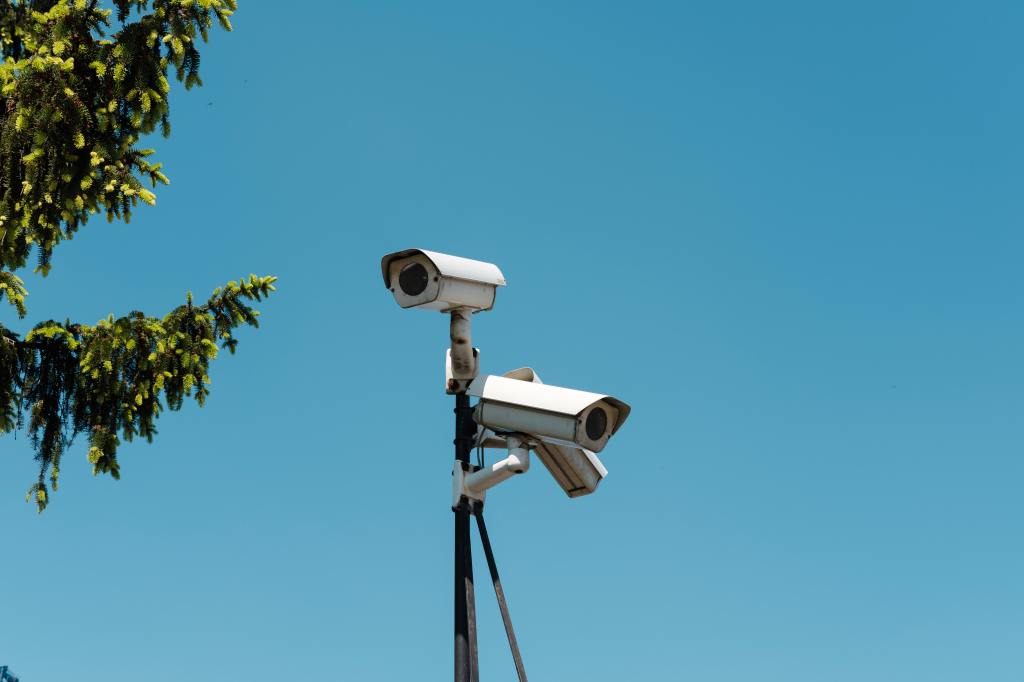
The situation look like the schemes used by the “Thought Police” to scrupulously monitor every moment of the characters in George Orwell’s “1984” novel. As in that book, the consequences of this practice of strict control on employees are devastating. The boss gains in peace of mind but staff suffer from it and are also less productive. Actually, this system creates bottlenecks that cause a slowdown in all activities. This type of manager wants to earn a good reputation and prevent a supervisor from blaming them that something was wrongly done.
Photo by Michal Jakubowski on Unsplash
But the worst part falls on the employees. Many times they do not know how to give priority, because the boss constantly changes their priorities based on the urgency that arrives, or because a superior asks him or her or it is the market requiring that. Employees lose creativity and self-esteem. A culture of fear is established, where everything is subject to the orders of the superior. This can lead to sickness absenteeism.
Apart from real psychosomatic diseases that can arise, psychological situations can also develop for which the person feels worthless, becomes smaller and smaller until they doubt their abilities. You begin to ask yourself: “Am I capable of doing it? ”,“ Am I in the wrong job? ”,“ Why do they control me like this, what have I done wrong? ”. And it can also happen that you quit your job, even if you have a good salary. When a situation cannot be changed or accepted, you have to leave it, and, in this case, you leave your job.
It is important to know that people do not quit jobs, they leave bosses.
But why do managers fall into this trap?
If micromanagement spoils the work environment, employees’ health, and it is harmful even to bosses who lose productivity and may lose also staff, why can’t this total and constant control be avoided? The bosses don’t have enough work to do?
Let’s see the possible causes.
First, managers themselves suffer pressure from the environment, be it from their own bosses, shareholders, markets or competition.
Second, incompetence. Either managers feel unsecure because their staff perform an excellent job compared to their own, or the employees are not suitable for that type of job.
The third cause is clear and straightforward: the boss’s obsessive personality making them unable to organize and manage the work.
Whatever the cause is, it is necessary to analyse what is happening in order to put an end to the situation as soon as possible. First, you should go to the human resources of your company. I have worked in human resources for over 10 years and have seen a lot of micromanagement.
As an alternative, you could turn to your superior and ask them to implement one or more techniques, perhaps with the help of a coach. One technique could be that of the traffic light. Together with the boss, you define the admissible and acceptable control limits, that are not to be exceeded. If these limits should be overcome, some signals will be sent to the manager. When the manager receives them, they identify their behaviour and try to control it.
Another strategy is to define the profile of the boss and of each team members, analysing their personal, professional and communication style and characteristics. Once this “x-ray” is completed, the boss shall answer the following questions:
1. What leadership style they use with each employee;
2. What leadership style each employee would need;
3. Which leadership model they would like to use with the each employee.
By doing so, the boss can realize that the type of leadership they are using is in line with that person’s role, but it is not what that employee, due to his or her personality, needs. By adopting this paradigm shift, the boss begins to think not from their own point of view, but from that of the subordinate. While this strategy may sound like science fiction, with time and a willingness to change, success is assured.
Our well-being should be our priority. But nowadays the society we live in often puts pressure on us so that we reverse priorities in a way that can seriously compromise our quality of life and our physical, mental and emotional health.
According to the international classification of diseases, burn-out is considered to be a work-related phenomenon but this is not the only cause.
With the increasing cost of living and the bills that accumulate, we are increasingly inclined to work harder and harder to earn a salary that allows us to live a decent life. However, this leads us to put aside other fundamental needs.
We spend many hours a day working for a company, or for ourselves, reducing the time for good meals, for resting, for spending time with our family and we do not understand the impact this can have on our life.
Certainly, many among us cannot afford to work less because they are responsible for their family and they shall provide for their needs.
However, even in such cases, a work-life balance should be found, because life is much more than our work.
The excessive time spent at work and the short time dedicated to ourselves practicing sports, walking in a forest or simply being lazy, in the long run will harm our health up to a level that it would be difficult to recover.
More and more often people suffer from post-traumatic stress, over-fatigue, nutrition problems, relationship difficulties due to exhausting and stressful days spent at work that do not leave us time to live and do activities that really make us happy.
If you think you are in this situation, you should understand one thing: no salary is worth your health, no benefit rewards you for the wear and tear you have at the end of a working day that has drained off your energy and your joy of living.
If you currently have no other choice than continuing with your present work, try to do something that is good for you every day to find your work-life balance. If everything you do daily is stressful and exhausting, the time will come when you won’t be able to go on any longer and the consequences will be more serious. It will take you longer to regain your optimal well-being.
Work is an important part of life but of course life is not just work. As you know, there is more: family, friends, health, in short, enjoying life. Don’t let work be your whole life!
Nothing is worth your being unhappy. Your work will continue even without you, while relationships and health must be taken care of, and followed up carefully.
You can find another job, but you cannot replace your family, your friends and above all your health. Remember to take care of yourself in order to live a better life.
No matter how busy you are, it is important that you take a little time for yourself. This is called self-care, and far from the extravagant images the phrase may call to your mind, the practice is about providing you with the energy and stability to live your best life every day. This often consists of the basic needs you may take for granted (and often skip past after a stressful day), like taking breaks and getting enough sleep. The good news is it can be easy to incorporate self-care into your busy life, whether you use a device to track how many steps you take in a day or take a quick nap during your lunch break. Here are some ways you can incorporate self-care into your day in a way that will actually help you when you need it the most.
Enhance Your Fitness with a Tracker Many who lead busy lives believe that there just isn’t enough time in the day to exercise. The reality is you can squeeze it into your schedule, and you should. Exercise can make you feel more relaxed and less stressed, and it can provide an energy boost to help you get through your day. If you don’t know which workout to try, start by adding more walks into your schedule. Take a stroll through your neighborhood after dinner, or park farther away from the supermarket. Be creative and look for more ways to walk and take the stairs instead of driving or riding the elevator.
Make the Most of Break Time Breaks are critical for your emotional health throughout a work day, but that doesn’t mean you have to sacrifice a portion of the time you have to accomplish your tasks each day. Instead, use the time you already have set aside as a time to do double duty. Most people take the time, whether it is a quick 15 minutes or an extensive hour, to have a healthy lunch in the middle of their day. You can take this one step further by using your lunch break as a break in the larger sense of the word. Do not take a work project to the deli with you, and don’t bring back a sandwich to eat while you make the finishing touches on a report. Instead, use your lunch break as a time to distance yourself from work and clear your mind.
Use Your Breaks to Evaluate Your Workload Your daily breaks can also help set you up in the right position to be healthier in a well-rounded kind of way. Taking breaks from the constant stream of work can give you an opportunity to go over your current workload in a more analytical way. For instance, if you feel like you never have enough time to spend time with family or friends, or even to take care of yourself, you may need to practice saying “no” more frequently at work. Saying “no” is not intrinsically a bad thing, in fact, it can be very healthy, as turning down projects means you are self-aware enough to understand you cannot take on any more projects without sacrificing your health. If you constantly feel stressed, there is a chance you are trying to do too much.
Support the health of your gut Finally, when you cook your meals each day, you can make them even better for you by focusing on the health of your gut. Gut flora, the bacteria that live inside your digestive system, are critical for maintaining healthy levels in your body. You can help keep them healthy and support good bacteria by eating (or abstaining from) certain food or by including certain supplements into your diet. Bacillus coagulans, for instance, support intestinal health, while saccharomyces boulardii protect against harmful microbes.
By making the most of your break time and regulating the amount of work you take on each week, you can help take care of yourself without even changing your schedule.
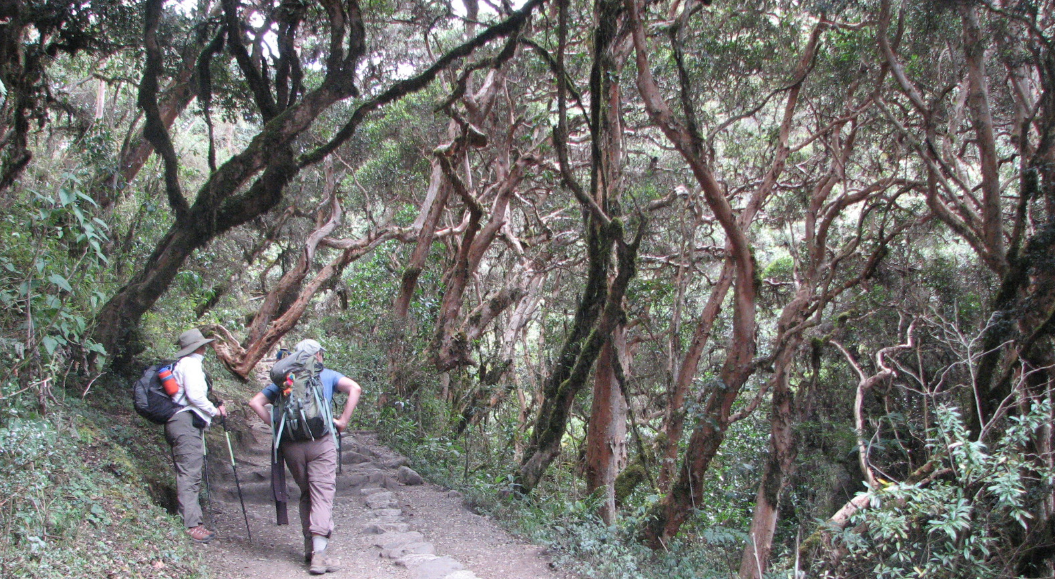
Hiking means enjoying a revitalizing moment. People increasingly appreciate the benefits of slowness and simplicity. Walking is a wonderful way to discover the natural environment.
Here are 5 reasons why you should start hiking:
1. It is an extremely healthy activity.
Hiking can improve your general physical health that under many aspects is comparable to other sports. Sleep improves, the risk of cardiovascular diseases and chronic diseases is reduced. Indeed, it could also be better than an indoor sport activity: the uneven surface of the paths allows actually to work naturally and effectively on your internal balance and to strengthen it. This does not happen on a treadmill in the gym, whose surface is absolutely equal and you can only change the inclination. The gym doesn’t even offer the combination of pure air and natural light, accompanied by sounds, colours and perfumes of nature.
2. Walking outdoors makes you
happier.
Hiking strengthen your spirit and your body at the same time. You can improve your mood, you can increase your happiness, the symptoms of anxiety and depression can be reduced. Connecting your spirit and your senses to the present moment, an excursion into nature represents the perfect antidote to the stress of modern life. In Japan, a long walk in the natural environment is considered an official therapy to reduce stress. The “shinrin-yoku“, or bath in the forest, simply consists of plunging yourself in the heart of a peaceful forest for a few hours and soaking up its atmosphere.
3. Sport is mixed with discovery
This is one of the main advantages of hiking, because it allows you to associate sport with discovery. Going to the gym can sometimes be difficult while going on an excursion is perceived as a pleasant activity. Hiking is always a new journey. By simply putting one foot in front of the other, you can venture into the diversity of new landscapes: green prairies, relaxing forests, sparkling lakes or cozy villages.
4. It’s a nearly free activity
There is no need to enrol, no classes or expensive equipment are required, hiking is an affordable activity. some nature reserves may ask for a low-cost entry ticket but there are plenty of areas whose access is completely free. The only think really necessary is a pair of good and comfortable shoes and a hat and sunglasses if it is sunny, of course.
5. Hiking is accessible to all, in almost all seasons and in all places
Everyone can enjoy a walk in the nature, regardless of the age and the level of training. Of course, you may have to choose paths that are suitable for your age and physical fitness. You don’t even need to plan or prepare the excursion in advance. Surely there are natural spaces suitable for hiking around or not far from you. If there are no mountains or large trails nearby where you live, there will certainly be a park or a natural space.





 Crisbie Coach