Is the Ego a Friend?

What is the ego? Is it really negative? How to keep it under control? Is the ego a friend?

The word ego comes from the Latin and means “I”. It is difficult to define it because it is not visible and it manifests mainly in a negative way.  It is easier to recognize the ego in others than in oneself.

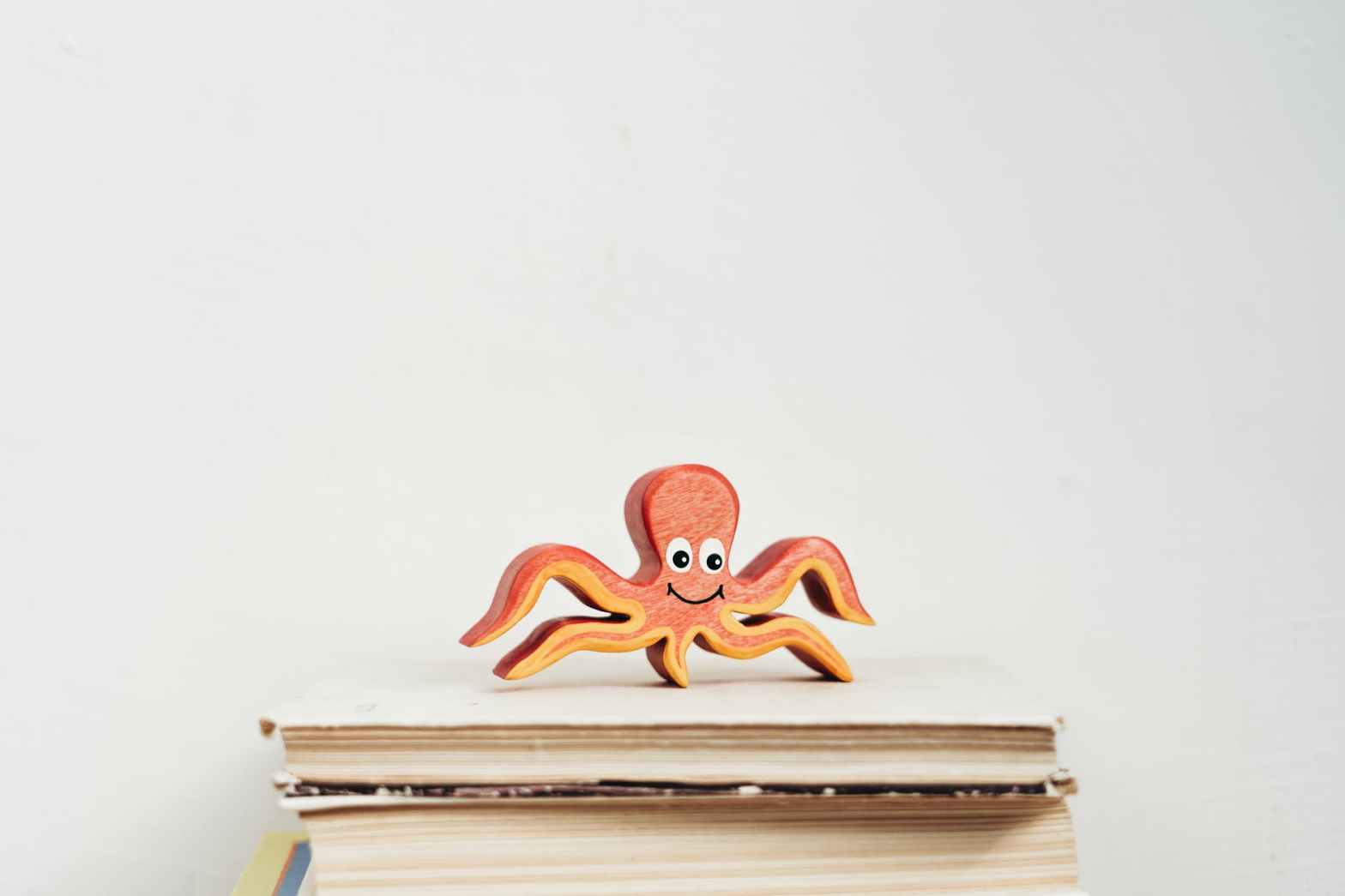
Sometimes, the ego is represented with animals. The octopus, the bloodsucker, any parasite, the wolf or the tiger. Or it is also represented with objects. Mask, dress, glasses, onion, egg or even serious illnesses.

It is a mystery and a paradox at the same time. The ego is us but not really us. It is a false self, or a pseudo self. It is not the personality but a part of the personality. It is not our true consciousness, but an altered, partial and non-objective consciousness. It does not represent a real need, but it wants to make us look perfect in a certain way, it wants to control everything and always be right. It is not real, but an illusion, an empty shell, which is based on fear, separation, loneliness and opposition. The ego can be a defensive or an aggressive reaction. In reality, the ego tries to protect us from showing our vulnerabilities.

Is the ego negative?

For Westerners, the ego is a necessary evil with which we must live, it is not so serious, indeed sometimes it can be useful or even positive. In fact, Western civilization since 1623 is based on the ego thanks to Descartes.

On the contrary, for spiritual masters, most of them Orientals, the ego has nothing positive, since it is the opposite of love, it represents our dark part, our Mr. Hyde, our shadow zone.

The ego is a false friend that makes us lack authenticity, honesty, and humanity. This is why certain traits of our character might be selfishness, self-centredness, narcissism, individualism, greed, possessiveness, materialism, avarice, susceptibility, and even paranoia. The ego is responsible for almost all of our negative emotions, especially hatred. It pushes us to defend ourselves, to justify ourselves, to rationalize, to deny the evidence, and generates childish behaviours. Escape, rejection, negative or destructive communication (like haters). It can also be responsible for toxic relationships, manipulation, harassment, and violence in a broad sense.

Why would we keep the ego under control?

On an individual level, keeping the ego under control would mean being happier, having better physical and mental health, more self-confidence, connecting better with others, living in harmony, having happier relationships, more energy, and being even more efficient.

On a social level, keeping it under control would help society overcome racism, sexism, nationalism, domination, oppression, exploitation, delinquency and even war! It would allow us to live better together, to develop a sense of brotherhood, equality, cohesion, solidarity, understanding and peace.

How to keep the ego under control?

It is impossible to eliminate the ego, because it is part of our personality. What we can do is trying to control it.

At the social level there are institutions such as the family and school that are delegated to this role. Other institutions, such as the police and justice, try to correct it.

We can try to transform the ego into our ally with meditation techniques, practising yoga, or using psychotherapeutic techniques that can help us to be more attentive, conscious, and to become more collaborative. We will be able to learn to listen, to help, to forgive, to let go, to create, to laugh and make people laugh, and of course to love.

I would like to conclude with a short story, The Story of the Two Wolves.

“One evening, an old Indian grandfather tells his grandson the story of the two wolves.

In each of us coexist two wolves, constantly fighting. One is bad, angry, jealous, sad, greedy, arrogant, liar, feels superior to the other wolf.

The other wolf is kind, empathetic, generous, sincere, compassionate, cheerful, peaceful, serene, hopeful, and humble.

The grandson asks his grandfather: “Who wins between the two wolves?”

Grandpa simply answers, “The one you feed will be the winner.”

Which wolf do you give priority in your life?

white wolf on brown dried leaves
Wolves – Photo by Shelby Waltz on Pexels.com

How to Find Happiness

We all seek happiness because we think that when we are happy, we have everything. When joy fills our souls, life lights up, our hearts open up and our hands stretch out. On the contrary, when our soul is darkened, when sadness pervades our lives, everything becomes more difficult. Where and how to find happiness?

Where to find happiness

We often seek happiness outside of ourselves. Of course, the joy that comes from the outside brings us joy as well. Dinner with friends, a successful exam, a new experience…

Unfortunately, these are ephemeral moments that will not last long. It would be good for you if you can remember them with nostalgia.

However, there is also a type of joy that does not depend on external events, it does not have elements that have triggered it, in short, it does not depend on anything.

It can be said that this is a free happiness, as Jean Klein defined it, namely a form of joy without object. To quote some of his words: “spontaneous state of interior silence that we can open ourselves to our true nature: the ‘I Am’ of pure consciousness.”  

It is a joy without object because it does not come from the world, it has another origin. This happiness comes from pure existence, from our being in the here and now.

How to find happiness

We knew this joy very well when we were children. Then, slowly, growing up, we miss it.

Sometimes it returns when we do not have worries, we are particularly relaxed and in a good mood.

But if you can transcend everyday life, stay silent and focus on your breathing even for a few minutes, you find yourself and the essence of life in the here and now.

Among the positive affirmations, you can find the affirmation “I am” that does not mean identifying with oneself as a person with name, surname, date of birth, etc.

Transcending yourself means stripping yourself of your individual identity so that you can quickly experience the happiness of your pure being.

Where and how do you find happiness?

underwater photography of clear water
Pure Water – Photo by Tyler Lastovich on Pexels.com

Positive Affirmations

Our mind is fascinating. It has its own rhythm, unique perceptions and we are not aware of all its possibilities yet. Waves of thought run through our mind but I must say that unfortunately most of them are negative. However, you need to know that there is a way out to go around your negative inner monologue: positive affirmations.

I read about the importance of positive affirmations in one book of Louise Hay.

Affirmations are short positive sentences that motivate you, inspire you and encourage you to take action to achieve your goals. To make them work you have to repeat these phrases several times throughout the day, to make them stay etched in your unconscious mind.

Repetition can change your habits, behaviour, and point of view. As you may know, words are powerful. Regular repetition, aloud, but also within you, turns into thoughts that create your reality. Positive thoughts have the power to overcome internal negative speech. You may find it odd to say phrases like “I choose to be happy” in front of a mirror, but I assure you that these statements really help you reinforce the good vibes. Regular repetition of affirmations becomes your truth.

A statement firmly and confidently declares a positive thought and transforms it as a truth. By integrating these positive statements into your daily routine, you help your mind prioritize positivity.

According to some researchers, affirmations can help you work better. Spending a few minutes reflecting on your abilities before a stressful meeting, for example, can calm your nerves, increase your confidence, and improve your chances of success. Affirmations can also help you relieve stress.  

Here are some of the benefits you can get from practising affirmations regularly:

Become happier. Affirmations allow you to recognize the things that keep you from being happy, because you focus on what you really want in life. In addition, your mood will get better.

See things in perspective. We often take the simplest things for granted. Using affirmations allows you to remind yourself that the simplest things are the most important. For example, if you are in good health, by using the statement “I am in good health” you can focus on this point and appreciate it more.

Reduce negative thoughts. Since most of our thoughts are unconscious (and negative), positive affirmations allow you to become more aware of your thought patterns and feelings, thereby reducing the risk of creating a recurring negative thought.

illustration of woman analyzing financial line graphic
Photo by Monstera on Pexels.com

To get the best out of affirmation practice, you need to observe these three basic rules:

  1. Plan repetition during specific moments throughout the day. Good times could be in the morning as soon as you get up or in the evening before going to bed. Each of us will find the best time to devote to repeating affirmations.
  2. Use the verb in the present, because you want results now and not in the future. Furthermore, the brain only understands the present tense.
  3. Do not use the negative form (for instance, do not say “I don’t take into account judgements from the others” but “judgements from the others are irrelevant to me”).

There are no strict rules on the frequency of repetitions. Nevertheless, according to psychotherapist Ronald Alexander of the Open Mind Training Institute, the statements can be repeated three to five times a day to reinforce the positive effect.  

Do you like to write? Perfect! Writing your affirmations in a journal and reading them in front of a mirror is an effective way to make them more powerful.

Here are some affirmations you could practice if you want to try if they work for you too:·     

  • I believe in myself and I trust my abilities.
  • I am the creator of my thoughts.
  • I am a successful person.
  • I choose to be happy.
  • An amazing family and very good friends surround me.
  • I am strong and courageous.
  • When I go to bed, everything is as it has to be and I fall asleep peacefully.
  • I love and accept myself as I am.

Do you think you could control more your negative thoughts by starting to make positive affirmations?

photo of person holding cup
Photo by Alina Vilchenko on Pexels.com

How to Embrace Change

Life is constant change, Buddha and Aristotle already said it: change is a fact of life. But change has also been accelerating in recent decades. Massive disruption across the social, technological, political and environmental dimensions of our lives means that we are constantly trying to figure out how best to manage uncertainty. And for someone it can be scary.

The origin of this fear can be found in biology. Our brain is the result of two and a half million years of evolution. We have lived in caves much longer than we have in cities. This means that we have “coded” automatic responses to successfully respond to everyday threats.

If absurdly you see a tiger walking down the street, you would not try to understand what breed it is but you would rather try to escape as quickly as possible (flight). Another codified reaction would be to stay still, hoping that the tiger will not see you (freeze). The last possible reaction would be to fight it (fight), with very, very limited chances of success, so your brain would immediately discard it.

Flight, Freeze or Fight are the three primal reactions to events that we perceive as dangerous to our safety.

However, the wonderful circuits that have allowed us to evolve as a species are not suited to addressing the most subtle threats of our age, such as digitization, the pandemic or the risk of losing your job.

These fears are evolutionarily new and are not always easy to manage.

bengal tiger half soak body on water during daytime
Photo by Flickr on Pexels.com

Remember that the brain is designed for your survival, not your happiness. Therefore, to face changes, you have to understand them as opportunities and learn from the potentials they entail. Moreover, this is not as automatic as running away from something dangerous. On the contrary, it takes effort and training.

Let us see how you could get started by following these four tips.

1. First of all, it is important to train your mind daily. Just as you go to the gym or practice by yourself, you need to keep your brain muscle in shape. Try to do something different every day. For example, you could change sources of information when reading the news (also useful to understand various points of view), change your route to go to work, or try a new dish.

2. Second, you can try to consider what happens to you in a different manner. For instance, a good way is reading history to realize that although we live in an age where changes happen very fast, all these progresses have allowed us, for example, to increase our life expectancy.

3. Third, try to disconnect from technology and reconnect with yourself and your surroundings. If you are always immersed in the digital world, you will not have time to integrate learning and to find a certain and needed tranquility. For example, one day during the weekend or on vacation you can put your mobile in the “don’t disturb” mode.

4. Fourth, trust. If you look at the difficulties that you have already faced in the past, you will see that now they look easy to you. If you have already been able to overcome challenging situations, why should not you be able to do it now?

Are you afraid of change or do you like new challenges?

Photo by Braden Collum on Unsplash

How and Why You Should Learn to Forget

Letting go of the burden of the past is important to your happiness.

Many people live in the past; they remember what they were, the love stories that did not go well, their failures and disappointments.

Such a burden takes away space and energy from the present, which is actually the only time you can live actively.

I read somewhere that happiness consists in enjoying good health and having a bad memory.

Actually, you should learn to let go of the past, forget about the insults received, the bad events and the mistakes, in short, all the bad memories, and learn to focus more on the present.

Photo by Ian Dooley on Unsplash

Here are some tips you could follow.

  1. The best antidote to guilt, resentment, or anger that takes you back to the past is to devote energy to building the life you want.
  2. Stop playing the victim and become an active protagonist of your life
  3. Your memories change while time passes by, they may distort, and they do not really reflect what happened. Try asking a person who shared an event with you to tell you about their memory and then compare it with your memory. You will see that you and that person remember different aspects of the same fact.
  4. Prioritize your well-being. Life is too short to spend arguing and complaining. What happened could be a source of stress and even discomfort. Continuing to feel anger at a past event drains up your energy. It is more important for your physical and mental health to live quietly than to be right at all costs.

The past, however, also brings with it good memories and lessons learned, which shape your personality.

Have a look at what Buddhism teaches: “Joy and happiness arise from letting go. Sit down and take an inventory of your life. There are things you have been hanging on to that really are not useful and deprive you of your freedom. Find the courage to let them go.”  

What about you? Would you find the courage to let go of your past?

accomplishment action adventure challenge
Photo by Pixabay on Pexels.com

How and Why You Need to Learn to Take Better Care of Yourself

The education we have received has taught us that we must treat well the others. But why the others and not ourselves?

Are you your own worst critic? Do you sometimes insult yourself for something you did wrong or wanted to do better? Do you eat poorly, sleep little, abuse of harmful substances (alcohol, tobacco)? Or are you simply worried about pleasing others? Know that you are not alone. This is a common problem and normal to a certain extent. Because of this, it would be useful to pay attention to some daily details to learn how to look better after yourself.

As I was saying before, we have not been taught to take good care of ourselves. We put often aside our well-being. How many times have your parents told you to look well after the others or do things for the others? How many times, on the other hands, have you been told that you must also take care of yourself?  

The way you look after yourselves is a kind of extension of what you have learned from your parents, teachers or caregivers.

For a very young person this may seem exaggerated, as some basic principles of self-esteem are taught in schools today. Some parents also try to instil some self-care virtues in their children.

However, for an adult or elderly person, taking care of themselves well and being truly respectful of themselves is not always something they have consciously internalized. In the past, it was not so easy to find someone who could help you cultivate a certain self-love without it being considered selfish.

In fact, this is precisely the basis: self-love, not to be confused with narcissism or egocentrism. To better understand this concept, we can first imagine what we do when we really love someone: we seek their happiness, we help them, we try to make them feel good, and we accept them as they are, with all their imperfections and qualities. Actually, looking well after yourself means really accepting yourself for who you are.

Becoming kind towards yourself, means understand yourself, especially when you face failures and mistakes.

Photo by Klimkin on Pixabay

That attitude can be a great ally. You can challenge yourselves in a healthy way, taking into account your possibilities, your desires, and not the desires that others have for you.

The use of language is very important to achieve the goal of taking good care of yourself. It is common, and to some extent normal, that on some occasions you speak “badly” to yourself, you do it unconsciously. You cannot talk to yourself always in a loving way, as you could enter into toxic positivity (when a positive attitude is used to mask negative emotions, namely pretending that all is well when it is not).

However, you must not use words that hurt yourself. Nobody insults those who truly love, right? Talking to yourself and thinking badly about some personal aspects (physical or mental), and constantly reiterating it, can in the end make you really believe it.

Taking care of yourself is essential. This implies developing a healthier and more suitable lifestyle. Sleeping and resting enough hours, for example, as well as eating well based on our weight, age and lifestyle, not abusing alcohol or tobacco, are all ways to take care of yourself. Taking time to relax, reconnect with what you really like to do, keep your hobbies, follow your passions and interact with people who bring you something positive in your life means being respectful of yourself.

What about you? Do you take good care of yourself?

Photo by Freestocks on Unsplash

Why Your Well-being Must Be a Top Priority

The society we live in often leads us to reverse priorities and put work first. This can negatively affects our quality of life and physical, mental and emotional health.

According to researches carried out in France, physical suffering related to work affects 3.1% of women and 1.4% of men, but according to some experts, the figures are higher. The international classification of diseases identifies burn-out as a work-related phenomenon but in reality work is not the only cause.

With the cost of living constantly rising, we are likely to work longer hours to earn a salary that allows us to provide for our own needs and those of our family. Because of this, many elements of our private life are put aside.

We spend many hours working, reducing the time to eat, to rest, to be with the family, and we do not realize how much this can harm us.

While most of us cannot afford to leave their job, a balance must be found between work and private life to prevent stress from building up in a worrying way.

Photo by Christin Hume on Unsplash

In this period of forced tele-working, it is even more difficult to put boundaries between work and private life. For this reason, many governments have been drafting directives that establish the right to “disconnect”. We need to have the time to do sports, to walk, to take care of our dear ones, to follow our passions or simply to rest.

More and more people suffer from stress, feel exhausted, have problems with nutrition, addictions, or relationship difficulties, and all that because of the long working days, which do not leave us the time to do activities for our well-being.

If you feel you are in one of those situations, know that no salary is worth your health, no job is worth the wear and tear that comes from working days that annihilate your energy and happiness.

If you have no other alternatives to the work you are currently doing, find something positive to balance your life, because otherwise, there may come a time when you will start making mistakes at work and your overall performance will suffer. Start looking for another job but put your health in the first place, because if you get ill it may take a long time to recover.

Your job is an important part of your life, but it is not your life. There is much more: family, health, and friends. Do not allow work to take up all the space in your mind and body, taking the joy away from you.

Remember always taking care of yourself first, because this is the only way you can live a better life.

How do you take care of yourself?

Photo by KT on Unsplash

How To Live the Life You Want

Albert Ellis (1913-2007), an American psychologist, developed his own method: Rational Emotive Therapy (RET). The basic principle of this therapy can be summed up in this sentence taken by Epictetus: “People are not disturbed by things, but by the views they take of them.” According to Ellis, by finding and changing your irrational beliefs, which are a source of suffering, you can free up yourselves from your internal chains and finally lead the life you ​​want.

Here are 5 tips that you can use depending on the area that you deem most “urgent” (couple, work, family, etc.) in which toxic beliefs are active and, therefore, need to be addressed.

Photo by Jan Baborak on Unsplash
  1. Stop using of the verb “must”. Ellis calls this belief the “musts”. Must-haves can generate emotional disturbances, which prevent you from connecting to your deepest and truest needs and desires. In addition, they also prevent you from finding the resources you need to pass over difficult times. Examples of some thoughts resulting from this belief are: “I have to do everything well otherwise others will not appreciate me (meaning, if others do not like me, I am worthless)”; “The others have to do exactly as I want”. “Circumstances must allow me to get what I want and how I want it”. Whenever you feel trapped in a situation, the “musts” are at work. Identifying them allows you to weaken their negative charge and slowly you will be able to let them go.
  2. Choose your words wisely (remember that words are bricks that build walls, also within you). The words you use not only reveal your way of thinking but also guide your behaviour. How you interpret what happens to you and how you project yourself into an event that has yet to happen affects your emotional state. This generates emotions that reinforce your beliefs. Rather than repeating over and over that you are not lucky or that you are worthless, it is better to say that you did your best, that perhaps you have not been careful or that you were not aware of that thing or fact, but that you will do everything possible to do it better next time. It is not about using the magic wand, but about betting on what helps you move forward rather than following your negative and useless beliefs.
  3. Dare to think about yourself. It is not about thinking only about yourself or thinking of yourself as opposed to others. Judgments, conformism and projections from others (parents, family, friends, society) take you away from what makes you feel good. Ellis believed in the power of determination, even knowing the weight of the unconscious and personal history. He invited his patients to identify areas of life that made them feel good and wanted them to focus on those. We all want to be accepted, recognized for our worth, but sometimes it is necessary to put aside these desires of gratification. You shall focus on what makes the most sense to you, what you feel is the condition for a happy life according to your happiness standards.
  4. Stop blaming yourself. Are you ruining your life by saying “I should have” or “I could have”? Are you spinning around like a hamster on its wheel? Reproaches against yourself represent real sterile and negative self-flagellations. If you have made a mistake, even a serious one, let the guilt go away and then evaluate two rational and productive options: apologize and repair the “damage”. By apologizing, you face the reality and assume your responsibilities. Repairing, on the other hand, allows you to get back into a position of action and makes you regain self-esteem. Stopping self-scolding also helps you take the reins of your life back and move on. If you have made a mistake and you are the victim, it’s just as important to learn to forgive yourself and learn the lesson for the next time.
  5. Laugh more often. Laughing allows you to take distance, to play down, to hold on and to create an environment that is conducive to exchange and sharing around you. Look at the crazy side of situations (there always is), listen to humorists, watch comedies. Laughing is contagious, you know. As soon as you see that you are being a know-it-all, that you want to give lessons, that you are becoming fussy or that you are complaining, stop it! Remember that people do not like when you are like that. Moreover, you might be suffering of stress toxic effects, as you would fail to identify what is important from what is not and, finally, you would be a victim of a perfectionism that may ruin your life and, sometime, even that of the others.
Photo by Leslie Juarez on Unsplash

Do you think that any of these tips may help you with your life?

Three Tips to Fight Frustration

The pandemic has put us in front of an uncertain future and left us with negative emotions.

We have all experienced as children the disappointment of asking for something that was then denied. It could also happen that we started crying and this drove our parents crazy. They labelled this behaviour as a whim.

Actually, frustration is present in all stages of life and our success also depends a little on how we manage this typical human emotion.

A Zen master summarizes happiness in a simple formula: happiness is the reality that we live less than what we want or hope to achieve.

When what you want outweighs what you have, then you are faced with what Carl Gustav Jung used to say: “Life not lived is a disease from which you can die.”

In our society where competition and instant satisfaction prevail, frustration necessarily accompanies us more or less always, because as soon as we have satisfied a wish, another one comes.

This period of pandemic has made us move from unbridled consumerism to a culture of cancellation (cancellation of holidays, cancellation of dinners with friends, cancellation of medical appointments, etc.).

Has this sudden change affected your life? See if you have any of the symptoms listed below to understand if you have become a frustrated person:

  1. you are often melancholic;
  2. you experience increased irritability, tension and stress. Things that didn’t bother you before now make you jump up;
  3. you have negative thoughts that come back all the time, stealing you energy and sometimes sleep;
  4. you have increased consumption of alcohol and medicines taken without medical advice;
  5. you want to run away.
Photo by Oscar Aguilar Elías on Unsplash

If you recognize yourself in one or two of these characteristics, then it means that frustration has taken over part of your life.

Here are some tips that will help you get through this moment:

  1. cultivate patience. It may seem obvious, but it is very effective. As a child as well as an adult, frustration occurs when you don’t get what you want. If the parents don’t buy you the toy you want when you ask for it, but they tell you they will offer it to you over your birthday, that doesn’t make you feel better. In times of crisis, if we do not know when the situation that creates frustration will end (as now, which the spread of Covid has resumed in a rather important way) we could lose hope. Against this view, only a long-term perspective will help you. Although you don’t know how long the situation will last, knowing that there is light at the end of the tunnel helps you to live in the present moment.
  2. analyse what you get from it. Just as energy is not created or destroyed, but it is transformed, even losses can bring you gains. If you could not leave for that trip you wanted so much, think that you have saved some money and as soon as you can leave again, you will have greater financial availability. If you have lost your job because the company where you used to work has closed down, you will be forced to evaluate other possibilities, to get back into the game and maybe you can start an independent business that you never would have thought of before and that finally it is worthy. To fight frustration you have to ask yourself: What do I gain from this loss?
  3. think that everything changes. Nothing we have will last for ever. Even if we could satisfy all our wishes, it would always be a temporary satisfaction. If nothing remains as it is but everything changes, then the frustration loses its meaning.

The following thought is attributed to the painter Eugéne Delacroix: “Desire the best, avoid the worst and take what comes”. If you follow this motto, instead of holding on to expectations, you will take things as they happen. You will feel more in the flow of events, even chaotic, that life sometimes offers you.

Do you feel frustrated in this period of pandemic that is not over yet nor do you know when it will end?

Photo by Steve Johnson on Unsplash

Would More Money Make You Happier?

Markus Persson, a Swedish 36-year-old business man, spends his time on Twitter, where he talks about his life and that of his company. One day, he twitted something that will change his life.

Markus created in 2009 the video game called Minecraft, a kind of virtual Lego game that has become a social phenomenon. But, all of a sudden, he ends up getting tired of running his business, Mojang.

So, one evening in June 2014, he announced on Twitter that he would sell Mojang. In no time one IT giant contacted him and bought it for 2.5 billion dollars (2.2 billion euros).

Photo by Markus Spiske on Unsplash

On permanent vacation or lying in his luxury villa, he continues to tell about his life on Twitter: he complains that he no longer sees his friends, that parties in Ibiza have become boring…to make a long story short, he gets depressed.

Markus may be the victim of what is called the “Easterlin Paradox“, after the name of the economist who demonstrated it. Richard Easterlin has observed over several years that while the per capita income in the US increased, the proportion of people saying being “very happy” did not increase at the same time.

Later, other researchers found that the more money you made, the happier you felt but there was a limit: up to 75,000 dollars (about 68,000 euros) per year per household. Over this amount of money, the extra money would not make you happier!

Markus earned far more than 75,000 dollars but he has no friends, no plans for the future, and he is also depressed. He even ends up arguing with lots of people on Twitter, making comments deemed racist and misogynist.

As a result, in 2019 the big IT company who bought his business does not invite him to the 10 year anniversary of Minecraft, and deleted his name from the credits of the game. Markus gained a lot of money, but he also lost a lot.

Do you agree with the Easterlin Paradox? Would you be happier with more money? Would 75,000 dollars be enough to have a happy life? In my case, I would be definitely happy with 75,000 dollars a year!

Photo by Lidya Nada on Unsplash