Veganuary 2025 Challenge – Results

Veganuary 2025 has marked a significant milestone in the global movement towards plant-based eating. For the first time ever, active Veganuary campaigns are now running in 20 countries across the globe, showcasing the growing enthusiasm and commitment to sustainable and ethical food choices. This year’s theme, “Food doesn’t have to be weird,” has resonated with people worldwide, highlighting that plant-based eating is not only delicious and sustainable but also the more sensible choice.

A Theme That Resonates

The “Food doesn’t have to be weird” theme has been instrumental in breaking down barriers and misconceptions about plant-based diets. By emphasizing the simplicity and familiarity of plant-based meals, Veganuary 2025 has encouraged more people to explore and adopt this lifestyle. The campaign has shown that plant-based eating can be just as satisfying and enjoyable as traditional diets, making it an accessible option for everyone.

Celebrity Endorsements

Veganuary 2025 has garnered support from a diverse range of celebrities, who have lent their voices to amplify the mission. Notable figures such as actor Woody Harrelson, comedian Preacher Lawson, and star of House of the Dragon Bethany Antonia have joined the cause, inspiring their fans and followers to consider the benefits of a plant-based diet. Their influence has helped spread awareness and encourage more people to participate in the campaign.

Corporate Participation

Hundreds of companies have taken part in Veganuary 2025, demonstrating their commitment to sustainability and ethical consumerism. In the UK, major retailers like Aldi and IKEA have actively participated, offering a wide range of plant-based products to their customers. In the US, Love & Sandwiches has been a prominent supporter, while in Germany, more than 1,000 businesses have joined the initiative. This widespread corporate involvement has made it easier for consumers to access plant-based options and contribute to the movement.

Tangible Impact on Consumer Behavior

The impact of Veganuary on consumer behavior is evident, particularly in Germany. New data published this January revealed that during the last two campaigns, meat sales declined by 12.5% in January 2024 and 14.3% in January 2023 compared to the annual average. This significant reduction in meat consumption highlights the tangible influence of Veganuary on consumer choices, encouraging more people to opt for plant-based alternatives.

Join the Movement

Veganuary 2025 has shown that the shift towards plant-based eating is not just a trend but a growing global movement. By choosing plant-based options, we can make a positive impact on our health, the environment, and animal welfare. Whether you’re a seasoned vegan or just starting to explore plant-based eating, there’s never been a better time to join the movement.

So, are you ready to make the difference?


Thank you for reading! Please sign up for my blog crisbiecoach so you don’t miss out on any posts and also for Wise&Shine an incredible online magazine!

The Shifting Plate: Sustainable Diets in Asia

With climate change accelerating, dietary shifts, particularly in rapidly expanding Asian economies, are emerging as a critical player in global climate solutions. A recent study delves into how consumers in China, Japan, and Vietnam are balancing their love for traditional foods with a growing interest in eco-friendly choices. This exploration uncovers insights that could pave the way for more sustainable diets across the region.

The Impact of Sustainable Diets

Shifting to more sustainable diets is one of the most effective ways to cut global greenhouse gas emissions and ease the strain on land and water resources. Experts agree that reducing the consumption of resource-intensive animal proteins, such as beef, can significantly benefit both the planet and our health.

While countries in South and East Asia have traditionally leaned on plant-forward diets, the demand for animal protein is skyrocketing. By 2030, meat consumption is expected to grow by 75% in Vietnam and 20% in China compared to 2010 levels. This trend underscores the urgency of promoting sustainable eating habits in these regions.

Exploring Consumer Readiness in Asia

Most research on reducing meat consumption has focused on Western countries, where strategies like food labeling and education campaigns have proven effective. However, little is known about whether similar approaches would work in Asian markets. The study conducted by Research and Advocay Officer Elena Schaller explores how ready consumers in China, Japan, and Vietnam are to embrace more sustainable eating habits.

Researchers surveyed over 5,000 people across the three countries to understand their food habits and awareness of environmental issues and health concerns associated with meat production. They also asked how much people would pay for food certified as environmentally friendly.

Methodology and Findings

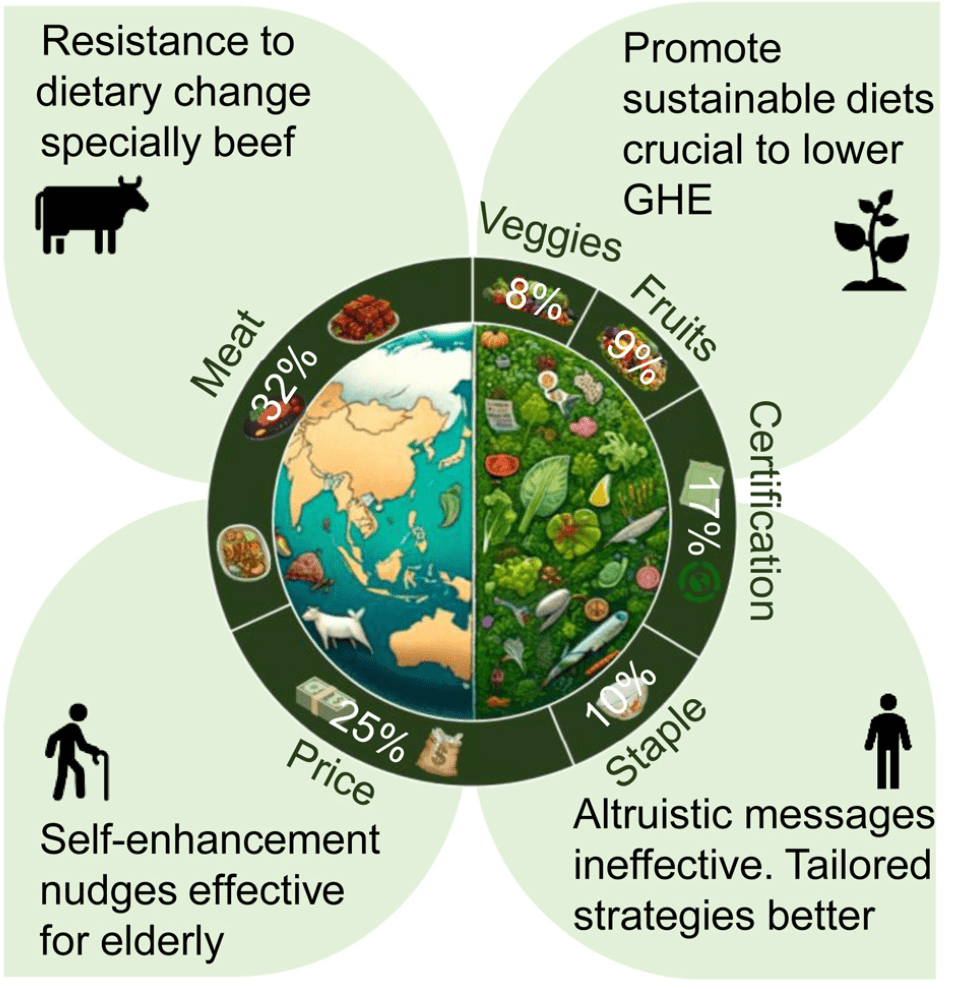
To dig deeper, participants were presented with “food baskets” filled with different items that varied in sustainability and price. These foods considered food culture and habits and included meat, vegetables, fruits, and starch staples like rice or bread. Participants could also choose a meat-free option. The researchers then tested whether providing educational “nudges” could influence their choices. Participants were randomly divided into groups and exposed to one of three nudges or no nudge at all (the control group):

  1. Climate Impact Nudge: Explained how the growing demand for meat contributes to increased greenhouse gas emissions.
  2. Resource Use Nudge: Highlighted the environmental toll of intensive farming.
  3. Health Effects Nudge: Emphasized risks from fertilizers and pesticides used in intensive agriculture.

Each nudge ended with a statement about the ability of the participant’s personal choices to make a difference.

The survey was delivered face-to-face in China and Vietnam and online in Japan. Participants were recruited from both urban and rural areas in each country, and the sampling was designed to represent population demographics in terms of age, gender, and household income to investigate country-level effects.

Key Insights

  • Protein Preferences: Chicken and fish were the most popular protein choices, with people willing to pay 2% more for them compared to pork. Beef was slightly less popular, and lamb was the least preferred.
  • Carbohydrate Choices: Rice was the clear favorite, with consumers willing to pay 7% more for rice than bread or potatoes.
  • Sustainable Labeling: Food labeled as sustainable was well received across all three countries, with participants being willing to pay roughly 16% more for a food basket with items that were certified as sustainably produced. Vietnamese consumers stood out, being willing to pay 39% more for eco-friendly options.
  • Demographic Differences: Younger and wealthier participants were the most interested in sustainable options and willing to pay more for them. Older and rural consumers responded better to health-focused messages.
  • Trust in Certification: 84% of consumers trusted certified environmental labels, with international organizations being trusted the most. Participants in China and Vietnam expressed the most trust in government certification schemes (50%), while Japanese participants were the least trusting of these (26%).

The Effectiveness of Nudges

The nudges didn’t significantly reduce the consumption of less sustainable proteins like beef and pork. However, they did slightly increase interest in chicken and fish, particularly the greenhouse gas emission and health-related message. This suggests that promoting better choices may be easier than discouraging worse ones.

Implications for Advocates

While many Asian consumers are reluctant to reduce their animal protein intake, there’s growing concern for the environment. The strong interest in food certification shows that people are open to sustainable choices, especially when they’re seen as trustworthy and high quality.

Creating meaningful change will require more than awareness campaigns or nudges. A comprehensive approach will combine culturally tailored strategies, reliable certification programs, and improved access to affordable sustainable options. Together, these efforts could help lower the environmental footprint of diets in these diverse markets.

As consumers, we have the power to drive change through our food choices. By supporting sustainable practices and advocating for reliable certification programs, we can collectively reduce our environmental footprint. Let’s embrace this shift and contribute to a healthier planet, one meal at a time.

Thank you for reading! Please sign up for my blog crisbiecoach so you don’t miss out on any posts and also for Wise&Shine an incredible online magazine!