Do you often forget things, from the most trivial trifle to the most important thing you have in mind?
Don’t worry, as one study has found out that:
“The point of memory is not being able to remember who won the Stanley Cup in 1972 but to make you an intelligent person who can make decisions”
While shopping, you may forget one of the most important items you were supposed to buy, or in the middle of a conversation with friends, it’s impossible for you to remember the title or the name of the author of a book you were recommending.
In short, it feels like starting Alzheimer’s because you notice that you have difficulties remembering (almost) everything.
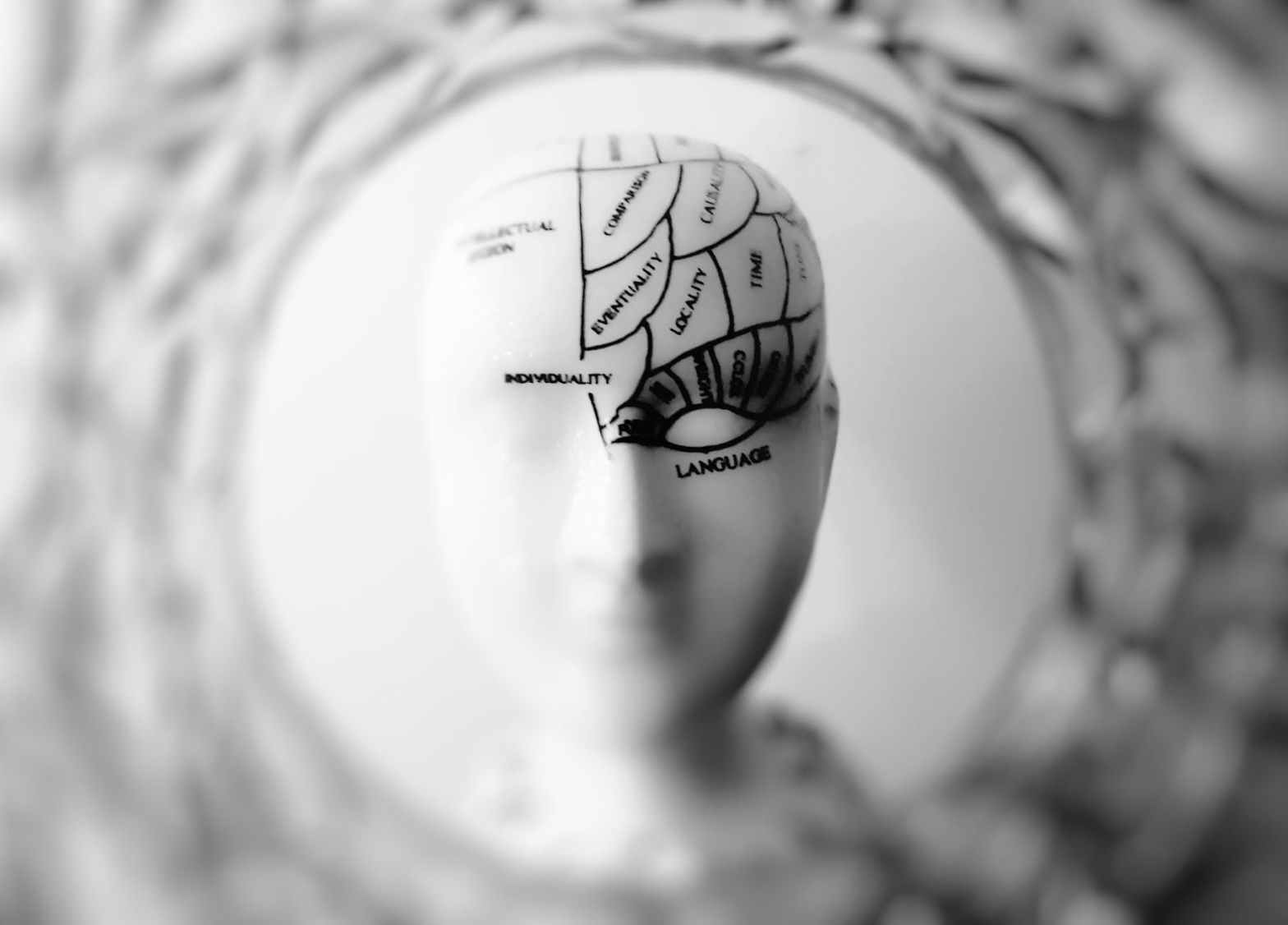
But don’t worry, because a study by two researchers at the University of Toronto (Canada) reveals how important it is to forget.
Paul Frankland and Blake Richards, researchers at the University of Toronto conducted a study that found out that people who are more likely to forget are also the smartest!
“It is of utmost importance that the brain is able to select the information it acquires and eliminates irrelevant details, thus focusing on a more general view to ensure that decisions are made in the most correct way.”
These are the words of Blake Richards denying the belief that those who can remember more things are also the smartest, and confirming almost the opposite. The elimination of unimportant information allows us to increase our analytical abilities, focusing our attention on the fundamental things and avoiding unnecessary work of our brain.
The researchers developed this study after several years of research on memory loss and brain activity, including both humans and animals.
The conclusion is that:
“If you forget occasional details,” Richards says, “it may mean your memory is healthy and doing exactly what it should be doing”.
Intuition has always been a fascinating subject of study. It is generally associated with genius, because the greatest scientific discoveries happened thanks to moments of intuition.
Einstein wrote:
Intuition is a sacred gift of which reason is a faithful servant. We have created a society that honours the servant and forgets the gift.
In addition, we all know that it is thanks to our intuition that we make some of the decisions of our lives, even if we consider ourselves rational and Cartesian beings.
From the point of view of the Eastern religions (Buddhism, Hinduism, Taoism) there is no mystery. In the traditional languages of these millennial wisdoms, the terms designating knowledge, consciousness, lucidity are often identical.
Attachment to mental constructions, beliefs, and concepts, as well as the mental agitation that accompanies it, are seen by them as a veil over primordial intelligence. Buddhists explain it like that:
if we do not stir water, it will become clear by itself. In the same way, if we leave unchanged the nature of the spirit, and we do not manipulate it, it will find peace and clarity on its own.
But let’s go back to the West and see that to make a decision we will evaluate three elements:
rational analysis,
emotional aspect,
intuitive wisdom.
However, if we practise meditation, thoughts and emotions would calm down, and intuition would manifest. In fact, there are several testimonies from practitioners who tell that the most creative ideas came at the end of their meditation.
In a linear, predictable, and orderly environment, a rational analysis is often more effective for deciding and planning an action.
On the contrary, in a volatile, unpredictable, or chaotic environment, when the human element predominates, intuitive intelligence becomes useful.
Therefore, meditation is more and more used in our times, as we live in an ever-increasing insecurity and instability.
How intuition works
Intuition draws on three main resources.
Like a tree, the first source is the ramification of its roots. It is the entirety of information, of experiences lived in the past and stored in the unconscious.
The second source is comparable to the leaves of a tree. These are the strong or weak signals, picked up in the present instant. All these signals are undefined and cannot be evaluated by rational analysis.
The third source is collective intelligence. In fact, our personal intuition can go beyond temporal and spatial limitations. Intuitive intelligence can tap into a nearly unlimited source, outside the limits of time, space, and the individual. All this is normal according to Buddhist philosophy where, for example, the individual, time, and space are conceptual categories created by the mind.
How do you synthesize these sources of information?
Cognitive science researchers have tried to answer.
Just before an intuition, there is a “letting go” moment, a descent within us. Then, suddenly, the presence increases, there is a kind of awakening, a feeling of unity and inner agreement. There is also a feeling of evidence, of surprise, of amazement and wonder.
These are the elements that we also find in a meditative experience: letting go, increased presence, awakening, unity.
It is necessary to emphasize the essential place occupied by the body in intuitive intelligence.
How many times have you made rational or emotional decisions while your body opposed it? Did you regret this decision a few days, months or years later? It happened to me several times in my life. I should have listened to the signals that my body sent me and taken them into account when making my decision.
In this regard, body scan meditation can help to develop this sixth sense of intuition. We shall also consider that if we constantly ignore the body’s messages, we might experience illness, pain, or disorder. Which is what happened to me.
Intuition, beyond the help it provides us in making decisions, is our deep inner voice, our wisdom, our most precious guide. It is important to learn to listen to it and to look after it.
To conclude if you hesitate to follow your intuition, try asking yourself these two questions, which will help you clarify what is at stake:
We are all born curious. Think about when you were a child or at children you know. They are extremely curious, aren’t they? They ask a lot of questions and they put themselves in dangerous situations.
Curiosity has great benefits: from rejuvenating your minds to helping you cope with change successfully.
However, we don’t all experience it the same way. There are those who are fascinated by Instagram to look into others’ lives, and there are some people who focus their interest on getting to know how things work, like for instance a car engine.
In both cases they are curious people.
However, the latest research shows that there are different types of curiosity which influence our personality and abilities.
Joyful exploration: this is the classic type of curiosity. You look for something related to new knowledge or information, from learning how to cook a dish you liked to knowing who built a particular building. This curiosity, as the name indicates, is linked to the joy of learning something you did not know before.
Anxiety caused by missing something: this dimension has a different emotional tone. While the previous one gives you joy, in this case you get stressed or anxious to know how to solve a problem during an exam or to remember something that does not come to your mind, for example.
Tolerance to stress: it is activated when you accept doubt or anxiety facing new, complex or unknown events. In some ways, it helps reduce resistance to change. It allows you to ask yourself what there may be beyond fear, for example when you experience changes in your job.
Social curiosity: if you are socially curious you tend to observe what others think, or how they behave. It is the desire to learn about others’ lives through the press, TV or social networks.
Thrill-seeking: This is the dimension that leads people to take any kind of risks to seek out new experiences, such as practising extreme sports or travelling to dangerous countries for the pleasure of the adventure.
According to a research conducted in 2018 on over 3,000 workers in the United States, Germany and China, 84% recognized that curiosity allows them to generate new ideas and 64% that it helps them to get a job promotion. Furthermore, according to the study’s conclusions, the first four dimensions of curiosity improve outcomes at work while people with high social curiosity are best at stirring up conflicts and gaining trust.
Ultimately, you can have one or more of the previous dimensions and, depending on this, you will be a joyful explorer, or you will be more inclined to solve problems, or, thanks to your social curiosity, you will be more empathetic.
How can you resist the temptation to drink a good glass of wine, eat a piece of cake or skip the gym and go to the cinema instead?
“The only way to get rid of temptation is to yield to it” said Oscar Wilde.
Diet, sport, sleeping enough are fine, but sometimes indulging in the breach of the rule helps your psycho-physical well-being and eases the performance anxiety that often accompanies a healthy lifestyle.
However, in addition to giving in to temptations, we can learn to control them.
A child is left alone in a room in front of a Marshmallow: they can choose whether to eat it immediately or wait 15 minutes and get two as a reward. Some children will know how to wait; others, unable to resist, will throw themselves on that inviting sugar candy.
The professor compared throughout the years the self-control skills shown by children with the successes achieved in their adult age and found out that those who did not eat the marshmallow achieved more goals in life.
Is self-control therefore the secret of success? Is it postponing rewards really more likely to bring success in life?
The Mischel experiment actually explains how self-control is fundamental in studying, in sport, at work and in many other circumstances of your life.
Self-control means knowing how to make decisions in the right time and in the right place to improve your skills to not yield to the temptation of a marshmallow.
People who are best at mastering their decision-making are generally people who are better off. They eat well, play sports, get enough sleep. These people structure their lives around good habits and build routines that are easy to follow.
Eating a piece of pie is not a moral failure, even if you have decided to go on a diet. Giving up on the piece of cake may cause you more stress and therefore cause you more harm than eating it. The trick is rather to avoid buying a cake or passing in front of a cake! But don’t feel guilty if you eat a slice. Don’t forget that an excess of willpower can also be more harmful because, as mentioned before, it can cause additional stress.
Self-control depends on your choices and it is your responsibility. Stress has become a personal burden, which you are called to manage alone with the help of techniques, like meditation, coaching, yoga.
Remember that it is important to recognize your own limits because it makes you become aware of the fact that you cannot be perfect and control everything.
A few days ago, I came across an article on the Internet that recommended sleeping three consecutive hours and then taking three 20-minute naps throughout the day. This sleeping pattern was indicated as a model for obtaining success inspired by great world managers or businessmen, in particular they referred to Elon Musk.
As a person who has trouble with sleeping, I can tell you that science warns that too little sleep affects cognitive performance, behaviour and metabolism. With this strategy, you may be successful at the price of your health.
Sleeping is also productive. To get enough energy and focus to devote to work or another productive activity such as studying, you need to sleep at least 7 and half hours.
One of the functions of sleep is to process and consolidate learning, focus and memory. Sleeping implies continuing to work, because the brain clears up the bombing of information accumulated during the day that is generally very intense due to the different sources available today. Our biology is prepared for short periods of sleeplessness in stressful or urgent situations.
Several studies have revealed that the habit of dedicating a few hours to sleep reduces cognitive performance, causes focusing deficit and loss of the ability to make decisions, as well as increases states of stress, anxiety and depression. Humans are ‘circadian animals’, programmed for 24-hour sleep-wake cycles. Sleeping for a few hours is a physiological assault on our body and, in particular, on the brain. If sleeping little is your choice, know that this alters the neuron-hormonal pattern which can cause:
Thinking that sleeping is a waste of time is wrong because it has health consequences. Sleepiness and loss of focus are evident the next day, while other problems could arise in the long term, such as an increased risk of cancer, cardiovascular disease, hypertension, neurodegenerative disorders and metabolic disorders. Actually, sleeping for short time also increases appetite, with obvious consequences on your weight. Lack of sleep, in fact, leads to have frequent snack and drink sugary or caffeinated beverages.
Another important question is whether these negative health effects also occur when you wake up very early. Studies show that getting up too early does not necessarily cause alterations, as long as your sleep has been restorative enough. Remember that it is very important to complete five or six sleeping cycles every night (a sleep cycle lasts an average of 90 minutes).
Over the last few years, a very old practice has become the subject of scientific studies: yoga. Positive effects on the brain have begun to be measured, such as anti-stress and anti-depressant effects.
The studies began thanks to the spectacular spread of yoga. Millions of people practice yoga regularly. Positions (asanas) such as the warrior or the cobra are increasingly known among different people and age group. The reasons are mainly that persons want to learn how to relax, how to get rid of several kinds of pain (back, neck, shoulders, etc.) manage stress, and maintain good physical shape.
Traditional yoga (from the Sanskrit “yuga” which means “union”) comes from India and is a discipline more than five thousand years old. An important source of this spiritual school, which should guide us towards the divine, is a writing by Patañjali: Yoga Sutra, which contains the essential foundations of the discipline.
According to this essay, the purpose of yoga is to attain a higher form of self-knowledge, which can be achieved with inner contemplation. In addition to specific physical exercises, and breathing techniques, traditional yoga also includes meditation, a vegetarian diet and an entire philosophy of life. The modern and western form of yoga omits many of these elements. The development of strength and plasticity, meditation and breathing exercises play the most important role today.
At the beginning of the twentieth century, a small group of Indian yoga teachers began to spread the teachings of yoga in the Western world. After the explosion of fitness in the 1980s, which focused above all on the cult of the body, the spiritual part has been lost a little. Therefore, in the Western world mainly hatha yogabegan to spread.
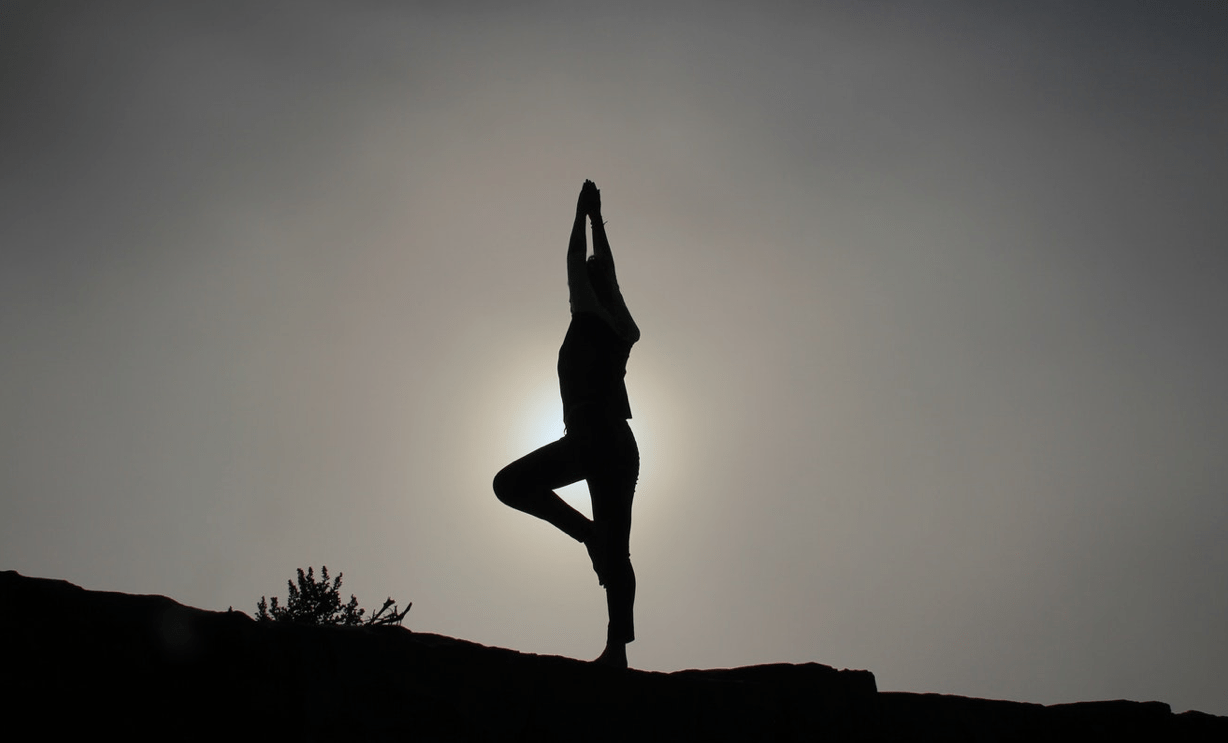
Photo by Mor Shani on Unsplash
The effects of hatha yoga on health are: improving body consciousness and coordination, strengthening muscles and enhancing blood circulation. Moreover, yoga is also beneficial to stress management.
From experience, I can say that after a yoga session I feel relaxed and rested. It takes longer to reach a similar state with meditation, while hatha yoga produces effects immediately, probably thanks to the more marked physical component. It is actually proved that physical exercise is good for your spirit. Perhaps, this is why yoga is a fast-acting cure-all, as it associates physical exercise with meditative practice.
In fact, by associating postures (asanas) with breathing (pranayama), we act on the body by relaxing the muscles, and on the spirit because the sympathetic nervous system (the nervous system that is stimulated when we rest or sleep) is activated.
Yoga allows you to find calm despite the limits imposed by everyday life. With regular practice, even 5 minutes a day is enough, you will sleep better, your self-confidence will increase, as well as your ability to make decisions and manage stress.












 Crisbie Coach