Discover the Power of Tantra: Intimacy, Connection, and Self-Discovery


The world of tantra combines intimacy, connection, and self-discovery that takes us harmoniously on a beautiful, enriching journey. Whether you’re looking to deepen relationships or tap into your personal energy, tantra offers a path to profound exploration.

What is Tantra, Anyway?

At its essence, tantra is a practice of embracing the sacred in everyday life. It intertwines the physical, emotional, and spiritual, creating a holistic experience. While tantra is often associated with relationships, it extends beyond that. It’s an invitation to explore your body, energy, and connection with the universe.

Think of tantra as a way to enhance your intimacy with yourself and others, offering tools for more meaningful connections.

Why Would You Want to Discover Tantra?

  1. Deepen Emotional Bonds
    If you’re yearning for deeper relationships, tantra can help. It teaches authentic communication, active listening, and how to be fully present. By learning to connect on a deeper level, you unlock the key to truly meaningful interactions.
  2. Celebrate Your Sensual Self
    Tantra celebrates the body’s natural sensuality. In this practice, you’ll learn to explore your body in a safe, nurturing environment. Every touch, breath, and heartbeat becomes an opportunity to awaken your senses and celebrate your inner world.
  3. Unleash Your Inner Energy
    Feeling stuck or blocked? Tantra offers techniques to shift and transform your energy, clearing pathways that lead to greater creativity, passion, and zest for life. By learning how to harness and redirect your energy, you can experience personal transformation.
  4. Live Fully in the Moment
    Imagine moving through life with a heightened sense of presence. Tantra encourages mindfulness, allowing you to fully experience each moment. Whether in your yoga practice or daily routine, this heightened awareness enriches every facet of life.

Who Can Practice Tantra?

Tantra is open to everyone, from the curious newbie to the experienced practitioner. No matter your starting point, tantra is about embracing where you are and unlocking the potential for deeper intimacy, connection, and self-awareness.

Awaken Your Senses with Tantra

Ready to embark on this journey? Tantra offers a sacred space to explore intimacy and connection. Awaken your senses, tap into your energy, and let the magic of tantra unfold in your life.

Thank you for reading! Please sign up for my blog crisbiecoach so you don’t miss out on any posts!


Searching for Sugar Man: The Timeless Lessons of Sixto Rodriguez

In the world of documentaries, few stories are as compelling and inspiring as “Searching for Sugar Man.” This Oscar-winning film, directed by Malik Bendjelloul, chronicles the fascinating journey of Sixto Rodriguez, a Detroit-based musician who, despite being largely unknown in his home country, became a cultural icon in South Africa. The documentary is more than just a tale of music—it’s a profound exploration of hope, resilience, and the transformative power of art.

The Enigmatic Story of Sixto Rodriguez

In the late 1960s and early 1970s, Sixto Rodriguez recorded two albums, “Cold Fact” and “Coming from Reality.” Despite their artistic brilliance, these records went unnoticed in the United States, and Rodriguez faded into obscurity. However, his music somehow made its way to South Africa, where it struck a chord with the anti-apartheid movement. In a land divided by racial injustice, Rodriguez’s songs became anthems of hope and resistance. Yet, while his music thrived on another continent, Rodriguez himself remained a mystery, with many assuming he had died in obscurity.

The documentary follows two South African fans, Stephen “Sugar” Segerman and Craig Bartholomew-Strydom, as they start on a quest to uncover the truth about Rodriguez. Their search leads to the astonishing discovery that not only was Rodriguez alive, but he was also unaware of his fame on the other side of the world. “Searching for Sugar Man” is the story of how one man’s music transcended borders, and how it changed lives forever.

Lessons We Can Learn from “Searching for Sugar Man”

  1. Resilience in the Face of Failure. Rodriguez’s story is a testament to the power of resilience. Despite the commercial failure of his albums in the United States, Rodriguez never lost his passion for music or his belief in his own artistry. His persistence in pursuing his craft, even when the world seemed indifferent, is a powerful reminder that success is not always immediate or visible. It often requires patience, perseverance, and an unshakable belief in oneself.
  2. The Unpredictable Nature of Success. Success, as Rodriguez’s story illustrates, is often unpredictable and can come unexpectedly. While his music was ignored in the United States, it resonated deeply in South Africa, where it became a symbol of resistance. This teaches us that impact and influence can be far-reaching, often beyond our immediate understanding. The key is to continue creating, sharing, and contributing, even if the results are not immediately apparent.
  3. The Power of Art to Inspire Change. Art can inspire, uplift, and unite people across cultures and continents. Rodriguez’s music became the soundtrack to a movement, giving voice to those who were fighting against oppression. This underscores the importance of artistic expression as a tool for social change. Whether through music, writing, or visual arts, our creations have the potential to make a difference in the world.
  4. The Value of Staying True to Yourself. Throughout his life, Rodriguez remained true to his values and his music, regardless of the commercial outcome. This authenticity is a powerful lesson in the importance of staying true to oneself. In a world that often prioritizes commercial success over artistic integrity, Rodriguez’s story is a reminder that true fulfillment comes from being genuine in our pursuits.

Embrace Your Passion

The story of Sixto Rodriguez and “Searching for Sugar Man” is not just a fascinating narrative; it’s a call to action. It encourages us to embrace our passions, pursue our dreams, and share our stories, no matter how unlikely success may seem. We are reminded that our contributions have value, even if they are not immediately recognized. The world is vast, and our impact may be greater than we ever realize.

As you reflect on Rodriguez’s journey, consider the passions you hold dear. Are you pursuing them with resilience and authenticity? Are you sharing your talents and stories with others? Let Rodriguez’s story inspire you to keep creating, keep striving, and keep believing in the power of your unique voice.

Have you watched “Searching for Sugar Man”? What lessons did you take away from Sixto Rodriguez’s incredible journey? Share your thoughts in the comments below, and let’s continue to celebrate the power of resilience, creativity, and the enduring impact of art. If you haven’t seen the documentary yet, I highly recommend you watch it.

Thank you for reading! Please, subscribe to my blog, for more articles!

A Gaze Through a Window: Reflections on Life’s Different Paths

I watched this story on Jerry Seinfeld Youtube channel and found it funny and meaningful at the same time. This anecdote, featuring the legendary Glenn Miller and his orchestra, offers a poignant glimpse into the human condition and the divergent paths we tread in life.

As Miller and his band, clad in their performance attire, trudged through the biting cold, instruments in tow, they stumbled upon a scene that seemed to be from another world. Inside a cozy country home, a family shared laughter and love around a dinner table, a stark contrast to the musicians’ immediate reality. It was a snapshot of domestic bliss, so distant from the nomadic life of a touring musician.

One band member, observing the family, uttered a line that resonates with the core of the story: “How do people live like that?” This question isn’t one of bewilderment at the family’s lifestyle but rather a reflection of his own life choices. It’s a moment of introspection, a comparison of the stability and predictability of a traditional life with the uncertainty and excitement of a life on the road.

The moral of this story is multifaceted. It speaks to the idea that there is no singular way to live a fulfilling life. The band member’s question reveals a yearning for the warmth and security he perceives in the family’s life, yet it also highlights the unique beauty of his own experiences. The musicians’ path is one of passion, creativity, and the pursuit of a different kind of fulfillment—one that comes from the roar of the crowd and the joy of performance.

Moreover, the story underscores the importance of embracing our choices and the lives we lead. It’s a reminder that while we may occasionally gaze wistfully through the windows of others, our own journey has its own worth and beauty. It’s about finding contentment in our chosen path and recognizing that every lifestyle has its own challenges and rewards.

In essence, Seinfeld’s retelling of Miller’s story is a gentle nudge to appreciate the life we have and to understand that the grass isn’t always greener on the other side. It’s a call to celebrate the uniqueness of our individual journeys and to find joy in the path we’ve chosen, whether it’s a quiet life at home or a thrilling adventure on the road.

As we reflect on this tale, let us take a moment to appreciate our own life’s narrative, with all its twists and turns, knowing that each of us has a special story to tell. 🎶🏡❄️

Do you like this anecdote? Are you happy with the life you live?

Share your thoughts in the comment box and subscribe to my blog, for more articles!

How Creative Visualization Will Help You Achieve Your Goals

Do you find your ambitious life goals confined to your thoughts rather than materializing in reality? Creative visualization might be the missing link to transforming your aspirations into tangible achievements. In this blog post, I’ll explore the power of creative visualization and how it can help you manifest your dreams.

What is Creative Visualization?

Creative visualization is a potent technique that leverages imagination to shape your desired life. The fundamental principle is that your mind can actively influence your reality by nurturing it with the right mental images. When you intentionally visualize and feel your future successes, you plant the seeds that can sprout into reality.

Creative Visualization embodies three core principles:

  1. Clarity: The more vivid and detailed your mental images, the more impactful your visualization becomes. Clarity in your mind’s eye is key to manifesting your goals.
  2. Emotion: Infusing your visualizations with intense positive emotions enhances their effectiveness. Feeling success in your imagination strengthens the connection between your mind and body.
  3. Belief: A profound belief in the possibility of achieving your goals is crucial. Your mental state profoundly influences the outcomes, and unwavering belief supports the manifestation process.

Mind-Body Connection in Visualization

Creative visualization is grounded in the concept of the interconnectedness of the mind and body. When you vividly imagine your desired outcomes, your brain activates neural pathways as if you were experiencing them. This process triggers physiological responses, reinforcing the mind-body connection.

Achieve Your Goals with Creative Visualization

Clarify Your Goals: Visualization helps define your goals precisely, enabling you to identify your true desires.

Boost Motivation: Vivid mental imagery stirs emotions and motivates action towards your goals.

Overcome Obstacles: Anticipate and mentally prepare for challenges through visualization, enhancing your ability to overcome obstacles.

Grow Confidence: Repeated visualization of success builds self-confidence and a robust belief in your capabilities.

Attract Opportunities: Positive energy generated through creative visualization can attract opportunities and resources into your life.

Better Focus: Visualization sharpens focus, aiding in maintaining clarity and persistence when pursuing your dreams.

Incorporating creative visualization into your daily routine can be a transformative tool for manifesting your dreams. By understanding and applying the core principles, you empower yourself to clarify goals, boost motivation, overcome obstacles, grow confidence, attract opportunities, and maintain better focus on your journey towards success.

Are you ready to embrace the power of creative visualization?

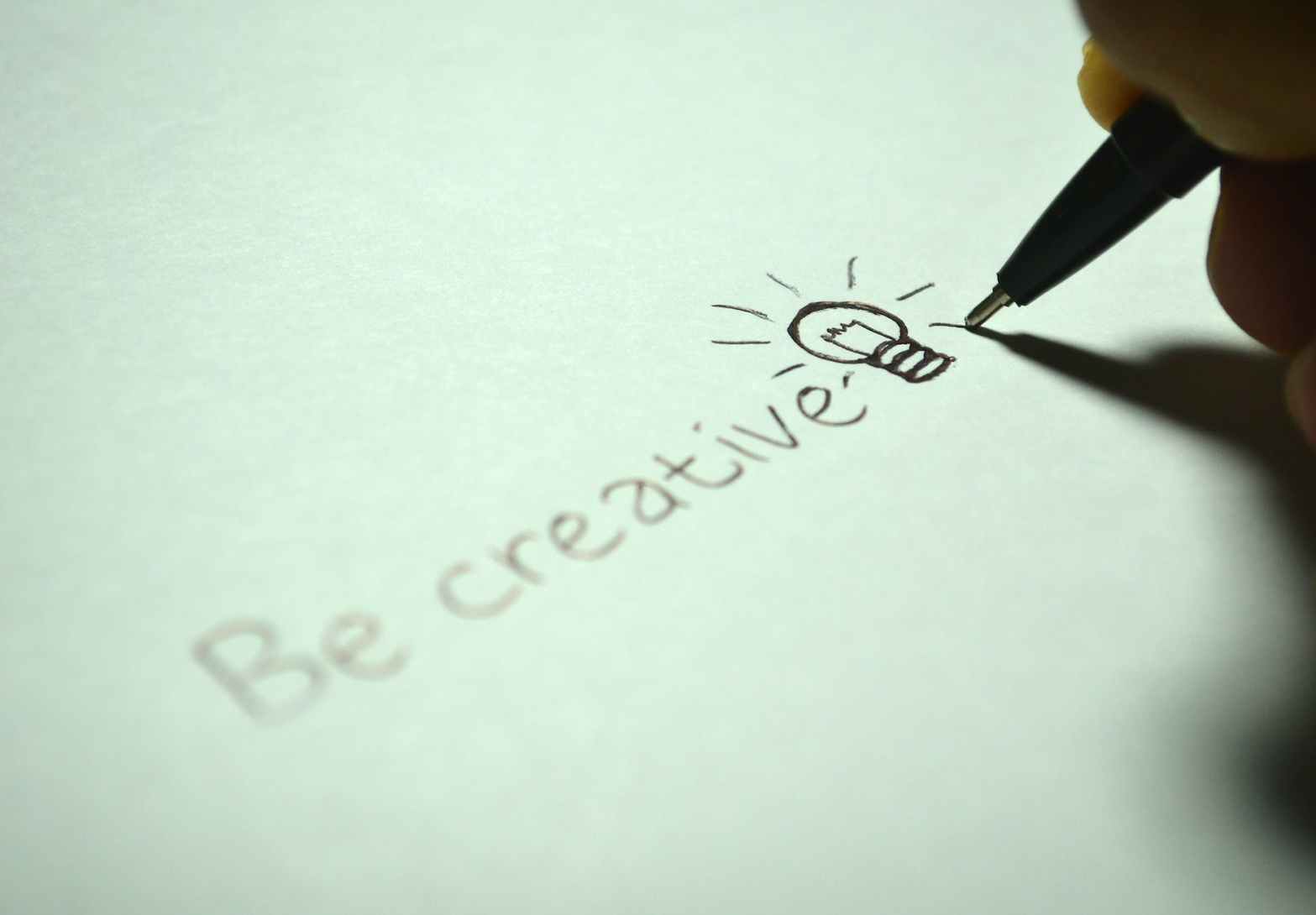
Nurturing Creativity: Unleashing the Vital Skill for the Future

In the fast-paced world of tomorrow, creativity stands tall as one of the essential skills. In this article, I aim to demystify the concept of creativity and provide you with valuable resources to delve deeper into this skill.

Beyond the conventional perception of creativity being limited to artists and innovators, I explore its universal relevance, the process it entails, and how anyone can harness and enhance their creative capabilities.

Unveiling the Real Essence of Creativity

Commonly, creativity is associated with individuals possessing extraordinary artistic or inventive talents. However, this narrow view is debunked by creativity expert Sir Ken Robinson. In his immensely popular TED talk, Robinson reshapes our understanding of creativity, emphasizing:i

  • Creativity’s significance across all spheres of life and work.
  • The inherent creativity we are born with but tend to outgrow.
  • The misconception that creativity thrives only when boundaries are absent; in reality, it often thrives within constraints.
  • Viewing creativity as an ongoing process, not a singular event, and thus, acquirable by all.

Creativity, Imagination, and Innovation Distilled

Distinguishing creativity from imagination and innovation is crucial. The following definition outlines the two fundamental phases of the creative process:

  • Generating ideas.
  • Making judgments to evaluate the value of those ideas.

This dual-phase approach sheds light on the myriad factors that foster creativity, including cognitive abilities, knowledge, thinking styles, motivation, personality traits, and environment.

Fostering Creativity: Techniques and Strategies

While no foolproof formula exists to boost creativity, several techniques can be beneficial:

Empowering Resources for Unleashing Creativity

A wealth of online resources awaits those seeking to enhance their creative prowess:

Embrace the exciting journey of nurturing your creativity, a skill pivotal for the future. Shedding the misconception of creativity being exclusive, the universal relevance is unveiled and the process demystified. With an array of techniques and resources at your disposal, you’re empowered to unlock your creative potential and contribute meaningfully to the ever-evolving world. So, dive in, explore, and enjoy the transformative power of creativity!

Writing Is Good for Your Health

There are great therapeutic benefits to writing backed by science – that’s why I run this blog 🙂

Keeping a journal can be extremely helpful. It is a low-cost, easily accessible, and versatile form of therapy. It can be done individually or guided by a mental coach. It can be practiced within a group and even added as a supplement to another form of cure.

These benefits are certainly not trivial. The potential positive outcomes of a creative writing process reach much further and deeper than simply writing in a journal.

A case out of all: Participants in a study who wrote about their most traumatic experiences for 15 minutes, four days in a row, experienced better health outcomes up to four months later (Baikie & Wilhelm, 2005). This research shows a significant healing effect in individuals who have experienced a traumatic or extremely stressful event.

Regular creative writing can help the writer:

• Find meaning in their experiences, view things from a new perspective, and see the silver linings in their most stressful or negative experiences (Murray, 2002).

• Experience important insights about themselves and their environment that may be difficult to determine without focused writing (Tartakovsky, 2015)

Writing therapy has proven effective for many different conditions or mental diseases, as found by Lepore & Smyth, 2002; Pennebaker, 1997, 2004; Farooqui, 2016, including:

• Post Traumatic Stress Disorder (PTSD)
• Anxiety
Depression
• Obsessive-compulsive disorder
• Grief and loss
• Chronic illness issues
• Substance abuse
• Eating disorders
• Interpersonal relationship issues
• Communication skill issues
• Low self-esteem.

Writing regularly, following an established pattern has shown:

• Increased feelings of well-being
• Reduced physician visits
• Reduced absenteeism from work
• Enhanced immune system functions.

Why don’t you try today the writing therapy? Email me to know more!

Windows

Windows are thresholds for the human mind.

Windows are thresholds for the human mind. Looking out the window, leaving your gaze suspended beyond a glass pane is not synonymous with wasting your time.  

Sometimes, the person looking beyond this threshold doesn’t want to see the outside world. They simply want to cross their reflection to navigate through the waves of introspection and reach inner worlds in search of new possibilities. In reality, there are few mental exercises that can be more useful than this one.

Windows are often indispensable resources for any dreamer. And also for that person who needs to rest after a stressful day and leans their head against the icy glass of a subway window. It is at this moment that the gaze relaxes and the imagination begins. At this time, we start to daydream and our brain finally finds relief, freedom, and well-being.

Windows allow daydreaming

Expert psychologists in the world of creativity like Scott Barry Kaufman and Jerome L. Singer, explain in one of their studies that today daydreaming is almost considered a stigma. Whoever chooses to look out the window for half an hour instead of continuing to work on their computer is nothing but lazy.

In addition, in another study by these psychologists, they showed that 80% of business leaders believe that creativity is enhanced by work and continuous activity. Thus, the person who, at some point, chooses to go for coffee in front of a window is someone who cannot stand the pressure, someone who may also be unproductive.

Today, we continue to associate action with productivity and passivity with laziness. We shall change these old and rusty ideas. Daydreaming is the art of going in search of the wonders hidden in our brain. It means training our mind to develop a little more introspection, curiosity, and imagination.

As Art, one of the authors of Wise and Shine, would say: Dare to dream.

Are you a daydreamer?

How And Why Reinventing Yourself. Find It Out by Following These 6 Steps

Have you ever wanted to reinvent your life? Have you tried several times but failed? Reinventing yourself professionally or personally can be a challenge but also a great adventure. Follow these 6 steps to succeed.

First step: find or wake up one of your passion.

Photo by Braden Collum on Unsplash

Concluding one phase and starting another one is not easy. Reinventing yourself requires more commitment than a simple change. Consequences may impact vital aspects of your daily life and a lot of courage and determination are needed.

The pandemic phase has forced all of us to look within and it is possible that many of us are dealing with the need of reinventing ourselves. There will be some who feel empty and need to do something to fill the empty spaces, others who have been forced to reinvent themselves due to the loss of a family member or a friend, others due to difficulties with their work.

For one reason or another, these are times when you need to stop to reflect and make decisions. Let’s see how to deal with this situation.

Reinventing yourself in a satisfactory way presupposes confronting yourself with one of the most uncomfortable emotions that exist: fear. You will be forced to leave your comfort zone and take a leap in the dark. The best antidote to fear is passion. It is the first success factor in a “reinvention” phase. Finding your passion, or awakening it, is only possible if you are honest with yourself. You have to ask yourself questions like:

  1. who I really am;
  2. what I want to do;
  3. which of my passions can help me in this moment.

An honest reflection and re-discovery your old dreams are the fundamental ingredients to neutralize fear and not fearing the future.

The second factor that will help you is not to assess uncertainty as a danger but as an opportunity. It is a question of letting go nostalgia and opening up to the experience of the “new”, so that to focus on what you want and not on what you fear.

To achieve this, you must be willing to learn with humility. If you think you already know everything, it is difficult to be able to start over in any area of ​​your life in a satisfactory way. The success of those who are successful is only the tip of the iceberg, behind there are hours and hours of training and mistakes that are barely seen.

Facing the future and uncertainty also requires a great deal of creativity and imagination. When reinventing yourself, it is important to keep a compass to map the path you are taking. The future is not written anywhere, it is up to you to create it and to do so you need our imagination and hard work.

Photo by Jamie Street on Unsplash

Reinventing yourself means knowing yourself from another perspective and being surprised by the opportunities that suddenly begin to present themselves. If we want your new self to be successful, you need to go out and make yourself known. For this, it is essential to strengthen your network of contacts.

The final ingredient for your success is to be self-confident, because you are capable of doing things you do not even imagine. But you need to learn to use the resources you have and find others available around you.

To conclude, here are the six ingredients to successfully reinvent yourself:

  1. find / awaken your passion to neutralize fear;
  2. transform difficulties into opportunities;
  3. learn, learn, learn;
  4. use great creativity and imagination;
  5. make yourself known;
  6. be self-confident.

Are you ready to reinvent yourself now?

Photo by Ahmad Odeh on Unsplash

Unplug your mind, find yourself

When e-mails, text messages, conference calls, Webex, Whatspp, FB, Instagram, Tweeter, Google and anything else from your partner to your boss invade our lives, it becomes necessary for our survival to stop for a while and be silent.

Our always connected minds take us away from the best of ourselves and our creative potential.

Referring constantly to what one or the other has said, we forget to connect to our essential being, which is unique and precious.

We have become individuals driven by technological change that moved away from ourselves, from our awareness of being human, from the first component of Emotional Intelligence (EI). EI is recognized today as a condition of success in a Volatile, Uncertain, Complex and Ambiguous (VUCA) world, as it is the one we live today.

Refocusing, looking inside, listening to silence and our inner voice. In the depths of ourselves we find an enormous amount of resources and our most authentic creativity: it is our treasure, a unique, rich and colorful, magical place where everything is open and possible.

In this space, we can find synchronicity, messages and insights that will enable us to make the right decisions for our lives.

In this space real relationships can arise, authentic relationships between sincere people who are now masked by the ego that continues to rule us.

What to do then?

Give yourself moments of silence! Be for a while without your mobile phone. Go out for a walk without it, walk with no direction in the nature and feel, look, listen, use all your senses to the maximum.

Be present in this unique moment and let yourself be pervaded by the harmony that surrounds you.

Practice your favorite hobby, and if you do not have it, think about finding one. Quietly cooking at home, knitting, painting, drawing, gardening and all the other activities that you may be passionate about.

Stop for a moment and stop moving from one activity to another, from one piece of information to another. Your brain can not take it anymore, it also needs a rest. Give yourself time to deepen the reasons of your choices and discover the reason of your being, your purpose.

So many people today cannot make a decision, if it has not been recommended by someone, a friend, a colleague, or a family member.

People feel lost. Most probably they are really lost: they have disconnected from themselves to live in connection with the social networks.

It is not my intention to condemn social networks and sources of information, I also use them. The problem is their overuse: a lot of people nowadays lives constantly with an external reference and far away from their real life.

I can accompany you on a journey where you will learn to clear some space for your inner needs. I will show you techniques to manage your stress that will help you to go back to your daily occupations in a more balanced way. And live your life fully. You deserve it!

Creativity: the skill of the future

Creativity is among the top three skills of the future.  I try to clarify this concept and give you more resources to explore it further.

We often associate creativity with artistic or innovational abilities, that only certain special people have. Those people are supposed to live a life of free expression and to produce ingenious works of arts or invent something useful for the human kind.

However, according to creativity expert, Sir Ken Robinson, this view of creativity is erroneous. Robinson, whose talk on this subject remains the most viewed video on Ted.com, states that:

  • creativity is essential for all spheres of work and life, not just the arts,
  • we are all born creative, but grow out of it,
  • creativity does not require freedom from boundaries and usually takes place within a given framework,
  • creativity is a process, rather than an event, and consequently,
  • it can be learned by all.

Creativity is closely linked to, but different from imagination and innovation. This definition of the concept identifies two phases of the creative process:

  1. generating ideas,
  2. making judgements (evaluating the value of those ideas).

This helps explain why so many different factors may be conducive to creativity, such as intellectual abilities, knowledge, styles of thinking, motivation, certain personality traits and environment.

Even though there is limited scientifically sound conclusions on how to become more creative, a number of techniques may help:

There are a lot of resources available on the Internet that will help you boosting your capacity to create original and useful work:

Have fun!