Sustainable Diets: Evolving Attitudes and Persistent Barriers

In recent years, the conversation around sustainable diets has gained momentum, driven by increasing awareness of climate change and environmental degradation. A recent study revisiting attitudes and awareness around sustainable diets in the U.K. reveals significant shifts since a similar study conducted a decade ago. This blog post looks into the key findings of this research, exploring how public opinion has evolved and what barriers persist.

Understanding Sustainable Diets

The term “sustainable diets” has seen a rise in recognition, thanks in part to heightened media coverage on climate change. However, the understanding of this term varies widely among individuals. Some associate it with affordability and personal health, while others link it to environmental concerns such as plastic packaging and climate impact. This varied understanding underscores the need for clearer, more consistent messaging about what constitutes a sustainable diet.

Awareness and Skepticism

One of the notable findings of the study is the increased awareness of the environmental impact of food choices, particularly meat consumption. This awareness has grown across all demographic groups compared to a decade ago. However, skepticism remains, especially among rural participants who often question the evidence linking meat consumption to environmental harm. Urban participants, particularly those from low-deprivation areas are more likely to accept the connection between meat consumption and greenhouse gas emissions (“low-deprivation” refers to areas or communities with a relatively high level of resources and opportunities compared to other areas or communities, often associated with higher socioeconomic status and fewer challenges in accessing basic needs and services. In contrast, “high-deprivation” areas face significant challenges in these areas).

Willingness to Reduce Meat Consumption

The study indicates a greater willingness among low-deprivation participants to reduce meat consumption. This shift may be influenced by social desirability, as reducing meat intake is increasingly seen as a marker of social status. Health concerns and animal welfare considerations are also significant motivators for those who have already reduced their meat consumption.

Persistent Barriers

Despite the increased willingness to adopt sustainable diets, several barriers persist. These include the enjoyment of eating meat, difficulties in changing household habits, and a lack of appealing plant-based options when eating out. Plant-based alternatives are often perceived as expensive, overly processed, or unsatisfying. Additionally, the concept of a “balanced diet” that includes moderate meat consumption is still prevalent.

Practical Solutions

The study highlights that small, practical changes can make a significant difference. Participants who have successfully reduced their meat intake often cite strategies such as setting meat-free days, trying new recipes, and swapping in ingredients like lentils or mushrooms. These manageable and realistic changes can be more effective in promoting sustainable diets than drastic, unrealistic shifts.

Tailored Strategies

The research suggests that different strategies may be needed to promote sustainable diets across various socioeconomic and geographic groups. For rural and lower-income communities, focusing on affordability, ease, and local relevance may be more effective. In contrast, urban and higher-income individuals may respond better to messages about climate change and animal welfare.

Conclusion

While awareness of sustainable diets has improved over the past decade, ongoing barriers highlight the need for practical, tailored solutions. Addressing the confusion and skepticism surrounding meat consumption and climate change is crucial. By focusing on manageable changes and clear, consistent messaging, we can make significant progress toward a more sustainable future.

Are you ready to make a difference? Start by incorporating small, practical changes into your diet, such as setting meat-free days or trying new plant-based recipes. Share your journey with friends and family to inspire them to join you in adopting a more sustainable lifestyle.

Thank you for reading! Please sign up for my blog crisbiecoach so you don’t miss out on any posts and also for Wise&Shine an incredible online magazine!

How Car Use and Meat Consumption Vary by Gender and Drive Climate Change

In the battle against climate change, understanding the contributing factors and their nuanced dynamics are crucial in planning for effective strategies. A recent study of 15,000 people in France throws light on an often-overlooked aspect of this challenge: the emissions gap driven by gender differences in lifestyle choices, particularly car use and meat consumption. This research shows that men in France have a 26 per cent higher carbon footprint than women. This finding not only opens new paths for targeted environmental policies but also invites individuals and communities to reflect on their environmental responsibilities.

The study underscores an intriguing facet of climate dynamics — the substantial impact of personal lifestyle choices on carbon emissions, delineated by gender. According to the research, men tend to have higher carbon footprints primarily due to higher car usage and meat consumption.

The implications of these findings are significant. Cars are known to be one of the most significant sources of greenhouse gas emissions, substantially contributing to air pollution and global warming. Men, statistically more inclined towards car use, add disproportionately to these emissions owing to both frequency of travel and preferences for larger, more polluting vehicles. Similarly, meat consumption, particularly from ruminant animals like beef and lamb, stands out as a major carbon emitter. The dietary preferences of men, leaning more towards meat-heavy meals, again skew the emissions balance unfavorably.

Environmental and Social Implications

Addressing this emissions gap involves more than individual accountability; it defines a broader picture requiring societal transformation. Environmental policies and initiatives must pivot to acknowledge these gender-based differences. For instance, promoting the shift to public transportation or enhancing the appeal of plant-based diets could be geared more strategically by recognizing and targeting these demographic nuances.

Moreover, this research aligns closely with ongoing discussions about sustainable living and gender equality. As the world progresses towards egalitarian norms, understanding how consumption behaviors intersect with gender dynamics can ensure that sustainability efforts are holistic and inclusive.

In light of these findings, what can we do individually and collectively? It begins with conscientious consumer choices — opting for public transportation, carpooling, or plant-based diets can substantially lower our personal carbon footprints. Let’s reflect on this opportunity to change our habits, foster discussions, and advocate for policies that recognize and address these disparities.

The intersection of gender and environmental responsibility is complex but pivotal to address climate change. By understanding and implementing gender-specific tendencies in emissions, we can build up on more targeted strategies that respect the diversity of human habits and needs. Our planet’s future may very well depend on how effectively we can balance these scales.

What do you think about the gender differences in tackling climate change?

Thank you for reading! Please sign up for my blog crisbiecoach so you don’t miss out on any posts!

The Shifting Plate: Sustainable Diets in Asia

With climate change accelerating, dietary shifts, particularly in rapidly expanding Asian economies, are emerging as a critical player in global climate solutions. A recent study delves into how consumers in China, Japan, and Vietnam are balancing their love for traditional foods with a growing interest in eco-friendly choices. This exploration uncovers insights that could pave the way for more sustainable diets across the region.

The Impact of Sustainable Diets

Shifting to more sustainable diets is one of the most effective ways to cut global greenhouse gas emissions and ease the strain on land and water resources. Experts agree that reducing the consumption of resource-intensive animal proteins, such as beef, can significantly benefit both the planet and our health.

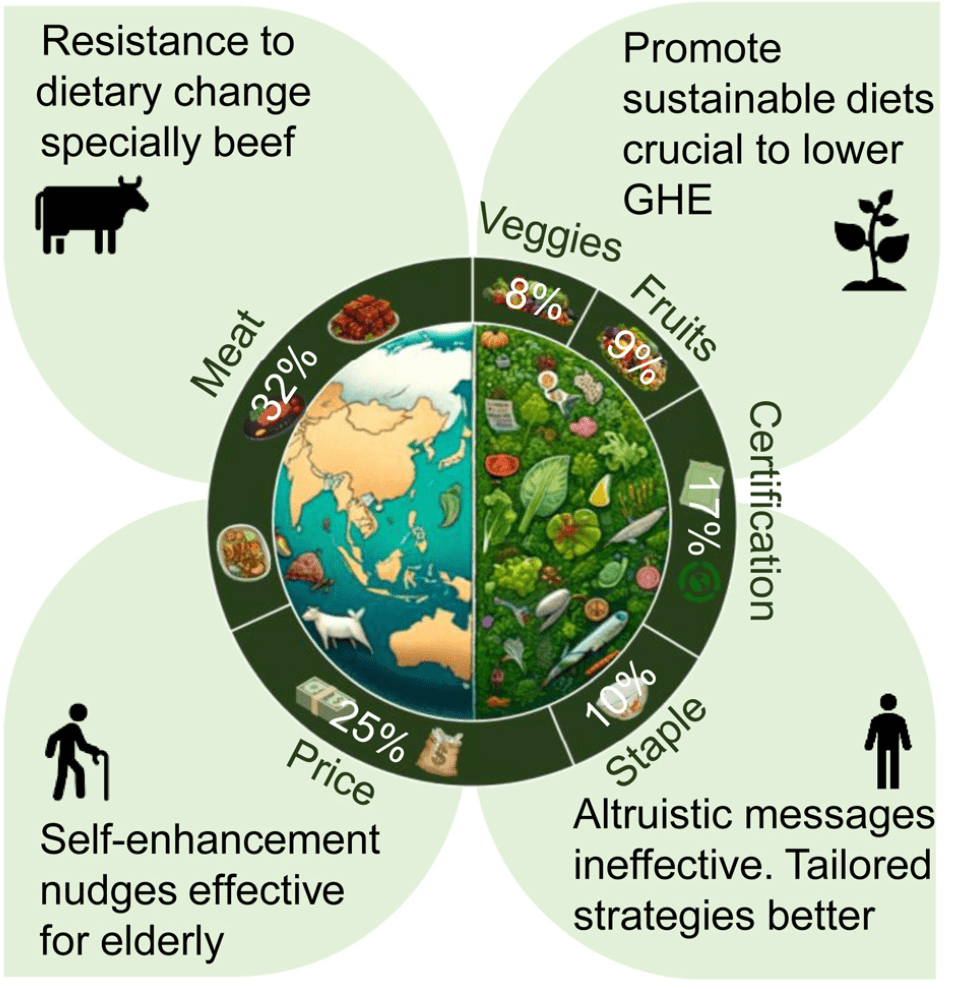
While countries in South and East Asia have traditionally leaned on plant-forward diets, the demand for animal protein is skyrocketing. By 2030, meat consumption is expected to grow by 75% in Vietnam and 20% in China compared to 2010 levels. This trend underscores the urgency of promoting sustainable eating habits in these regions.

Exploring Consumer Readiness in Asia

Most research on reducing meat consumption has focused on Western countries, where strategies like food labeling and education campaigns have proven effective. However, little is known about whether similar approaches would work in Asian markets. The study conducted by Research and Advocay Officer Elena Schaller explores how ready consumers in China, Japan, and Vietnam are to embrace more sustainable eating habits.

Researchers surveyed over 5,000 people across the three countries to understand their food habits and awareness of environmental issues and health concerns associated with meat production. They also asked how much people would pay for food certified as environmentally friendly.

Methodology and Findings

To dig deeper, participants were presented with “food baskets” filled with different items that varied in sustainability and price. These foods considered food culture and habits and included meat, vegetables, fruits, and starch staples like rice or bread. Participants could also choose a meat-free option. The researchers then tested whether providing educational “nudges” could influence their choices. Participants were randomly divided into groups and exposed to one of three nudges or no nudge at all (the control group):

  1. Climate Impact Nudge: Explained how the growing demand for meat contributes to increased greenhouse gas emissions.
  2. Resource Use Nudge: Highlighted the environmental toll of intensive farming.
  3. Health Effects Nudge: Emphasized risks from fertilizers and pesticides used in intensive agriculture.

Each nudge ended with a statement about the ability of the participant’s personal choices to make a difference.

The survey was delivered face-to-face in China and Vietnam and online in Japan. Participants were recruited from both urban and rural areas in each country, and the sampling was designed to represent population demographics in terms of age, gender, and household income to investigate country-level effects.

Key Insights

  • Protein Preferences: Chicken and fish were the most popular protein choices, with people willing to pay 2% more for them compared to pork. Beef was slightly less popular, and lamb was the least preferred.
  • Carbohydrate Choices: Rice was the clear favorite, with consumers willing to pay 7% more for rice than bread or potatoes.
  • Sustainable Labeling: Food labeled as sustainable was well received across all three countries, with participants being willing to pay roughly 16% more for a food basket with items that were certified as sustainably produced. Vietnamese consumers stood out, being willing to pay 39% more for eco-friendly options.
  • Demographic Differences: Younger and wealthier participants were the most interested in sustainable options and willing to pay more for them. Older and rural consumers responded better to health-focused messages.
  • Trust in Certification: 84% of consumers trusted certified environmental labels, with international organizations being trusted the most. Participants in China and Vietnam expressed the most trust in government certification schemes (50%), while Japanese participants were the least trusting of these (26%).

The Effectiveness of Nudges

The nudges didn’t significantly reduce the consumption of less sustainable proteins like beef and pork. However, they did slightly increase interest in chicken and fish, particularly the greenhouse gas emission and health-related message. This suggests that promoting better choices may be easier than discouraging worse ones.

Implications for Advocates

While many Asian consumers are reluctant to reduce their animal protein intake, there’s growing concern for the environment. The strong interest in food certification shows that people are open to sustainable choices, especially when they’re seen as trustworthy and high quality.

Creating meaningful change will require more than awareness campaigns or nudges. A comprehensive approach will combine culturally tailored strategies, reliable certification programs, and improved access to affordable sustainable options. Together, these efforts could help lower the environmental footprint of diets in these diverse markets.

As consumers, we have the power to drive change through our food choices. By supporting sustainable practices and advocating for reliable certification programs, we can collectively reduce our environmental footprint. Let’s embrace this shift and contribute to a healthier planet, one meal at a time.

Thank you for reading! Please sign up for my blog crisbiecoach so you don’t miss out on any posts and also for Wise&Shine an incredible online magazine!
Why We Struggle to Eat Less Meat Despite Knowing Its Harms

I read an article recently that discusses the concept of moral disengagement in the context of meat consumption. It highlights the significant negative impacts of meat production and consumption on the environment, animal welfare, and human health. These include contributions to climate change, biodiversity loss, water pollution, and diet-related diseases, along with concerns over poor working conditions in the meat production sector.

For a shift towards sustainability, especially in high-income countries, there is the need for reducing meat consumption. However, there is a discrepancy between these sustainability imperatives and consumer demands, both at the societal and individual levels. Many individuals intend to reduce meat consumption but often fail to do so, leading to cognitive dissonance when their dietary choices conflict with their beliefs or values.

The theory of moral disengagement is proposed as an explanation for why people continue to eat meat despite recognizing its negative consequences. Moral disengagement involves mental strategies that people use to justify or rationalize morally questionable actions, allowing them to disengage from the guilt associated with these actions. The article identifies eight mechanisms of moral disengagement employed by meat consumers:

  1. Moral Justifications: Framing meat consumption as serving a socially valuable purpose.
  2. Euphemistic Labelling: Using softer language to describe harmful behaviors.
  3. Advantageous Comparison: Comparing meat consumption with worse actions to make it appear less harmful.
  4. Displacement of Responsibility: Attributing responsibility to external factors or authorities.
  5. Diffusion of Responsibility: Sharing responsibility with a group to lessen individual accountability.
  6. Disregard or Distortion of Consequences: Ignoring or minimizing the harm caused.
  7. Dehumanization: Denying the sentience or feelings of animals.
  8. Attribution of Blame: Shifting blame onto the animals themselves.

These justifications help to soften feelings of guilt and reduce the motivation to decrease meat consumption. Research has found that meat eaters often deny or downplay the cognitive abilities of animals to ease their sense of guilt.

Additionally, they frequently justify meat consumption using the “4Ns”: describing it as natural, normal, necessary, or nice. Other justifications may involve appeals to religion, availability of meat, or personal freedom.

Moreover, the article notes a correlation between cultural ideals of masculinity, high meat consumption, and the tendency to utilize moral disengagement strategies. Understanding these cognitive processes can be crucial in developing more effective approaches to encourage reduced meat consumption and promote more sustainable dietary practices.

What do you think about the moral disengagement linked to meat consumption?

Thank you for reading! Please sign up for my blog crisbiecoach so you don’t miss out on any posts and also for Wise&Shine an incredible online magazine!