Why Unplugging Your Mind Is Important to Find Yourself

When e-mails, text messages, conference calls, Webex, Whatspp, FB, Instagram, Tweeter, Google and anything else from your partner to your boss invade your lives, it becomes necessary for your survival to stop for a while and be silent. That’s why unplugging your mind is crucial.

Our always connected minds take us away from the best of ourselves and our creative potential.

Referring constantly to what one or the other has said, we forget to connect to our essential being, which is unique and precious.

We have become individuals driven by technological change that moved away from ourselves, from our awareness of being human, from the first component of Emotional Intelligence (EI). EI is recognized today as a condition of success in a Volatile, Uncertain, Complex and Ambiguous (VUCA) world, as it is the one we live in today.

Refocusing, looking inside, listening to silence and our inner voice. In the depths of ourselves we find an enormous amount of resources and our most authentic creativity: it is our treasure, a unique, rich and colorful, magical place where everything is open and possible.

In this space, we can find synchronicity, messages and insights that will enable us to make the right decisions for our lives. Real relationships can arise, authentic relationships between sincere people who are now masked by the ego that continues to rule us.

What to do then?

Give yourself moments of silence! Be for a while without your mobile phone. Go out for a walk without it, walk with no direction in nature and feel, look, listen, use all your senses to the maximum.

Be present in this unique moment and let yourself be pervaded by the harmony that surrounds you.

Practice your favorite hobby, and if you do not have it, think about finding one. Quietly cooking at home, knitting, painting, drawing, gardening and all the other activities that you may be passionate about.

Stop for a moment and stop moving from one activity to another, from one piece of information to another. Your brain can not take it anymore, it also needs a rest. Give yourself time to deepen the reasons for your choices and discover the reason for your being, your purpose.

People feel lost. Most probably they are really lost: they have disconnected from themselves to live in connection with the social networks.

Therefore, unplugging your mind is very important for your wellbeing. Learn to find some space for yourself and your deeper needs. And live your life fully. You deserve it!

Walking on the Beach

I came back from a fantastic trip to Cuba where I had a chance to walk a lot on beaches.

We all know that spending time outdoors is good physically and mentally, but the benefits of spending time at the beach have just been revealed by science. 

That incredible feeling of peace and calm you get on the beach is now called “blue space“. This is what scientists have dubbed the effect that the combination of soothing perfumes and water sounds has on the brain. The blue space is enough to make you feel comfortable in a hypnotic way. Overall, this blue space strikes you in four different ways:

1. It reduces stress. Water is nature’s remedy for life’s stressors. It’s full of natural positive ions that are known to have the ability to make you feel comfortable. So whether you’re swimming or just dipping your toes into the water, you’re sure to feel a sense of relaxation. It’s an instant mood booster that we could all use from time to time!

2. The beach stimulates your creativity. Do you feel like you’re in a creative routine? Well, scientists now believe that walking on the beach helps the creative process. Being in the blue space allows you to clear up your mind and tackle problems or projects more creatively. Just like meditation, being on the beach triggers a sense of calm that allows you to tune everything else together and reflect on what you need to focus on.

3. Going to the beach can help reduce states of depression. Just like the effects you have on stress and creativity, walking on the beach also offers some relief from states of depression. The hypnotic sound of the waves combined with the sight and perfumes of the beach can put you in a meditative mode. You can clear up your mind and reflect on life in a safe space away from the chaos of your daily life.

4. Overall, spending time at the beach will change your perspective on life. And that perspective will change for the better! Nature in general has always been a factor for a healthy and happy life, but being on the beach in particular is so good for the soul.

So grab your sunscreen because it’s time to go to the beach! It’s winter on my side of the world but you can dress properly and enjoy the positive effects of walking on the beach.

Did you like this article? For more on wellbeing, please have a look here.

Do You Often Forget Things?

Do you often forget things, from the most trivial trifle to the most important thing you have in mind?

Don’t worry, as one study has found out that:

“The point of memory is not being able to remember who won the Stanley Cup in 1972 but to make you an intelligent person who can make decisions”

While shopping, you may forget one of the most important items you were supposed to buy, or in the middle of a conversation with friends, it’s impossible for you to remember the title or the name of the author of a book you were recommending.

In short, it feels like starting Alzheimer’s because you notice that you have difficulties remembering (almost) everything.

But don’t worry, because a study by two researchers at the University of Toronto (Canada) reveals how important it is to forget.

Paul Frankland and Blake Richards, researchers at the University of Toronto conducted a study that found out that people who are more likely to forget are also the smartest!

“It is of utmost importance that the brain is able to select the information it acquires and eliminates irrelevant details, thus focusing on a more general view to ensure that decisions are made in the most correct way.”

These are the words of Blake Richards denying the belief that those who can remember more things are also the smartest, and confirming almost the opposite. The elimination of unimportant information allows us to increase our analytical abilities, focusing our attention on the fundamental things and avoiding unnecessary work of our brain.

The researchers developed this study after several years of research on memory loss and brain activity, including both humans and animals.

The conclusion is that:

“If you forget occasional details,” Richards says, “it may mean your memory is healthy and doing exactly what it should be doing”.

Are you someone who often forgets things?

You can find more on brain here.

I Accept Myself As I Am

After finishing my training to become a coach (already a long ago, in 2017), I began to recite a mantra that sounds like this: 

I love and accept myself as I am.

Every time I argue with my husband, especially when he doesn’t like some of my behaviour, I go with my mantra: I love and accept myself as I am.

What does it mean to love and accept ourselves as we are?

First, it means having a healthy relationship with ourselves, namely clogging the genuine belief that we are enough and not continuing to try to be “validated” by others.

Self-acceptance is not just about your body. Sometimes when we look in the mirror (especially us women) we do not like ourselves, we see ourselves fat, a little older, with dark circles under our eyes and who knows what other defects. Our body is the most visible part of ourselves, and commercials make us see people in great shape, always perfect and beautiful.

But also our personality is important of course, and it is crucial to accept ourselves as we are.

Why is accepting oneself so important?

Research has shown that non-acceptance of oneself or poor self-acceptance can be the cause of depression and anxiety. In addition, a negative image of ourselves can even cause eating disorders that could also turn into obesity.

Although accepting ourselves as we are would make us feel better, it is not easy, because we always seek others’ approval. This is also the result of social conditioning, which pushes us to always seek validation from the group, from the community we belong and feel part of.

Moreover, today, with the massive use of social media, we tend more and more to compare ourselves to others, we want to get as many likes as possible, to feel part of something that goes beyond our identity, and prevents us from achieving a well-being based on who we really are and what we seek in life, our purpose, why we are on this planet, in one word, your Ikigai, as the Japanese would say.

We think that judgment, the approval of others contributes to our well-being, when in reality it is not like that.

Ask yourself the following questions:

  1. Who are these “others” whom you trust so much that you let them judge you?
  2. Do you really know them well?
  3. Why do you trust their judgment?

Remember: accept yourself for what you are, with all your strengths and weaknesses.

Make my mantra yours: I love and accept myself as I am.

A Glass Full of Water

You all know about the half empty or half full glass of water. By saying how you see it, you will understand if you are an optimist or not.

And if you would like another perspective on a half empty or half full glass, you can read Wynne’s post The Glass Is Refillable.

But what you are going to read here is something different that I saw recently in a simple, short but very effective video.

A professor during a lecture surprised his students by showing a full glass of water in his hand.  The students, who thought he would talk about the classic concept of a glass half empty or half full were amazed when he asked them about the weight of the glass. His intention was quite different, in fact he did not want to explain the concept of glass half empty or half full.

The answers were different and most of them could be considered acceptable. However, the explanation given by the professor was different and much deeper.

The weight of the glass depends on the time you will have to hold it. If you hold it in your hand for 5 minutes, it is very unlikely that you will have troubles. However, if you hold it in your hand for 2 hours, the arm will get tired. And if you hold it even longer, let’s say one day, the arm will be as if paralyzed and eventually the glass will fall.

The same happens with stress.  If you are under stress for a relatively short period of time you will have no side effects. But if you experience stress for weeks and months, you may eventually get sick.

The disease in this case would be of psychosomatic origins.

What is a psychosomatic disorder?

The word psychosomatic comes from the Greek psyche “soul” and soma “body”. A psychosomatic illness occurs when the mind creates an alteration of the body.

For example, imagine that you have a colleague, or a person you know, who often criticizes you.

Their criticisms are not sporadic, on the contrary they are recurrent enough to become a habit. This behaviour also creates a negative environment around you.

If you can’t get rid of this stress in time, you’ll accumulate so much negativity that it could cause side effects on your health. It would be like holding a glass full of water for a whole day.

This reality is unfortunately so common that it is even believed that some physical illnesses can worsen due to mental factors such as stress and anxiety. It is believed, for example, that conditions such as psoriasis, eczema, gastric ulcers, hypertension and many heart diseases can occur due to psychosomatic problems such as stress or anxiety.

Would you like to learn some techniques to reduce stress: have a look at the conclusion on this article published on wiseandshinezine.com.

What about you? What are the solutions you adopt to fight your stress?

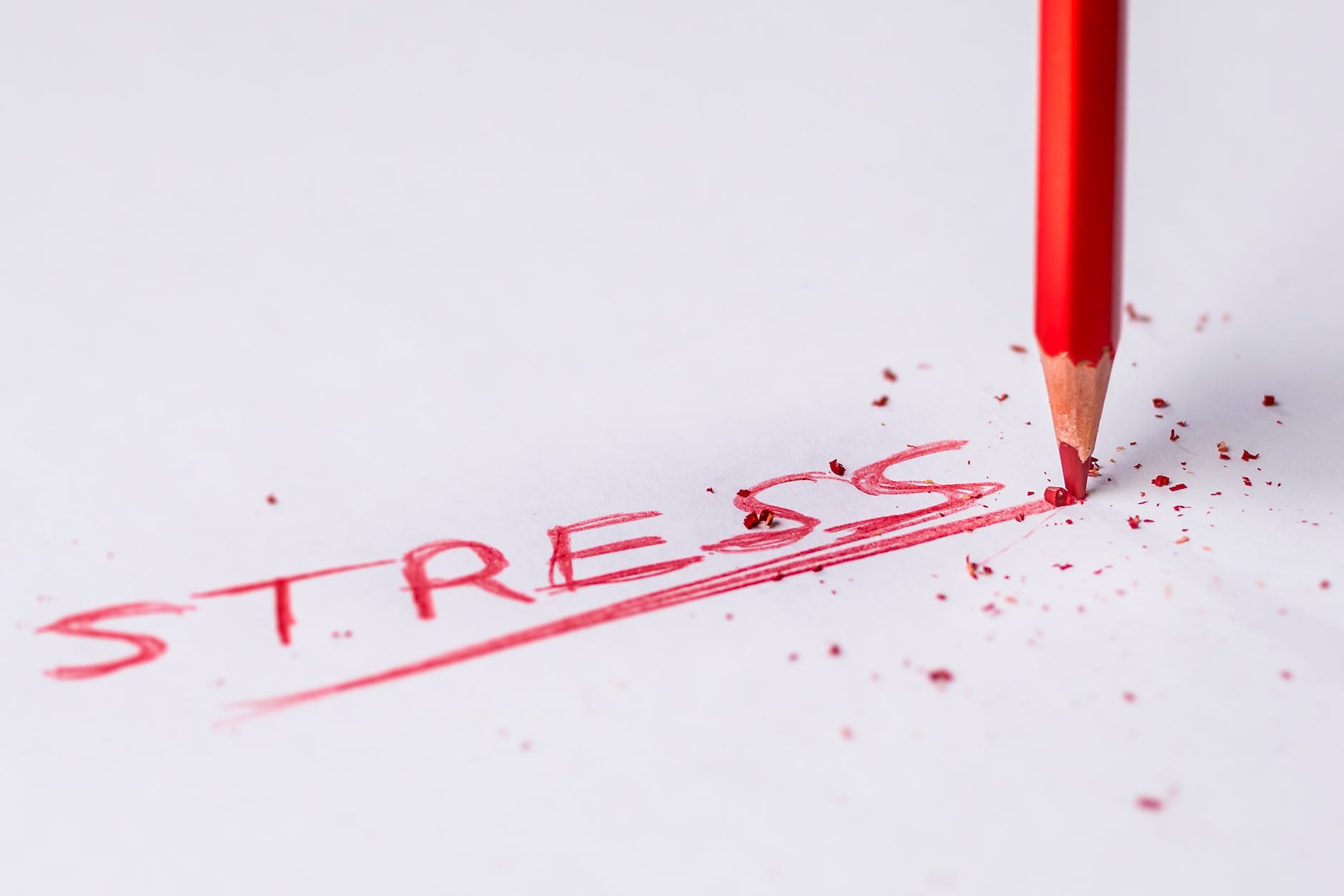
stress handwritten text on white printer paper
Stress – Photo by Pedro Figueras on Pexels.com

The Power of Intuition

Intuition has always been a fascinating subject of study. It is generally associated with genius, because the greatest scientific discoveries happened thanks to moments of intuition.

Einstein wrote:

Intuition is a sacred gift of which reason is a faithful servant. We have created a society that honours the servant and forgets the gift.

In addition, we all know that it is thanks to our intuition that we make some of the decisions of our lives, even if we consider ourselves rational and Cartesian beings.

From the point of view of the Eastern religions (Buddhism, Hinduism, Taoism) there is no mystery. In the traditional languages of these millennial wisdoms, the terms designating knowledge, consciousness, lucidity are often identical.

Attachment to mental constructions, beliefs, and concepts, as well as the mental agitation that accompanies it, are seen by them as a veil over primordial intelligence. Buddhists explain it like that:

if we do not stir water, it will become clear by itself. In the same way, if we leave unchanged the nature of the spirit, and we do not manipulate it, it will find peace and clarity on its own.

But let’s go back to the West and see that to make a decision we will evaluate three elements:

  1. rational analysis,
  2. emotional aspect,
  3. intuitive wisdom.

However, if we practise meditation, thoughts and emotions would calm down, and intuition would manifest. In fact, there are several testimonies from practitioners who tell that the most creative ideas came at the end of their meditation.

In a linear, predictable, and orderly environment, a rational analysis is often more effective for deciding and planning an action.

On the contrary, in a volatile, unpredictable, or chaotic environment, when the human element predominates, intuitive intelligence becomes useful.

Therefore, meditation is more and more used in our times, as we live in an ever-increasing insecurity and instability.

How intuition works

Intuition draws on three main resources.

  1. Like a tree, the first source is the ramification of its roots. It is the entirety of information, of experiences lived in the past and stored in the unconscious.
  2. The second source is comparable to the leaves of a tree. These are the strong or weak signals, picked up in the present instant.  All these signals are undefined and cannot be evaluated by rational analysis.
  3. The third source is collective intelligence. In fact, our personal intuition can go beyond temporal and spatial limitations. Intuitive intelligence can tap into a nearly unlimited source, outside the limits of time, space, and the individual. All this is normal according to Buddhist philosophy where, for example, the individual, time, and space are conceptual categories created by the mind.
two brown trees
Trees – Photo by Johannes Plenio on Pexels.com
How do you synthesize these sources of information?

Cognitive science researchers have tried to answer.

Just before an intuition, there is a “letting go” moment, a descent within us. Then, suddenly, the presence increases, there is a kind of awakening, a feeling of unity and inner agreement. There is also a feeling of evidence, of surprise, of amazement and wonder.

These are the elements that we also find in a meditative experience: letting go, increased presence, awakening, unity.

It is necessary to emphasize the essential place occupied by the body in intuitive intelligence.

How many times have you made rational or emotional decisions while your body opposed it? Did you regret this decision a few days, months or years later? It happened to me several times in my life. I should have listened to the signals that my body sent me and taken them into account when making my decision.

In this regard, body scan meditation can help to develop this sixth sense of intuition. We shall also consider that if we constantly ignore the body’s messages, we might experience illness, pain, or disorder. Which is what happened to me.

Intuition, beyond the help it provides us in making decisions, is our deep inner voice, our wisdom, our most precious guide. It is important to learn to listen to it and to look after it.

To conclude if you hesitate to follow your intuition, try asking yourself these two questions, which will help you clarify what is at stake:

  1. What do I risk following my intuition?
  2. What do I not risk following my intuition?

What do you think about intuition? Do you agree with me that it is powerful?

This article has been previously published on Wise&Shine magazine.

Seven Simple Rules to Follow

We are approaching the end of summer. For those who have already returned from vacation it may be difficult to go back to everyday life, to start over with the usual routine.

So, I would like to share with you seven simple rules to follow for a quiet and less stressful life:

1. Make peace with your past so that it won’t disturb your future.

2. What other people think of you is none of your business.

3. The only person responsible for your happiness is you.

4. Don’t compare yourself to others, you may get hurt.

5. Time heals almost everything. Give yourself more time.

6. Stop thinking so much. Accept not to know all the answers.

7. Smile. You cannot control all the problems in the world.

Would you consider following these simple rules? Do you have any other to add? Let me know!

two yellow emoji on yellow case
Smile – Photo by Pixabay on Pexels.com

The Link Between Sleep & Weight

Do you know that sleeping less than 7 hours will make you gain weight? Let’s see how.

It is known that sleep affects overall well-being, but few people know that it also has a direct link to your weight.

This relationship was highlighted by a study conducted by researchers at the University of Chicago, coordinated by Dr. Eva Van Cauter, director of the Center for Sleep and Metabolism. According to scientific research, sleeping less than 7 hours a night would contribute significantly to weight gain. The reason is that less sleep corresponds to a greater appetite during the day because the body automatically tends to feed more to stay awake longer. Sleep is in fact an essential condition for regulating many biological mechanisms, both mental and physical.

While you sleep, your metabolism slows down, allowing your body to consume less and optimize its energy reserves. Sleeping poorly and a few hours interrupts this rhythm, so increased appetite is one of the many ways nature tries to compensate for what it lacks. It is estimated that just one hour less sleep than the recommended average of 7/8 hours translates into a consumption of about 300 extra calories per day and 1 kilogram of extra body weight per week!

All this is due to the decrease in the satiety hormone, while ghrelin, the hunger hormone, increases. That is why, despite attempts to lose weight through exercise, few results are achieved. It is obvious that sleeping more and better is not the only thing you can do, but it is a good habit that should be part of a healthy lifestyle, including a rich and varied diet.

Therefore, to get back in shape, in addition to going to the gym and seeking advice from a nutritionist, you could simply increase the hours and quality of your sleep, thus restoring the balance of your body.