How and Why Yoga Helps You Maintain Physical and Mental Balance

Over the last few years, a very old practice has become the subject of scientific studies: yoga. Positive effects on the brain have begun to be measured, such as anti-stress and anti-depressant effects.

The studies began thanks to the spectacular spread of yoga. Millions of people practice yoga regularly. Positions (asanas) such as the warrior or the cobra are increasingly known among different people and age group. The reasons are mainly that persons want to learn how to relax, how to get rid of several kinds of pain (back, neck, shoulders, etc.) manage stress, and maintain good physical shape.

Traditional yoga (from the Sanskrit “yuga” which means “union”) comes from India and is a discipline more than five thousand years old. An important source of this spiritual school, which should guide us towards the divine, is a writing by Patañjali: Yoga Sutra, which contains the essential foundations of the discipline.

According to this essay, the purpose of yoga is to attain a higher form of self-knowledge, which can be achieved with inner contemplation. In addition to specific physical exercises, and breathing techniques, traditional yoga also includes meditation, a vegetarian diet and an entire philosophy of life. The modern and western form of yoga omits many of these elements. The development of strength and plasticity, meditation and breathing exercises play the most important role today.

At the beginning of the twentieth century, a small group of Indian yoga teachers began to spread the teachings of yoga in the Western world. After the explosion of fitness in the 1980s, which focused above all on the cult of the body, the spiritual part has been lost a little. Therefore, in the Western world mainly hatha yoga began to spread.

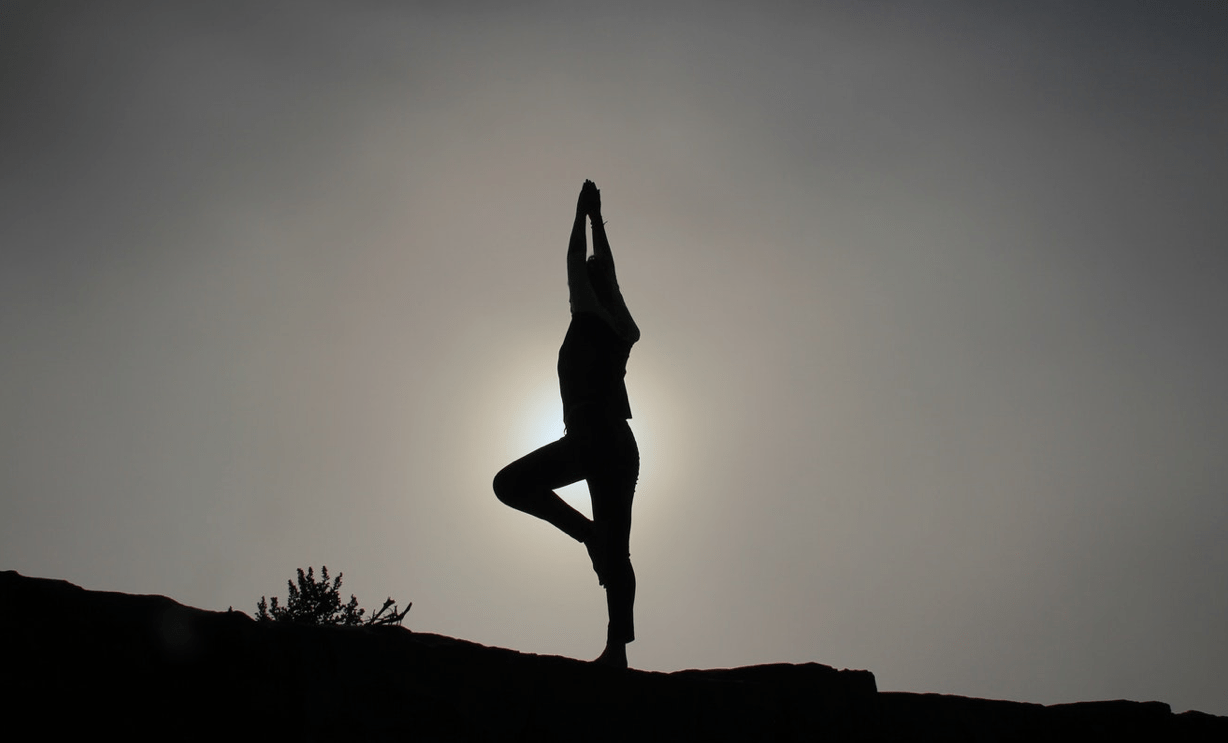
Photo by Mor Shani on Unsplash

The effects of hatha yoga on health are: improving body consciousness and coordination, strengthening muscles and enhancing blood circulation. Moreover, yoga is also beneficial to stress management.

From experience, I can say that after a yoga session I feel relaxed and rested. It takes longer to reach a similar state with meditation, while hatha yoga produces effects immediately, probably thanks to the more marked physical component. It is actually proved that physical exercise is good for your spirit. Perhaps, this is why yoga is a fast-acting cure-all, as it associates physical exercise with meditative practice.

In fact, by associating postures (asanas) with breathing (pranayama), we act on the body by relaxing the muscles, and on the spirit because the sympathetic nervous system (the nervous system that is stimulated when we rest or sleep) is activated.

Yoga allows you to find calm despite the limits imposed by everyday life. With regular practice, even 5 minutes a day is enough, you will sleep better, your self-confidence will increase, as well as your ability to make decisions and manage stress.

Considering all those positive aspects, are you planning to start practising yoga?

balance blur boulder close up
Photo by Pixabay on Pexels.com

How and Why You Should Listen to Your Body

In our times, we receive information from many sources: emails, social networks, television, people we know and colleagues. Our mind is over-stimulated for the duration of the day and this can cause stress and anxiety, which can also cause a real burn-out.

The excessive exposure to those information is detrimental to the activity of our body which is relegated to a mere container of organs that allow us to move (even if sometimes less than what we should).

Too many hours spent in front of the screen (mobile phone, computer or television) do not allow the body to tone up and therefore regenerate. During the pandemic, it has become even worse, because of the restrictions imposed to avoid the spreading of the virus. We could go out less often, or not at all.

Furthermore, it can happen that we ignore the pain from the body by using analgesics or other types of medicines to avoid feeling sick.

crop patient taking pill from table
Photo by Artem Podrez on Pexels.com

If you do this, know that you are waging war to yourself, because silencing your body will not help you solve the problem.

Our body is sending us important signals that we will need to start considering. By continuing to ignore the messages it sends us, there may come a time when the pain becomes unbearable and it might be too late.

As soon as you hear a strange noise coming from your car, you take it to the mechanic before it breaks down. The same thing you should do with your body.

For example, if you experience often back pain, it means that you need to change your position, adopt a more adequate posture, maybe change chairs or just go for a walk.

Try to think that pain is actually your ally because it wants to tell you that there is something wrong with you and which you should take care of.

Let’s see four techniques that you can use every day to learn listening to your body.

Mental scanner. This is a mindfulness technique that involves mentally scanning of your body from the top of your head to the bottom of your toes to check if each part is healthy.

Daily walks. This is the best way to get up of your chair. Usually all mobile phones have an app to calculate steps. I signed up for a monthly “race” with colleagues to take at least 6,000 steps a day. At the end of the race, there will be an award for the walker who has taken the most steps. Run a race with your friends or colleagues too!

Feeding your body and mind. The Japanese eat up to 80% of their hunger in order not to get heavy (this is a principle of Ikigai). Therefore, eat less but eat healthy, and sleep at least six hours a night so that your body and mind can do a complete “reset”.

Respect the messenger. Instead of taking medicines at the first symptom of discomfort or pain, try listening to your body, what it is communicating to you. Think that your body needs to be considered and looked after. Don’t wait for your body to ask you for help when you are in extreme pain, as remember that it might be too late.

When you don’t feel well, what do you do? Do you listen to your body or you take medications?

namaste sign on wall
Photo by Mikhail Nilov on Pexels.com

10 Ideas For Spending Your Holidays At Home.

In this period of mobility restrictions caused by the pandemic, the time when we could travel freely seems a long ago. Last year for Easter, I had planned a trip to Berlin and I would not have expected to cancel it. This year too, I would have liked to leave for the Easter break, but the virus is still among us and it is better to stay where we are.

Covid has changed many aspects of our life and going on vacation is one of them. It is obvious that going on vacation is very important for physical and mental health. You should think about taking rest periods even without being able to travel.

When we work we look forward to the weekend but it is not long enough to fully recharge ourselves. To be able to really disconnect from work we need more time.

Holidays are a period of time that we need, we need it as well as sleep, eat, drink, in short, they are a necessity. If we want to stay healthy, we have to take vacations.

Waiting for the pandemic to pass and then taking a long vacation is not a good idea. It is better to take shorter vacations but more often.

Of course, we cannot travel now, it is strongly discouraged, but this does not mean that a period of rest at home or close to your place, depending on what you can do in the country where you live, will do some good. Holidays allow us to recover and when we come back, we often feel better, full of energy and even more creative.

Photo by Wee Lee on Unsplash

It does not matter where you go on vacation. The main thing is that you can rest and put aside your daily worries. Choose what to do, with whom and when to do it. Not everyone likes travelling. Some like to have time to read more, do more physical activity, spend time outdoors. Others like to take small hikes, without straying too far from home. Some people enjoy long trips, some other like only short ones.

With the health crisis, many of us had their vacations at home. Let us see the positive aspects of it: definitely less pollution, you saved some money and also the stress of travelling.

However, there are people who do not like being at home. They do not know what to do, they get bored, they do not want to tidy up the house (but for this one could call someone to help), and the children (when they are there) need care and attention. They have to think about many things, as if they were working. On the other hand, they may simply want to change air and get to know new places, or return to places they have loved before.

If, however, you are forced to stay at home due to travel restrictions, take some days off and try to take advantage of your free time anyway, as doing so will make you feel better. Moreover, think that the pandemic will be hopefully over soon.

If you find yourself in the position of having to stay at home during your holidays, try these tips:

1. Don’t read professional emails;

2. Do little housework;

3. Establish rules and times for being at the computer or television (both for you and your children, if you have any);

4. Look for new places to discover in your neighbourhood;

5. Spend time in nature because nature is a source of energy;

6. Make a list of what you would normally do on vacation, eliminating the things you cannot do due to anti-Covid rules. For example, in Belgium, where I live, you can ride a bike, but you cannot go to a restaurant;

7. Organize a movie marathon with friends and discuss with them to find out which ones you all liked the most;

8. You can do the same thing with a book. Choose with your friends a book you all would like to read. When finished, you gather together (on-line if not possible a real gathering together) to comment on it;

9. Why do not you sign up for an online course to learn new things? There are many possibilities even for free!

10. Indulge yourself with little vices: buy some chocolate (soon it will be Easter, the best moment to buy it), a good bottle of wine, or have a three-course meal delivered.

What kind of vacation do you like? Do you prefer to travel far away or stay closer?

Photo by Emma Simpson on Unsplash

How the Pandemic Has Changed Our Lives

It is undeniable that the restrictions imposed by the ongoing pandemic have drastically changed our habits and our lifestyle. There is no doubt that the stress produced by uncertainty, prohibitions and lockdowns, whether partial or total, have prompted us to search for distractions that can give us some relief. As Ovid said, human beings seek what is forbidden and desire what is denied them.

There is a thread that links excessive behaviors (drinking too much, smoking too much, overeating, spending too much time on the computer or watching television) to stress.

Photo by Christin Hume on Unsplash

Clearly, the pandemic puts our desires on hold and it is normal to wish for what cannot be done. Only when we go back to a more or less normal life and our desires will be satisfied, our lives will be brighter. The pursuit of pleasure is an absolutely human behaviour, there is nothing to worry about.

Our brain identifies and reinforces beneficial behaviours such as eating well, socializing, having fun. This complex reward circuit that generates pleasure is the result of the evolution that guarantees our survival, that orients us in daily life and that keeps us going on. The more we can produce dopamine (the pleasure and reward hormone), the more we can generate pleasant sensations in a natural way. As a consequence, we would not need to adopt excessive behaviours that can lead to addictions.

However, the situation we have been experiencing for about a year has affected and affects motivation and self-control. We are no longer able to generate pleasant sensations and situations naturally and we have to look for different means to improve our life condition. The sudden lack of dopamine results in a short circuit of pleasant sensations which then pushes us to seek pleasure in another way.

It is important to be careful that these behaviours do not turn into addictions. Luckily, few people drive themselves to the point of becoming addicted to new harmful habits.

To prevent addiction it is necessary to put in place strategies that favour self-control, especially anti-stress strategies. Practising physical exercise, walking in the nature, trying not to isolate yourself but to maintain contact even remotely, are just some suggestions.

Do you have any anti-stress strategies? Let me know!

Photo by Maarten van den Heuvel on Unsplash

How and Why Fighting Your Stress Is Important

I’m sure you use the word stress often throughout your day.

We all feel a little stressed due to the multiple commitments we have, pending deadlines, and lack of time to dedicate to ourselves.

The common denominator of all forms of stress is a feeling of malaise, fatigue, irritability that makes us more fragile with illness and less tolerant of others and of daily problems.

Actually stress is an adaptive response that has allowed our species to survive throughout its evolution.

Hans Seyle, the first theorist of stress, conceived it as an adaptive response that the body puts into force to overcome all the situations that its alarm systems deem dangerous.

The stress reaction is indeed characterized by the secretion of hormones such as cortisol and adrenaline which make the muscles stronger and the person more reactive. In this sense, stress has a value that is not only positive but also necessary for the survival of the species.

Primitive men had to face dangers that were of a short duration. While they were hunting, for example, they might encounter an animal and had to decide whether to run away or face it (have you ever heard of the “fight or flight” response?), but once they made up their mind and acted accordingly, they had plenty of time to recover.

Photo by Crawford Jolly on Unsplash

In the contemporary age, we too have this type of reaction when facing what, on a conscious or unconscious level, we perceive as dangerous (stressor). But today’s stressors are definitely different from those our ancestors faced. Modern stressors are psychosocial and no longer physical. It’s about the work environment, social relationships, financial worries, the huge amount of commitments we have and the limited time to complete them. Above all, these stressors are not momentary but can persist for a long time and consequently we need more time to recover.

Look at these signs that may indicate that stress is becoming a threat to your health:

  1. Discomfort with sounds and lights
  2. Muscle pains, contractures and cramps
  3. Headache
  4. Sleeping Disorders
  5. Cardiac arrhythmia
  6. Hypertension
  7. Digestive difficulties
  8. Anxiety
  9. Depression
  10. Irritability
  11. General fatigue

What can you do concretely to combat stress, when the conditions in which you find yourself do not allow you to avoid it?

Physical activity, especially aerobic, such as brisk walking, swimming and cycling, is undoubtedly one of the best remedies for stress.

Breathing control, like getting used to using the diaphragm and slowing the respiratory rate, is another useful tool against stress.

Other activities may be: yoga, tai chi and meditation. In recent years, mindfulness has become popular. Mindfulness, by increasing the level of personal awareness, carries out an anti-stress action.

Obviously, a good massage that helps you increase the level of oxytocin, a hormone capable of counteracting cortisol, is certainly effective.

As regards food supplement, magnesium is the anti-stress mineral for excellence, also because we are chronically deficient. Remember that a supplement is such because it must be complementary to a healthy diet. Therefore, remember to eat well!

What about you? What are the solutions you adopt to fight your stress?

Photo by Sharon Wright on Unsplash

August Blues

I look forward August with impatience as for me it represents the top of summer time, that is my favourite period of the year. July prepares myself to August that comes full of expectations and good intentions.

However, at the end of the summer I find myself dealing with what I have actually achieved and I am not always happy with the results.

It happens that often my expectations are misaligned with reality and this causes me frustration and distress that reaches its top at the end of the summer. The idea of ​​not having enjoyed the summer period as I wanted and the thought of the “going back to work” around the corner might turn the last days of vacation into moments of anxiety and suffering.

The August melancholy is known as “August Blues”, the boredom and the dissatisfaction that may become a real malaise of the season.

Therefore, this year I decided to anticipate it and I identified four suggestions so to avoid being overwhelmed by it:

  1. spending time outdoors: natural light, fresh air and nature help psychophysical well-being and allow us to look at situation with more detachment and serenity;
  2. thinking about the positive moments: we all have had for sure beautiful experiences that brought us some benefits, even though small ones. They will help us to add value to the time spent. Sometimes our mind plays with us and makes us not very objective;
  3. scheduling your time: we are all different and there are people who can go back to work straight after their flight back home but there are others who need some time to recover from the shock of returning home from holidays. Listen to your needs and plan your time accordingly;
  4. last but not least, show awareness: learning to recognize the first signs of your distress will help you to manage it better and to prevent it from overwhelming you.

What about you? Have you ever experienced the August Blues?

Photo by Jan Tinneberg on Unsplash

Aromatherapy to Fight Insomnia

Insomnia can have different causes: noisy surrounding environment, excess of light or lack of light, extreme heat or cold, intense rhythm of life that causes stress, anxiety and depression. Good sleep is the cornerstone of a healthy life, while insomnia can cause mental and physical health ailments and weaken the immune system.

Several studies have shown a positive effect of essential oils on sleep disorders. However, if you experience severe sleeping disorders that have a significant impact on any aspect of your well-being, seek professional help.

I have selected five essential oils that I use for myself and my family that I hope will be useful to you too.

Oils that prevent insomnia and calm the spirit by reducing anxiety:

Lavender: relaxes the muscles, has antidepressant, calming and balancing properties. I used it also when my son was little and found difficult to fall asleep.

Roman chamomile: powerful calming oil, helps to manage nervous and anguish crisis.

Bitter orange: calming, balancing, sedative, it allows to fight anxiety, anguish, restless sleep and night time awakenings.

Photo by Daiga Ellaby on Unsplash

Oils to calm muscle spasms responsible for agitation:

Marjoram: a very powerful anxiolytic, antispasmodic and sedative. In addition to providing a sedative and anti-inflammatory effect, it relieves stiff and painful joints.

Ravensara (Ravintsara): muscle relaxant. Complements and strengthens the marjoram and helps you fall asleep.

This is only a small selection based on my preferences. You can also try mandarin, neroli, hypericum, valerian and lemon scented geranium.

Photo by Brooke Lark on Unsplash

How to use them:

Aroma Diffuser: pour 20 to 25 drops of essential oil into an electric diffuser to avoid combustion and turn it on 5 minutes before going to bed.

Massage: pour 4 to 10 drops of essential oil into a vegetable oil such as argan or hemp. Massage the solar plexus before going to bed. If you have the chance, ask those who live with you to massage your feet, back, legs and belly.

Bath (for an adult): mix 5 to 10 drops of essential oil with unrefined coarse salt (a medium-sized glass) and add it to your bath water just before plunging in. Rest about 15 minutes in the tub and then go to bed. For children use only 5 drops.

Steam your pillow: spray some oil a few times on your pillow before going to sleep.

General tips to improve your sleep:

Avoid noise and light in your room. Deep darkness is optimal for a deep sleep. Keep the temperature between 18 and 19 degrees C, before going to bed open the window for 5 minutes and eliminate allergens (cat or dog hair, dust, pollen, etc.).

In the evening, eliminate exciting drinks like coffee, tea, carbonated drinks and alcohol. Eat light food and do not go to bed immediately after eating, even if you are very tired. Beware if you miss vitamin B, calcium and magnesium as it may be the cause which can cause sleep disorders.

Avoid spending many hours in front of a screen (both computer and television) before going to sleep. Of course, you should also avoid having a television in the room.

Emotions

Anxiety and adaptation to change are two enemies of sleep. Read, drink a herbal tea, meditate. Plan a 30 minute relaxation time to at least calm your spirit and body before going to bed.

Sleep Cycle

Respect your schedules and habits as much as possible so as not to upset your biological clock. Always try to eat and go to bed at the same time. If you suffer from insomnia do not take an afternoon nap because you risk changing your sleeping pattern.

What about you? Do you think that one of those oils may help you improve your sleep?

Photo bt Gregory Pappas on Unsplash.

Coping with Cabin Fever

A few days ago, listening to the news updating on the Covid-19 outbreak in Belgium, I heard that they were talking about the Cabin Fever. Since what they were saying sounded familiar to me, I decided to do some research. Having spent 9 weeks at home, without going to work and without seeing people other than my family, I must admit that I also felt something strange. I don’t feel like going back to a so-called normal life (then I should also know what it is the meaning of this normal life and see if I like it).

Actually, I don’t want to go back to work, I mean to my office premises, as I have been tele-working very well since the beginning of the crisis. It wasn’t clear to me why, so I decided to try to find it out and I drove nearby my office place. I found out with great relief that I did not feel anything in particular, neither stress nor anxiety, or fear.

However, this did not change my wish to continue teleworking.

Photo by Ella Jardim on Unsplash

What is it about?

The Cabin Fever is a syndrome that you may develop as a reaction to being isolated or confined for an extended period of time. It is not a real mental disorder, but it is associated with a particular condition linked to a long period of being lockdown, such as a disease, or a pathological condition, or in the case that we have been just experiencing, with the Coronavirus pandemic. We can feel anxiety, insecurity, fear of the future and of those we don’t know. You don’t want to leave your own place and only there you feel safe.

This syndrome, first described in the early twentieth century, is not fully recognised at a scientific level because there are not enough literature and case studies. At the time, they referred to people who, for example, worked in the high mountains and spent a lot of time within their home. It was discovered that these people found it difficult to go out, because they felt that they could not control the external space. This may also happen to prisoners when they go out of prison (that is why it is also called prisoner syndrome). You may feel infinitely small in front of a big world, out of your reach.

What to do then?

We spent about two months locked in our apartment or house, worried about the spread of the virus, fearing of ourselves getting sick, fearing that one of our loved ones would get sick and fearing of losing our job.

The media have also played a bit with our fears: put on the mask when you go out (but there were no masks available), don’t touch anything when you’re out if you don’t have disposable gloves (also unavailable on the market), above all do not touch your face (do you know how many times are we tempted to touch our face in an hour? On average 60 times, that is once a minute. Try to pay attention to it). It doesn’t matter then if on the street you see people wearing the mask in an absolutely inappropriate way which could also be more harmful than useful (wearing the mask around the neck, putting it on and taking it off maybe with unwashed hands, leaving the nose uncovered – I know it is difficult to breathe with something on your nose and mouth).

And now that, all of a sudden, they tell us that we can get out, we wonder if the danger has really passed. Our mind is still focused on everything that has just happened and it is normal to think that there may be a situation of danger and / or insecurity outside (think only if you have to use public transport for example).

Photo by Clément Falize on Unsplash

Now, however, it is time to plan the future, calmly. Did you appreciate the quietness found during the time spent at home? I have appreciated it very much and I would like teleworking from home to become a regular working pattern. I wish that we could choose to stay at home to tele-work (it is obvious that it is not a possible option for all types of job, but big companies like Twitter have already adopted this policy and have decided that only those who want will go back to their office). I list only some of the advantages that this choice entails: your ecological footprint will decrease, your quality of life will improve because you find yourself with “freed” time, for example from avoiding the journey home-work-home. This time could be dedicated to your well-being.

Then you can arrange a meeting with some (a few) friends and pay a visit to your family (though without being able to hug each other yet).

A few days ago it has been announced that from June 3 we can return to Italy without having to spend 14 days in quarantine. So, we can start planning vacations. You could start too.

What you shouldn’t do is listening obsessively and compulsively (transforming or even adding obsessive-compulsive disorder – OCD – to the Cabin Fever) the continuous updates on new infections, number of deaths, and the news coming from other continents. Don’t watch catastrophic movies, they don’t help you but rather will increase your anxiety. Then, try to think positive, because as the law of attraction teaches you, if you think negative then what happens to you will be negative. Also be aware that most of the bad things you think won’t happen, and that’s statistics.

Above all, try to be courageous, patient and safe: step by step the world will start to turn again, more or less well, but I hope better than before.

However, if you experience a sense of terrible anxiety, a malaise that paralyses you and you feel like being surrounded by flames, or by monsters, or by dangerous animals, you should go to a professional, such as a psychologist for example, if you don’t want this syndrome to turn into post-traumatic stress disorder (PTSD).

Photo by Petra Heryanova on Pexels.com

5 Effective Ways to Relax Yourself

Do you feel the need to relax but don’t know which relaxation method to choose? Here are some of my favourite ones! You have to just choose the one that inspires you the most.

Method 1: mindful breathing.
Obviously it is not our normal way of breathing, which consists of inhaling and exhaling without even realizing it. It is a conscious breathing, to which you have to pay attention.

How does it work? Sit where you want, on the floor, on a chair, on the sofa. Begin to inhale through your nose by inflating your belly. Slowly breathe out through your mouth, emptying your belly (it’s also a good exercise for your abs). Just focus on the air flow that passes through your body. You will see that your breathing slows down and your body slowly relaxes. The ideal would be to practice this type of breathing at least three times a day. You can do it everywhere, you always breath, you only need to do it mindfully. One minute of deep, conscious breathing will help you to relax.

Method 2: meditation.
I am not referring here to transcendental meditation, but to meditation in full consciousness (mindfulness), accessible and easy to apply. Meditation helps you take care of yourself and your mind, allowing you to be aware of the “here and now”, moving away from stress and problems.

How does it work? Close your eyes and concentrate on the sensation of the air going in and coming out from your nostrils. Try not to be distracted, and every time you notice that your mind is wandering, focus back your attention on the breath. A meditation session can last a few minutes for beginners and hours for the more experienced. If you are a super technological type, you can try apps that guide and follow you during your meditation journey. It would be ideal practising this type of meditation a few minutes several times a day.

Method 3: massage
Massage eliminates tension and provides a feeling of serenity and super pleasant well-being. So if you have the chance, get a massage. Your stress will disappear. If you don’t find anyone among your family or friends that can massage you (in these confinement times you cannot go to a wellness centre), you can take massage devices, which you can use for the neck, feet, back or head. There are also armchairs that do massages and even a mask that gently massages your eyes and makes you look and feel perfectly rested! A simple solution for the feet could be crushing and rolling tennis balls. It is almost like having a reflexology session. Give it a try!

Method 4: Yoga and Pilates
They are two similar disciplines and are both helpful for your physical and mental health. While Yoga focuses on the physical and mental connection, Pilates is more similar to a sport that, however, makes us use deeply the muscles of our body.

Method 5: aromatherapy
Aromatherapy uses the aromatic essence of plants to prevent, cure or relax. In the latter case, you can use an essential oil diffuser that allows the atomization of the oils and their diffusion in the home environment.

What oils can you use to relax? Here are some that I like very much:

  1. Lavender essential oil: it has sedative and calming properties and allows relaxation.
  2. Neroli essential oil: it reduces stress and fights insomnia and tension.
  3. Marjoram essential oil: it regulates emotions and protects you from fears.
  4. Grapefruit essential oil: it combats stress and helps you resolve doubts.
  5. Mandarin essential oil: it is relaxing and sedative.
  6. Scots pine essential oil: it helps you control emotions.

Here are my favourite relaxation methods. Choose the one you like most and, if you like, let me know. You can even choose more than one because taking care of yourself is the best thing you can do!

Work-Life Balance

Our well-being should be our priority. But nowadays the society we live in often puts pressure on us so that we reverse priorities in a way that can seriously compromise our quality of life and our physical, mental and emotional health.

According to the international classification of diseases, burn-out is considered to be a work-related phenomenon but this is not the only cause.

With the increasing cost of living and the bills that accumulate, we are increasingly inclined to work harder and harder to earn a salary that allows us to live a decent life. However, this leads us to put aside other fundamental needs.

We spend many hours a day working for a company, or for ourselves, reducing the time for good meals, for resting, for spending time with our family and we do not understand the impact this can have on our life.

Certainly, many among us cannot afford to work less because they are responsible for their family and they shall provide for their needs.

However, even in such cases, a work-life balance should be found, because life is much more than our work.

The excessive time spent at work and the short time dedicated to ourselves practicing sports, walking in a forest or simply being lazy, in the long run will harm our health up to a level that it would be difficult to recover.

More and more often people suffer from post-traumatic stress, over-fatigue, nutrition problems, relationship difficulties due to exhausting and stressful days spent at work that do not leave us time to live and do activities that really make us happy.

If you think you are in this situation, you should understand one thing: no salary is worth your health, no benefit rewards you for the wear and tear you have at the end of a working day that has drained off your energy and your joy of living.

If you currently have no other choice than continuing with your present work, try to do something that is good for you every day to find your work-life balance. If everything you do daily is stressful and exhausting, the time will come when you won’t be able to go on any longer and the consequences will be more serious. It will take you longer to regain your optimal well-being.

Work is an important part of life but of course life is not just work. As you know, there is more: family, friends, health, in short, enjoying life. Don’t let work be your whole life!

Nothing is worth your being unhappy. Your work will continue even without you, while relationships and health must be taken care of, and followed up carefully.

You can find another job, but you cannot replace your family, your friends and above all your health. Remember to take care of yourself in order to live a better life.