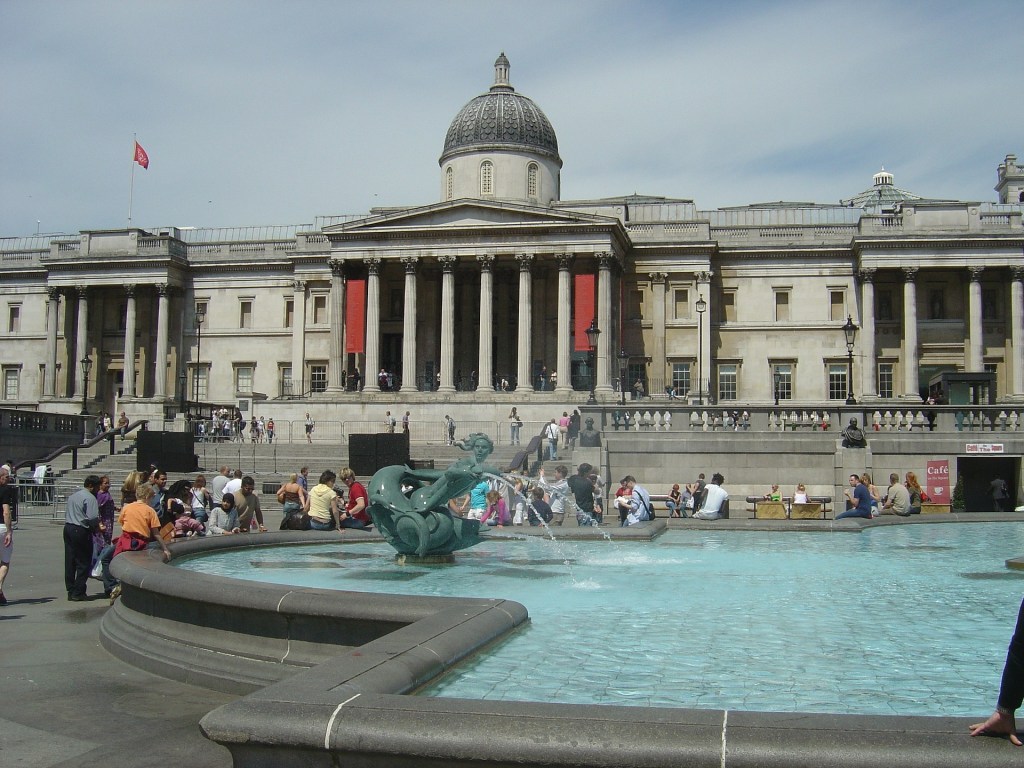
During the Second World War, the director of the National Gallery of London, Kenneth Clark, while reading the newspaper found out an article addressed to him. It was a letter from a reader who asked him if he could you reopen the doors of the museum that has been closed because of the German bombing.
Obviously, it would be very dangerous for the artworks but the director is impressed by this request. “It is precisely because of the war that we need to see beautiful things,” thinks the director.
How to do? The National Gallery, like other museums, has emptied their exhibition halls. Then all the artworks were put in an abandoned mine in Wales. This precaution proved to be effective because nine bombs have fallen on the National Gallery building since 1940. Because of that danger, the museum obviously cannot be reopened.
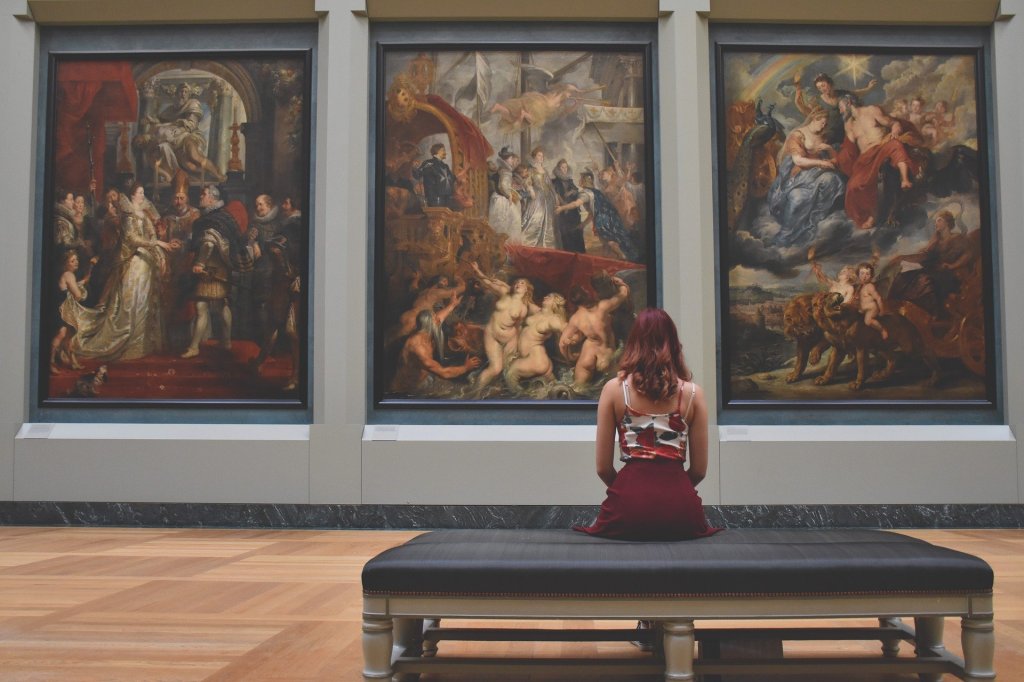
But Londoners need consolation and Kenneth Clark makes an unprecedented decision: he made arrive an artwork secretly every month. This operation is carried out following maximum security criteria, so that the “picture of the month” does not risk anything. Two assistants remain in proximity and at the slightest warning signal they are ready to evacuate the artwork. Every night, the artwork is placed in an underground secured room.
Much to Clark’s amazement, the public shows up at the monthly appointment and this initiative lasts until the end of the war. Paintings by Titian, Velázquez, Renoir, and many more, go back and forth to warm up the soul of Londoners. As the author of the letter says, “it’s risky, but worth!”
You miss the train and on the quay you meet the love of your life. You receive money in the exact moment you need it: this is the magic of synchronicity; they are coincidences that sometimes leave you speechless and let you see a new path.
What Is Synchronicity?
Psychiatrist Carl Gustav Jung brought us the term “synchronicity,” which literally means “falling together in time.” Synchronicity describes the surprise that occurs when a thought in the mind is mirrored by an external event to which it has no apparent causal connection.
Read this story told by Jung to understand what synchronicity is about.
A young woman of high education and serious demeanour entered Jung’s office. Jung could see that her quest for psychological change was doomed unless he was able to succeed in softening her rationalist shell with “a somewhat more human understanding.” He needed the magic of coincidence. He asked for it, searched his surroundings for it. He remained attentive to the young woman, while hoping something unexpected and irrational would turn up.
As she described a golden scarab—a costly piece of jewellery—she had received in a dream the night before, he heard a tapping on the window. He looked and saw a gold-green glint. Jung opened the window to coincidence. He plucked the scarab beetle out of the air. The beetle, closely resembling to the golden scarab, was just what he needed—or just what she needed. “Here is your scarab,” he said to the woman, as he handed her a link between her dreams and the real world.
A synchronic event goes beyond mere coincidence because it has a transforming power, which marks a before and after in your personal history.
In order to notice synchronicity, you need to develop attention and spirit of observation.
If you begin to notice with curiosity what happens to you during the day, your everyday life would become a joyful space of possibility and opportunity.
Hidden or obvious, these ephemeral messages are so precious that they deserve our full attention. You will see that then, the more you notice these significant coincidences, the more they multiply and will help you get out of your routine. Moreover, you will be headed for something new. By changing your perspective, you will also be able to make your reality move.
Try one of these games and see what feelings you get.
Pick up your favourite book, or the book that is nearest to you. Note down its title.
Close your eyes, and open up randomly the book.
Before opening your eyes, run your hands along the page and point with one finger at a random line.
Open your eyes and read the sentence or paragraph. Note down the page number and line number.
Consider what implication the passage you pointed to has on the question you posed, and write down some reflections.
Here is another one, that I call “The Sidewalk Observation Game”. Even with this game you can get an unexpected message by putting you in touch with a symbol or situation.
Start by writing down a question. Walk with your senses in full alert and notice all the details. For example, catch some elements of a conversation between two people you cross during your walk, read an advertisement, look at a graffiti or a newspaper left on a bench. These are signs that can help you find the answer to your question.
Even slips or dysgraphia can be a clue to explore. For example, I often write massage instead of message. I think I may need to get a massage …
These tips come to you so that you can open doors and not close them. They offer you the opportunity to enjoy meaningful experiences with enthusiasm and enjoyment and to abandon the plans established by your ego.
In this way, you have the opportunity to connect to the collective unconscious because you adhere to positive and non-blocking beliefs. The more you pay attention to synchronicity, the more your neurological and emotional circuits are positively stimulated and they create new behavioural patterns, installs beneficial habits that connect you with the consciousness of the universe.
Photo by Greg Rakozy
The time of synchronicity
As the Greek root of this word shows, synchronicity refers to time (syn means meeting and chronos means time). The ancient Greeks conceived synchronicity in three distinct ways: the chronos, which corresponds to a linear flow; the aion, or the endless cycles; the kairos, that is the right moment to act.
In the Greek mythology there is the winged god Kairos. When Kairos passes by there are three possibilities:
You don’t see him;
You see him but you do nothing;
In the moment he passes by you give him your hand to grasp the chance he is offering you.
In practice, synchronicity is telling you carpe diem, namely seize the moment.
Nostalgia is a shield against existential challenges. Evoking positive experiences and feelings from the past can help you cope better with the present and the future.
Nostalgia is a rear view mirror that reflects a particular feeling of a time or place or an emotion that happened in the past. It could be the memory of your first love, a yellowed photograph found by chance, or an object that reminds you of something. The Internet can help make you nostalgic. With one click you can find, for example, the soundtrack of a pleasant moment you lived.
Photo by Laura Fuhrman on Unsplash
Today, experts tell us that nostalgia is a complex emotion, above all, but not always, positive, which can give you greater sensitivity and can help you understand the present.
The word nostalgia was invented in 1680 by a student (Johannes Hofer) from the University of Basel who combined the Greek word nóstos (homecoming) and algia (suffering). He described it as the pain that the Swiss soldiers felt in battle and that they wanted to go home.
Current studies distinguish nostalgia from melancholy because it has a stimulating effect and does not cause symptoms of illness, rather it tries to fight them.
Researchers from the University of Southampton (UK) have observed that nostalgia is a vital component of mental health that motivates us and increases our self-esteem.
Nostalgia also represents a reservoir of emotions that you can consciously access and which you unconsciously use in your daily life to reinforce the feelings of your past that help you cope with the present and the future.
But remember that the past can be recalled but cannot come back. Nostalgia does not give you back what you have lost but it helps you to better manage the life you are living.
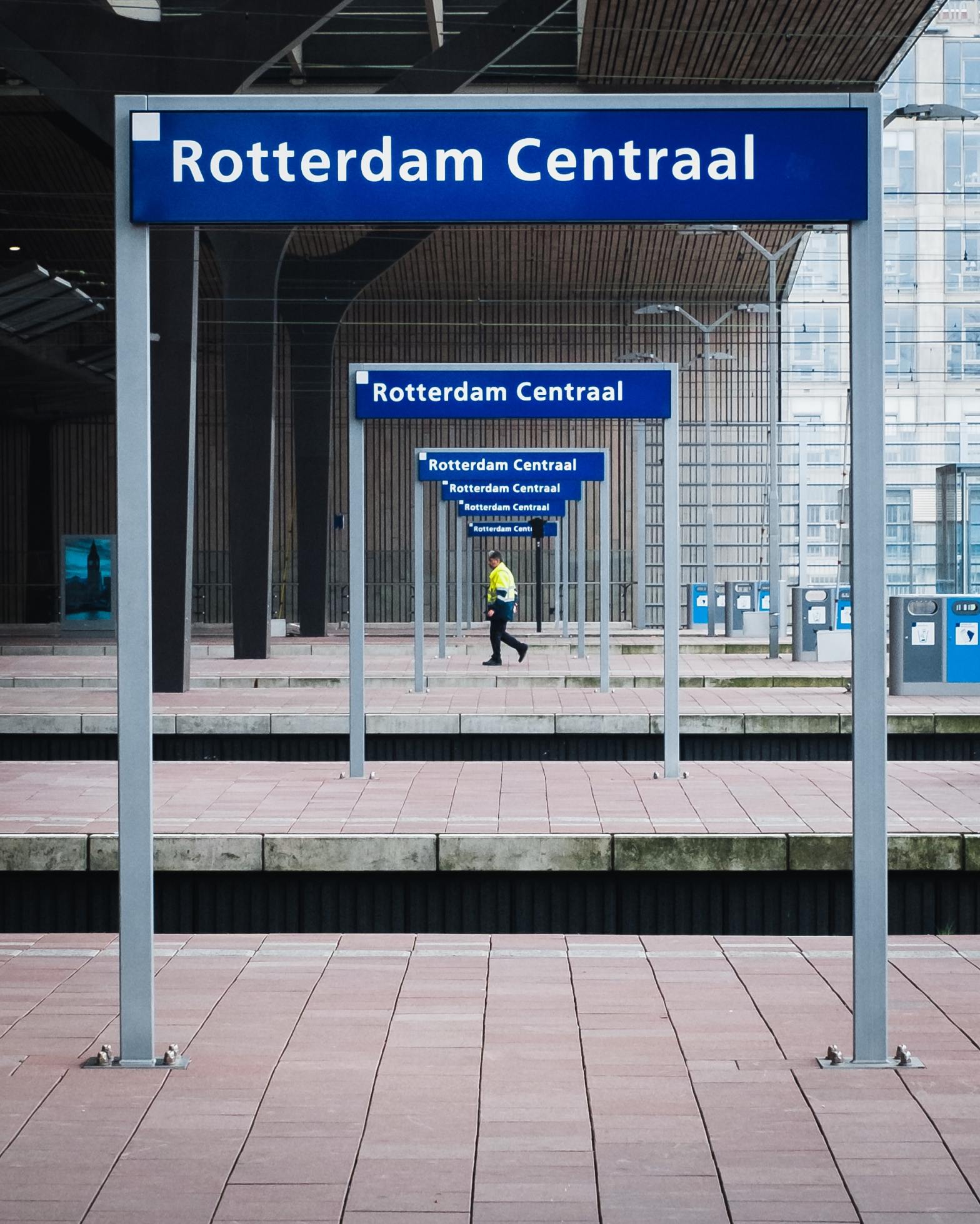
2009, The Netherlands. Some inhabitants of one Rotterdam’s neighbourhood receive a strange email: they have been watched while driving and are asked of not doing it any longer. Is it a threat or blackmail?
Absolutely not! The message comes for Rotterdam City and the company managing the highway that are allied to reduce traffic jams that has been polluting the cities day after day.
Wouldn’t it be easier to build bigger highways or built new ones?
Here comes the “Braess Paradox”. According to this theory, increasing the road capacity to reduce traffic jams would make the situation worse.
Actually, with a new road, people who have given up to the car before, would go back and use the car again. In addition, those who were avoiding using the car during the rush hours would try to do it again.
Photo by Iwona Castiello D’Antonio on Unsplash
However, by eliminating roads, the journey time can be reduced, because some motorists will be inclined to abandon the car. This is the paradox.
Rotterdam City tries also another thing: the positive toll, also known as the reverse toll.
What is it? If the citizens leave the car into their garage during the rush hours, they will receive a small amount of money. Of course, they will receive also a device to control if they indeed have left the car into the garage.
It works! In a couple of years, the volunteers applying to that scheme increase and traffic jams decrease. Also when the money stop, people keep up with their good habit. Rotterdam starts to better breath.
Say stop to resolutions that soon turn into constraints!
To avoid bad habits coming back, don’t set objectives that are too ambitious.
Consider your resolutions as a positive challenge to make your life more enjoyable! It is useless aiming at changing all in once. Use a stop-by-step approach and set a list of priorities among your resolutions.
Start with simple things, like sorting your clothes and choose the ones you have not been using for the last two years (and give them away. This is a good practice according to the Feng shui). Then replace a bad habit with a good one, like drinking more green tea instead of coffee.
Be kind to yourself and indulge yourself from time to time. The goal is not to become more stressed but to love yourself.
Karma is one of the most known concepts of Buddhism. At the same time, it is also one of the least understood. You may hear speaking about having a good or a bad karma without really knowing what it is about.
What is karma then?
Karma is a Sanskrit word meaning “act” or “action”. According to Buddhism, karma is a cause-and-effect law: to each action corresponds a reaction. For Buddhists karma is part of the natural forces of the universe, such as the gravity force, for instance. According to the principle of karma, all our actions, thoughts and intentions create energy: they are causes that have consequences. If we let go positive energy, we will receive positive energy. At the same way, if you send negative energy to the world, you may get problems and difficulties. Karma is simply an echo of what we do, say and think.
This does not mean that karma takes revenge! Karma does not take revenge when we emit negative waves. However, this is the general Western understanding of karma. We think that it is a kind of punishment from the universe for our bad deeds of the past. But karma does not work that way, it is neither a revenge nor a justice. Karma is reflected energy.
How to live according to karma.
To create a good karma, you have to send positive vibrations to the world. This does not necessarily mean that you have to donate all you savings to an NGO or quit your job to work as a volunteer. It is the small gesture of daily generosity that count, such us giving up your seat on the bus, inviting that friend you have not seen for a while to drink something, or helping a colleague in difficulty.
Do not forget to express gratitude when others take care of you. What matters is to act selflessly, not to expect anything in return. Simply appreciate doing a good deed without a hidden agenda, even if you just keep the door open for your neighbour.








 Crisbie Coach