Non-Violent Communication

Non-Violent Communication (NVC) developed by Marshall Rosenberg is a form of philosophy of life that seeks on the one hand to strengthen relationships (starting with the one with yourself) and on the other it is a way to begin a dialogue favouring mutual understanding, open mind and kindness.

NVC aims to connect people in a peaceful way, using words without offending people, without attacking them and at the same time without annihilating yourself. It is an assertive way of communication. We listen to understand.

In these times of uncertainty and difficulty due to the persistence of the Covid emergency, we are super stressed and sometimes we can have excessive verbal reactions, which we may regret later.

We can consider the NVC as a real tool for maintaining a healthy relationship with ourselves and with others. Who hasn’t ever wanted to express themselves so as not to hurt or attack the other?

NCV consists of a simple method of clear and empathic communication, based on these four steps.

Observation of the facts.

Try to identify the fact without expressing any judgement. E.g. “It’s two o’clock in the morning and I hear music coming from your room” (fact) is different from saying: “It’s too late to make all that noise” (judgement).

Feelings.

Express the feelings that accompany the observation. Or, imagine what the other person feeling is and ask them. E.g. “You are about to take an exam and I see you walking back and forth (observation). Are you nervous?”

Recognition of needs.

Express the needs that give rise to certain feelings. E.g. “I am a bit upset and would like to talk. Is this the right time for you?”

Formulation of requests.

Ask clearly and precisely what you want. E.g. “I noticed that you are very silent today (fact). Are you bored? (feeling).” If the answer is yes, try to communicate your feelings and make a proposal: “Well, I’m bored too. How about going out for a walk?”.

Finally, the ultimate purpose of NVC is to find a way in which each person can express what they consider important without blaming, humiliating, embarrassing, or threatening others. It serves to resolve conflicts, get in tune with people and live in a conscious and attentive way of their needs, finding a compromise with your own.

NCV helps us to discover our experiences and our aspirations and to express them with firmness and kindness.

Furthermore, it also allows us to make ourselves better understood and to understand others better, by easing intra and interpersonal tensions. NVC offers keys to understand our limits and to welcome the actions and reactions of others without letting ourselves be overwhelmed!

Thanks to this tool you can lose the fear of expressing yourself and gain more confidence in your abilities.


What do you think about NVC?

ground group growth hands
Trust – Photo by Pixabay on Pexels.com

Positive Affirmations

Our mind is fascinating. It has its own rhythm, unique perceptions and we are not aware of all its possibilities yet. Waves of thought run through our mind but I must say that unfortunately most of them are negative. However, you need to know that there is a way out to go around your negative inner monologue: positive affirmations.

I read about the importance of positive affirmations in one book of Louise Hay.

Affirmations are short positive sentences that motivate you, inspire you and encourage you to take action to achieve your goals. To make them work you have to repeat these phrases several times throughout the day, to make them stay etched in your unconscious mind.

Repetition can change your habits, behaviour, and point of view. As you may know, words are powerful. Regular repetition, aloud, but also within you, turns into thoughts that create your reality. Positive thoughts have the power to overcome internal negative speech. You may find it odd to say phrases like “I choose to be happy” in front of a mirror, but I assure you that these statements really help you reinforce the good vibes. Regular repetition of affirmations becomes your truth.

A statement firmly and confidently declares a positive thought and transforms it as a truth. By integrating these positive statements into your daily routine, you help your mind prioritize positivity.

According to some researchers, affirmations can help you work better. Spending a few minutes reflecting on your abilities before a stressful meeting, for example, can calm your nerves, increase your confidence, and improve your chances of success. Affirmations can also help you relieve stress.  

Here are some of the benefits you can get from practising affirmations regularly:

Become happier. Affirmations allow you to recognize the things that keep you from being happy, because you focus on what you really want in life. In addition, your mood will get better.

See things in perspective. We often take the simplest things for granted. Using affirmations allows you to remind yourself that the simplest things are the most important. For example, if you are in good health, by using the statement “I am in good health” you can focus on this point and appreciate it more.

Reduce negative thoughts. Since most of our thoughts are unconscious (and negative), positive affirmations allow you to become more aware of your thought patterns and feelings, thereby reducing the risk of creating a recurring negative thought.

illustration of woman analyzing financial line graphic
Photo by Monstera on Pexels.com

To get the best out of affirmation practice, you need to observe these three basic rules:

  1. Plan repetition during specific moments throughout the day. Good times could be in the morning as soon as you get up or in the evening before going to bed. Each of us will find the best time to devote to repeating affirmations.
  2. Use the verb in the present, because you want results now and not in the future. Furthermore, the brain only understands the present tense.
  3. Do not use the negative form (for instance, do not say “I don’t take into account judgements from the others” but “judgements from the others are irrelevant to me”).

There are no strict rules on the frequency of repetitions. Nevertheless, according to psychotherapist Ronald Alexander of the Open Mind Training Institute, the statements can be repeated three to five times a day to reinforce the positive effect.  

Do you like to write? Perfect! Writing your affirmations in a journal and reading them in front of a mirror is an effective way to make them more powerful.

Here are some affirmations you could practice if you want to try if they work for you too:·     

  • I believe in myself and I trust my abilities.
  • I am the creator of my thoughts.
  • I am a successful person.
  • I choose to be happy.
  • An amazing family and very good friends surround me.
  • I am strong and courageous.
  • When I go to bed, everything is as it has to be and I fall asleep peacefully.
  • I love and accept myself as I am.

Do you think you could control more your negative thoughts by starting to make positive affirmations?

photo of person holding cup
Photo by Alina Vilchenko on Pexels.com

Let It Go

Three monks were bringing oil jars to their monastery. For some days, they had practised inner silence following the advice of the senior monk.

As they walked, a stranger who was lost in the forest came by and asked for directions to the nearest village. The three monks looked at each other. The younger monk decided to interrupt the vow and showed the man the shortest way to get to the village. The stranger thanked him and left.

The three monks started walking again and, after a short stretch of road, one of the two monks broke the silence by scolding the young man for speaking. The other monk, meanwhile, continued to mutter within himself.

Arriving at the monastery, he blurted out asking the two why they had interrupted the vow of silence.

The elderly monk of the community was observing and heard what had happened.

He then approached the three monks, saying: “Venerable brothers, it is true that the younger monk spoke and answered that stranger, but it was an act of kindness and it stopped there. You, on the other hand, had no reason to speak. Moreover, you carried a grudge throughout the journey, while you should let it go.”

According to you, why is it important to let go ?

river between green leafed tree
Photo by Baskin Creative Studios on Pexels.com

Why Saying No To Temptations

How can you resist the temptation to drink a good glass of wine, eat a piece of cake or skip the gym and go to the cinema instead?

“The only way to get rid of temptation is to yield to it” said Oscar Wilde.

Diet, sport, sleeping enough are fine, but sometimes indulging in the breach of the rule helps your psycho-physical well-being and eases the performance anxiety that often accompanies a healthy lifestyle.

However, in addition to giving in to temptations, we can learn to control them.

Have you ever heard of the “Marshmallow test“?

The “Marshmallow test” is a curious experiment, carried out by Professor Walter Mischel in the sixties at Stanford University.

yummy marshmallows heaped on white table
Photo by Arina Krasnikova on Pexels.com

A child is left alone in a room in front of a Marshmallow: they can choose whether to eat it immediately or wait 15 minutes and get two as a reward. Some children will know how to wait; others, unable to resist, will throw themselves on that inviting sugar candy.

The professor compared throughout the years the self-control skills shown by children with the successes achieved in their adult age and found out that those who did not eat the marshmallow achieved more goals in life.

Is self-control therefore the secret of success? Is it postponing rewards really more likely to bring success in life?

The Mischel experiment actually explains how self-control is fundamental in studying, in sport, at work and in many other circumstances of your life.

Self-control means knowing how to make decisions in the right time and in the right place to improve your skills to not yield to the temptation of a marshmallow.

People who are best at mastering their decision-making are generally people who are better off. They eat well, play sports, get enough sleep. These people structure their lives around good habits and build routines that are easy to follow.

Good news are that you can learn new habits.

Eating a piece of pie is not a moral failure, even if you have decided to go on a diet. Giving up on the piece of cake may cause you more stress and therefore cause you more harm than eating it. The trick is rather to avoid buying a cake or passing in front of a cake! But don’t feel guilty if you eat a slice. Don’t forget that an excess of willpower can also be more harmful because, as mentioned before, it can cause additional stress.

Self-control depends on your choices and it is your responsibility. Stress has become a personal burden, which you are called to manage alone with the help of techniques, like meditation, coaching, yoga.

Remember that it is important to recognize your own limits because it makes you become aware of the fact that you cannot be perfect and control everything.

Do you think that you can learn how you can control yourself?

assorted colorful lollipops on pink background
Photo by Karolina Grabowska on Pexels.com

How to Embrace Change

Life is constant change, Buddha and Aristotle already said it: change is a fact of life. But change has also been accelerating in recent decades. Massive disruption across the social, technological, political and environmental dimensions of our lives means that we are constantly trying to figure out how best to manage uncertainty. And for someone it can be scary.

The origin of this fear can be found in biology. Our brain is the result of two and a half million years of evolution. We have lived in caves much longer than we have in cities. This means that we have “coded” automatic responses to successfully respond to everyday threats.

If absurdly you see a tiger walking down the street, you would not try to understand what breed it is but you would rather try to escape as quickly as possible (flight). Another codified reaction would be to stay still, hoping that the tiger will not see you (freeze). The last possible reaction would be to fight it (fight), with very, very limited chances of success, so your brain would immediately discard it.

Flight, Freeze or Fight are the three primal reactions to events that we perceive as dangerous to our safety.

However, the wonderful circuits that have allowed us to evolve as a species are not suited to addressing the most subtle threats of our age, such as digitization, the pandemic or the risk of losing your job.

These fears are evolutionarily new and are not always easy to manage.

bengal tiger half soak body on water during daytime
Photo by Flickr on Pexels.com

Remember that the brain is designed for your survival, not your happiness. Therefore, to face changes, you have to understand them as opportunities and learn from the potentials they entail. Moreover, this is not as automatic as running away from something dangerous. On the contrary, it takes effort and training.

Let us see how you could get started by following these four tips.

1. First of all, it is important to train your mind daily. Just as you go to the gym or practice by yourself, you need to keep your brain muscle in shape. Try to do something different every day. For example, you could change sources of information when reading the news (also useful to understand various points of view), change your route to go to work, or try a new dish.

2. Second, you can try to consider what happens to you in a different manner. For instance, a good way is reading history to realize that although we live in an age where changes happen very fast, all these progresses have allowed us, for example, to increase our life expectancy.

3. Third, try to disconnect from technology and reconnect with yourself and your surroundings. If you are always immersed in the digital world, you will not have time to integrate learning and to find a certain and needed tranquility. For example, one day during the weekend or on vacation you can put your mobile in the “don’t disturb” mode.

4. Fourth, trust. If you look at the difficulties that you have already faced in the past, you will see that now they look easy to you. If you have already been able to overcome challenging situations, why should not you be able to do it now?

Are you afraid of change or do you like new challenges?

Photo by Braden Collum on Unsplash

Why You Are the Words You Use

The words you use can change your reality. Language actually generates changes in your brains and changes your perception of the environment around you.

Language is linked to emotions. Your words are constantly sending messages to your brain. According to neuroscientists Andrew Newberg and Mark Robert Waldman, negative words cause the increase of cortisol, the stress hormone. Therefore, adopting a negative attitude and using phrases like “I cannot do it”, “I will fail” or “it is impossible” could weaken your personal physical and mental health.

Nowadays, many techniques associated with changing the language to treat various psychological disorders are used. An example of this is the cognitive-behavioural therapy, which demonstrate that promoting positive thinking through the language used by the patient improves their mental state.

This therapy aims to replace patients’ negative views about themselves and their surroundings with more positive ones. The applied techniques have proven to be an effective treatment for disorders such as depression, phobias, addictions or anxiety, as the activity of the brain amygdala increases when you perceive a more prosperous future through positive words. On many occasions, these therapies have proven to be as effective as medicines.

Research has shown that the brain improves when you start using three to five positive expressions for each one negative. Language has a powerful ability to change your world. It affects you negatively when you use a poor, defeatist language but it also works the other way around, namely, when you use positive phrases they will help you change your perception of the world.

person doing thumbs up
Photo by Donald Tong on Pexels.com

Start adopting a series of simple but very effective techniques. For example, use “yet” instead of using only “not”. Saying “I cannot do it” is not the same as saying “I cannot do it yet“. “Yet” leaves the doors open, arouses hope, evokes motivation.

You should not use “but” or, at least, you should build your phrases differently. “But” does not have the same effect when you say, “You did a good job, but you gave it to me late” compared to when you say, “You gave it to me late, but you did a good job.”

Tenses also give you a great opportunity to change your emotions. Instead of using the conditional, try using the future. You change a hypothetical scenario for a true one. It is not the same as saying: “When I write a book, I would speak of happiness” rather than “When I write a book, I will speak of happiness”. Doubt lives in the conditional, certainty in the future.

At the same time, you should avoid words like failure, problem, impossible or guilt in your language and replace them by more inspiring words like challenge or responsibility. The latter not only pushes you to grow and open more doors, but also makes you interact better with others.

Words are not harmless. They can build or tear down walls. By changing your language, you will improve your image, as language is a way to reach others. Remember that the words you use also improve the environment around you.

What do you think about the language you use with others?

key with trinket in shabby door
Photo by Andrea Piacquadio on Pexels.com

How and Why Yoga Helps You Maintain Physical and Mental Balance

Over the last few years, a very old practice has become the subject of scientific studies: yoga. Positive effects on the brain have begun to be measured, such as anti-stress and anti-depressant effects.

The studies began thanks to the spectacular spread of yoga. Millions of people practice yoga regularly. Positions (asanas) such as the warrior or the cobra are increasingly known among different people and age group. The reasons are mainly that persons want to learn how to relax, how to get rid of several kinds of pain (back, neck, shoulders, etc.) manage stress, and maintain good physical shape.

Traditional yoga (from the Sanskrit “yuga” which means “union”) comes from India and is a discipline more than five thousand years old. An important source of this spiritual school, which should guide us towards the divine, is a writing by Patañjali: Yoga Sutra, which contains the essential foundations of the discipline.

According to this essay, the purpose of yoga is to attain a higher form of self-knowledge, which can be achieved with inner contemplation. In addition to specific physical exercises, and breathing techniques, traditional yoga also includes meditation, a vegetarian diet and an entire philosophy of life. The modern and western form of yoga omits many of these elements. The development of strength and plasticity, meditation and breathing exercises play the most important role today.

At the beginning of the twentieth century, a small group of Indian yoga teachers began to spread the teachings of yoga in the Western world. After the explosion of fitness in the 1980s, which focused above all on the cult of the body, the spiritual part has been lost a little. Therefore, in the Western world mainly hatha yoga began to spread.

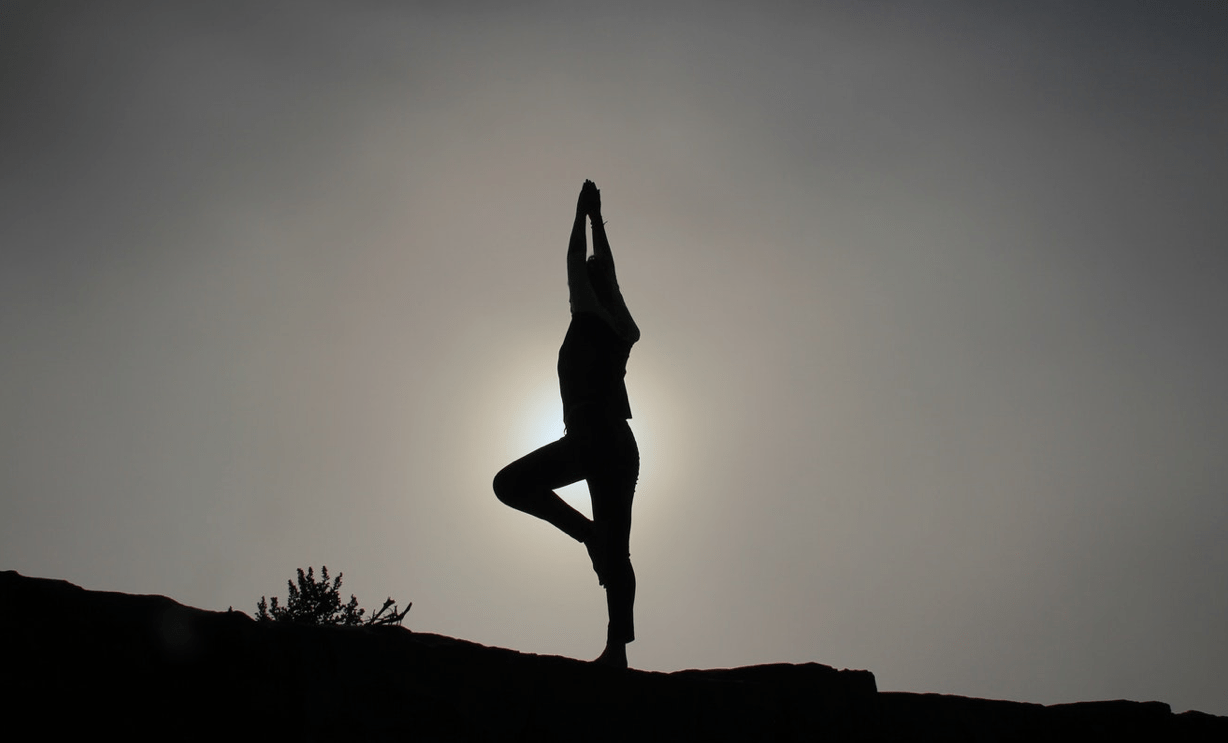
Photo by Mor Shani on Unsplash

The effects of hatha yoga on health are: improving body consciousness and coordination, strengthening muscles and enhancing blood circulation. Moreover, yoga is also beneficial to stress management.

From experience, I can say that after a yoga session I feel relaxed and rested. It takes longer to reach a similar state with meditation, while hatha yoga produces effects immediately, probably thanks to the more marked physical component. It is actually proved that physical exercise is good for your spirit. Perhaps, this is why yoga is a fast-acting cure-all, as it associates physical exercise with meditative practice.

In fact, by associating postures (asanas) with breathing (pranayama), we act on the body by relaxing the muscles, and on the spirit because the sympathetic nervous system (the nervous system that is stimulated when we rest or sleep) is activated.

Yoga allows you to find calm despite the limits imposed by everyday life. With regular practice, even 5 minutes a day is enough, you will sleep better, your self-confidence will increase, as well as your ability to make decisions and manage stress.

Considering all those positive aspects, are you planning to start practising yoga?

balance blur boulder close up
Photo by Pixabay on Pexels.com

How and Why You Should Learn to Forget

Letting go of the burden of the past is important to your happiness.

Many people live in the past; they remember what they were, the love stories that did not go well, their failures and disappointments.

Such a burden takes away space and energy from the present, which is actually the only time you can live actively.

I read somewhere that happiness consists in enjoying good health and having a bad memory.

Actually, you should learn to let go of the past, forget about the insults received, the bad events and the mistakes, in short, all the bad memories, and learn to focus more on the present.

Photo by Ian Dooley on Unsplash

Here are some tips you could follow.

  1. The best antidote to guilt, resentment, or anger that takes you back to the past is to devote energy to building the life you want.
  2. Stop playing the victim and become an active protagonist of your life
  3. Your memories change while time passes by, they may distort, and they do not really reflect what happened. Try asking a person who shared an event with you to tell you about their memory and then compare it with your memory. You will see that you and that person remember different aspects of the same fact.
  4. Prioritize your well-being. Life is too short to spend arguing and complaining. What happened could be a source of stress and even discomfort. Continuing to feel anger at a past event drains up your energy. It is more important for your physical and mental health to live quietly than to be right at all costs.

The past, however, also brings with it good memories and lessons learned, which shape your personality.

Have a look at what Buddhism teaches: “Joy and happiness arise from letting go. Sit down and take an inventory of your life. There are things you have been hanging on to that really are not useful and deprive you of your freedom. Find the courage to let them go.”  

What about you? Would you find the courage to let go of your past?

accomplishment action adventure challenge
Photo by Pixabay on Pexels.com

How and Why to Prevent a Recurring Thought from Turning into an Obsession.

You have thought – and rethought – if you locked the door when you went out? Are you on the street and you wonder if you turned off the light; or the gas? This is not as serious as it looks like. Moreover, you are not the only person it happens to. The thoughts that come to your mind are normal; they are not obsessions … yet.

Thoughts don’t turn into obsession overnight. At first, they are imperceptible, then they grow, but they don’t seem so serious to you; when you start having problems at work, in the family, with friends, you may have developed an obsession. Recognizing the degree of frequency and intensity is crucial to avoid that one of your recurring thoughts starts to be harmful.

If you don’t get major problems in your daily life, you can let your recurring thoughts flow and unlock them with relaxation techniques, and by becoming aware of their cause.

Imagine a grandmother lighting a candle in the Church so that her grandson succeeds the exam. Or the songs you hum in your brain and can’t get rid of them. Or the cultures that pray to get some rain. They are examples of small obsessions that do not harm anyone or give problems in everyday life. Therefore, in similar cases, you do not need to take actions.

However, there are other kinds of thoughts that trap the mind in a vicious circuit and catch your attention very often. They are called OCD (Obsessive Compulsive Disorder).

There are some tricks you can use to keep them under control.

Let’s see some of them.

Photo by Claudio Schwarz on Unsplash

If, for example, you wash your hands too often, try to actually count how many times you’ve washed them. Then, think about the absurdity of doing it so often because washing your hands well once should be enough, and doing it twice should reassure you that they are really clean.

If your fear is to get infected on the public transport, because you touch knobs, bars, doors, use gloves every time you take them or take a hydro-alcoholic gel with you to be used as soon as you get off (very useful also during Covid times).

The important thing is to be able to rationalize your recurring thoughts and find solutions to control them. If you really cannot manage to do it, however, you should consult a professional (doctor, psychologist, coach) who can help you keep your thoughts from becoming obsessions.

Also be aware that genetics can be a cause of your recurring thoughts. If you are very emotional and have difficulty controlling your impulses, you are somewhat predisposed. Exposure to obsessive models in the family, which transmit the values ​​of order, norms, not making mistakes, can also be a cause. Highly demanding, perfectionist, rigid, excessively ordered, inflexible and reluctant to delegate tasks personalities are also more prone to developing OCD.

Recurring thoughts are normal until they become fixations. In addition, remember that most of the things that worry us never happen. Try to notice it and let me know.

Photo by Brett Jordan on Unsplash

The Trap Of High Expectations

Our brain does not like uncertainty. We are programmed for survival but we cannot move on if what surrounds us is not clear. To reduce the uncomfortable feeling that a lack of certainty generates, we create expectations. However, relying on our expectations does not always help us feel better. Our expectations affect us more than we imagine. They affect our learning, our perception, and how we treat those around us.

Our expectations can become a source of frustration. For example, you definitely want to see a movie because you have heard great comments about it but after watching it you find out that you actually did not like it that much, so you feel disappointed. If you go to eat in a famous restaurant, then the food does not seem to you so well prepared, you are disappointed (and you may have spent a fortune).

Expectations are said to be anticipated resentments, because when reality does not match your expectations it causes you frustration.

In marketing, customer satisfaction is defined as the result of perception minus expectation. The higher the expectation, the higher you will have to set the bar of experiences or relationships in order to be satisfied. This is an unconscious mechanism, but there are ways to act on your way of thinking, so that it could play in your favour.

Let’s see how they can help you in the context of the current pandemic.

1. Trust that soon the pandemic will end, thanks to the progress of vaccination. Do not get obsessed by setting an end date though. Now in Europe they are talking about mid-July, but can how you be sure? Do not let your happiness depend on the end of Covid.

2. Replace expectations with gratitude. Be grateful that you did not get sick, that you have a house to live in, that someone loves you. Look at the little details of your daily life and you will surely find something to be grateful for.

Living without so many expectations is easier because you value what happens to you in that moment without being influenced by the idea you created before. This does not mean abandoning your dreams or desires. You must keep them as a beacon that guides you in the decisions about your future, but you shall not make your happiness depend on external factors that are beyond your control.

Can you let go any of your expectations?

Photo by Cortney Corlew on Unsplash