How and Why Yoga Helps You Maintain Physical and Mental Balance

Over the last few years, a very old practice has become the subject of scientific studies: yoga. Positive effects on the brain have begun to be measured, such as anti-stress and anti-depressant effects.

The studies began thanks to the spectacular spread of yoga. Millions of people practice yoga regularly. Positions (asanas) such as the warrior or the cobra are increasingly known among different people and age group. The reasons are mainly that persons want to learn how to relax, how to get rid of several kinds of pain (back, neck, shoulders, etc.) manage stress, and maintain good physical shape.

Traditional yoga (from the Sanskrit “yuga” which means “union”) comes from India and is a discipline more than five thousand years old. An important source of this spiritual school, which should guide us towards the divine, is a writing by Patañjali: Yoga Sutra, which contains the essential foundations of the discipline.

According to this essay, the purpose of yoga is to attain a higher form of self-knowledge, which can be achieved with inner contemplation. In addition to specific physical exercises, and breathing techniques, traditional yoga also includes meditation, a vegetarian diet and an entire philosophy of life. The modern and western form of yoga omits many of these elements. The development of strength and plasticity, meditation and breathing exercises play the most important role today.

At the beginning of the twentieth century, a small group of Indian yoga teachers began to spread the teachings of yoga in the Western world. After the explosion of fitness in the 1980s, which focused above all on the cult of the body, the spiritual part has been lost a little. Therefore, in the Western world mainly hatha yoga began to spread.

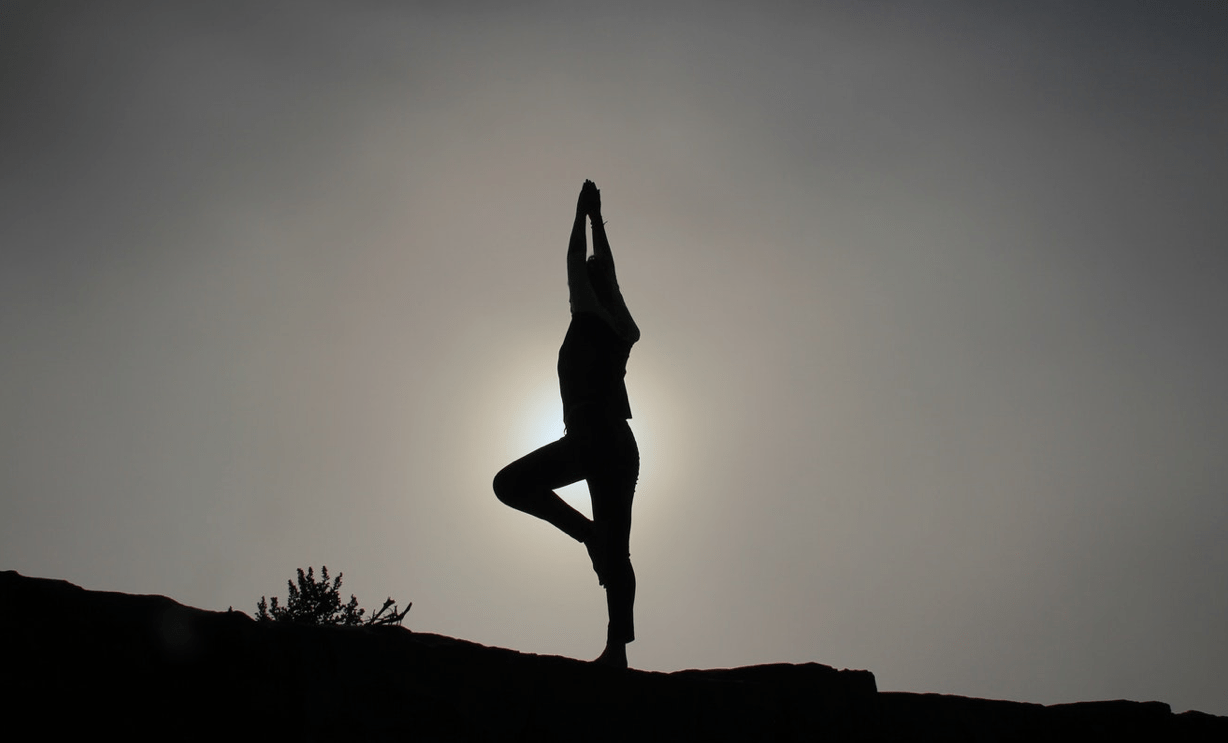
Photo by Mor Shani on Unsplash

The effects of hatha yoga on health are: improving body consciousness and coordination, strengthening muscles and enhancing blood circulation. Moreover, yoga is also beneficial to stress management.

From experience, I can say that after a yoga session I feel relaxed and rested. It takes longer to reach a similar state with meditation, while hatha yoga produces effects immediately, probably thanks to the more marked physical component. It is actually proved that physical exercise is good for your spirit. Perhaps, this is why yoga is a fast-acting cure-all, as it associates physical exercise with meditative practice.

In fact, by associating postures (asanas) with breathing (pranayama), we act on the body by relaxing the muscles, and on the spirit because the sympathetic nervous system (the nervous system that is stimulated when we rest or sleep) is activated.

Yoga allows you to find calm despite the limits imposed by everyday life. With regular practice, even 5 minutes a day is enough, you will sleep better, your self-confidence will increase, as well as your ability to make decisions and manage stress.

Considering all those positive aspects, are you planning to start practising yoga?

balance blur boulder close up
Photo by Pixabay on Pexels.com

Why Your Well-being Must Be a Top Priority

The society we live in often leads us to reverse priorities and put work first. This can negatively affects our quality of life and physical, mental and emotional health.

According to researches carried out in France, physical suffering related to work affects 3.1% of women and 1.4% of men, but according to some experts, the figures are higher. The international classification of diseases identifies burn-out as a work-related phenomenon but in reality work is not the only cause.

With the cost of living constantly rising, we are likely to work longer hours to earn a salary that allows us to provide for our own needs and those of our family. Because of this, many elements of our private life are put aside.

We spend many hours working, reducing the time to eat, to rest, to be with the family, and we do not realize how much this can harm us.

While most of us cannot afford to leave their job, a balance must be found between work and private life to prevent stress from building up in a worrying way.

Photo by Christin Hume on Unsplash

In this period of forced tele-working, it is even more difficult to put boundaries between work and private life. For this reason, many governments have been drafting directives that establish the right to “disconnect”. We need to have the time to do sports, to walk, to take care of our dear ones, to follow our passions or simply to rest.

More and more people suffer from stress, feel exhausted, have problems with nutrition, addictions, or relationship difficulties, and all that because of the long working days, which do not leave us the time to do activities for our well-being.

If you feel you are in one of those situations, know that no salary is worth your health, no job is worth the wear and tear that comes from working days that annihilate your energy and happiness.

If you have no other alternatives to the work you are currently doing, find something positive to balance your life, because otherwise, there may come a time when you will start making mistakes at work and your overall performance will suffer. Start looking for another job but put your health in the first place, because if you get ill it may take a long time to recover.

Your job is an important part of your life, but it is not your life. There is much more: family, health, and friends. Do not allow work to take up all the space in your mind and body, taking the joy away from you.

Remember always taking care of yourself first, because this is the only way you can live a better life.

How do you take care of yourself?

Photo by KT on Unsplash

How to Overcome Difficulties with the Ganbatte

The Japanese people have an incredible ability to recover from catastrophes of any kind. After World War II that left the country in ruins, in just thirty years Japan became the second largest economy in the world, becoming leaders in the electronics sector in the eighties and nineties. How could the Japanese economic miracle happen? The answer has to do with an expression that we should use too: “ganbatte” which means “try your best”.

Here lies one of the differences between the fragility of the Western culture and the resilience of Japanese culture: how they deal with crisis’ situations.

In Japan, when they have to take an exam, they say “Ganbatte kudasai“, which is the best way to tell others to do their best. In this case, there is no external factor on which the outcome of your exam depends on. According to the Japanese, if you try your best, you will get a result, which even if not the best ever, it will be the best for you, because it represents your maximum effort.

Another Japanese saying, also very useful to all of us, is: “if you want to warm a rock, sit over it for a hundred years”, which means that to overcome great difficulties you need to be patient. However, this doesn’t mean sitting down and waiting for circumstances to change, it means actually working to create new situations and opportunities.

The “ganbatte” is present in the individual and collective activities of the Japanese, and it is very much linked to the Ikigai, that is simply the priority around which everything else (often unconsciously) turns.

In 1995, when the disastrous earthquake happened in Kobe causing enormous damages, the slogan that circulated in Japan was: Ganbaro Kobe. The meaning of the message was: strength and courage from all of us; united and with efforts we will get out of this situation.

Later on, in 2011, on the occasion of another great earthquake that caused the nuclear catastrophe in Fukushima, the slogan that encouraged all Japanese was: Ganbaru Nippon! This encouraged all Japanese to join in the collective effort to help all those involved in the catastrophe. A collective effort was required, and this spirit manifested heroically when retired workers from the nuclear power plant, volunteered to control it. The reason presented by those people was that it was better for the radiation to affect people who had already lived a good part of their lives rather than young people with a future ahead.

A good lesson for all of us in these difficult times. We could try to do as the Japanese do by following these four practical tips.

  1. Do and not complain. Don’t complain with your arms crossed: do something. Value your actions, even if they seem of little importance to you, in reality everything you do is important. As the Kaizen philosophy says, modest but continuous progress ends up in a great transformation.
  2. Hope instead of despair. An attitude of hope focused on day after day rather than on “when this will end” helps to keep morale high.
  3. Don’t waste energy. Don’t venture into endless arguments, which get you nowhere. It is necessary to keep all your strengths (mental and physical) to keep moving forward.
  4. Seek the company of enthusiastic people. We are friends by affinity. This does not, however, exclude that we can surround ourselves with people with a ganbatte spirit, who strive to improve rather than seeing only the negative side.

Do you think ganbatte can help you with facing difficult situations?

Photo by Clément Falize on Unsplah

The Thought Landscape – An Alternative Way To Deal with Negative Thoughts

I have been receiving Miguel’s emails for some time, cannot really say how long. Recently, I received this article in my mail box that perfectly matches with the purpose of my blog. Actually Miguel, also published a video, in case you prefer watching to reading. Enjoy it!

Photo by Nick Fewings on Unsplash

Humans have a natural tendency to gravitate towards negative thinking.

We could assume that tendency is there because it gave our ancestors a small survival advantage.

Those that were happy-go-lucky optimists got eaten by wolves.

Those that were pessimists and hoping for the worst didn’t get eaten as much.

So here we are today with a lizard brain primed to expect the worst.

Although there might be an evolutionary advantage to being pessimistic, living your life pestered by gloomy doomy thoughts is no fun.

The truth is today we live in a much more safe environment than hundreds of thousands of years ago.

It’s very rare for people to succumb to hungry tooth sabre tigers and such.

Yet, we live in a constant state of alert and fear triggered in part by nature only exacerbated by the news and social media.

So how do we escape negative thoughts?

Besides recreational drugs, alcohol, mindless social media binging, and meditation, I dare to propose a new way to lead happier mental lives.

You could think of this method as a thought experiment, a new mental model to deal with pessimistic thinking.

I call it the thought landscape.

Disclaimer: if you have trouble using your imagination or suffer from aphantasia, it won’t be easy to implement this approach.

The concept is quite simple to understand but tricky to master.

It goes like this:

A: There is a large number of thoughts we can have (negative, positive, neutral)

B: However, at any given instant, we can only think of one thing.

C: We can choose what we think at any given instant (focus)

D: Therefore, we can choose to substitute any current thought with any other available thought from A.

These are vast assumptions so let me elaborate a bit on each point.

A: This one everyone should agree. The number of thoughts a human can have is between 0 and Many. Many could be thousands or millions, a lot.

If you have a working brain, A should always be many. 0 is only for dead people.

B: This could be debated. However, we could safely assume that we can only hold one thought at a time. Thinking two thoughts simultaneously is not possible. I.e., you cannot think blue or black simultaneously (“Bluk” is not a colour!)

C: This could be more debatable, but If I tell you to think of a white elephant, usually you’ll think of a white elephant, not of a purple platypus. So you were able to change your thinking deliberately.

D: If the three statements above hold true, then it has to be true that we can control what we think at any given moment.

And if D is true, then it is good news for all of us!

This means that thinking negatively is, for the most part, a choice.

So, if you catch yourself stuck on negative thinking, now you know it’s because you chose to do so.

Great, and then what?

Then you can discard that thought, take a step back and look at what other thoughts are available from A.

The goal of taking this imaginary step back is to gain a new perspective.

Is to gain some altitude and contemplate which other thoughts you could choose from.

In A., we established that there could be many other thoughts you could have.

The range of available thoughts is what I call the thought landscape.

Like a physical landscape, you’ll see valleys and hills.

Photo by Claudio Testa on Unsplash

Now that you’ve momentarily elevated yourself over your thought landscape, it’s time to choose.

What other thoughts do you see that you could choose to think next?

Let me give you a concrete example of how this would play out for me.

So here I am, thinking I’m not good enough, smart enough, that people suck, that the pandemic sucks, that politicians are hypocrites, etc.

I’m feeling like shit. This is no fun. Then I realize I can choose what to think.

I take a step back and look at what other thoughts are currently available across my thought landscape.

In the beginning, it’s hard to see past a few meters because all the negative thoughts are fighting for attention, clouding my vision.

I try to rise a bit higher, past the dark fog.

I know there are other thoughts across the dark valley of shitty thoughts.

There you go… I see some light.

About 2 km away, I see a couple of green hills peeking through the clouds.

I take a closer look.

I see my family on one of them.

They love me. I feel happy to know they are alive and they love me.

I see food. Yum! I can see I have plenty of food, and I can afford more if I need to.

That makes me happy.

Another hill. Wow! I’m relatively healthy. How lucky I am! I can still walk, play sports, dance, use my body. My hands work… I can build things!

Another hill further away.

I see people in need. People whose lives I could make better. It makes me happy I could help other people. That’s important.

This exercise took only a couple of minutes, and my outlook has completely changed.

I feel gratitude. I feel alive. I feel happy.

My thought landscape is full of wonderful thoughts to choose from.

I don’t want to discriminate against negative thoughts. I just don’t want them to dictate how I feel 90% of the time.

I don’t know about you, but I don’t remember a single day of my life where I didn’t have a moment where my mind wasn’t imprisoned by negative thinking.

Negative thinking is inevitable. It’s there for our survival. We just need to learn how to keep it at bay.

The thought landscape will always offer you plenty of alternative thoughts, equally or even more valid than the negative thoughts you currently hold in your mind.

Give your positive thoughts a chance to live.

They deserve some attention too.

Peace. Love. Happy-Cookies.

Miguel @ Grumo.com

5 Secrets To Sleep Better

We all know someone who complains about not sleeping or sleeping badly. In Europe, about one third of the adult population has difficulty falling asleep and between 10% and 15% suffer from chronic insomnia. I myself have suffered from insomnia for a long time. This is a problem that can have various causes (from the excessive use of digital devices that emit blue light – computers, tablets, TVs, etc. – to biological issues). One of the causes may also be the obsession with sleeping well.

What is this obsession? It is a phenomenon called orthosomnia (from the Greek ortho, “perfect”, and from the Latin somnia, “rest”) and, according to experts, although it is not yet considered a disorder, it is getting increasingly common. It consists in continually recurring thoughts, that I call “circular thoughts”, namely thoughts that enter a vicious circle precisely because they are always the same and recur all the time. The main causes of these thoughts are, guess what, stress and anxiety. Not being able to sleep, your mind does not stop thinking about the same things over and over (hence circular thoughts, i.e. thoughts that come back).

If you suffer from insomnia, even if not severe, it would be good to do a complete sleep study (polysomnography) to find an effective solution. I had this test. I was in a sleep clinic for one night, with electrodes attached all over the body including, of course, the head. I have found that, during my sleeping time, Alpha waves (the brain waves typical of the awaking period) intrude from time to time.

The obvious solution would be to try eliminating or at least reducing stress. I know, it’s not easy. Therefore, I propose that you try the following five tips.

Photo by Alex Basov on Unsplash
  1. Learn to breathe well and deeply by practising a discipline such as Yoga, Pilates or meditation.
  2. Create a relaxing environment. A quiet home is the key to a restful night. If you have trouble falling asleep, keep your bedroom clean and clear of unnecessary items, tidy up the things you have left lying around and you will see that you will have a more peaceful night.
  3. Use essential oils that are particularly suitable for inducing sleep, such as lavender or chamomile.
  4. Create a playlist to help you relax and fall asleep.
  5. Try using Bach Flowers and melatonin. White Chestnut against circular thoughts and Rescue Sleep to help you fall asleep. I used them for several months, then gradually I stopped and now I suffer much less from thoughts that come back and I also sleep much better. At the moment I use only melatonin and I think it is a good solution for my insomnia.

And you, do you suffer from insomnia? Do you have circular thoughts that haunt you? Would you try these tips?

Photo by Cristiana Branchini

How To Cope With the Fatigue Caused by the Covid-19

For about a year, we have been facing a health crisis that does not give us a break and actually begins to cause psychological effects.

If you feel tired and have little energy to do things, know that you are not alone.

Fatigue is one of the most common consequences of this pandemic. We are exhausted for several reasons. The disease directly causes one of them. Obviously, if you had the Covid, you have been more tired afterwards; it takes some time to recover from it and to get back into shape.

The World Health Organization (WHO) has defined “pandemic fatigue” the fatigue resulting from always being super attentive to the precautionary measures that we must comply with in order not to catch the virus.

More and more people suffer from nervousness, anxiety and feel pushed to the limit of their ability to bear the situation.

This state of hyper vigilance with Covid represents a constant strain of our hormonal and endocrine system which results in greater anxiety and, sometimes might turn into depression.

The economic situation and the uncertainty about the future we are living now are working our nerves out.

Photo by RD LH on Pixabay

In addition, you have to consider the deprivation of liberty caused by the lockdown.

Knowing that we are vulnerable to pandemic fatigue, we must put into practice measures that help us regain some well-being.

Here are 3 ideas that may help you out:

  1. Normalize what you feel. It is normal for you to feel stressed or sad. These last months are even harder because we are in winter and we do not see the way out (during the 1st wave we had summer ahead).
  2. Your well-being must become your priority. Just as you pay attention to wearing a mask, respecting safety distances and washing often your hands, you must take care of your well-being. Try to eat healthy, practise physical activity even at home, and talk to friends or beloved ones even if you cannot do it in person. If the rules in force allow it, go out, especially when it is sunny. Vitamin D is good not only for the body but also for the spirit. Find a hobby, or if you had one before, start doing it again.
  3. Give your mind a break. Stop listening to the latest news on Covid. Take a break from the news. Give yourself permission to disconnect. If you miss the latest update on the contagion data, nothing will happen. When you talk to someone, try to avoid the Covid topic. It is not a matter of pretending nothing has happened, but simply of avoiding further fatigue.

Let me know which tips you find more useful!

Photo by Ivabalk on Pixabay

6 Less Known Benefits of Ginger

Ginger is a flowering plant that originated in Southeast Asia. It’s among the healthiest (and most delicious) spices on the planet.

The rhizome (underground part of the stem) is the part commonly used as a spice. It’s often called ginger root or, simply, ginger.

Ginger can be used fresh, dried, powdered, or as an oil or juice or in infusion. It’s a very common ingredient in recipes. It’s sometimes added to processed foods and cosmetics.

The unique fragrance and flavour of ginger come from its natural oils, the most important of which is gingerol.

Gingerol is the main bioactive compound in ginger. It’s responsible for much of ginger’s medicinal properties.

Gingerol has powerful anti-inflammatory and antioxidant effects, according to research. For instance, it may help reduce oxidative stress, which is the result of having an excess amount of free radicals in the body.

Ginger has a very long history of use in various forms of traditional and alternative medicine. One well known benefits of ginger is the hot infusion with lemon and honey used to treat the flu and cold.

But there are less known benefits of ginger.

Let’s see them.

1. It can treat many forms of nausea, especially morning sickness

Ginger appears to be highly effective against nausea.

It may help relieve nausea and vomiting for people undergoing certain types of surgery, and also for chemotherapy-related nausea.

It may be also effective when it comes to pregnancy-related nausea, such as morning sickness.

Although ginger is considered safe, talk to your doctor before taking it if you’re pregnant.

2. It may help with weight loss

Ginger may play a role in weight loss and in achieving your BMI (Body Mass Index).

It appears that its ability to influence weight loss may be related to certain mechanisms, such as its potential to help increase the number of calories burned.

3. It can help with osteoarthritis

Osteoarthritis (OA) is a common health problem.

It involves degeneration of the joints in the body, leading to joint pain and stiffness.

Researches have found that a combination of topical ginger, cinnamon, and sesame oil can help reduce pain and stiffness in people with OA.

4. It may lower blood sugars

This area of research is relatively new, but ginger may have powerful anti-diabetic properties (not all types of diabetes though).

The results are incredibly impressive, but they need to be confirmed in larger studies before any recommendations can be made.

Therefore, consult your doctor before using large amount of ginger.

5. It can help treat chronic indigestion

Chronic indigestion is characterized by recurrent pain and discomfort in the upper part of the stomach.

It’s believed that delayed emptying of the stomach is a major driver of indigestion. Interestingly, ginger has been shown to speed up emptying of the stomach.

6. It may reduce menstrual pain

Dysmenorrhea is the scientific name given to pain felt during the menstrual cycle.

One of the traditional uses of ginger is for pain relief, therefore menstrual pain is included.

To conclude

Ginger is loaded with nutrients and bioactive compounds that have powerful benefits for your body.

It’s one of the very few superfoods actually worthy of that name.

I like candied ginger and also infusions with lemon and honey to help recovery from flu or cold, as said at the beginning.

Now that end of the year holidays are approaching, you may want to try the Pepparkakor, ginger biscuits typical of Scandinavia that are absolutely delicious!.

What about you? Have you ever tried ginger?

Photo by Congerdesign on Pixabay

The Magic of Synchronicity

You miss the train and on the quay you meet the love of your life. You receive money in the exact moment you need it: this is the magic of synchronicity; they are coincidences that sometimes leave you speechless and let you see a new path.

What Is Synchronicity?

Psychiatrist Carl Gustav Jung brought us the term “synchronicity,” which literally means “falling together in time.” Synchronicity describes the surprise that occurs when a thought in the mind is mirrored by an external event to which it has no apparent causal connection.

Read this story told by Jung to understand what synchronicity is about.

A young woman of high education and serious demeanour entered Jung’s office. Jung could see that her quest for psychological change was doomed unless he was able to succeed in softening her rationalist shell with “a somewhat more human understanding.” He needed the magic of coincidence. He asked for it, searched his surroundings for it. He remained attentive to the young woman, while hoping something unexpected and irrational would turn up. 

As she described a golden scarab—a costly piece of jewellery—she had received in a dream the night before, he heard a tapping on the window. He looked and saw a gold-green glint. Jung opened the window to coincidence. He plucked the scarab beetle out of the air. The beetle, closely resembling to the golden scarab, was just what he needed—or just what she needed. “Here is your scarab,” he said to the woman, as he handed her a link between her dreams and the real world.

A synchronic event goes beyond mere coincidence because it has a transforming power, which marks a before and after in your personal history.

In order to notice synchronicity, you need to develop attention and spirit of observation.

If you begin to notice with curiosity what happens to you during the day, your everyday life would become a joyful space of possibility and opportunity.

Hidden or obvious, these ephemeral messages are so precious that they deserve our full attention. You will see that then, the more you notice these significant coincidences, the more they multiply and will help you get out of your routine. Moreover, you will be headed for something new. By changing your perspective, you will also be able to make your reality move.

Try one of these games and see what feelings you get.

Here is the first one that is called Bibliomancy.

  1. Write down a question in a notebook or a sheet.
  2. Pick up your favourite book, or the book that is nearest to you. Note down its title.
  3. Close your eyes, and open up randomly the book.
  4. Before opening your eyes, run your hands along the page and point with one finger at a random line.
  5. Open your eyes and read the sentence or paragraph. Note down the page number and line number.
  6. Consider what implication the passage you pointed to has on the question you posed, and write down some reflections.

Here is another one, that I call “The Sidewalk Observation Game”. Even with this game you can get an unexpected message by putting you in touch with a symbol or situation.

Start by writing down a question. Walk with your senses in full alert and notice all the details. For example, catch some elements of a conversation between two people you cross during your walk, read an advertisement, look at a graffiti or a newspaper left on a bench. These are signs that can help you find the answer to your question.

Even slips or dysgraphia can be a clue to explore. For example, I often write massage instead of message. I think I may need to get a massage …

These tips come to you so that you can open doors and not close them. They offer you the opportunity to enjoy meaningful experiences with enthusiasm and enjoyment and to abandon the plans established by your ego.

In this way, you have the opportunity to connect to the collective unconscious because you adhere to positive and non-blocking beliefs. The more you pay attention to synchronicity, the more your neurological and emotional circuits are positively stimulated and they create new behavioural patterns, installs beneficial habits that connect you with the consciousness of the universe.

Photo by Greg Rakozy

The time of synchronicity

As the Greek root of this word shows, synchronicity refers to time (syn means meeting and chronos means time). The ancient Greeks conceived synchronicity in three distinct ways: the chronos, which corresponds to a linear flow; the aion, or the endless cycles; the kairos, that is the right moment to act.

In the Greek mythology there is the winged god Kairos. When Kairos passes by there are three possibilities:

  1. You don’t see him;
  2. You see him but you do nothing;
  3. In the moment he passes by you give him your hand to grasp the chance he is offering you.

In practice, synchronicity is telling you carpe diem, namely seize the moment.

What do you do when Kairos passes by next to you ?

Photo by Alex Plesovkich on Unsplash

August Blues

I look forward August with impatience as for me it represents the top of summer time, that is my favourite period of the year. July prepares myself to August that comes full of expectations and good intentions.

However, at the end of the summer I find myself dealing with what I have actually achieved and I am not always happy with the results.

It happens that often my expectations are misaligned with reality and this causes me frustration and distress that reaches its top at the end of the summer. The idea of ​​not having enjoyed the summer period as I wanted and the thought of the “going back to work” around the corner might turn the last days of vacation into moments of anxiety and suffering.

The August melancholy is known as “August Blues”, the boredom and the dissatisfaction that may become a real malaise of the season.

Therefore, this year I decided to anticipate it and I identified four suggestions so to avoid being overwhelmed by it:

  1. spending time outdoors: natural light, fresh air and nature help psychophysical well-being and allow us to look at situation with more detachment and serenity;
  2. thinking about the positive moments: we all have had for sure beautiful experiences that brought us some benefits, even though small ones. They will help us to add value to the time spent. Sometimes our mind plays with us and makes us not very objective;
  3. scheduling your time: we are all different and there are people who can go back to work straight after their flight back home but there are others who need some time to recover from the shock of returning home from holidays. Listen to your needs and plan your time accordingly;
  4. last but not least, show awareness: learning to recognize the first signs of your distress will help you to manage it better and to prevent it from overwhelming you.

What about you? Have you ever experienced the August Blues?

Photo by Jan Tinneberg on Unsplash

5 Effective Ways to Relax Yourself

Do you feel the need to relax but don’t know which relaxation method to choose? Here are some of my favourite ones! You have to just choose the one that inspires you the most.

Method 1: mindful breathing.
Obviously it is not our normal way of breathing, which consists of inhaling and exhaling without even realizing it. It is a conscious breathing, to which you have to pay attention.

How does it work? Sit where you want, on the floor, on a chair, on the sofa. Begin to inhale through your nose by inflating your belly. Slowly breathe out through your mouth, emptying your belly (it’s also a good exercise for your abs). Just focus on the air flow that passes through your body. You will see that your breathing slows down and your body slowly relaxes. The ideal would be to practice this type of breathing at least three times a day. You can do it everywhere, you always breath, you only need to do it mindfully. One minute of deep, conscious breathing will help you to relax.

Method 2: meditation.
I am not referring here to transcendental meditation, but to meditation in full consciousness (mindfulness), accessible and easy to apply. Meditation helps you take care of yourself and your mind, allowing you to be aware of the “here and now”, moving away from stress and problems.

How does it work? Close your eyes and concentrate on the sensation of the air going in and coming out from your nostrils. Try not to be distracted, and every time you notice that your mind is wandering, focus back your attention on the breath. A meditation session can last a few minutes for beginners and hours for the more experienced. If you are a super technological type, you can try apps that guide and follow you during your meditation journey. It would be ideal practising this type of meditation a few minutes several times a day.

Method 3: massage
Massage eliminates tension and provides a feeling of serenity and super pleasant well-being. So if you have the chance, get a massage. Your stress will disappear. If you don’t find anyone among your family or friends that can massage you (in these confinement times you cannot go to a wellness centre), you can take massage devices, which you can use for the neck, feet, back or head. There are also armchairs that do massages and even a mask that gently massages your eyes and makes you look and feel perfectly rested! A simple solution for the feet could be crushing and rolling tennis balls. It is almost like having a reflexology session. Give it a try!

Method 4: Yoga and Pilates
They are two similar disciplines and are both helpful for your physical and mental health. While Yoga focuses on the physical and mental connection, Pilates is more similar to a sport that, however, makes us use deeply the muscles of our body.

Method 5: aromatherapy
Aromatherapy uses the aromatic essence of plants to prevent, cure or relax. In the latter case, you can use an essential oil diffuser that allows the atomization of the oils and their diffusion in the home environment.

What oils can you use to relax? Here are some that I like very much:

  1. Lavender essential oil: it has sedative and calming properties and allows relaxation.
  2. Neroli essential oil: it reduces stress and fights insomnia and tension.
  3. Marjoram essential oil: it regulates emotions and protects you from fears.
  4. Grapefruit essential oil: it combats stress and helps you resolve doubts.
  5. Mandarin essential oil: it is relaxing and sedative.
  6. Scots pine essential oil: it helps you control emotions.

Here are my favourite relaxation methods. Choose the one you like most and, if you like, let me know. You can even choose more than one because taking care of yourself is the best thing you can do!