We all seek happiness because we think that when we are happy, we have everything. When joy fills our souls, life lights up, our hearts open up and our hands stretch out. On the contrary, when our soul is darkened, when sadness pervades our lives, everything becomes more difficult. Where and how to find happiness?
Where to find happiness
We often seek happiness outside of ourselves. Of course, the joy that comes from the outside brings us joy as well. Dinner with friends, a successful exam, a new experience…
Unfortunately, these are ephemeral moments that will not last long. It would be good for you if you can remember them with nostalgia.
However, there is also a type of joy that does not depend on external events, it does not have elements that have triggered it, in short, it does not depend on anything.
It can be said that this is a free happiness, as Jean Klein defined it, namely a form of joy without object. To quote some of his words: “spontaneous state of interior silence that we can open ourselves to our true nature: the ‘I Am’ of pure consciousness.”
It is a joy without object because it does not come from the world, it has another origin. This happiness comes from pure existence, from our being in the here and now.
How to find happiness
We knew this joy very well when we were children. Then, slowly, growing up, we miss it.
Sometimes it returns when we do not have worries, we are particularly relaxed and in a good mood.
But if you can transcend everyday life, stay silent and focus on your breathing even for a few minutes, you find yourself and the essence of life in the here and now.
Among the positive affirmations, you can find the affirmation “I am” that does not mean identifying with oneself as a person with name, surname, date of birth, etc.
Transcending yourself means stripping yourself of your individual identity so that you can quickly experience the happiness of your pure being.
Extreme perfectionism is a compulsive lifestyle that has a high personal cost and can lead to anxiety or depression. Sometimes it hides a low self-esteem. That is why perfectionism is not healthy.
Being perfect means that you do not have imperfections, defects, or weaknesses. For some of us, perfectionism might seem an advantage, especially if it is referred to the work place. If you want to be successful, you should set high standards, have attention to details, and dedication.
However, this is a myth. Perfectionism does not mean to do things well.
Perfectionism affects people of all ages and lifestyles, and it is on the rise among students. An research in which 41,641 British, Canadian and American universities were included between 1989 and 2016, showed an increase in the percentage of young people who feel they need to aim for perfection to achieve their academic and professional goals.
Extreme perfectionism is a compulsive way of demanding that things and the way you do things shall be perfect and precise.
Aiming for perfection can have a high personal cost, it involves multiple negative effects, such as eating disorders, anxiety, or depression.
Especially among young people, the link between perfectionism and suicide risk is alarming.
According to the study, an increasing number of people have been experiencing what the researchers call “multidimensional perfectionism,” which includes perfectionism aimed at themselves, perfectionismaimed at others, and the socially prescribed perfectionism.
While self-oriented perfectionism focuses on extremely high personal standards, other-oriented perfectionism involves that others shall meet high and unmeasured expectations set by us.
In addition, the socially prescribed perfectionism implies the perception that other people, or also society at large, impose being perfect and having perfect performances.
Every form of perfectionism has a negative aspect. When the person who aims for perfection fails, especially in the presence of others, they feel a deep sense of guilt and shame because they perceive it as a flaw or, even worse, as a failure.
Moving from being perfectionist to being a bit less perfectionist
We stigmatize ourselves when we fail, so it’s important to learn that failure is acceptable. This is an inevitable reality, as perfection does not apply to human beings.
Therefore:
give yourself permission to develop more realistic and flexible expectations;
keep your perspective and focus on what you are passionate about;
if you think, or have been told, that you are in a critical situation, do not hesitate to ask for professional help;
recognize that there is also meaning in failure, because you can learn from it.
To conclude, remember that to invent the light bulb, 2000 attempts were necessary!
We are all born curious. Think about when you were a child or at children you know. They are extremely curious, aren’t they? They ask a lot of questions and they put themselves in dangerous situations.
Curiosity has great benefits: from rejuvenating your minds to helping you cope with change successfully.
However, we don’t all experience it the same way. There are those who are fascinated by Instagram to look into others’ lives, and there are some people who focus their interest on getting to know how things work, like for instance a car engine.
In both cases they are curious people.
However, the latest research shows that there are different types of curiosity which influence our personality and abilities.
Joyful exploration: this is the classic type of curiosity. You look for something related to new knowledge or information, from learning how to cook a dish you liked to knowing who built a particular building. This curiosity, as the name indicates, is linked to the joy of learning something you did not know before.
Anxiety caused by missing something: this dimension has a different emotional tone. While the previous one gives you joy, in this case you get stressed or anxious to know how to solve a problem during an exam or to remember something that does not come to your mind, for example.
Tolerance to stress: it is activated when you accept doubt or anxiety facing new, complex or unknown events. In some ways, it helps reduce resistance to change. It allows you to ask yourself what there may be beyond fear, for example when you experience changes in your job.
Social curiosity: if you are socially curious you tend to observe what others think, or how they behave. It is the desire to learn about others’ lives through the press, TV or social networks.
Thrill-seeking: This is the dimension that leads people to take any kind of risks to seek out new experiences, such as practising extreme sports or travelling to dangerous countries for the pleasure of the adventure.
According to a research conducted in 2018 on over 3,000 workers in the United States, Germany and China, 84% recognized that curiosity allows them to generate new ideas and 64% that it helps them to get a job promotion. Furthermore, according to the study’s conclusions, the first four dimensions of curiosity improve outcomes at work while people with high social curiosity are best at stirring up conflicts and gaining trust.
Ultimately, you can have one or more of the previous dimensions and, depending on this, you will be a joyful explorer, or you will be more inclined to solve problems, or, thanks to your social curiosity, you will be more empathetic.
To recharge your batteries, you do not need to go to an exotic place, do a daring trekking, or organize a party with a thousand guests (by the way, this is not the case considering the new variant of Covid.) There are many activities you can explore. Here are some ideas to try out in your free time.
Free time, it speaks for itself, is a time during which you do not do the usual things and you can plan your day without too many constraints or obligations. It is a unique opportunity to listen to your needs, without an agenda to follow, to enjoy and savour your moments of freedom that can allow you to take better care of yourself.
Vacations are certainly a panacea to authorize you to do something you have not had the time or energy to do before.
However, decelerate, take moments to listen to yourself, live the present moment, relearn to live at the rhythm of your body, listen to your heartbeat, do relaxing, creative or spiritual activities are things you can do also on weekends.
Starting today, I’ll be posting from time to time ideas to try out in your spare time.
Let’s start.
Write a song, a poem or a letter. Write a song, a poem or a letter addressed to yourself telling something about your life, or your emotions, or what comes to your mind, no matter the topic. In addition, if you can write and play music, why don’t you try also to compose something for the text you have prepared? Then, when you feel confident, try making a great video to share with friends!
Discover a town or a village near your place that you have never visited. Sometimes we don’t think about the treasures hiding close to where we live. Take a day to go and explore the area near you, eat in a typical restaurant, visit places of cultural and touristic interest, then if it’s worth, take a room at the hotel to continue the visit in complete tranquillity the day after.
Create a time capsule. What is a time capsule? My idea of a time capsule is nothing more than a box (for shoes is absolutely fine) that you can personalize by putting inside photos, newspaper clippings, drawings, the letter you wrote to yourself. Use your imagination to create a box that contains everything that represents your current self. Keep it, and have a look at it in a few years time, to see how you have changed. You may be surprised at the progress you have made!
Learn a new skill. If your old hobbies bore you or you don’t have any real hobbies, why not start one? What about learning a new language, a sport that has always attracted you, or a musical instrument? Listen to your passions and develop your talents. Make a list of the things you’d like to do, then choose what you like best.
It was Christmas Eve babe In the drunk tank An old man said to me, won’t see another one And then he sang a song The Rare Old Mountain Dew I turned my face away And dreamed about you
Got on a lucky one Came in eighteen to one I’ve got a feeling This year’s for me and you So happy Christmas I love you baby I can see a better time When all our dreams come true
They’ve got cars big as bars They’ve got rivers of gold But the wind goes right through you It’s no place for the old When you first took my hand On a cold Christmas Eve You promised me Broadway was waiting for me
You were handsome You were pretty Queen of New York City When the band finished playing They howled out for more Sinatra was swinging All the drunks they were singing We kissed on a corner Then danced through the night
The boys of the NYPD choir Were singing Galway Bay And the bells were ringing out For Christmas day
You’re a bum You’re a punk You’re an old slut on junk Lying there almost dead on a drip in that bed You scumbag, you maggot You cheap lousy faggot Happy Christmas your arse I pray God it’s our last
The boys of the NYPD choir Still singing Galway Bay And the bells are ringing out For Christmas day
I could have been someone Well so could anyone You took my dreams from me When I first found you I kept them with me babe I put them with my own Can’t make it all alone I’ve built my dreams around you
The boys of the NYPD choir Still singing Galway Bay And the bells are ringing out For Christmas day
I will take a break until 6 January 2022.
I wish you a wonderful Christmas time and a successful new year full of knowledge!
It hurts to see a loved one who is not psychologically well. How to help a friend need then?
Nobody taught you how to help a friend and you don’t know what to do. You celebrate successes with them but you would like to be able to listen to their anxieties, fears, frustrations and problems in general. It really depends on your sensitivity and empathy.
You have noticed that a friend of yours no longer looks like the one you used to know. They seem sad, dull, speak little, they are isolated and blocked in their thoughts. They may be also restless, nervous, hyperactive, anxious, irritable, and have started drinking a lot of alcohol.
You wonder if it was due to the pandemic. Maybe, but they were like that also in the summer, when the Covid situation had improved. They continue to see everything black, they don’t want to go out, see anyone or even talk to anyone.
Moreover, they sleep badly, and are not motivated to go to work.
The first thing that comes naturally to do is trying to reassure them, saying that they don’t need to worry, it will pass quickly, we all have problems and maybe you start telling them about yours, as if this could cheer them up. The result is that your friend is getting worse and worse.
Actually, this diminishing other people’s state of discomfort only contributes to making them feel worse.
Once a psychologist told me that when a person is agitated, you should never tell them to stay calm, because this would have the opposite effect. It is more or less the same thing. If a person is in distress, you should not underestimate their discomfort.
First, you have to listen to them, in an active and empathic way. Listening in this way is not easy, but you can learn. Validate what the friend feels; don’t underestimate their situation and make them understand that they are not alone.
Sometimes, giving advice is not useful. On the other hand, it may be useful to offer practical help, such as shopping for example.
Alternatively, you can propose to go out together, for a drink or to a restaurant, so that your friend can get distracted and maybe they relax and tell you about the difficult time they are going through. A walk in nature or a short hike are also activities that can prove useful. Visiting an art exhibition or a museum can really help raise the moral.
You don’t have to force them to do anything they don’t want to, you have to give your friend space and time, conveying hope that they will feel better later on. You can also tell them to remember some good times from the past that might be comforting. Or, you can tell them to think of other difficult moments they went through and ask themselves how they overcame them.
In addition, you don’t have neither to put pressure on them nor judge them. Only be available.
Obviously, you must not take responsibility for the mental health of the other person. If you are not a psychologist, you cannot know if what the person is going through is temporary or if it is a real mental disorder.
Therefore, if you see that your friend’s health does not improve, you should try to convince them to go to the doctor to explain the situation. Maybe you could even offer to accompany them, because friendship also means helping each other.
Eco-anxiety or climate anxiety can be defined as the stress that some people feel due to environmental events even though they have not had to deal with them (yet).
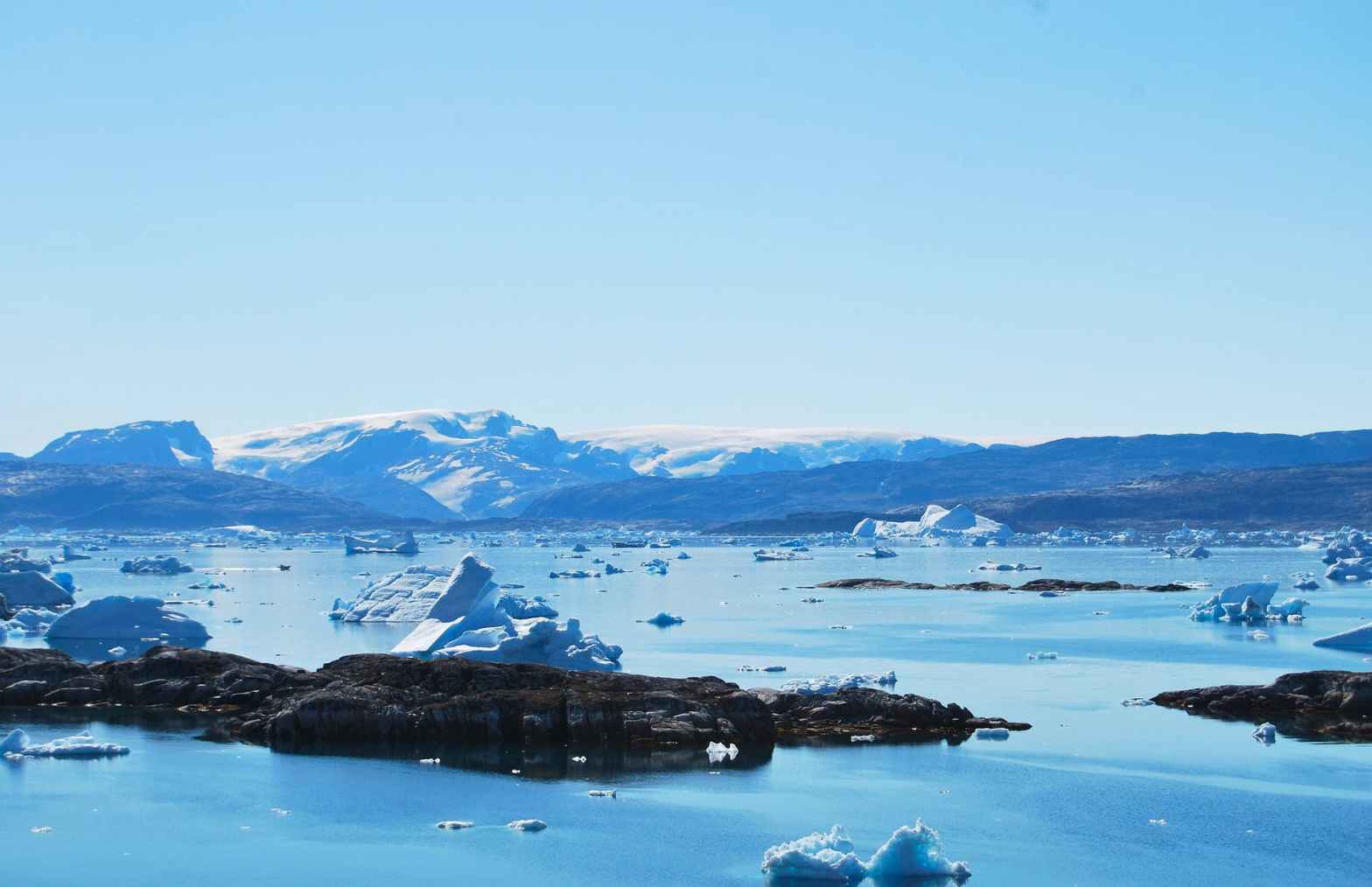
Melting glaciers, fires that more and more often happen worldwide, unbelievable heat waves, just to mention some major events, could really cause eco-anxiety.
The dire effects of climate change are hard to miss, and they instil fear in many people who are worried about the future of the Earth and obviously of the human kind.
If these fears sound familiar to you, you are not the only one.
Respondents between the ages of 18 and 34, who are likely thinking about what the meaning to inherit the Earth on the brink of environmental collapse, were more likely to say they were concerned about climate change, and actually nearly half said the anxiety affects their life every day.
The online survey, which involved 2,017 adults in the United States, covered ecological anxiety and changing habits to reduce the impact on the climate.
The survey results were weighted to reflect the national adult population, taking into account factors such as age, sex, education, region, family income, and ethnicity. 60% of respondents said they had made changes to their behaviour.
The most popular, adopted by over three-quarters of participants, included reducing waste through reuse and recycling of items. In addition to improving the insulation of your home, limiting the use of services such as water, heat and electricity and consuming less in general.
Not all respondents, however, could change daily transport or eating habits. Only two-thirds said they had or would do things like carpool, walk, cycle, eat less red meat, or become vegetarians or vegans.
People who suffered from ecological anxiety were much more likely to feel motivated to change their behaviour than those who didn’t.
While climate change anxiety may seem demoralizing, there are practical ways to manage this stress. It is especially important to gain control because anxiety can increase psychological distress.
The APA survey found out that half of adults did not know where to start to combat climate change. While it is true that governments and the private sector have the power to make the most radical changes, every citizen can change their habits. Eating less red meat, for example, can reduce carbon emissions. Participating in strikes and protests, such as those held by Greta Thunberg’s Fridays for Future, draws attention to the issue and helps get others to act. Asking local politicians to do more on climate change is also a good rule of thumb.
Re-framing negative thoughts
Overall, research shows that re-framing negative thoughts can help relieve stress, anxiety, and depression. If apocalyptic thoughts keep creeping into your mind, or even prevent you from making plans, it can be helpful to focus your attention on the present.
Addressing all the stressors
It is important to think about climate change-related stress as part of overall mental health. You may also experience financial, relationship, professional or physical stress, which can alter feelings about climate change and vice versa. It is essential to analyse the other stressors as well and, if necessary, seek the help of a professional, like a coach or a psychologist.
Building your resilience
Greater resilience can help resist eco-anxiety. You could increase your resilience by developing a close network of friends and family. Strong social and emotional support is linked to well-being, material aid during times of adversity, and lower rates of psychological distress following a disaster.
Like the whole human body, the brain also regresses with ageing.
At birth, each human being has 100 billion neurons. At 25, your brain is at its best. Then, it gradually begins to regress and, as we age, some neurons become defective, in particular those located at the level of memory, attention and awareness of what surrounds us.
This ageing process should not be regarded as a fatality. Thanks to some activities, we can preserve the functioning of the brain longer. This will allow us to have a better life from a physical and mental point of view.
1. Feed your brain well. A balanced diet is essential for good mental health. However, the brain needs specific substances to increase the connection of neurons and stimulate their regeneration. Therefore, eat food rich in antioxidants such as fruits and vegetables in general (in particular, artichokes, blueberries and ginger are really useful), fish and olive oil. Fatty fish (salmon, mackerel, herring, sardines) contains omega 3 which helps strengthen brain cells, optimizes learning and memory and contributes to the prevention of mental disorders such as depression and dementia. Remember that avocado and walnuts also contain omega 3 and that for a good brain oxygenation you need to eat glucose (bread and pasta) and food rich in iron (meat and fish).
2. Stimulates attention. Like the muscles that must be kept in motion, the brain also must be trained to keep its performance. It is therefore important to keep it active with activities such as crosswords, sudoku, reading, puzzles or even some video games that offer programs to train the brain. The more diversified the exercises, the better. Continuing to broaden one’s knowledge such as learning a new foreign language, playing an instrument, visiting exhibitions, travelling, and having a lively social life, are all activities that contribute to the training of neurons and prevent brain ageing. Also meditation is an excellent activity not only for improving the ability to concentrate but also because it reduces stress, anxiety and negative emotions. Meditating from 10 to 15 minutes a day will allow you to develop new connections between neurons and thus slow down the ageing of the brain.
3. Practice physical activity regularly. Physical activity keeps neurons active because it promotes blood circulation which therefore also reaches the brain. There is no need to become a top-level athlete to slow down the ageing of the brain. A moderate intensity sport is already effective as long as it is regular. The recommended frequency is 30 minutes a day. To keep up the pace it is advisable to find an activity that you like and that is engaging. Group physical activity (such as dance for example) is useful for the perception of bodies into space and for the relationship with others that releases endorphins, the hormones of well-being and pleasure.
The importance of trees in cities, but not only, is also evident from the final declaration of the recent G20 summit in Rome which reads: “Recognizing the urgency to combat soil degradation and create new carbon sinks, we share the ambitious goal of planting 1,000 billion trees collectively, focusing on the most degraded ecosystems on the planet “.
“We urge other countries to join forces with the G20 to achieve this global goal by 2030, including through climate projects, with the involvement of the private sector and civil society”.
The importance of trees in cities does not have to be demonstrated. Natural filters, trees absorb carbon dioxide and other pollutants to return oxygen and naturally cool the air during hot summer days.
In addition, they also offer shelter to small animals, birds build their nests there and with their roots, trees carry out a flood protection action by helping the soil drainage.
Last year a local television crew from Brussels stopped me on the street to interview me about something that had happened where I live. A man had cut branches from a tree, obviously without having the right because it is the municipality that is in charge of cutting trees’ branches regularly.
Therefore, they asked me what my opinion was about it. My comment was negative. How could a citizen dare to cut branches from a tree that belongs to the whole community? Trees are our friends; they do a very important and priceless job for all of us. Maybe I exaggerate a little, because I also think they give me positive energy and when I walk in the forest, I do not miss the opportunity to hug some trees.
I am happy to see that more and more city administrations are moving towards the organization of events in honour of our friends, the trees of course, which are good not only for the environment but also for the health and psychological well-being of each of us.
During the lock-down, the gym clubs have been closed (at least in Europe) and not all of us were able or willing to workout in our homes, perhaps following a video on YouTube. However, to prevent not only weight gain but also stress and anxiety from increasing, it is essential to exercise regularly.
Rhythmic physical activity (dancing, walking, cycling) alone is not enough, you need to maintain muscle mass which with ageing will be decreasing.
Maintaining muscle mass is particularly important in the case of a diet. In fact, thanks to a well developed muscle mass, you can avoid regaining fat and stabilize your weight. To do that, you should eat protein, do some resistance training, increase your Omega 3 intake, and check out your vitamin D levels.
In addition, there are at least 12 other benefits of moderate and regular physical activity. Let us see them.
1. More physical, mental and emotional well-being.
2. Reduce hunger.
3. Improve “bad” cholesterol and reduces triglycerides.
4. Decrease the risk of cardiovascular diseases.
5. Decrease resting heart rate.
6. Reduce abdominal fat.
7. Improve sleep quality.
8. Reduce the time to fall asleep.
Change your habits! Run, cycle, walk in the nature but also in the city, take a yoga or Pilates class even online or take a sports coach. You will see that you will soon get back your shape and motivation!














 Crisbie Coach