
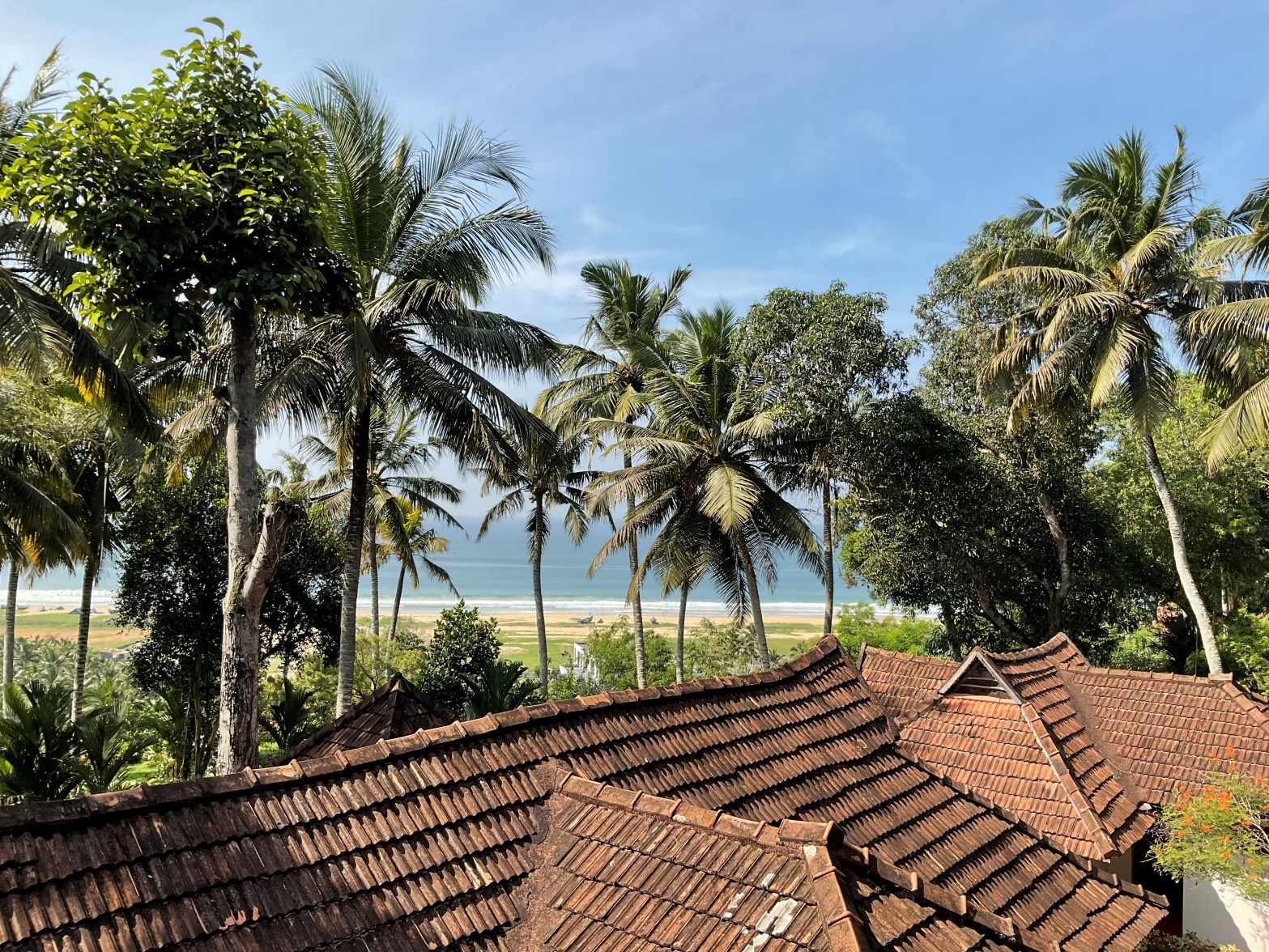
We spent the last part of our trip in India getting Ayurvedic treatments. Ayurveda, often called the “science of life,” is an ancient Indian system of medicine that dates back over 5,000 years. Rooted in the belief that health is a balance between body, mind, and spirit, Ayurveda focuses on prevention and holistic healing. Unlike modern medicine, which often treats symptoms, Ayurveda seeks to address the root cause of imbalance, using natural remedies, diet, and lifestyle adjustments.
At the heart of Ayurveda are the three Doshas: Vata, Pitta, and Kapha. These are biological energies found throughout the body and mind, governing all physical and mental processes. Each person has a unique combination of these Doshas, which determines their constitution and health tendencies.
- Vata (air and space) governs movement, creativity, and communication. An imbalance can lead to anxiety, insomnia, or digestive issues.
- Pitta (fire and water) controls metabolism, digestion, and intelligence. Excess Pitta may cause inflammation, anger, or acidity.
- Kapha (earth and water) provides structure, lubrication, and stability. Too much Kapha can result in weight gain, sluggishness, or congestion.
At Travancore Heritage, a serene Ayurvedic resort near Trivandrum, Kerala, the treatments are tailored to balance these Doshas. The experience begins with a consultation, where an Ayurvedic doctor assesses your Dosha and prescribes therapies, diet, and herbal medicines. Then, you have a daily re-assessment to adjust your treatment, that consists of different kind of therapies for 2 and a half hours.
Let’s see the most common therapies:
- Abhyanga: A full-body oil massage using warm, medicated oils to detoxify, nourish the skin, and calm the nervous system.
- Shirodhara: A continuous stream of warm oil poured onto the forehead, inducing deep relaxation and mental clarity.
- Pizhichil: A luxurious treatment where warm oil is poured over the body while being massaged by two therapists, ideal for arthritis and muscle pain.
- Peanut Sweda: or herbal stamp therapy is a unique Ayurvedic treatment that combines heat and herbs to relieve pain and relax the body.
A cornerstone of Ayurvedic medicine is Ghee, or clarified butter. It is used both internally and externally for its detoxifying and nourishing properties. Rich in antioxidants and healthy fats, ghee improves digestion, boosts immunity, and lubricates the joints.
Vegetarian Food and the Magic of Ghee
The food at Travancore Heritage is a celebration of Kerala’s vegetarian traditions. Meals are prepared with fresh, local ingredients, and every dish is designed to balance the Doshas. During the therapy (actually also later as they give you a list of recommended food) you are supposed to eat only food that is appropriate to your doshas. Here are some examples of delicious vegetarian food:
- Sambar: A lentil-based vegetable stew with tamarind and spices.
- Idli: Fermented rice steamed into soft, fluffy cakes.
- Pathiri: A delicious crispy pancakes.
- Thorans: Stir-fried vegetables with grated coconut.
- Rice and ghee: A sumptuous dish with a deliciously creamy texture easy to digest.
- Koottukari, a thick, delightful lentil and vegetable curry.
- Dosa: a thin, savoury crepe made from a fermented batter of ground black gram and rice.
Ghee is generously used in cooking, adding a rich, nutty flavor. It is believed to enhance the absorption of nutrients and promote longevity.
Of course there is much more to explore in Kerala’s food, but those are our favorites. We didn’t taste any sweet, following medical advise, as sugar is known to boost inflammation.
The Beauty of Travancore Heritage
The resort itself is a haven of tranquility. Nestled amidst lush greenery, the traditional Kerala-style cottages are built with wood and laterite, exuding an old-world charm. The gardens are alive with the sounds of birds—kingfishers, woodpeckers, and bulbuls, while palm squirrels and butterflies dart between the trees. The air is humid and thick but it spreads the scent of frangipani and jasmine, and the gentle rustle of palm leaves lulls you into a state of calm.
However, not everything was perfect. The nearby beach, though picturesque from a distance, was marred by waste left behind (I must say by local fishermen) denoting a poor trash management. Plastic bottles and wrappers littered the shore, a stark contrast to the resort’s pristine environment. It was a reminder that even in beautiful places, human neglect can leave scars.
The Kindness of the People
What truly made the experience unforgettable was the warmth of the people. The staff at Travancore Heritage treated us like VIP, always ready with a smile and a helping hand. Their kindness extended beyond the resort. During a tuk-tuk tour of Trivandrum, our driver doubled as a guide, sharing stories about the city’s history and culture. We visited the Padmanabhaswamy Temple, and the bustling Chalai Market, where we bought spices to bring back home.
A Royal Welcome at the Hilton
One of the most unexpected highlights was our visit to an exhibition of female entrepreneurs at the Hilton. As we entered, we were warmly greeted by the organizers, who treated us like royalty, insisting on taking photos for their records. The exhibition showcased everything from handmade jewelry to clothes, each stall a testament to the talent and resilience of Kerala’s women.
The Backwaters of Poovar
A trip to Kerala would be incomplete without a boat ride through the backwaters of Poovar. We glided the water and went through mangroves, coconut groves, and fishing villages. The backwaters are a birder’s paradise. We spotted kingfishers, cormorants, egrets, herons, eagles and even a brahmin kite soaring overhead. The silence was broken only by the gentle lapping of water against the boat.
Shopping and Souvenirs
No trip to Kerala is complete without indulging in some shopping. We returned home with silk scarves, pashminas, handcrafted jewelry, and cotton shirts in vibrant colors. Each piece will be a beautiful souvenir of our trip.
Walking with Eagles
Our final adventure was a walk along the beach, where we encountered eagles soaring above. I must admit, I was a little scared, but the experience was wonderful. It was a surprise to see the wild beauty coexisting with human life in Kerala.
Final Thoughts
Kerala is a land of contrasts, serene backwaters and bustling cities, ancient traditions and modern innovations. Yet, it is the kindness of the people, the healing power of Ayurveda, and the beauty of nature and wildlife that linger in my heart. Travancore Heritage was more than a retreat; it was a journey into the soul of Kerala, one that I will cherish forever.
Do you have a special memory of a trip that you will cherish forever?
Thank you for reading. This is the last part of our trip to the South of India. If you liked it, put a like and a comment and sign up for my blog crisbiecoach.








 Crisbie Coach