Achieving Harmony: Nurturing Well-being in a Fast-Paced World

In today’s society, our well-being often takes a backseat to the demands of our professional lives. Striking a balance between work and personal needs is crucial for maintaining a high quality of life and safeguarding our physical, mental, and emotional health.

The international classification of diseases recognizes burnout as a work-related phenomenon, but its causes extend beyond the workplace. With the rising cost of living, a lot of people work tirelessly to make ends meet.

However, this relentless pursuit often results in neglecting essential aspects of life.

Whether working for a company or engaging in individual businesses, we dedicate countless hours to our professional lives, leaving little time for nourishing meals, adequate rest, and quality time with loved ones. The consequences of this imbalance are often underestimated.

Even for those facing the responsibility of providing for their families, it’s essential to find a work-life equilibrium. Life encompasses more than work, and neglecting personal well-being can have long-term repercussions on health.

The excessive focus on work, coupled with insufficient time for activities like sports, walks in nature, or simply relaxation, can contribute to issues such as post-traumatic stress, fatigue, nutritional imbalances, and strained relationships. It’s crucial to recognize the signs and prioritize self-care.

If you feel trapped in a cycle of stress and exhaustion, it’s important to realize that no salary is worth compromising your health. While changing your current situation might not be immediately feasible, incorporating daily activities promoting well-being is crucial to achieving a healthier work-life balance.

Remember, life extends beyond the confines of the workplace. Family, friends, and health are integral parts of a fulfilling life. Work may be important, but it shouldn’t consume your entire existence. Strive for a harmonious balance, as your relationships and health are irreplaceable.

In the grand scheme of things, your job may be replaceable, but your family, friends, and well-being are not. Prioritize self-care to lead a happier, healthier life. After all, nothing is worth sacrificing your happiness for. Your work will go on, but your relationships and health require your mindful attention. Take the necessary steps to care for yourself and embrace a life that goes beyond the confines of the workplace.

Do you think you care enough for your well-being?

Thank you for reading my blog! Have you already subscribed to my blog so you don’t miss out on any new posts?

Why Accepting That You Cannot Always Be Happy Makes Your Life Easier

After having read a lot about happiness, I found out that you also would need to accept that you cannot always be happy because it will make your life easier.

What is the real meaning of being happy? Is it really necessary to be happy all the time to be successful in life?

Some researchers state that happiness means designing your own quality of life and also finding ways to strive for continuous improvement. They say that we all have a social purpose to live for, that is our mission. If you keep a journal, for instance, you would be able to evaluate the activities that make you happy and compare them with those that make you unhappy. In this way you may have a choice. You can also compare yourself with others’ activities to find out what makes them happy and get inspired. It doesn’t mean that you have to compare yourself with others: you are unique, and  in some cases you don’t even know those people very well.

Moreover, there is not a single recipe to be happy. Not everyone will be happy by practicing meditation or sports, for instance. There are, however, common factors that will influence your happiness:  valuable relationships, a meaningful job,  work-life balance, a great partner and good health. In any case, you may find someone who is not happy in spite of the fact that they have a good job and they get along well with their partner.

Yet, there are also researchers saying that it is not important to target happiness as such, but you would need to to learn how to be unhappy, by accepting the moments of unhappiness without judgement and as part of your life.

Being always positive is not good

Some scientists see with a critical eye today’s trend on being always positive. Avoiding facing distress, sorrow, misery is not a solution. You can’t ignore being unhappy, you have to accept it for what it is. You can also share your negative feelings or emotions with others, it will help you create and strengthen your relationships. When you are worried and you know that someone will listen to you, you may feel a bit better after having shared your distress and discomfort.

Actually, those who pretend to always be happy may end up being alone, isolated and of course unhappy.

Accept what life gives you in the present moment

This sounds like a paradox but if you try to accept your unhappiness as a moment in your life that sooner or later will fade away, you will be more content.

The most important thing is to be happy with the life you live, acknowledging and accepting the ups and downs that are part of your life. As the French say, c’est la vie.

How to Keep Your Resolutions

Today is the first of January and many of us have decided about their resolutions for 2023, or are about to do so. The new year brings the desire for a change, the need for renewal. We would like to spend more time with our family, to take that trip that we have been dreaming about for so long, to change our job, to enrol in a gym club, to lose weight, to stop smoking…the main goal is feeling better with ourselves and with others.

Why does it happen then that along the way we forget about our resolutions or we abandon them?

Here are some questions you should ask yourself.

Are your resolutions too ambitious, vague or simply they are too many? In this case you are putting too much pressure on yourself. If you have decided to stop smoking or to lose 10 kilos, you must ask yourself why you have started smoking and why you are always hungry. Are they ways for relieving the daily tensions?

Are you positive in comparison to the achievement of your resolutions? If you think that you will never make it, it is sure that you will never make it. Henry Ford used to say: “If you believe you can make it or if you believe you cannot make it, you will always be right”.

Are your resolutions appealing? You have decided to lose weight or to stop smoking. As such, they are great objectives. But find a bigger reason for which you want to achieve these objectives. For instance, you want to stop smoking to be able to recover breath faster when you go jogging or you want to lose weight to put on those beautiful pants that suited you very well.

Bad habits are difficult to lose, above all you need time. If you have been sticking to them for years, you have your good reasons (to protect yourself from stress, for example). You cannot change your habits in some weeks. Some time ago, studies stated that you could take up a new habit in 21 days. Now, neuroscience has found out that you need at least 60 days! Take your time then, establish a new habit with calmness, don’t stretch your body too far, your body is comfortably used to the old habit and it doesn’t feel like changing it. You must make it understand, day after day, that another way is possible and it is also healthier!

Besides, remember that the path won’t always be linear and you may find obstacles. There will be some easy moments and some difficult ones but losing a battle doesn’t mean losing the war. Accept the ups and downs: your body will learn to adapt slowly.

Choose an objective that won’t sound like an obligation, in the sense that it must represent a real choice, a thing that you want to do, not that you must do. Control your thoughts, remember what Henry Ford said. Don’t focus on what you still have to achieve, but celebrate what you have already achieved. List the small victories and congratulate yourself. Stay positive!

Think about the strength that a seed has to become grass. It must come out from the soil to be able to live and flourish. It works slowly under the soil, up to when one day it comes out and sees the light! For you it is kind of the same thing. Work slowly and one day you will see the results, because you are stronger than you think.

And now four tips:

1. set one objective at the time, but define it well, use the SMART model (specific, measurable, attainable, relevant and time bound). Even though this model has been created for organisations, it may be helpful also to individuals engaged in goal setting.

2. Adopt the strategy of small steps by dividing your objective into smaller objectives.

3. Celebrate achievements: the first kilo you have lost, the first whole day without smoking. Put some post-it all over your place with your success on it. Tell yourself “Well done!”.

4. Inform your family and friends about your goals and ask them to help you with this. Getting their support will help you in achieving the results. Look for some groups on Facebook that share your same goals, and participate in forums on the Internet. Remember that you are not alone, there are other thousands of people that may have your same goals and exchanging ideas with them can be helpful to you. You can create a blog that can become your journal (a journal on paper is also okay).

I wish you a successful 2023!

Photo by Cristiana Branchini

Do You Often Forget Things?

Do you often forget things, from the most trivial trifle to the most important thing you have in mind?

Don’t worry, as one study has found out that:

“The point of memory is not being able to remember who won the Stanley Cup in 1972 but to make you an intelligent person who can make decisions”

While shopping, you may forget one of the most important items you were supposed to buy, or in the middle of a conversation with friends, it’s impossible for you to remember the title or the name of the author of a book you were recommending.

In short, it feels like starting Alzheimer’s because you notice that you have difficulties remembering (almost) everything.

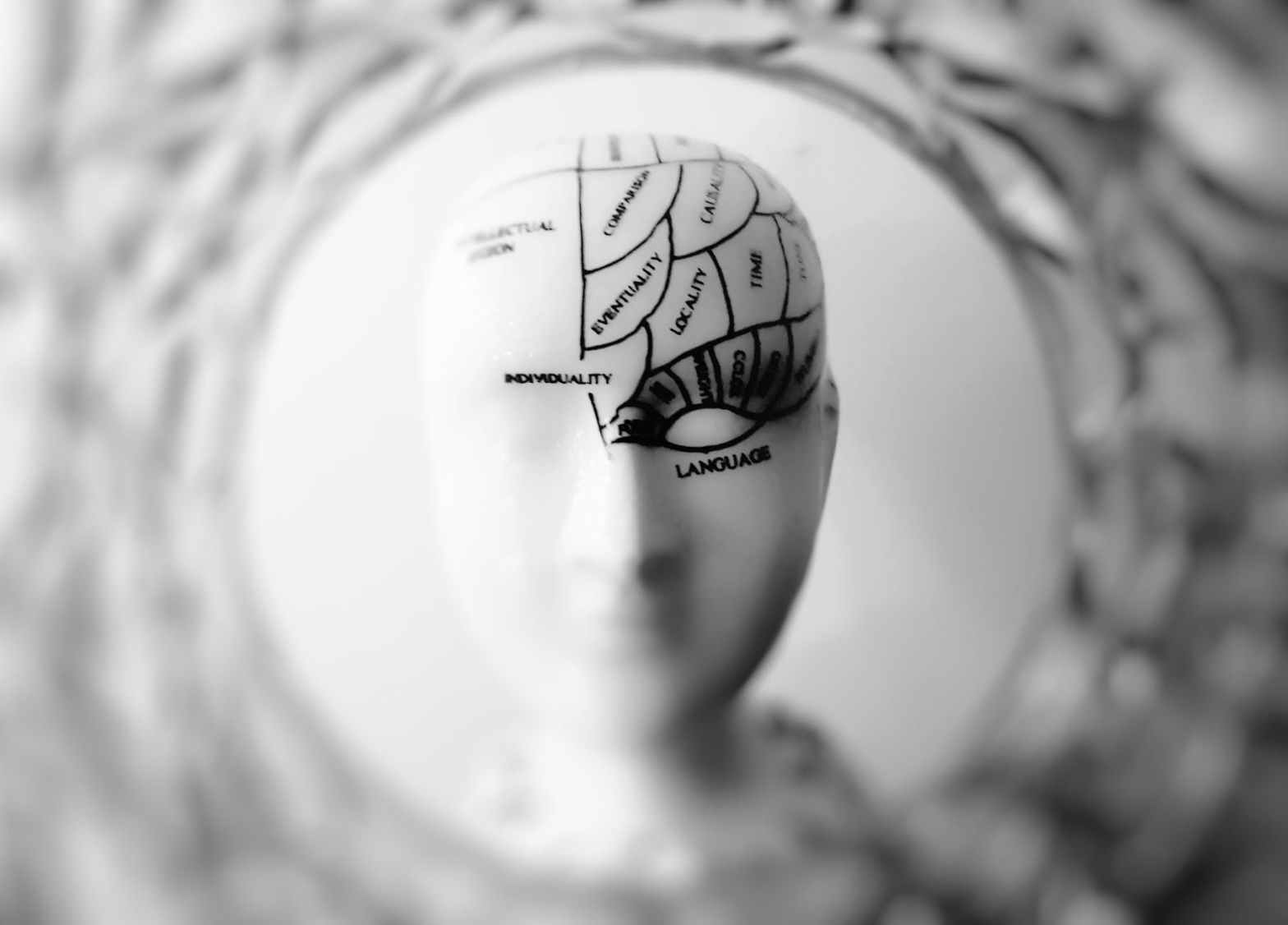
But don’t worry, because a study by two researchers at the University of Toronto (Canada) reveals how important it is to forget.

Paul Frankland and Blake Richards, researchers at the University of Toronto conducted a study that found out that people who are more likely to forget are also the smartest!

“It is of utmost importance that the brain is able to select the information it acquires and eliminates irrelevant details, thus focusing on a more general view to ensure that decisions are made in the most correct way.”

These are the words of Blake Richards denying the belief that those who can remember more things are also the smartest, and confirming almost the opposite. The elimination of unimportant information allows us to increase our analytical abilities, focusing our attention on the fundamental things and avoiding unnecessary work of our brain.

The researchers developed this study after several years of research on memory loss and brain activity, including both humans and animals.

The conclusion is that:

“If you forget occasional details,” Richards says, “it may mean your memory is healthy and doing exactly what it should be doing”.

Are you someone who often forgets things?

You can find more on brain here.

A Long Lasting Strike

Ireland, May 1970.  The country’s banks were closing one after the other. The reason? The employees claimed for a salary increase. Their strike would be long lasting, it went on for 6 months! How will people withdraw money, receive their pay-checks or buy things?

Their way out to this long lasting strike was going to the pub! Indeed, these typical bars of the country have a lot of cash.

In addition, the owners know everyone, and enjoy great trust from their customers.

Therefore, Irish people turned to them. They signed cheques and collected cash in exchange. Pub owners will only need to wait for the banks to reopen. Thank to this way out, they could pay for their purchases, and everything went well.

For the anthropologist David Graeber, this episode would tend to show that the job of bank’s employees has no “social utility”. When they would not work, everything continued to function normally. This proved to be true as in the year of the strike, the Irish economy grew as well as usual.

Obviously, Irish could not do some operations, like asking for loans, making investments in the stock market or establishing business companies.

Finally, everyone was very happy when they could go to the bank again, especially the pub owners who could cash out all the checks they received.

Actually, bank jobs have changed a lot during the last twenty years. When I opened my first bank account, I had to go there and meet someone to do all the papers. The last one I opened, I went to the bank just to sign one paper, to verify the authenticity of my signature.

Beyond social utility, today we are witnessing the disappearance of professions due to the increasingly widespread use of artificial intelligence which causes, and will massively cause, a radical change in the job market.

What jobs do you think will change or disappear in the near future?

high angle photo of robot
Artificial Intelligence – Photo by Alex Knight on Pexels.com

Working Four Days a Week

In Iceland they carried out an experiment. From 2015 to 2019, 2,500 people (equal to 1% of the inhabitants) participated in a very ambitious project: to reduce working time without reducing wages. Public sector employees, with different profiles and working in different sectors (schools, hospitals, social and administrative services), worked 4 days a week following their working hours, not necessarily during the day.

Objective

Analyse positive changes in professional and personal life.

How it was achieved

Communication mainly via emails, reduced time of breaks and daily activities redistributed in order to optimize the available time.

Results

The results speak for themselves. In 4 years, participants’ productivity and well-being have increased, while stress and risk of burn-out has decreased considerably.

The results show that the 2,500 workers involved used their free time to recover their energy, to spend more time with their families, or to practise their hobbies. This has led unions to renegotiate employment contracts and now 86% of Icelandic employees have chosen to work less for the same salary.

Benefits

A marked improvement in the quality of life has been noticed. In fact, it is often the work environment that increases states of anxiety and malaise.

This research could be replicated in the UK, because, according to a survey, 63% of the population would be in favour. In addition, 45 deputies voted a motion to ask the government to study this proposal.

Would you like to work 4 days a week? I think this is an inspiring model to be exported without hesitation!

person holding white stylus
Working Week – Photo by Jess Bailey Designs on Pexels.com

Why Being Curious Is Worth

We are all born curious. Think about when you were a child or at children you know. They are extremely curious, aren’t they? They ask a lot of questions and they put themselves in dangerous situations.

Curiosity has great benefits: from rejuvenating your minds to helping you cope with change successfully.

However, we don’t all experience it the same way. There are those who are fascinated by Instagram to look into others’ lives, and there are some people who focus their interest on getting to know how things work, like for instance a car engine.

In both cases they are curious people.

However, the latest research shows that there are different types of curiosity which influence our personality and abilities.

Let’s look at the typology proposed by Todd Kashdan, of George Mason University, and other authors:

Joyful exploration: this is the classic type of curiosity. You look for something related to new knowledge or information, from learning how to cook a dish you liked to knowing who built a particular building. This curiosity, as the name indicates, is linked to the joy of learning something you did not know before.

Anxiety caused by missing something: this dimension has a different emotional tone. While the previous one gives you joy, in this case you get stressed or anxious to know how to solve a problem during an exam or to remember something that does not come to your mind, for example.

Tolerance to stress: it is activated when you accept doubt or anxiety facing new, complex or unknown events. In some ways, it helps reduce resistance to change. It allows you to ask yourself what there may be beyond fear, for example when you experience changes in your job.

Social curiosity: if you are socially curious you tend to observe what others think, or how they behave. It is the desire to learn about others’ lives through the press, TV or social networks.

Thrill-seeking: This is the dimension that leads people to take any kind of risks to seek out new experiences, such as practising extreme sports or travelling to dangerous countries for the pleasure of the adventure.

According to a research conducted in 2018 on over 3,000 workers in the United States, Germany and China, 84% recognized that curiosity allows them to generate new ideas and 64% that it helps them to get a job promotion. Furthermore, according to the study’s conclusions, the first four dimensions of curiosity improve outcomes at work while people with high social curiosity are best at stirring up conflicts and gaining trust.

Ultimately, you can have one or more of the previous dimensions and, depending on this, you will  be a joyful explorer, or you will be more inclined to solve problems, or, thanks to your social curiosity, you will be more empathetic.

Which category do you think you belong to?

black and white boys children curiosity
Children Are Extremely Curious – Photo by Pixabay on Pexels.com

Positive Affirmations

Our mind is fascinating. It has its own rhythm, unique perceptions and we are not aware of all its possibilities yet. Waves of thought run through our mind but I must say that unfortunately most of them are negative. However, you need to know that there is a way out to go around your negative inner monologue: positive affirmations.

I read about the importance of positive affirmations in one book of Louise Hay.

Affirmations are short positive sentences that motivate you, inspire you and encourage you to take action to achieve your goals. To make them work you have to repeat these phrases several times throughout the day, to make them stay etched in your unconscious mind.

Repetition can change your habits, behaviour, and point of view. As you may know, words are powerful. Regular repetition, aloud, but also within you, turns into thoughts that create your reality. Positive thoughts have the power to overcome internal negative speech. You may find it odd to say phrases like “I choose to be happy” in front of a mirror, but I assure you that these statements really help you reinforce the good vibes. Regular repetition of affirmations becomes your truth.

A statement firmly and confidently declares a positive thought and transforms it as a truth. By integrating these positive statements into your daily routine, you help your mind prioritize positivity.

According to some researchers, affirmations can help you work better. Spending a few minutes reflecting on your abilities before a stressful meeting, for example, can calm your nerves, increase your confidence, and improve your chances of success. Affirmations can also help you relieve stress.  

Here are some of the benefits you can get from practising affirmations regularly:

Become happier. Affirmations allow you to recognize the things that keep you from being happy, because you focus on what you really want in life. In addition, your mood will get better.

See things in perspective. We often take the simplest things for granted. Using affirmations allows you to remind yourself that the simplest things are the most important. For example, if you are in good health, by using the statement “I am in good health” you can focus on this point and appreciate it more.

Reduce negative thoughts. Since most of our thoughts are unconscious (and negative), positive affirmations allow you to become more aware of your thought patterns and feelings, thereby reducing the risk of creating a recurring negative thought.

illustration of woman analyzing financial line graphic
Photo by Monstera on Pexels.com

To get the best out of affirmation practice, you need to observe these three basic rules:

  1. Plan repetition during specific moments throughout the day. Good times could be in the morning as soon as you get up or in the evening before going to bed. Each of us will find the best time to devote to repeating affirmations.
  2. Use the verb in the present, because you want results now and not in the future. Furthermore, the brain only understands the present tense.
  3. Do not use the negative form (for instance, do not say “I don’t take into account judgements from the others” but “judgements from the others are irrelevant to me”).

There are no strict rules on the frequency of repetitions. Nevertheless, according to psychotherapist Ronald Alexander of the Open Mind Training Institute, the statements can be repeated three to five times a day to reinforce the positive effect.  

Do you like to write? Perfect! Writing your affirmations in a journal and reading them in front of a mirror is an effective way to make them more powerful.

Here are some affirmations you could practice if you want to try if they work for you too:·     

  • I believe in myself and I trust my abilities.
  • I am the creator of my thoughts.
  • I am a successful person.
  • I choose to be happy.
  • An amazing family and very good friends surround me.
  • I am strong and courageous.
  • When I go to bed, everything is as it has to be and I fall asleep peacefully.
  • I love and accept myself as I am.

Do you think you could control more your negative thoughts by starting to make positive affirmations?

photo of person holding cup
Photo by Alina Vilchenko on Pexels.com

Why Saying No To Temptations

How can you resist the temptation to drink a good glass of wine, eat a piece of cake or skip the gym and go to the cinema instead?

“The only way to get rid of temptation is to yield to it” said Oscar Wilde.

Diet, sport, sleeping enough are fine, but sometimes indulging in the breach of the rule helps your psycho-physical well-being and eases the performance anxiety that often accompanies a healthy lifestyle.

However, in addition to giving in to temptations, we can learn to control them.

Have you ever heard of the “Marshmallow test“?

The “Marshmallow test” is a curious experiment, carried out by Professor Walter Mischel in the sixties at Stanford University.

yummy marshmallows heaped on white table
Photo by Arina Krasnikova on Pexels.com

A child is left alone in a room in front of a Marshmallow: they can choose whether to eat it immediately or wait 15 minutes and get two as a reward. Some children will know how to wait; others, unable to resist, will throw themselves on that inviting sugar candy.

The professor compared throughout the years the self-control skills shown by children with the successes achieved in their adult age and found out that those who did not eat the marshmallow achieved more goals in life.

Is self-control therefore the secret of success? Is it postponing rewards really more likely to bring success in life?

The Mischel experiment actually explains how self-control is fundamental in studying, in sport, at work and in many other circumstances of your life.

Self-control means knowing how to make decisions in the right time and in the right place to improve your skills to not yield to the temptation of a marshmallow.

People who are best at mastering their decision-making are generally people who are better off. They eat well, play sports, get enough sleep. These people structure their lives around good habits and build routines that are easy to follow.

Good news are that you can learn new habits.

Eating a piece of pie is not a moral failure, even if you have decided to go on a diet. Giving up on the piece of cake may cause you more stress and therefore cause you more harm than eating it. The trick is rather to avoid buying a cake or passing in front of a cake! But don’t feel guilty if you eat a slice. Don’t forget that an excess of willpower can also be more harmful because, as mentioned before, it can cause additional stress.

Self-control depends on your choices and it is your responsibility. Stress has become a personal burden, which you are called to manage alone with the help of techniques, like meditation, coaching, yoga.

Remember that it is important to recognize your own limits because it makes you become aware of the fact that you cannot be perfect and control everything.

Do you think that you can learn how you can control yourself?

assorted colorful lollipops on pink background
Photo by Karolina Grabowska on Pexels.com

How to Embrace Change

Life is constant change, Buddha and Aristotle already said it: change is a fact of life. But change has also been accelerating in recent decades. Massive disruption across the social, technological, political and environmental dimensions of our lives means that we are constantly trying to figure out how best to manage uncertainty. And for someone it can be scary.

The origin of this fear can be found in biology. Our brain is the result of two and a half million years of evolution. We have lived in caves much longer than we have in cities. This means that we have “coded” automatic responses to successfully respond to everyday threats.

If absurdly you see a tiger walking down the street, you would not try to understand what breed it is but you would rather try to escape as quickly as possible (flight). Another codified reaction would be to stay still, hoping that the tiger will not see you (freeze). The last possible reaction would be to fight it (fight), with very, very limited chances of success, so your brain would immediately discard it.

Flight, Freeze or Fight are the three primal reactions to events that we perceive as dangerous to our safety.

However, the wonderful circuits that have allowed us to evolve as a species are not suited to addressing the most subtle threats of our age, such as digitization, the pandemic or the risk of losing your job.

These fears are evolutionarily new and are not always easy to manage.

bengal tiger half soak body on water during daytime
Photo by Flickr on Pexels.com

Remember that the brain is designed for your survival, not your happiness. Therefore, to face changes, you have to understand them as opportunities and learn from the potentials they entail. Moreover, this is not as automatic as running away from something dangerous. On the contrary, it takes effort and training.

Let us see how you could get started by following these four tips.

1. First of all, it is important to train your mind daily. Just as you go to the gym or practice by yourself, you need to keep your brain muscle in shape. Try to do something different every day. For example, you could change sources of information when reading the news (also useful to understand various points of view), change your route to go to work, or try a new dish.

2. Second, you can try to consider what happens to you in a different manner. For instance, a good way is reading history to realize that although we live in an age where changes happen very fast, all these progresses have allowed us, for example, to increase our life expectancy.

3. Third, try to disconnect from technology and reconnect with yourself and your surroundings. If you are always immersed in the digital world, you will not have time to integrate learning and to find a certain and needed tranquility. For example, one day during the weekend or on vacation you can put your mobile in the “don’t disturb” mode.

4. Fourth, trust. If you look at the difficulties that you have already faced in the past, you will see that now they look easy to you. If you have already been able to overcome challenging situations, why should not you be able to do it now?

Are you afraid of change or do you like new challenges?

Photo by Braden Collum on Unsplash