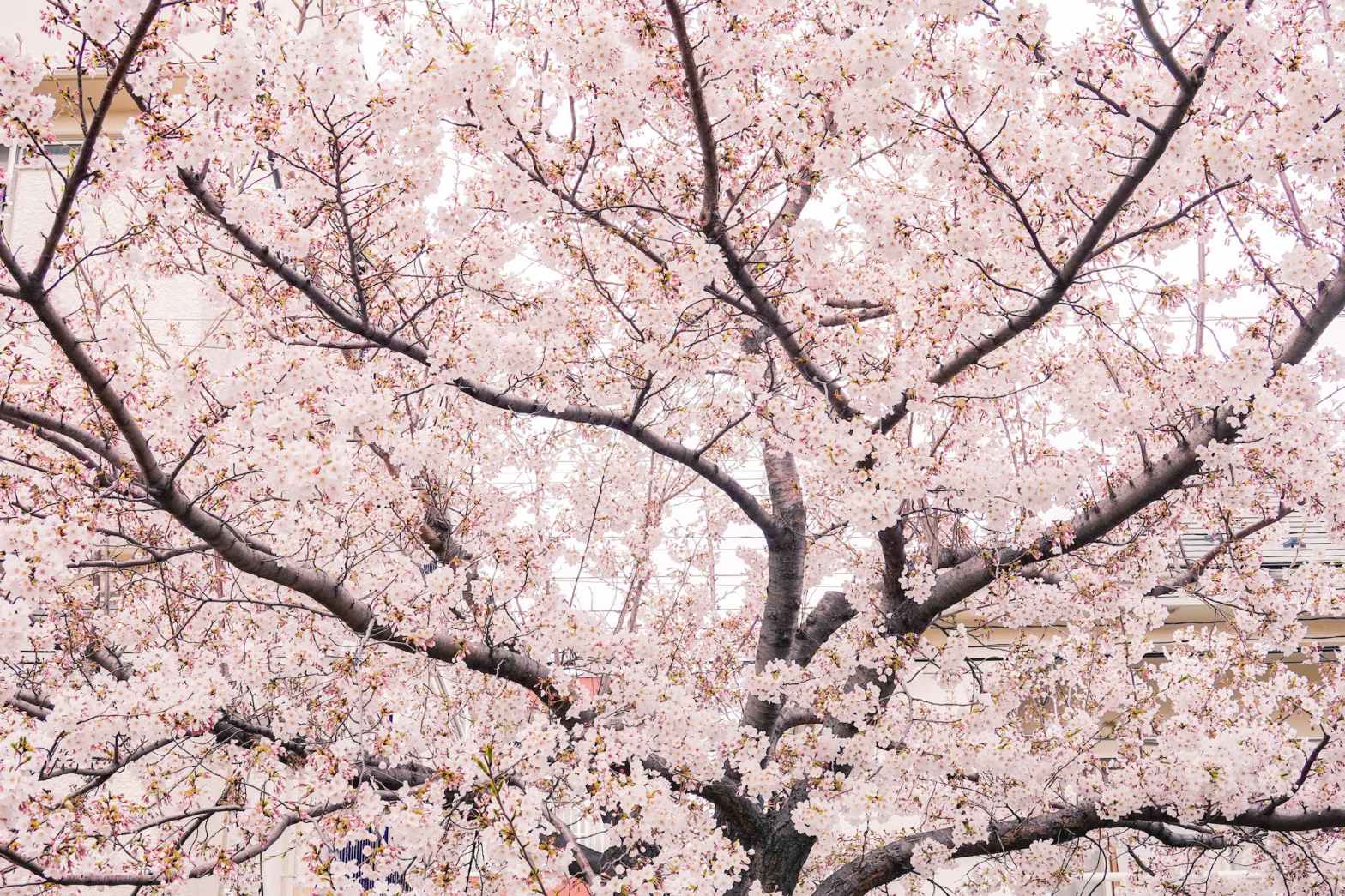
In the shade of cherry blossoms, there are no more strangers.
Kobayashi Issa, Poet
Have you ever heard of the beautifully simple Japanese tradition of Hanami, also known as “flower contemplation”, better known as “cherry blossom contemplation”? It is an ancient practice of contemplating the flowers.
Life is beautiful yet fleeting. This is the feeling behind the Japanese celebration of Hanami. Every spring, friends and families gather to organize picnics and parties under the beautiful cherry blossoms. Otherwise known as Sakura, the flowers appear for a very short period between March and May, embellishing the Japanese landscape with their delicately fragrant presence.
Sakura bloom for only two weeks before the wind spreads them in nature, so the flowers symbolize the beauty and ephemerality of life. As we admire these beautiful flowers, we remind ourselves that every moment is a gift and should be celebrated as such. In this way, we learn to let our lives flourish and to appreciate every moment of joy, love and wonder that the wind brings us.
“Sa”, which means “god” (神), refers to the god of the rice fields. “Kura” represents the stand used to honor a god with offerings of food and saké.
THE HISTORY OF SAKURA
The Hanami tradition is centuries old, with references dating back between 710 and 794, and it is inspired by the Chinese custom of admiring plum blossoms. Sakura were worshipped as gods in Japan, and when the cherry blossoms bloomed, it was a sign that the god had come down from the mountain and it was time to plant rice. Emperor Saga (Heian period from 794 to 1185) was the first to throw a real party on that occasion – with food, drink, music, and poems – after having admired a cherry tree at Jishu Shrine located in Kiyomizu Temple.
HANAMI IN MODERN TIMES
This activity is so popular – and has been for so long – that the Japan Meteorological Agency is even involved in forecasting tree blooms. Cherry blossom contemplation is one of the best experiences in Japan, but it can also be practiced in many other countries. There are famous cherry blossom parks in the United States, Canada, South Korea, Brazil, Europe, Taiwan and China.
ABOUT CHERRY BLOSSOMS
- There are nine types of cherry trees in Japan and more than 100 varieties according to the Japan Cherry Blossom Association.
- In addition, there are 200 other cultivated varieties.
- Their colors range from white to dark pink, and the size and number of petals can also vary.
- Some trees can reach up to 20 meters tall.
- A tree can also be a national monument. The Miharu Takizakura in Miharu City is believed to be more than a thousand years old and 13.5 meters high and about 25 meters wide.

 Crisbie Coach