
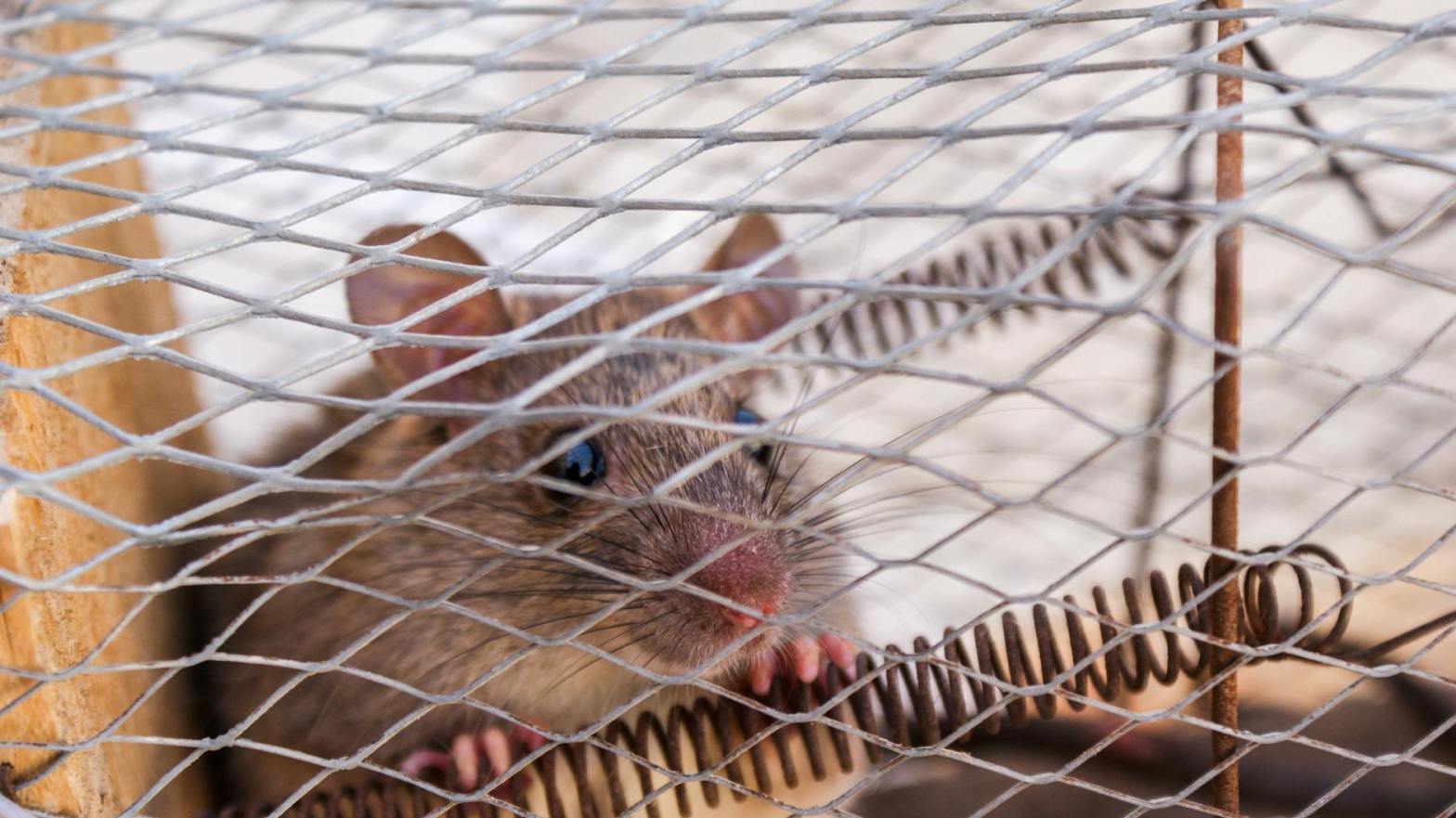
The Story of the Mouse and the Trap

Do you know the story of the mouse and the trap? It’s a tale that teaches a lesson about community, the importance of heeding warnings, and empathy.

A little mouse once discovered that a trap had been set in the farmer’s house. Alarmed, the mouse ran out to inform the other animals on the farm, hoping they would understand the danger and help find a solution.

The mouse first approached the chicken and warned, “There is a trap in the house!”

The chicken clucked and replied, “I am sorry, Mr. Mouse, but it is no concern of mine. It doesn’t affect me directly, so there’s nothing I can do.”

Next, the mouse went to the pig and repeated, “There is a trap in the house!”

The pig sympathized but said, “I am very sorry, Mr. Mouse, but there is nothing I can do about it. It doesn’t affect me directly.”

The mouse then turned to the cow and told her, “There is a trap in the house!”

The cow said, “Oh, Mr. Mouse, I am sorry for you, but it doesn’t bother me at all. There is nothing I can do.”

Dejected and alone, the mouse returned to the house, knowing that he would have to face the danger alone. That night, the trap snapped, but it wasn’t the mouse that was caught. The farmer’s wife had heard the noise and went to check the trap. In the darkness, she didn’t see that it had caught a venomous snake by the tail. The snake bit her, and she became very ill.

To care for her, the farmer slaughtered the chicken to make soup. Despite the efforts to nurse her back to health, the woman did not recover. Many people came to the house to pay their respects, so the farmer had to kill the pig to feed all the visitors. Eventually, the farmer also had to slaughter the cow to provide enough meat for everyone.

The little mouse watched in sorrow as all the animals who had refused to help him met their fate due to the trap that they had thought did not concern them.

The moral of this story is that danger to one can be a danger to all, and the importance of helping others in times of need, as a threat to one community member can ultimately affect everyone.

In the end, “The Mouse and the Trap” illustrates the interconnectedness of all community members and the vital role of empathy. Each animal’s initial reaction of indifference underscores a lack of empathy for the mouse’s plight. By ignoring the mouse’s warning, they failed to understand and share in its fear and concern.

True empathy involves recognizing that the struggles of others are significant, even if they do not seem to directly affect us. The misfortunes that befell the chicken, pig, and cow serve as a poignant reminder that a lack of empathy can lead to unforeseen consequences. Had they empathized with the mouse and taken action, they might have prevented the ensuing tragedy.

Thus, the story encourages us to practice empathy by listening to and supporting those around us, understanding that their troubles could one day become our own. By fostering a compassionate and responsive community, we can collectively safeguard against dangers that any one member might face.

Would you agree that this fable teaches us the good implications of being empathic?

Thank you for reading! Please sign up for my blog crisbiecoach so you don’t miss out on any posts!
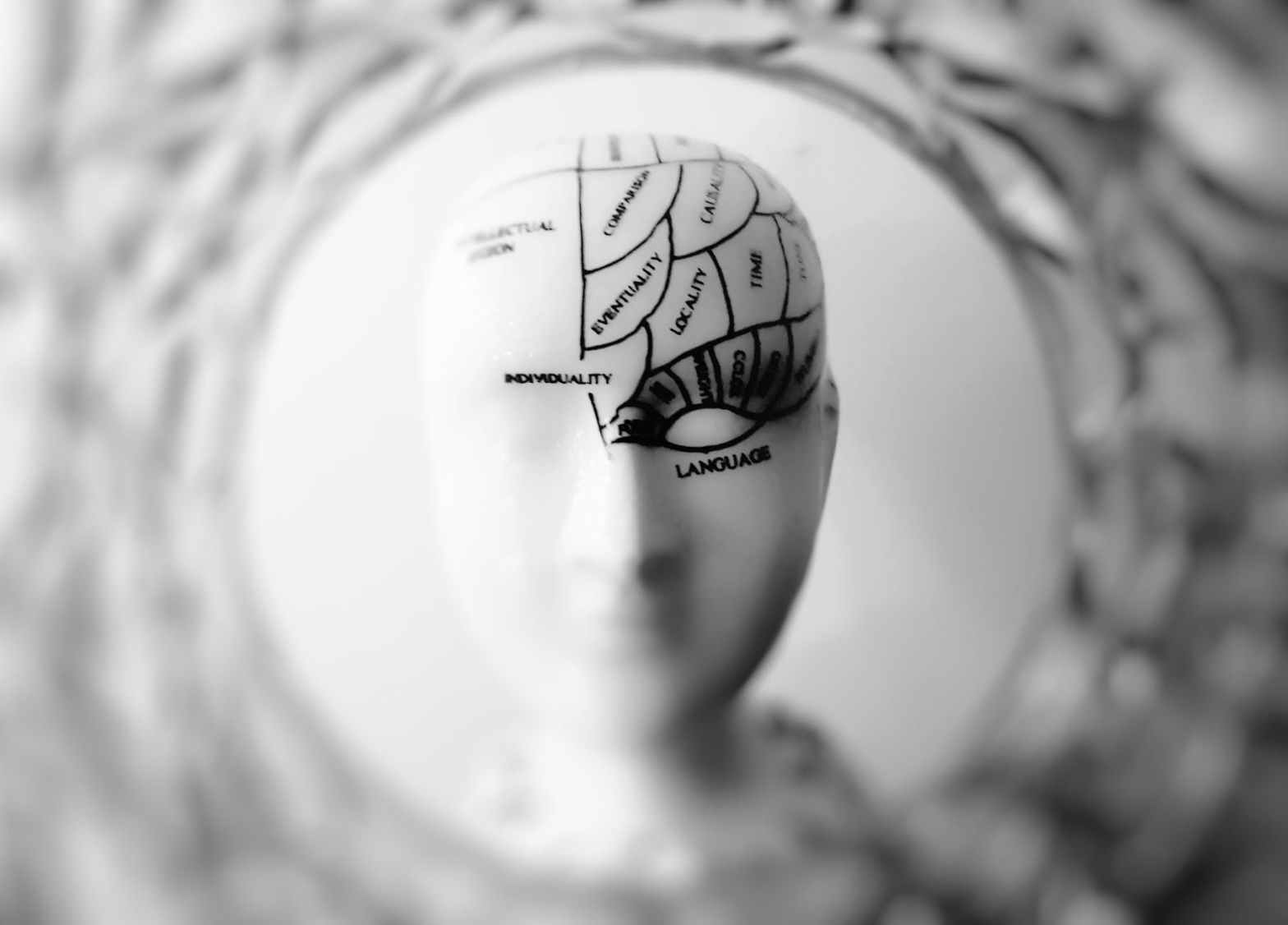
Do You Often Forget Things?

Do you often forget things, from the most trivial trifle to the most important thing you have in mind?

Don’t worry, as one study has found out that:

“The point of memory is not being able to remember who won the Stanley Cup in 1972 but to make you an intelligent person who can make decisions”

While shopping, you may forget one of the most important items you were supposed to buy, or in the middle of a conversation with friends, it’s impossible for you to remember the title or the name of the author of a book you were recommending.

In short, it feels like starting Alzheimer’s because you notice that you have difficulties remembering (almost) everything.

But don’t worry, because a study by two researchers at the University of Toronto (Canada) reveals how important it is to forget.

Paul Frankland and Blake Richards, researchers at the University of Toronto conducted a study that found out that people who are more likely to forget are also the smartest!

“It is of utmost importance that the brain is able to select the information it acquires and eliminates irrelevant details, thus focusing on a more general view to ensure that decisions are made in the most correct way.”

These are the words of Blake Richards denying the belief that those who can remember more things are also the smartest, and confirming almost the opposite. The elimination of unimportant information allows us to increase our analytical abilities, focusing our attention on the fundamental things and avoiding unnecessary work of our brain.

The researchers developed this study after several years of research on memory loss and brain activity, including both humans and animals.

The conclusion is that:

“If you forget occasional details,” Richards says, “it may mean your memory is healthy and doing exactly what it should be doing”.

Are you someone who often forgets things?

You can find more on brain here.

How to Embrace Change

Life is constant change, Buddha and Aristotle already said it: change is a fact of life. But change has also been accelerating in recent decades. Massive disruption across the social, technological, political and environmental dimensions of our lives means that we are constantly trying to figure out how best to manage uncertainty. And for someone it can be scary.

The origin of this fear can be found in biology. Our brain is the result of two and a half million years of evolution. We have lived in caves much longer than we have in cities. This means that we have “coded” automatic responses to successfully respond to everyday threats.

If absurdly you see a tiger walking down the street, you would not try to understand what breed it is but you would rather try to escape as quickly as possible (flight). Another codified reaction would be to stay still, hoping that the tiger will not see you (freeze). The last possible reaction would be to fight it (fight), with very, very limited chances of success, so your brain would immediately discard it.

Flight, Freeze or Fight are the three primal reactions to events that we perceive as dangerous to our safety.

However, the wonderful circuits that have allowed us to evolve as a species are not suited to addressing the most subtle threats of our age, such as digitization, the pandemic or the risk of losing your job.

These fears are evolutionarily new and are not always easy to manage.

bengal tiger half soak body on water during daytime
Photo by Flickr on Pexels.com

Remember that the brain is designed for your survival, not your happiness. Therefore, to face changes, you have to understand them as opportunities and learn from the potentials they entail. Moreover, this is not as automatic as running away from something dangerous. On the contrary, it takes effort and training.

Let us see how you could get started by following these four tips.

1. First of all, it is important to train your mind daily. Just as you go to the gym or practice by yourself, you need to keep your brain muscle in shape. Try to do something different every day. For example, you could change sources of information when reading the news (also useful to understand various points of view), change your route to go to work, or try a new dish.

2. Second, you can try to consider what happens to you in a different manner. For instance, a good way is reading history to realize that although we live in an age where changes happen very fast, all these progresses have allowed us, for example, to increase our life expectancy.

3. Third, try to disconnect from technology and reconnect with yourself and your surroundings. If you are always immersed in the digital world, you will not have time to integrate learning and to find a certain and needed tranquility. For example, one day during the weekend or on vacation you can put your mobile in the “don’t disturb” mode.

4. Fourth, trust. If you look at the difficulties that you have already faced in the past, you will see that now they look easy to you. If you have already been able to overcome challenging situations, why should not you be able to do it now?

Are you afraid of change or do you like new challenges?

Photo by Braden Collum on Unsplash

How And Why Reinventing Yourself. Find It Out by Following These 6 Steps

Have you ever wanted to reinvent your life? Have you tried several times but failed? Reinventing yourself professionally or personally can be a challenge but also a great adventure. Follow these 6 steps to succeed.

First step: find or wake up one of your passion.

Photo by Braden Collum on Unsplash

Concluding one phase and starting another one is not easy. Reinventing yourself requires more commitment than a simple change. Consequences may impact vital aspects of your daily life and a lot of courage and determination are needed.

The pandemic phase has forced all of us to look within and it is possible that many of us are dealing with the need of reinventing ourselves. There will be some who feel empty and need to do something to fill the empty spaces, others who have been forced to reinvent themselves due to the loss of a family member or a friend, others due to difficulties with their work.

For one reason or another, these are times when you need to stop to reflect and make decisions. Let’s see how to deal with this situation.

Reinventing yourself in a satisfactory way presupposes confronting yourself with one of the most uncomfortable emotions that exist: fear. You will be forced to leave your comfort zone and take a leap in the dark. The best antidote to fear is passion. It is the first success factor in a “reinvention” phase. Finding your passion, or awakening it, is only possible if you are honest with yourself. You have to ask yourself questions like:

  1. who I really am;
  2. what I want to do;
  3. which of my passions can help me in this moment.

An honest reflection and re-discovery your old dreams are the fundamental ingredients to neutralize fear and not fearing the future.

The second factor that will help you is not to assess uncertainty as a danger but as an opportunity. It is a question of letting go nostalgia and opening up to the experience of the “new”, so that to focus on what you want and not on what you fear.

To achieve this, you must be willing to learn with humility. If you think you already know everything, it is difficult to be able to start over in any area of ​​your life in a satisfactory way. The success of those who are successful is only the tip of the iceberg, behind there are hours and hours of training and mistakes that are barely seen.

Facing the future and uncertainty also requires a great deal of creativity and imagination. When reinventing yourself, it is important to keep a compass to map the path you are taking. The future is not written anywhere, it is up to you to create it and to do so you need our imagination and hard work.

Photo by Jamie Street on Unsplash

Reinventing yourself means knowing yourself from another perspective and being surprised by the opportunities that suddenly begin to present themselves. If we want your new self to be successful, you need to go out and make yourself known. For this, it is essential to strengthen your network of contacts.

The final ingredient for your success is to be self-confident, because you are capable of doing things you do not even imagine. But you need to learn to use the resources you have and find others available around you.

To conclude, here are the six ingredients to successfully reinvent yourself:

  1. find / awaken your passion to neutralize fear;
  2. transform difficulties into opportunities;
  3. learn, learn, learn;
  4. use great creativity and imagination;
  5. make yourself known;
  6. be self-confident.

Are you ready to reinvent yourself now?

Photo by Ahmad Odeh on Unsplash