Exploring the Minsky Moment: Lessons from a Very Funny Coyote and Financial Instability

In the middle of a desert, a somewhat foolish coyote chases after a remarkably cunning bird, their pursuit escalating to breakneck speeds.

Then, abruptly, the bird halts at the edge of a precipice. Yet, the coyote, driven by instinct, continues its sprint heedlessly until it comprehends the futility of its strides – it finds itself suspended in mid-air.

This iconic scene is not merely the antics of Bee Beep and the coyote; it encapsulates a profound economic theory: the hypothesis of financial instability.

Hyman Minsky posited that within every period of economic prosperity lies the seeds of a future crisis. How so? The explanation is deceptively simple. During times of prosperity, economic agents — be they households, businesses, or the state — act with optimism. They borrow funds to fuel projects, investments, and expansion.

Amidst this optimistic climate, investors embrace higher risks; banks extend credit more liberally, often overlooking the perils of repayment. Minsky termed this phenomenon the “paradox of tranquility.”

However, as the economy becomes increasingly dependent on credit, ominous signs emerge: unemployment rises, economic growth falters, incomes shrink, and repayment becomes arduous. Yet, economic actors persist in their illusion of stability, akin to the hapless coyote suspended in mid-air.

A mere whisper of adversity can catalyze the “Minsky moment”: a sudden awakening to the perils of excess. Panic ensues as the realization dawns that risks are untenable, debts are insurmountable, and credit dries up.

The result? A systemic crisis: the coyote, too preoccupied to grasp its impending fall, plunges into the abyss. Such is the saga of financial instability in the real world.

Now, reflect for a moment: have you ever experienced a Minsky moment in your life?

As we ponder the parallels between the whimsical pursuits of cartoon characters and the sobering realities of economic theory, let us heed the lessons embedded within. Let us strive for prudence, resilience, and foresight in navigating the tumultuous landscapes of finance and life.

In a world where folly and wisdom often converge, let us endeavor to discern the difference and chart a course toward sustainable prosperity.

Are you prepared for your Minsky moment? Embrace the challenge, for within it lies the opportunity for growth, resilience, and renewal.

Thank you for reading! Please sign up for my blog crisbiecoach so you don’t miss out on any posts.

Sharing the Little Good Things

The publication on Facebook or other Social Media provokes a contagious phenomenon. Both positive or negative news generate a reaction from the followers. That’s why I think that sharing little good things would bring positivity to your life.

I rarely publish negative things on Facebook, with the exception of some situations that happen in big cities, like a poor waste collection. I definitely prefer to publish positive news because I think that generally speaking the media report mainly about bad news. I am convinced that both positive and negative things happen in the world. Honestly, I think that more good things happen and that they are worth sharing. By sharing good things, you will help the world be a better place as positive energy will spread all over around you. Bad news attracts the attention of the public because of their morbidity but they only contribute to the creation of a spiral of negativity.

Social Crisis

It is true that our society has been in crisis for many years now and that politics does not offer adequate solutions to problems that are increasingly complex. There are too many homeless people, salaries are low and life is expensive. But despite this I am sure that life reserves us moments of joy that we should not hide, rather we should celebrate!

I am happy about my life overall. Of course, the environment that surrounds me is not ideal; sometimes things do not go as they should; I see injustices, I have my intolerance and suffering, but I don’t let myself be involved in this negative spiral. If I think about the life that our grandparents used to live, then there is nothing else to do than rejoice. We have food every day, running water, electricity and heating in our homes. In Maslow’s hierarchy of needs we surely passed the first two levels. What if you were a woman born in Afghanistan and had to wear the burka? Or if you were born in a country at war? Or if you were forced to pay a fortune to heal yourself?

Therefore, do not hesitate to share your moments of joy, your successes, small or big, because this will spread and create positivity all around you. Of course, not every day will be spring, but I’m sure you can always find a small good thing to share.

This does not mean that you should not try to improve yourself, but it does mean that your personal development would be easier if you looked at the glass half full instead of the glass half empty.

So, are you ready for positivity? Let me know!

How to Deal with Eco-anxiety

Eco-anxiety or climate anxiety can be defined as the stress that some people feel due to environmental events even though they have not had to deal with them (yet).

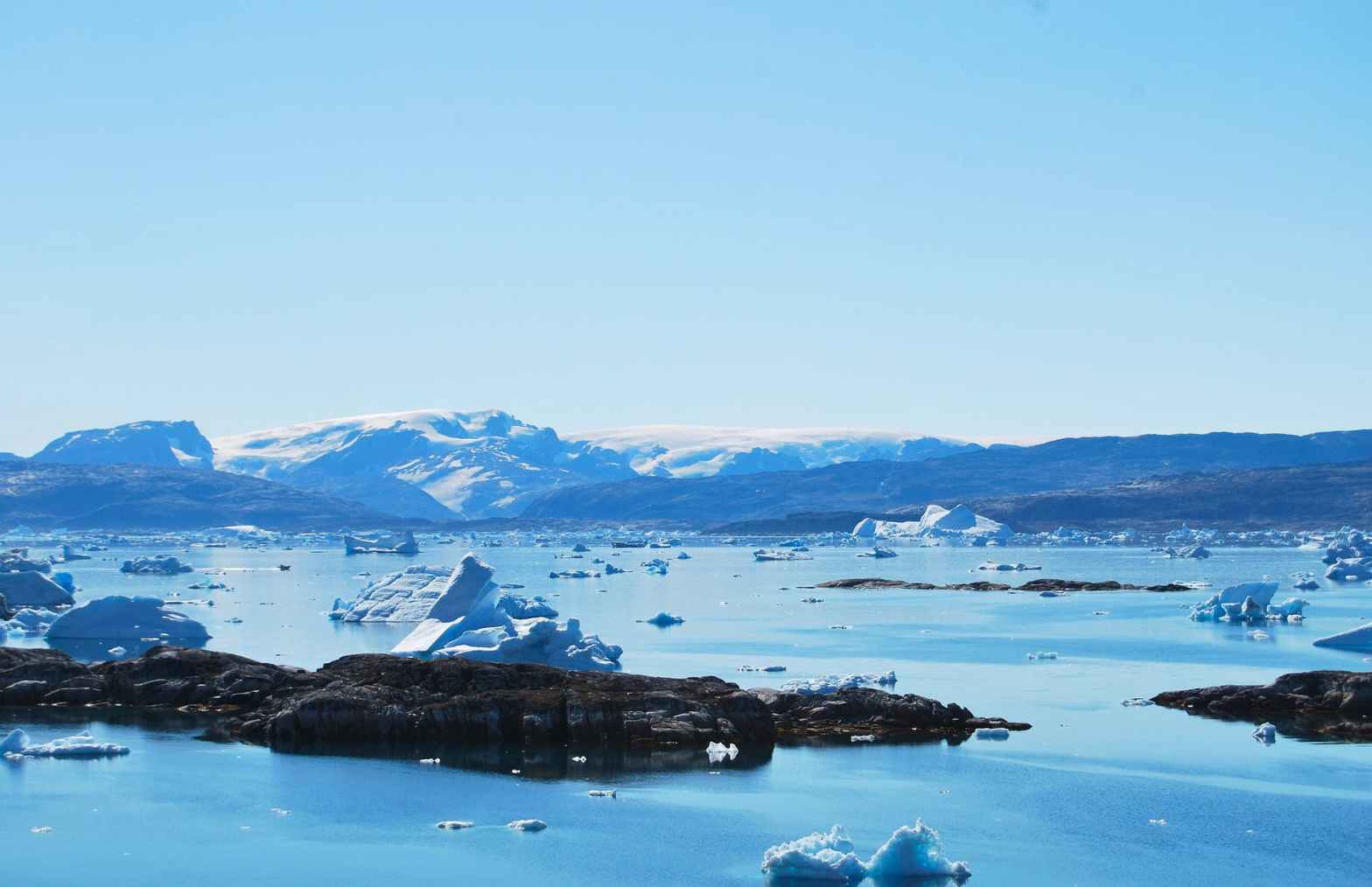
Melting glaciers, fires that more and more often happen worldwide, unbelievable heat waves, just to mention some major events, could really cause eco-anxiety.

The dire effects of climate change are hard to miss, and they instil fear in many people who are worried about the future of the Earth and obviously of the human kind.

If these fears sound familiar to you, you are not the only one.

A recent survey, conducted by The Harris Poll on behalf of the American Psychological Association (APA), found that over two-thirds of respondents suffer at least some “eco-anxiety” and more than a quarter perceive stress.

Respondents between the ages of 18 and 34, who are likely thinking about what the meaning to inherit the Earth on the brink of environmental collapse, were more likely to say they were concerned about climate change, and actually nearly half said the anxiety affects their life every day.

The online survey, which involved 2,017 adults in the United States, covered ecological anxiety and changing habits to reduce the impact on the climate.

The survey results were weighted to reflect the national adult population, taking into account factors such as age, sex, education, region, family income, and ethnicity. 60% of respondents said they had made changes to their behaviour.

The most popular, adopted by over three-quarters of participants, included reducing waste through reuse and recycling of items. In addition to improving the insulation of your home, limiting the use of services such as water, heat and electricity and consuming less in general.

Not all respondents, however, could change daily transport or eating habits. Only two-thirds said they had or would do things like carpool, walk, cycle, eat less red meat, or become vegetarians or vegans.

People who suffered from ecological anxiety were much more likely to feel motivated to change their behaviour than those who didn’t.

While climate change anxiety may seem demoralizing, there are practical ways to manage this stress. It is especially important to gain control because anxiety can increase psychological distress.

woman sitting on wooden planks
Photo by Keenan Constance on Pexels.com

Here are 4 tips on how to deal with eco-anxiety:

Finding concrete ways to make a difference

The APA survey found out that half of adults did not know where to start to combat climate change. While it is true that governments and the private sector have the power to make the most radical changes, every citizen can change their habits. Eating less red meat, for example, can reduce carbon emissions. Participating in strikes and protests, such as those held by Greta Thunberg’s Fridays for Future, draws attention to the issue and helps get others to act. Asking local politicians to do more on climate change is also a good rule of thumb.

Re-framing negative thoughts

Overall, research shows that re-framing negative thoughts can help relieve stress, anxiety, and depression. If apocalyptic thoughts keep creeping into your mind, or even prevent you from making plans, it can be helpful to focus your attention on the present.

Addressing all the stressors

It is important to think about climate change-related stress as part of overall mental health. You may also experience financial, relationship, professional or physical stress, which can alter feelings about climate change and vice versa. It is essential to analyse the other stressors as well and, if necessary, seek the help of a professional, like a coach or a psychologist.

Building your resilience

Greater resilience can help resist eco-anxiety. You could increase your resilience by developing a close network of friends and family. Strong social and emotional support is linked to well-being, material aid during times of adversity, and lower rates of psychological distress following a disaster.

Do you think you suffer from eco-anxiety?

art abstract typography business
Photo by Ann H on Pexels.com

Bee Beep or the Paradox of Tranquillity

In the middle of the desert, a somewhat stupid coyote runs after a very clever bird. The two animals go at high speed.

Suddenly, the bird stops in front of a precipice. The coyote, on the other hand, continues to run without looking until it realizes it is running in the air.

This scene is a classic of Bee Beep and the coyote.

Questa immagine ha l'attributo alt vuoto; il nome del file è Plymouth_%286787874235%29.jpg

But it is also the perfect illustration of a very serious economic theory: the hypothesis of financial instability.

According to Hyman Minsky, all periods of economic prosperity contain the elements of a future crisis. Like what? It is simple. When all goes well, economic agents (households, businesses, the State) are trustful and borrow money to carry out projects, invest, and develop activities.

In this good environment, investors risk more; banks lend money more easily, without paying too much attention to the danger of not being repaid. Minsky calls this the “paradox of tranquillity”.

However, at some point, the whole economy lives on credit. It then happens that other, more worrying phenomena arise: unemployment, slowdown in activities, lower income, and difficulty in repaying. Despite this, economic agents continue to behave as if nothing had happened. Just like when the poor coyote runs in the air!

Some bad news are enough to trigger the “Minsky moment“: everyone wakes up suddenly and gets scared. We realize that risks can no longer be taken, loans cannot be repaid, and banks stop lending money.

It is the general crisis: the coyote is too busy to realize it is about to fall on deaf ears. And it is too late to avoid to fall. The same happens in the real world.

And what about you, has it ever happen to you to live a Minsky moment?

Di شہاب – Opera propria, CC BY-SA 4.0, https://commons.wikimedia.org/w/index.php?curid=44752971

Walking on Stilts

1980, Quebec City. People rush to meet three exhausted travellers, who have just walked 90 kilometres in 22 hours…on stilts!

They had left for this trip to be noticed and raise funds. Their goal was setting up their own circus company, but not just like the others.

At the time, circus companies still followed the main rules established at the beginning of the twentieth century by the showman Phineas Barnum. A show was to include trained animals, stellar acrobats, clowns for children.

In the 1980s, hundreds of circus companies competed fiercely to attract an increasingly rare audience. Yes, things have changed: the circus is no longer popular compared to the cinema or the television.

Result: circuses earn less and less money.

Our young waders say it is time to reinvent the circus, thus changing the business model.

Photo by Alejandro Contreras on Unsplash

Thanks to their genius, the three friends got their first funding and launched their project: the Cirque du Soleil.

Pets and animals? That’s enough! We don’t want to see them in cages any more, and it costs too much to keep them healthy. The stellar acrobats? Okay, long live to young talents, unknown and motivated. Clowns? We keep the principle but let them do things that make adults laugh too. The sand track and the badly heated tent? Never again, the Cirque du Soleil offers comfortable space and beautiful decorations.

And it works! The new model finds their audience and it is known all over the world. Some of the founding waders even become billionaires.

Now, however, with the Covid-19 crisis, the management of Cirque du Soleil has filed for bankruptcy protection at the end of June. With bankruptcy, Cirque du Soleil aims to restructure its debt with assistance from the Canadian government and private equity firms, to be able to return enchanting their millions of fans around the world with their acrobatic shows.

Would you like to wish to Cirque du Soleil a fast recovery from their debt situation?

Photo By Rob Laughter on Unsplash

Exchange of Things: I Give Something to You, You Give Something to Me

Summer 1959, Moscow. During an official meeting, the head of the Soviet Union, Nikita Khrushchev, drinks a Pepsi Cola. Yes, victory! A member of the meeting discreetly welcomes.

The happy man is a representative of the famous American brand of drinks, Donald Kendall. That evening, Kendall had one goal: to convince the Russians to sell their drink in that immense country.

But Kendall shouted victory too early. If Khrushchev likes Pepsi, we are still in the times of the “cold war”. We don’t really talk about consuming a product from capitalist America!

But a few years later, when relations between the two countries improve, Pepsi tries again. And this time the Russians also see an interest in them because they can sell vodka to the Americans.

The deal can only be done without using the currency: Russia rejects the dollars of the American capitalists and cannot bring out the rubles from the country.

Then we return to the oldest form of exchange: bartering. The Russians authorize Americans to sell their drink on their soil in exchange for selling vodka on American soil.

This Pepsi exchange for vodka has continued for years, but in 1979 the US no longer wants to exchange Pepsi for vodka.

So Pepsi finds an alternative. Instead of regulating trade in vodka, the Russians will be able to pay with their old warships. Pepsi thus resells the old scrap metal to make a good profit.

Photo by Nick Jio on Unsplash

What do you think about it? Have you ever exchanged items with your friends? Would you like to do it, like when you were a child and you exchanged stickers?

Do you know that there are Local Exchange Trading Systems (LETS) where you can trade not only things but also services?

In times of crisis, it would be good to start applying new economic models, like the sharing economy, where individuals can hire out things like their cars, homes and time to others in a peer-to-peer modality. We exchanged our home for vacation for many years through a website called Home Based Holidays, and on the Web you can find many more. No worries about your belongings: they come to you place, but you go to theirs!

Once, at a second hand market I bought a sweater made by a famous French brand for 2 euros. I was astonished and the lady told me: What I don’t like any longer, you may like it.

Actually this is the principle: instead of buying things that we maybe use only once, or we get tired of soon, like children with their toys, we could start exchanging them.

It will be a step towards a more sustainable economy, that will bring us some benefits like reducing negative environmental impacts by decreasing the amount of goods needed to be produced, and cutting down on industry pollution. It will also increase recycling items and grant access to people who can’t afford buying certain types of goods or use them only from time to time.

All this is also in the perspective of the degrowth theory, that will let us go towards strengthening our belonging to our local community.

By the way, I have been using that sweater since then!

Photo by Norwood Themes on Unsplash