Choosing Happiness: Nine Things to Let Go for a Fulfilling New Year

In the pursuit of happiness, we often find ourselves entangled in the complexities of life, overlooking the simplicity of joy that’s right in front of us. They say happiness is a choice, but sometimes we complicate it to the point of missing it altogether. So, what can we do to embrace happiness and make it a more significant part of our lives? Here are nine things to let go of as we kick off the new year, paving the way for a more fulfilling and content existence.

  1. Release Anger:
    • Anger consumes valuable time and energy, taking away from moments that could be better spent. Did you know that recovering from just a minute of anger can take up to an hour?
  2. Surrender Control Illusion:
    • Control is but an illusion in a world that often operates beyond our influence. Accepting the uncontrollable aspects of life frees us from unnecessary stress.
  3. Ditch Approval Seeking:
    • Worrying about others’ opinions is a futile exercise. Embracing authenticity attracts genuine connections. Remember, you can’t please everyone, and that’s perfectly okay.
  4. Strive for Personal Growth:
    • Be the best version of yourself, naturally drawing like-minded people into your life.
  5. Bid Farewell to the Past:
    • Dwelling on the past inhibits present and future growth. Learn from past experiences without letting them dictate your current state.
  6. Mindful Spending:
    • Acquire fewer material possessions; they don’t equate to happiness but can deplete your resources. A simpler life often leads to greater happiness.
  7. Abandon Gossip:
    • Gossiping breeds negativity. Remember, those who gossip with you today might gossip about you tomorrow.
  8. Limit Worries:
    • Excessive worry invests time and energy in hypothetical scenarios. Trust in life’s journey, and let go of unnecessary worry.
  9. Avoid Taking Things Personally:
    • Recognize that people are immersed in their own lives. Most reactions have little to do with you. Let go of unnecessary concerns about what others think.

Are you ready to embrace a happier and more fulfilled life this year? Letting go of these nine things is a powerful step toward choosing happiness. Remember that simplicity and contentment often lie in the release of what no longer serves us. Kick off the year with a mindset geared towards a more joyful and gratifying existence.

Thank you for reading. You can find more about happiness on my blog. You can also think about subscribing so as not to miss out on any new posts!

Is the Ego a Friend?

What is the ego? Is it really negative? How to keep it under control? Is the ego a friend?

The word ego comes from the Latin and means “I”. It is difficult to define it because it is not visible and it manifests mainly in a negative way.  It is easier to recognize the ego in others than in oneself.

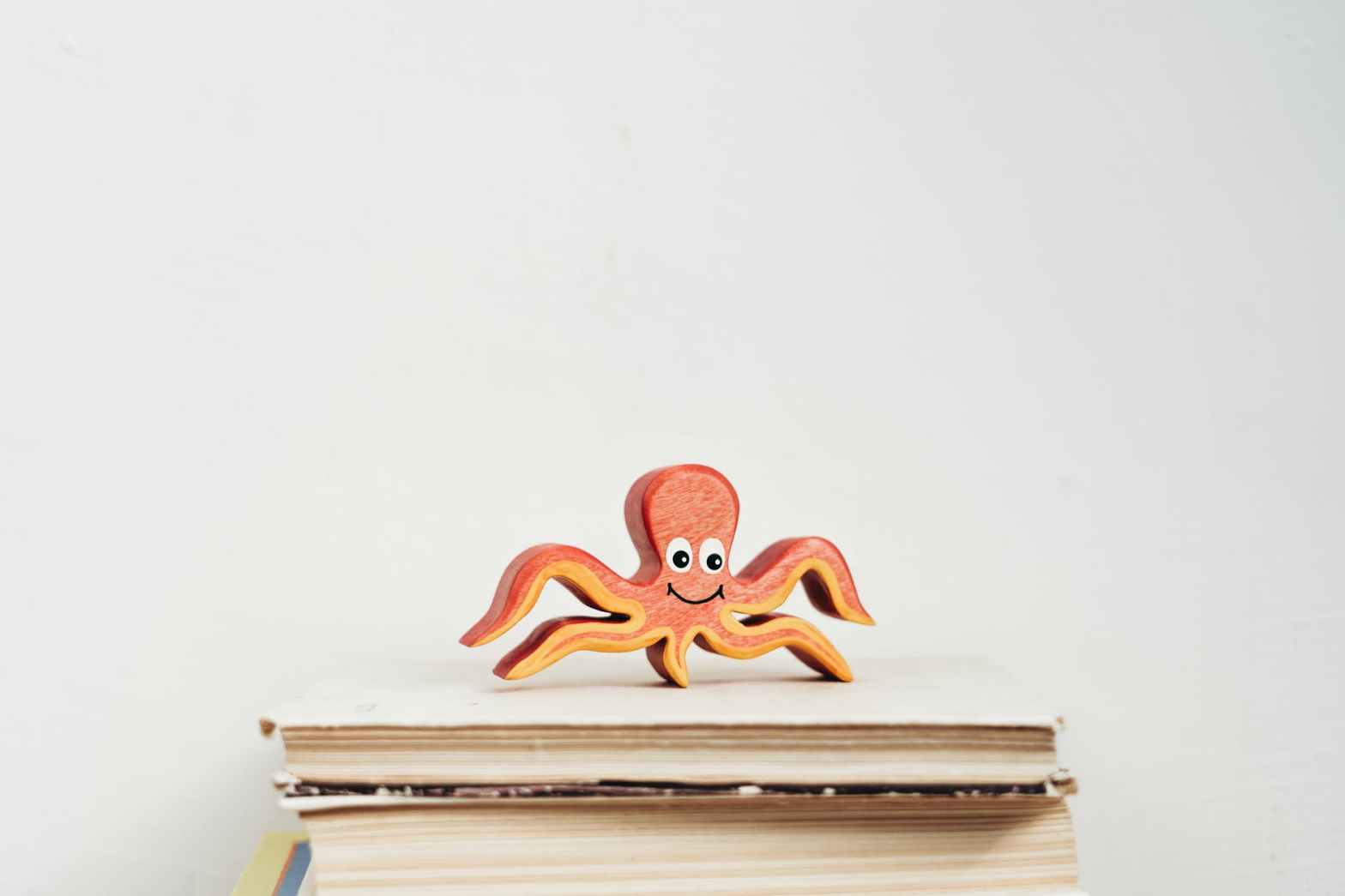
Sometimes, the ego is represented with animals. The octopus, the bloodsucker, any parasite, the wolf or the tiger. Or it is also represented with objects. Mask, dress, glasses, onion, egg or even serious illnesses.

It is a mystery and a paradox at the same time. The ego is us but not really us. It is a false self, or a pseudo self. It is not the personality but a part of the personality. It is not our true consciousness, but an altered, partial and non-objective consciousness. It does not represent a real need, but it wants to make us look perfect in a certain way, it wants to control everything and always be right. It is not real, but an illusion, an empty shell, which is based on fear, separation, loneliness and opposition. The ego can be a defensive or an aggressive reaction. In reality, the ego tries to protect us from showing our vulnerabilities.

Is the ego negative?

For Westerners, the ego is a necessary evil with which we must live, it is not so serious, indeed sometimes it can be useful or even positive. In fact, Western civilization since 1623 is based on the ego thanks to Descartes.

On the contrary, for spiritual masters, most of them Orientals, the ego has nothing positive, since it is the opposite of love, it represents our dark part, our Mr. Hyde, our shadow zone.

The ego is a false friend that makes us lack authenticity, honesty, and humanity. This is why certain traits of our character might be selfishness, self-centredness, narcissism, individualism, greed, possessiveness, materialism, avarice, susceptibility, and even paranoia. The ego is responsible for almost all of our negative emotions, especially hatred. It pushes us to defend ourselves, to justify ourselves, to rationalize, to deny the evidence, and generates childish behaviours. Escape, rejection, negative or destructive communication (like haters). It can also be responsible for toxic relationships, manipulation, harassment, and violence in a broad sense.

Why would we keep the ego under control?

On an individual level, keeping the ego under control would mean being happier, having better physical and mental health, more self-confidence, connecting better with others, living in harmony, having happier relationships, more energy, and being even more efficient.

On a social level, keeping it under control would help society overcome racism, sexism, nationalism, domination, oppression, exploitation, delinquency and even war! It would allow us to live better together, to develop a sense of brotherhood, equality, cohesion, solidarity, understanding and peace.

How to keep the ego under control?

It is impossible to eliminate the ego, because it is part of our personality. What we can do is trying to control it.

At the social level there are institutions such as the family and school that are delegated to this role. Other institutions, such as the police and justice, try to correct it.

We can try to transform the ego into our ally with meditation techniques, practising yoga, or using psychotherapeutic techniques that can help us to be more attentive, conscious, and to become more collaborative. We will be able to learn to listen, to help, to forgive, to let go, to create, to laugh and make people laugh, and of course to love.

I would like to conclude with a short story, The Story of the Two Wolves.

“One evening, an old Indian grandfather tells his grandson the story of the two wolves.

In each of us coexist two wolves, constantly fighting. One is bad, angry, jealous, sad, greedy, arrogant, liar, feels superior to the other wolf.

The other wolf is kind, empathetic, generous, sincere, compassionate, cheerful, peaceful, serene, hopeful, and humble.

The grandson asks his grandfather: “Who wins between the two wolves?”

Grandpa simply answers, “The one you feed will be the winner.”

Which wolf do you give priority in your life?

white wolf on brown dried leaves
Wolves – Photo by Shelby Waltz on Pexels.com

How to Identify a Narcissistic Personality

The common definition of narcissism is the pursuit of gratification from vanity or egotistic admiration of one’s idealised self-image and attributes.

Narcissists are people who believe be unique, superior to others and masters of a wonderful existence that no one can imagine. As a result, they may be bully and arrogant. They need constant admiration and always want to be the best. Therefore, they may become extremely competitive. In their view, they are the only ones capable of achieving results in life.

They also think their experience is more valuable than that of others and feel they need to set an example for those around them. They do not do it to give advice but to be at the centre of the attention. Because of that, their social relationships deteriorate fast and they need new people to admire them, even if, over time, they will be left alone.

The world of narcissists is small, it is limited to what they think and do. In their their mind there are echoes of their thoughts. They do not listen to others because they don’t care about anything. Their greed for admiration leads them to believe that there are no ordinary events happening in their life, their existence is just wonderful and successful.

Photo by NASA on Unsplash

Envy prevails in their personal and social relationships, both what they feel about others’ success and what they think other people feel about their fantastic life.

Caution is the norm if a narcissist approaches you, because they want to excel and they will not hesitate to crush you. They are the worst acquaintances you can have because their lack of empathy makes them unable to help and support.

They live in a parallel reality, in a dream world where they want to exert power over others. Whatever they do is addressed to achieve success at any costs.

They have a vivid imagination that leads them to lie often, and they may tell amazing things they have done, even though they are difficult to prove. Remember that they cannot fail, failure does not belong to their world.

Narcissists need to hide their flaws and turn their insecurity into a false security. In order not to show their vulnerability, they will do anything necessary, such as talking excessively, changing the subject in order to shift attention to them, and belittle others by pointing out their flaws.

Narcissists are control freaks and try to bring every situation to their own ground, where they feel safe. If they are managers, they will micromanage.

They must constantly feel euphoria not to show their discomfort, because the narcissistic person do not want to feel frustrated. A common way to avoid frustration is addiction, whether it is shopping, alcohol, drugs, sports, sex, or gambling.

Another characteristic of narcissists is that they tend to take advantage of others. For example, they will partner with well-positioned people to earn their trust and use them to help them grow. They will also take credits of others’ success to advance their career or social ladder.

Narcissists master the subtle art of manipulation. They are always on an alert mode, ready to redirect those who try to say or do something they do not like, or that does not allow them to show their greatness and power in front of others.

If after reading this article you think you are a narcissist, don’t worry as a true narcissist will never identify with these traits. For a narcissistic person, aspirations are never excessive. If they are the centre of attention it is because they think they deserve it. It is ridiculous for these people to try to identify themselves in any profile. The narcissist is unique, in no way you can compete with him or her.

Have you ever dealt with a narcissist?

Photo by Marina Lakotka on Unsplash

Micromanagement

“She asked me to put her in copy to all emails, even the most trivial ones. Sometimes she would knock on my office door to ask me if I was okay because I had spent a lot of time in the bathroom, when actually only five minutes have passed. She checked when I walked in and when I left my office to see how long I had been way. The pressure she exerted by checking every detail of my work was suffocating, more than exaggerated and above all counterproductive.”

This is just a testimony from an employee who used to work with a micro-manager. What exactly is micromanagement? It is a managerial practice through which the manager exercises exhaustive control of the actions, tasks, functions and responsibilities of the people subordinated to him / her at a hierarchical level.

This type of managers may also ask to see an email before it is sent, and they may want to be informed of all the decisions that employees need to take, because they think that their staff cannot take decisions. A micromanager combines impatience and distrust with absolute control of the tasks assigned to their subordinates.

The situation look like the schemes used by the “Thought Police” to scrupulously monitor every moment of the characters in George Orwell’s “1984” novel. As in that book, the consequences of this practice of strict control on employees are devastating. The boss gains in peace of mind but staff suffer from it and are also less productive. Actually, this system creates bottlenecks that cause a slowdown in all activities. This type of manager wants to earn a good reputation and prevent a supervisor from blaming them that something was wrongly done.

Photo by Michal Jakubowski on Unsplash

But the worst part falls on the employees. Many times they do not know how to give priority, because the boss constantly changes their priorities based on the urgency that arrives, or because a superior asks him or her or it is the market requiring that. Employees lose creativity and self-esteem. A culture of fear is established, where everything is subject to the orders of the superior. This can lead to sickness absenteeism.

Apart from real psychosomatic diseases that can arise, psychological situations can also develop for which the person feels worthless, becomes smaller and smaller until they doubt their abilities. You begin to ask yourself: “Am I capable of doing it? ”,“ Am I in the wrong job? ”,“ Why do they control me like this, what have I done wrong? ”. And it can also happen that you quit your job, even if you have a good salary. When a situation cannot be changed or accepted, you have to leave it, and, in this case, you leave your job.

It is important to know that people do not quit jobs, they leave bosses.

But why do managers fall into this trap?

If micromanagement spoils the work environment, employees’ health, and it is harmful even to bosses who lose productivity and may lose also staff, why can’t this total and constant control be avoided? The bosses don’t have enough work to do?

Let’s see the possible causes.

First, managers themselves suffer pressure from the environment, be it from their own bosses, shareholders, markets or competition.

Second, incompetence. Either managers feel unsecure because their staff perform an excellent job compared to their own, or the employees are not suitable for that type of job.

The third cause is clear and straightforward: the boss’s obsessive personality making them unable to organize and manage the work.

Whatever the cause is, it is necessary to analyse what is happening in order to put an end to the situation as soon as possible. First, you should go to the human resources of your company. I have worked in human resources for over 10 years and have seen a lot of micromanagement.

As an alternative, you could turn to your superior and ask them to implement one or more techniques, perhaps with the help of a coach. One technique could be that of the traffic light. Together with the boss, you define the admissible and acceptable control limits, that are not to be exceeded. If these limits should be overcome, some signals will be sent to the manager. When the manager receives them, they identify their behaviour and try to control it.

Another strategy is to define the profile of the boss and of each team members, analysing their personal, professional and communication style and characteristics. Once this “x-ray” is completed, the boss shall answer the following questions:

1. What leadership style they use with each employee;

2. What leadership style each employee would need;

3. Which leadership model they would like to use with the each employee.

By doing so, the boss can realize that the type of leadership they are using is in line with that person’s role, but it is not what that employee, due to his or her personality, needs. By adopting this paradigm shift, the boss begins to think not from their own point of view, but from that of the subordinate. While this strategy may sound like science fiction, with time and a willingness to change, success is assured.

Have you ever worked under the supervision of a micro-manager?

Photo by Erwan Hesry on Unsplash

9 Things to Let Go to Be Happier

It is said that being happy is a choice. But we have a tendency to complicate our lives to the point of not recognising it when we have it in front of our eyes.

What could we do to be happier?

Here are nine things we should let go to find more happiness in our lives:

1. Give up anger. Anger steals time and precious energy that we could use more usefully. Did you know that for a minute of anger you need an hour to recover?

2. Let go of things you can’t control. Control is an illusion. We live in a world that is out of control, we have to accept the fact that we cannot control everything.

3. Stop worrying about what others think of you. This also makes us waste time and energy. We could never please everyone, there will always be someone who doesn’t like us. It doesn’t matter what other people think of us. .

4. Try to be the best version of yourselves, to spontaneously attract people who are related to you.

5. Stop living in the past. We all have gone through difficult times. But we survived. Try to silence that little voice that tells you: “I should have done this”, “I shouldn’t have done that”, “if I went back I would change things”. The past is past and does not come back, so let’s accept it as it is. We can learn many lessons from the past that will help us manage the present and lay the foundations for the future.

6. Try to buy fewer useless things because they don’t make you happier but they empty your pockets. The less things we have, the happier we will be.

7. Stop gossiping. Those who share gossip with you today, will be the same gossiping on you tomorrow.

8. Don’t worry more than you should. Worrying means investing time and energy in something that has yet to happen. Again, let it go and try to trust life.

9. Stop taking things personally. People are just too busy thinking about their own lives to be able to think about others’ lives. The world does not turn around you. Most people’s reactions have nothing to do with you, don’t worry about it.

Are you ready to take on those tips?