Paris, 2004. A young man comes out from a building with a smile on his face. He applied for a traineeship and had just finished his interview that did not go as expected.
The young man, named Héritier, is 22 years old and came from Angola at the age of 8, running away from a civil war. He did not speak French but did everything to learn all well in school, also helped by his family and friends. After his degree, he started to look for small jobs, to contribute to the family budget.
He applied for a internship with a cleaning company. The employer, although they found that Héritier had an atypical profile, was very interested in the boy’s dynamism and the interview lasted about 5 hours!
At the end of the interview, Héritier did not get the internship but his first job contract. The company was just established and was looking for young talents like Héritier, who in short time reached the top of his career within the company.
He decided then to go further to make his dream come true. He wanted to create his own company and started up a cleaning company that would use only organic products.
Photo by Thepixelman on Pixabay
In those years, his career looked interesting to the media because it reflected a reality that was still unknown: the economical contribution produced by migrants in the country that welcomed them.
With his company, Héritier has generated a turnover of 100.000 euros during the first year, a figure that tripled over the following three years.
Héritier managed to find his way thanks to his commitment and determination to succeed.
Nostalgia protects against existential challenges, helping us cope with the present and future by evoking positive experiences and feelings from the past. This powerful emotion serves as a rearview mirror, reflecting a particular time, place, or emotion that once brought joy or comfort. Whether it’s the memory of your first love, a yellowed photograph found by chance, or an object that stirs a significant memory, nostalgia plays a crucial role in our mental well-being.
How the Internet Fuels Nostalgia
In today’s digital age, the Internet has become a key driver of nostalgia. With just one click, you can find the soundtrack of a cherished moment from your past, instantly transporting you back in time. Experts suggest that nostalgia is a complex emotion—predominantly positive—that enhances our sensitivity and helps us understand the present.
The Origin of Nostalgia
The term “nostalgia” was coined in 1680 by Johannes Hofer, a student at the University of Basel. He combined the Greek words “nóstos” (homecoming) and “algia” (suffering) to describe the deep longing Swiss soldiers felt to return home from battle. Today, we understand nostalgia as a positive and stimulating emotion, distinct from melancholy, which does not cause illness symptoms but helps combat them.
Nostalgia as a Source of Resilience and Wellbeing
Research from the University of Southampton in the UK highlights nostalgia as a vital mental health component. It motivates us, boosts our self-esteem, and serves as a reservoir of emotions that we can consciously and unconsciously access. These positive memories reinforce feelings from our past, aiding us in coping with current and future challenges.
While nostalgia allows us to recall the past, it does not bring back what we have lost. Instead, it helps us better manage the life we are living. By tapping into nostalgic memories, we can find comfort and strength, making it an essential tool for resilience and well-being.
Does Nostalgia Help You Manage Your Life?
Reflecting on your own experiences, do you find that nostalgia helps you manage your life? Share your thoughts and let me know how nostalgia influences your mental health and daily coping strategies.
Thank you for reading! Please sign up for my blog crisbiecoach so you don’t miss out on any posts and also for Wise&Shine an incredible online magazine!
In quantum physics, the concept of vibrational frequency holds a profound significance, suggesting that everything in the universe is energy, vibrating at distinct frequencies. Here, I delve into seven factors, inspired by quantum physics, that influence our vibrational frequencies and ultimately shape our reality.
1. Thoughts:
At the core of our vibrational frequency lie our thoughts. Each thought we harbor emits a frequency into the universe, which then returns to us. Negative thoughts breed negative frequencies, attracting discouragement, sadness, anger, and fear. It’s imperative to nurture positive thoughts, as they emit vibrations that align with abundance and positivity.
2. Company:
The company we keep significantly impacts our vibrational frequency. Surrounding ourselves with individuals radiating happiness, positivity, and determination elevates our own vibration. Conversely, associating with pessimists and complainers can dampen our frequency, hindering the manifestation of our desires.
3. Music:
Music, a powerful medium, can sway our vibrational frequency. Paying heed to lyrics laden with themes of despair, betrayal, and sorrow can lower our vibration. Choosing melodies that uplift and inspire us is vital, as they resonate with frequencies conducive to attracting positivity into our lives.
4. Visual Influence:
What we watch influences our vibrational frequency profoundly. Consuming content saturated with negativity can trick our brains into perceiving it as reality, thus affecting our vibration. Opting for content that uplifts and inspires fosters a higher vibrational state.
5. Environment:
The state of our surroundings directly impacts our vibrational frequency. A disorganized and cluttered environment can weigh down our vibration. By tidying and organizing our spaces, we signal to the universe our readiness to receive abundance and positivity.
6. Spoken Word:
Our words hold immense power in shaping our vibrational frequency. Engaging in gossip, complaints, and negativity lowers our vibration. Choosing to speak words of encouragement, positivity, and gratitude elevates our frequency, aligning us with the universe’s abundance.
7. Gratitude:
Cultivating an attitude of gratitude acts as a catalyst for raising our vibrational frequency. Expressing gratitude for both the good and seemingly challenging experiences in our lives opens the floodgates for abundance and positivity to flow freely.
Incorporating these insights from quantum physics into our daily lives can lead to a profound shift in our vibrational frequency, shaping a reality abundant with positivity, fulfillment, and joy. Let us embark on this journey of self-discovery and conscious living, harnessing the power of our vibrational frequency to manifest our deepest desires and aspirations.
Thank you for reading! Please sign up for my blog crisbiecoach so you don’t miss out on any posts.
In the shade of cherry blossoms, there are no more strangers.
Kobayashi Issa, Poet
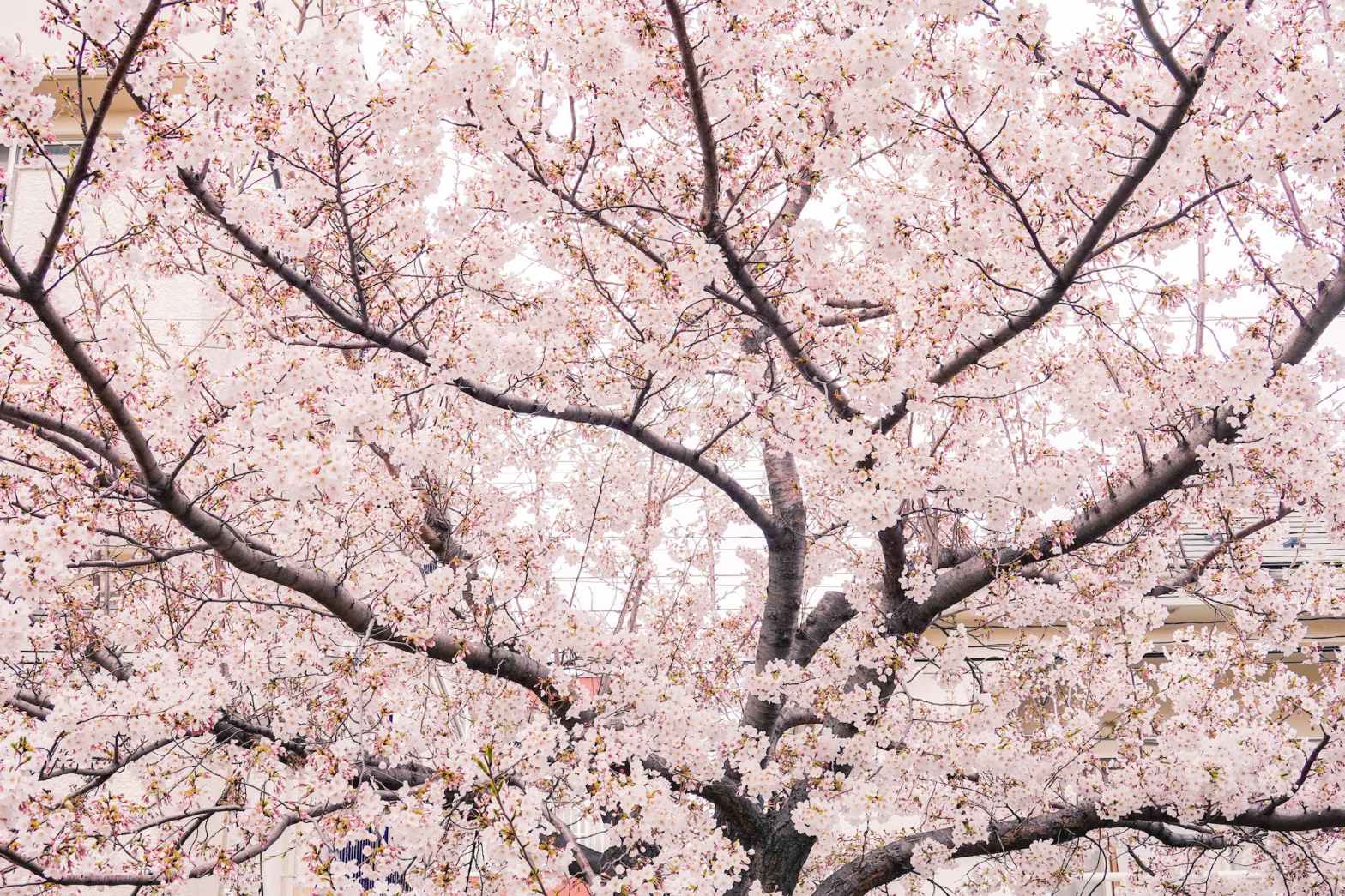
Have you ever heard of the beautifully simple Japanese tradition of Hanami, also known as “flower contemplation”, better known as “cherry blossom contemplation”? It is an ancient practice of contemplating the flowers.
Life is beautiful yet fleeting. This is the feeling behind the Japanese celebration of Hanami. Every spring, friends and families gather to organize picnics and parties under the beautiful cherry blossoms. Otherwise known as Sakura, the flowers appear for a very short period between March and May, embellishing the Japanese landscape with their delicately fragrant presence.
Sakura bloom for only two weeks before the wind spreads them in nature, so the flowers symbolize the beauty and ephemerality of life. As we admire these beautiful flowers, we remind ourselves that every moment is a gift and should be celebrated as such. In this way, we learn to let our lives flourish and to appreciate every moment of joy, love and wonder that the wind brings us.
“Sa”, which means “god” (神), refers to the god of the rice fields. “Kura” represents the stand used to honor a god with offerings of food and saké.
THE HISTORY OF SAKURA
The Hanami tradition is centuries old, with references dating back between 710 and 794, and it is inspired by the Chinese custom of admiring plum blossoms. Sakura were worshipped as gods in Japan, and when the cherry blossoms bloomed, it was a sign that the god had come down from the mountain and it was time to plant rice. Emperor Saga (Heian period from 794 to 1185) was the first to throw a real party on that occasion – with food, drink, music, and poems – after having admired a cherry tree at Jishu Shrine located in Kiyomizu Temple.
HANAMI IN MODERN TIMES
This activity is so popular – and has been for so long – that the Japan Meteorological Agency is even involved in forecasting tree blooms. Cherry blossom contemplation is one of the best experiences in Japan, but it can also be practiced in many other countries. There are famous cherry blossom parks in the United States, Canada, South Korea, Brazil, Europe, Taiwan and China.
ABOUT CHERRY BLOSSOMS
There are nine types of cherry trees in Japan and more than 100 varieties according to the Japan Cherry Blossom Association.
In addition, there are 200 other cultivated varieties.
Their colors range from white to dark pink, and the size and number of petals can also vary.
Some trees can reach up to 20 meters tall.
A tree can also be a national monument. The Miharu Takizakura in Miharu City is believed to be more than a thousand years old and 13.5 meters high and about 25 meters wide.
If you want to be happy or happy again, here are five tips you should remember and use whenever you are surrounded by people spreading negative energy.
1. Find the source – If you want to protect yourself from negative energy, I would suggest you first locate the cause. Don’t be afraid to confront it then. In the end, you will be able to free yourself from all negative influences.
2. Focus on the positive – If you focus on a certain positive thought to help you eliminate negative energy, rather than focusing on the unpleasant things, you will be able to tune into the positive energy and use it to your advantage.
3. You have the power to find the right solution – No matter what happens in your life, you will always be able to improve things. Believe in your potential and power to become happy and satisfied with your life. This way, you will understand that you are not a helpless victim.
4. Meeting positive people – The best way to avoid negativity is to meet positive people. It’s important that you have a friend who can support you, be there for you, and help you with life’s tough challenges. If you don’t want to go out, you can always suggest other ideas.
5. Negative energy isn’t always addressed to you – You might think that all negativity is targeting you directly. But this is not true. Negative energy is more about the emotional condition of others. In other words, it doesn’t depend on you and it is not always addressed to you.
Becoming older means also becoming wiser. You realize what really matters in your life, what you privilege and who you choose to spend your time with.
Priority goes to what really matters in your life
During your youth, you felt almost always excited and you believed that the world was in your hands. You thought you had all the time ahead to realize and live your dreams. Becoming older makes you understand that time is limited and therefore precious.
Because of that, you want to enjoy every minute and every second with what is essential for you. Going out in the evening and getting home very late (or also very early the day after), nights spent drinking, dancing until your feet would hurt, no longer interest you. What matters is enjoying the time spent with your family, dedicating them qualitative time, that is time of exchange, time that counts and that is not forgotten. You realize that time flies, so you want to favour the present moment. Looking at photos together, savouring the small magical moments of hugs, or playing with your children are moments of unforgettable happiness.
Avoiding self-righteous people
Hypocrisy is no longer part of your life as an adult (at least it should be). Sincerity is what you are looking for. Instead of uttering an uninteresting sentence to someone you barely know or don’t particularly like, you’d rather be sincere, kind but sincere. At the same time, you will be attracted to people who are honest in their gestures, words and actions; people who bring a positive note to your life.
Respecting the lives of others.
Time and experience are great teachers when it comes to knowing oneself and the others. Wisdom teaches you to turn away from the problems and conflicts that don’t concern you, so as to avoid getting involved with bad energy. Therefore, respecting the lives of others becomes a fundamental principle.
Restricting your circle of friends
By ageing, the idea of making new friends doesn’t interest you any longer. Your priorities are more related to your family. You seek good friends rather than many friends. You try to build healthy relationships and you want to avoid toxic people.
Becoming older means crossing many paths with pitfalls. However, the difficulties that life presented you, allowed you to become stronger, more determined and wiser.
You have learned to know the difference between a person who is harmful to your well-being and a person full of positive energy who brings you joy and good mood.
Our mind is fascinating. It has its own rhythm, unique perceptions and we are not aware of all its possibilities yet. Waves of thought run through our mind but I must say that unfortunately most of them are negative. However, you need to know that there is a way out to go around your negative inner monologue: positive affirmations.
I read about the importance of positive affirmations in one book of Louise Hay.
Affirmations are short positive sentences that motivate you, inspire you and encourage you to take action to achieve your goals. To make them work you have to repeat these phrases several times throughout the day, to make them stay etched in your unconscious mind.
Repetition can change your habits, behaviour, and point of view. As you may know, words are powerful. Regular repetition, aloud, but also within you, turns into thoughts that create your reality. Positive thoughts have the power to overcome internal negative speech. You may find it odd to say phrases like “I choose to be happy” in front of a mirror, but I assure you that these statements really help you reinforce the good vibes. Regular repetition of affirmations becomes your truth.
A statement firmly and confidently declares a positive thought and transforms it as a truth. By integrating these positive statements into your daily routine, you help your mind prioritize positivity.
According to some researchers, affirmations can help you work better. Spending a few minutes reflecting on your abilities before a stressful meeting, for example, can calm your nerves, increase your confidence, and improve your chances of success. Affirmations can also help you relieve stress.
Here are some of the benefits you can get from practising affirmations regularly:
Become happier. Affirmations allow you to recognize the things that keep you from being happy, because you focus on what you really want in life. In addition, your mood will get better.
See things in perspective. We often take the simplest things for granted. Using affirmations allows you to remind yourself that the simplest things are the most important. For example, if you are in good health, by using the statement “I am in good health” you can focus on this point and appreciate it more.
Reduce negative thoughts. Since most of our thoughts are unconscious (and negative), positive affirmations allow you to become more aware of your thought patterns and feelings, thereby reducing the risk of creating a recurring negative thought.
To get the best out of affirmation practice, you need to observe these three basic rules:
Plan repetition during specific moments throughout the day. Good times could be in the morning as soon as you get up or in the evening before going to bed. Each of us will find the best time to devote to repeating affirmations.
Use the verb in the present, because you want results now and not in the future. Furthermore, the brain only understands the present tense.
Do not use the negative form (for instance, do not say “I don’t take into account judgements from the others” but “judgements from the others are irrelevant to me”).
There are no strict rules on the frequency of repetitions. Nevertheless, according to psychotherapist Ronald Alexander of the Open Mind Training Institute, the statements can be repeated three to five times a day to reinforce the positive effect.
Do you like to write? Perfect! Writing your affirmations in a journal and reading them in front of a mirror is an effective way to make them more powerful.
Here are some affirmations you could practice if you want to try if they work for you too:·
I believe in myself and I trust my abilities.
I am the creator of my thoughts.
I am a successful person.
I choose to be happy.
An amazing family and very good friends surround me.
I am strong and courageous.
When I go to bed, everything is as it has to be and I fall asleep peacefully.
I found this beautiful story about a Buddha statue and would like you to share it with you. I do not know if it is true or not but I think it is very meaningful.
The mud Buddha statue was nearly three meters high. For generations it had been considered sacred by the locals. One day, due to the growth of the city, they decided to move it to a more appropriate place. This delicate operation was entrusted to a recognized monk, who, after careful planning, began the move. His luck was so bad that, in moving the statue, it slipped and fell, breaking into several parts.
Mortified, the monk and his collaborators decided to spend the night pondering the possible solutions. They were long and dark hours. The monk, instead of despairing, aimed to find a way out. Suddenly, observing the shattered sculpture, he noticed that the light from his candle was reflected through the cracks in the statue. He thought it was the raindrops, as it had rained in the afternoon. He approached the crack and noticed that there was something under the mud, but was not sure what it was.
He consulted with his colleagues and decided to take a risk that seemed crazy: he asked for a hammer and began to break the mud, discovering that under it, a nearly three meters high gold Buddha was hidden.
For centuries, this beautiful treasure had been covered under ordinary mud. They carried out a research and found out that the village was about to be attacked by bandits. Therefore, to protect their treasure, the inhabitants covered it with mud to make it seem common. The people were attacked and pillaged, but the bandits ignored the Buddha. Afterward, the inhabitants thought it was best to keep hiding it under the mud.
Over time, people began to think that the Golden Buddha was a legend or an invention of the old people. Finally, everyone forgot about the real treasure because they thought that something so beautiful could not be true.
However, eventually, they discovered a real treasure!
I think that it is the same for us. You can find some treasures under the surface. Your treasures may be your ability to give, to enjoy, to thank, to laugh, to forgive, to dream big, to pass over the little things, and to value what is important in yourself and in others .
Learn to see your life through the mud and you will realize that you also are a treasure surrounded by other treasures.
I have been receiving Miguel’s emails for some time, cannot really say how long. Recently, I received this article in my mail box that perfectly matches with the purpose of my blog. Actually Miguel, also published a video, in case you prefer watching to reading. Enjoy it!
Photo by Nick Fewings on Unsplash
Humans have a natural tendency to gravitate towards negative thinking.
We could assume that tendency is there because it gave our ancestors a small survival advantage.
Those that were happy-go-lucky optimists got eaten by wolves.
Those that were pessimists and hoping for the worst didn’t get eaten as much.
So here we are today with a lizard brain primed to expect the worst.
Although there might be an evolutionary advantage to being pessimistic, living your life pestered by gloomy doomy thoughts is no fun.
The truth is today we live in a much more safe environment than hundreds of thousands of years ago.
It’s very rare for people to succumb to hungry tooth sabre tigers and such.
Yet, we live in a constant state of alert and fear triggered in part by nature only exacerbated by the news and social media.
So how do we escape negative thoughts?
Besides recreational drugs, alcohol, mindless social media binging, and meditation, I dare to propose a new way to lead happier mental lives.
You could think of this method as a thought experiment, a new mental model to deal with pessimistic thinking.
I call it the thought landscape.
Disclaimer: if you have trouble using your imagination or suffer from aphantasia, it won’t be easy to implement this approach.
The concept is quite simple to understand but tricky to master.
It goes like this:
A: There is a large number of thoughts we can have (negative, positive, neutral)
B: However, at any given instant, we can only think of one thing.
C: We can choose what we think at any given instant (focus)
D: Therefore, we can choose to substitute any current thought with any other available thought from A.
These are vast assumptions so let me elaborate a bit on each point.
A: This one everyone should agree. The number of thoughts a human can have is between 0 and Many. Many could be thousands or millions, a lot.
If you have a working brain, A should always be many. 0 is only for dead people.
B: This could be debated. However, we could safely assume that we can only hold one thought at a time. Thinking two thoughts simultaneously is not possible. I.e., you cannot think blue or black simultaneously (“Bluk” is not a colour!)
C: This could be more debatable, but If I tell you to think of a white elephant, usually you’ll think of a white elephant, not of a purple platypus. So you were able to change your thinking deliberately.
D: If the three statements above hold true, then it has to be true that we can control what we think at any given moment.
And if D is true, then it is good news for all of us!
This means that thinking negatively is, for the most part, a choice.
So, if you catch yourself stuck on negative thinking, now you know it’s because you chose to do so.
Great, and then what?
Then you can discard that thought, take a step back and look at what other thoughts are available from A.
The goal of taking this imaginary step back is to gain a new perspective.
Is to gain some altitude and contemplate which other thoughts you could choose from.
In A., we established that there could be many other thoughts you could have.
The range of available thoughts is what I call the thought landscape.
Like a physical landscape, you’ll see valleys and hills.
Photo by Claudio Testa on Unsplash
Now that you’ve momentarily elevated yourself over your thought landscape, it’s time to choose.
What other thoughts do you see that you could choose to think next?
Let me give you a concrete example of how this would play out for me.
So here I am, thinking I’m not good enough, smart enough, that people suck, that the pandemic sucks, that politicians are hypocrites, etc.
I’m feeling like shit. This is no fun. Then I realize I can choose what to think.
I take a step back and look at what other thoughts are currently available across my thought landscape.
In the beginning, it’s hard to see past a few meters because all the negative thoughts are fighting for attention, clouding my vision.
I try to rise a bit higher, past the dark fog.
I know there are other thoughts across the dark valley of shitty thoughts.
There you go… I see some light.
About 2 km away, I see a couple of green hills peeking through the clouds.
I take a closer look.
I see my family on one of them.
They love me. I feel happy to know they are alive and they love me.
I see food. Yum! I can see I have plenty of food, and I can afford more if I need to.
That makes me happy.
Another hill. Wow! I’m relatively healthy. How lucky I am! I can still walk, play sports, dance, use my body. My hands work… I can build things!
Another hill further away.
I see people in need. People whose lives I could make better. It makes me happy I could help other people. That’s important.
This exercise took only a couple of minutes, and my outlook has completely changed.
I feel gratitude. I feel alive. I feel happy.
My thought landscape is full of wonderful thoughts to choose from.
I don’t want to discriminate against negative thoughts. I just don’t want them to dictate how I feel 90% of the time.
I don’t know about you, but I don’t remember a single day of my life where I didn’t have a moment where my mind wasn’t imprisoned by negative thinking.
Negative thinking is inevitable. It’s there for our survival. We just need to learn how to keep it at bay.
The thought landscape will always offer you plenty of alternative thoughts, equally or even more valid than the negative thoughts you currently hold in your mind.
Lille, 2018, Yolande, an 85-year-old lady, lives alone. She has children and grandchildren but they live far from her. Yolande does not like living alone and she needs some help with her daily life.
At the same time, Sandrine, a young single mother who has resumed her studies as a nurse, is looking for an accommodation for her and her daughter. But rents are expensive.
Photo by Joshua Newton on Unsplash
Sifting through ads on the Internet, Sandrine sees a much lower offer than the market average. She does not know yet, but it is the announcement that Yolande made.
Thanks to an association, Yolande puts in the market her house in a so called “intergenerational and supportive rent”. With this new type of contract, a single person over 60 can share their place with someone under 30.
The renter benefits from a much lower rent than the market average. In return, they undertake to live with the elderly person and help them with their daily life.
This type of cohabitation is encouraged by the French state which even enforced it in law in 2018. The aim is to help young people find affordable housing, and making older people less lonely.
Sandrine then moves with her daughter to Yolande’s place and they recreate a real little family. Sandrine helps Yolande with the grocery shopping and cleaning the house, while Yolande sometimes looks after the little child and even picks her up from school. By doing so, she feels like a young grandmother again!
















 Crisbie Coach