Your mind will answer most questions if you learn to relax and wait for the answer.

Bringing Positive Changes in Your Life

Your mind will answer most questions if you learn to relax and wait for the answer.


Tension is who you think you should be.
Relaxation is who you are.
Chinese Proverb

Summer 1959, Moscow. During an official meeting, the head of the Soviet Union, Nikita Khrushchev, drinks a Pepsi Cola. Yes, victory! A member of the meeting discreetly welcomes.
The happy man is a representative of the famous American brand of drinks, Donald Kendall. That evening, Kendall had one goal: to convince the Russians to sell their drink in that immense country.
But Kendall shouted victory too early. If Khrushchev likes Pepsi, we are still in the times of the “cold war”. We don’t really talk about consuming a product from capitalist America!
But a few years later, when relations between the two countries improve, Pepsi tries again. And this time the Russians also see an interest in them because they can sell vodka to the Americans.
The deal can only be done without using the currency: Russia rejects the dollars of the American capitalists and cannot bring out the rubles from the country.
Then we return to the oldest form of exchange: bartering. The Russians authorize Americans to sell their drink on their soil in exchange for selling vodka on American soil.
This Pepsi exchange for vodka has continued for years, but in 1979 the US no longer wants to exchange Pepsi for vodka.
So Pepsi finds an alternative. Instead of regulating trade in vodka, the Russians will be able to pay with their old warships. Pepsi thus resells the old scrap metal to make a good profit.
What do you think about it? Have you ever exchanged items with your friends? Would you like to do it, like when you were a child and you exchanged stickers?
Do you know that there are Local Exchange Trading Systems (LETS) where you can trade not only things but also services?
In times of crisis, it would be good to start applying new economic models, like the sharing economy, where individuals can hire out things like their cars, homes and time to others in a peer-to-peer modality. We exchanged our home for vacation for many years through a website called Home Based Holidays, and on the Web you can find many more. No worries about your belongings: they come to you place, but you go to theirs!
Once, at a second hand market I bought a sweater made by a famous French brand for 2 euros. I was astonished and the lady told me: What I don’t like any longer, you may like it.
Actually this is the principle: instead of buying things that we maybe use only once, or we get tired of soon, like children with their toys, we could start exchanging them.
It will be a step towards a more sustainable economy, that will bring us some benefits like reducing negative environmental impacts by decreasing the amount of goods needed to be produced, and cutting down on industry pollution. It will also increase recycling items and grant access to people who can’t afford buying certain types of goods or use them only from time to time.
All this is also in the perspective of the degrowth theory, that will let us go towards strengthening our belonging to our local community.
By the way, I have been using that sweater since then!

A few days ago, listening to the news updating on the Covid-19 outbreak in Belgium, I heard that they were talking about the Cabin Fever. Since what they were saying sounded familiar to me, I decided to do some research. Having spent 9 weeks at home, without going to work and without seeing people other than my family, I must admit that I also felt something strange. I don’t feel like going back to a so-called normal life (then I should also know what it is the meaning of this normal life and see if I like it).
Actually, I don’t want to go back to work, I mean to my office premises, as I have been tele-working very well since the beginning of the crisis. It wasn’t clear to me why, so I decided to try to find it out and I drove nearby my office place. I found out with great relief that I did not feel anything in particular, neither stress nor anxiety, or fear.
However, this did not change my wish to continue teleworking.

The Cabin Fever is a syndrome that you may develop as a reaction to being isolated or confined for an extended period of time. It is not a real mental disorder, but it is associated with a particular condition linked to a long period of being lockdown, such as a disease, or a pathological condition, or in the case that we have been just experiencing, with the Coronavirus pandemic. We can feel anxiety, insecurity, fear of the future and of those we don’t know. You don’t want to leave your own place and only there you feel safe.
This syndrome, first described in the early twentieth century, is not fully recognised at a scientific level because there are not enough literature and case studies. At the time, they referred to people who, for example, worked in the high mountains and spent a lot of time within their home. It was discovered that these people found it difficult to go out, because they felt that they could not control the external space. This may also happen to prisoners when they go out of prison (that is why it is also called prisoner syndrome). You may feel infinitely small in front of a big world, out of your reach.
We spent about two months locked in our apartment or house, worried about the spread of the virus, fearing of ourselves getting sick, fearing that one of our loved ones would get sick and fearing of losing our job.
The media have also played a bit with our fears: put on the mask when you go out (but there were no masks available), don’t touch anything when you’re out if you don’t have disposable gloves (also unavailable on the market), above all do not touch your face (do you know how many times are we tempted to touch our face in an hour? On average 60 times, that is once a minute. Try to pay attention to it). It doesn’t matter then if on the street you see people wearing the mask in an absolutely inappropriate way which could also be more harmful than useful (wearing the mask around the neck, putting it on and taking it off maybe with unwashed hands, leaving the nose uncovered – I know it is difficult to breathe with something on your nose and mouth).
And now that, all of a sudden, they tell us that we can get out, we wonder if the danger has really passed. Our mind is still focused on everything that has just happened and it is normal to think that there may be a situation of danger and / or insecurity outside (think only if you have to use public transport for example).

Now, however, it is time to plan the future, calmly. Did you appreciate the quietness found during the time spent at home? I have appreciated it very much and I would like teleworking from home to become a regular working pattern. I wish that we could choose to stay at home to tele-work (it is obvious that it is not a possible option for all types of job, but big companies like Twitter have already adopted this policy and have decided that only those who want will go back to their office). I list only some of the advantages that this choice entails: your ecological footprint will decrease, your quality of life will improve because you find yourself with “freed” time, for example from avoiding the journey home-work-home. This time could be dedicated to your well-being.
Then you can arrange a meeting with some (a few) friends and pay a visit to your family (though without being able to hug each other yet).
A few days ago it has been announced that from June 3 we can return to Italy without having to spend 14 days in quarantine. So, we can start planning vacations. You could start too.
What you shouldn’t do is listening obsessively and compulsively (transforming or even adding obsessive-compulsive disorder – OCD – to the Cabin Fever) the continuous updates on new infections, number of deaths, and the news coming from other continents. Don’t watch catastrophic movies, they don’t help you but rather will increase your anxiety. Then, try to think positive, because as the law of attraction teaches you, if you think negative then what happens to you will be negative. Also be aware that most of the bad things you think won’t happen, and that’s statistics.
Above all, try to be courageous, patient and safe: step by step the world will start to turn again, more or less well, but I hope better than before.
However, if you experience a sense of terrible anxiety, a malaise that paralyses you and you feel like being surrounded by flames, or by monsters, or by dangerous animals, you should go to a professional, such as a psychologist for example, if you don’t want this syndrome to turn into post-traumatic stress disorder (PTSD).


Do you feel the need to relax but don’t know which relaxation method to choose? Here are some of my favourite ones! You have to just choose the one that inspires you the most.
Method 1: mindful breathing.
Obviously it is not our normal way of breathing, which consists of inhaling and exhaling without even realizing it. It is a conscious breathing, to which you have to pay attention.
How does it work? Sit where you want, on the floor, on a chair, on the sofa. Begin to inhale through your nose by inflating your belly. Slowly breathe out through your mouth, emptying your belly (it’s also a good exercise for your abs). Just focus on the air flow that passes through your body. You will see that your breathing slows down and your body slowly relaxes. The ideal would be to practice this type of breathing at least three times a day. You can do it everywhere, you always breath, you only need to do it mindfully. One minute of deep, conscious breathing will help you to relax.
Method 2: meditation.
I am not referring here to transcendental meditation, but to meditation in full consciousness (mindfulness), accessible and easy to apply. Meditation helps you take care of yourself and your mind, allowing you to be aware of the “here and now”, moving away from stress and problems.
How does it work? Close your eyes and concentrate on the sensation of the air going in and coming out from your nostrils. Try not to be distracted, and every time you notice that your mind is wandering, focus back your attention on the breath. A meditation session can last a few minutes for beginners and hours for the more experienced. If you are a super technological type, you can try apps that guide and follow you during your meditation journey. It would be ideal practising this type of meditation a few minutes several times a day.
Method 3: massage
Massage eliminates tension and provides a feeling of serenity and super pleasant well-being. So if you have the chance, get a massage. Your stress will disappear. If you don’t find anyone among your family or friends that can massage you (in these confinement times you cannot go to a wellness centre), you can take massage devices, which you can use for the neck, feet, back or head. There are also armchairs that do massages and even a mask that gently massages your eyes and makes you look and feel perfectly rested! A simple solution for the feet could be crushing and rolling tennis balls. It is almost like having a reflexology session. Give it a try!
Method 4: Yoga and Pilates
They are two similar disciplines and are both helpful for your physical and mental health. While Yoga focuses on the physical and mental connection, Pilates is more similar to a sport that, however, makes us use deeply the muscles of our body.
Method 5: aromatherapy
Aromatherapy uses the aromatic essence of plants to prevent, cure or relax. In the latter case, you can use an essential oil diffuser that allows the atomization of the oils and their diffusion in the home environment.
What oils can you use to relax? Here are some that I like very much:
Here are my favourite relaxation methods. Choose the one you like most and, if you like, let me know. You can even choose more than one because taking care of yourself is the best thing you can do!

Our well-being should be our priority. But nowadays the society we live in often puts pressure on us so that we reverse priorities in a way that can seriously compromise our quality of life and our physical, mental and emotional health.
According to the international classification of diseases, burn-out is considered to be a work-related phenomenon but this is not the only cause.
With the increasing cost of living and the bills that accumulate, we are increasingly inclined to work harder and harder to earn a salary that allows us to live a decent life. However, this leads us to put aside other fundamental needs.
We spend many hours a day working for a company, or for ourselves, reducing the time for good meals, for resting, for spending time with our family and we do not understand the impact this can have on our life.
Certainly, many among us cannot afford to work less because they are responsible for their family and they shall provide for their needs.
However, even in such cases, a work-life balance should be found, because life is much more than our work.
The excessive time spent at work and the short time dedicated to ourselves practicing sports, walking in a forest or simply being lazy, in the long run will harm our health up to a level that it would be difficult to recover.
More and more often people suffer from post-traumatic stress, over-fatigue, nutrition problems, relationship difficulties due to exhausting and stressful days spent at work that do not leave us time to live and do activities that really make us happy.
If you think you are in this situation, you should understand one thing: no salary is worth your health, no benefit rewards you for the wear and tear you have at the end of a working day that has drained off your energy and your joy of living.
If you currently have no other choice than continuing with your present work, try to do something that is good for you every day to find your work-life balance. If everything you do daily is stressful and exhausting, the time will come when you won’t be able to go on any longer and the consequences will be more serious. It will take you longer to regain your optimal well-being.
Work is an important part of life but of course life is not just work. As you know, there is more: family, friends, health, in short, enjoying life. Don’t let work be your whole life!
Nothing is worth your being unhappy. Your work will continue even without you, while relationships and health must be taken care of, and followed up carefully.
You can find another job, but you cannot replace your family, your friends and above all your health. Remember to take care of yourself in order to live a better life.

Our thoughts are very powerful. They contribute largely to our mood. When negative thoughts creep into our mind without asking for permission, we can easily fall into a pattern of negativity that reflects on our life and well-being. It seems difficult to get out of the vicious circle of negative thoughts, but there are simple solutions that take us towards positive thinking and drive out negative ideas. It can be enough to carefully observe the pattern of our thoughts and try to change them.
Here are 5 steps that will guide you towards positive thinking.
Remember that you cannot change a situation but you can change your approach to it. By changing your thoughts, you will also change your life.

This story is attributed to the famous philosopher Socrate but the source is not that sure. As I think that the message it puts forward is very important, especially nowadays in the age of fake news, I would like to share it with you.
One day in ancient Greece, Socrates was visited by an acquaintance of his. Eager to share some juicy gossip, the man asked if Socrates would like to know the story he’d just heard about a friend of theirs.
Socrates replied that before the man spoke, he needed to pass the “Triple-Filter” test.
The first filter, he explained, is Truth.
“Have you made absolutely sure that what you are about to say is true?”
The man shook his head.“No, I actually just heard about it, and …
Socrates cut him off.
“You don’t know for certain that it is true, then. Is what you want to say something good or kind?”
Again, the man shook his head.“No! Actually, just the opposite. You see …”
Socrates lifted his hand to stop the man speaking.
“So you are not certain that what you want to say is true, and it isn’t good or kind. One filter still remains, though, so you may yet still tell me. That is usefulness or necessity. Is this information useful or necessary to me?”
A little defeated, the man replied,“No, not really.”
“Well, then,”Socrates said, turning on his heel.“If what you want to say is neither true, nor good or kind, nor useful or necessary, please don’t say anything at all.”
What do you think about it? Do you think it would be good doing this test before speaking about anything or anyone?
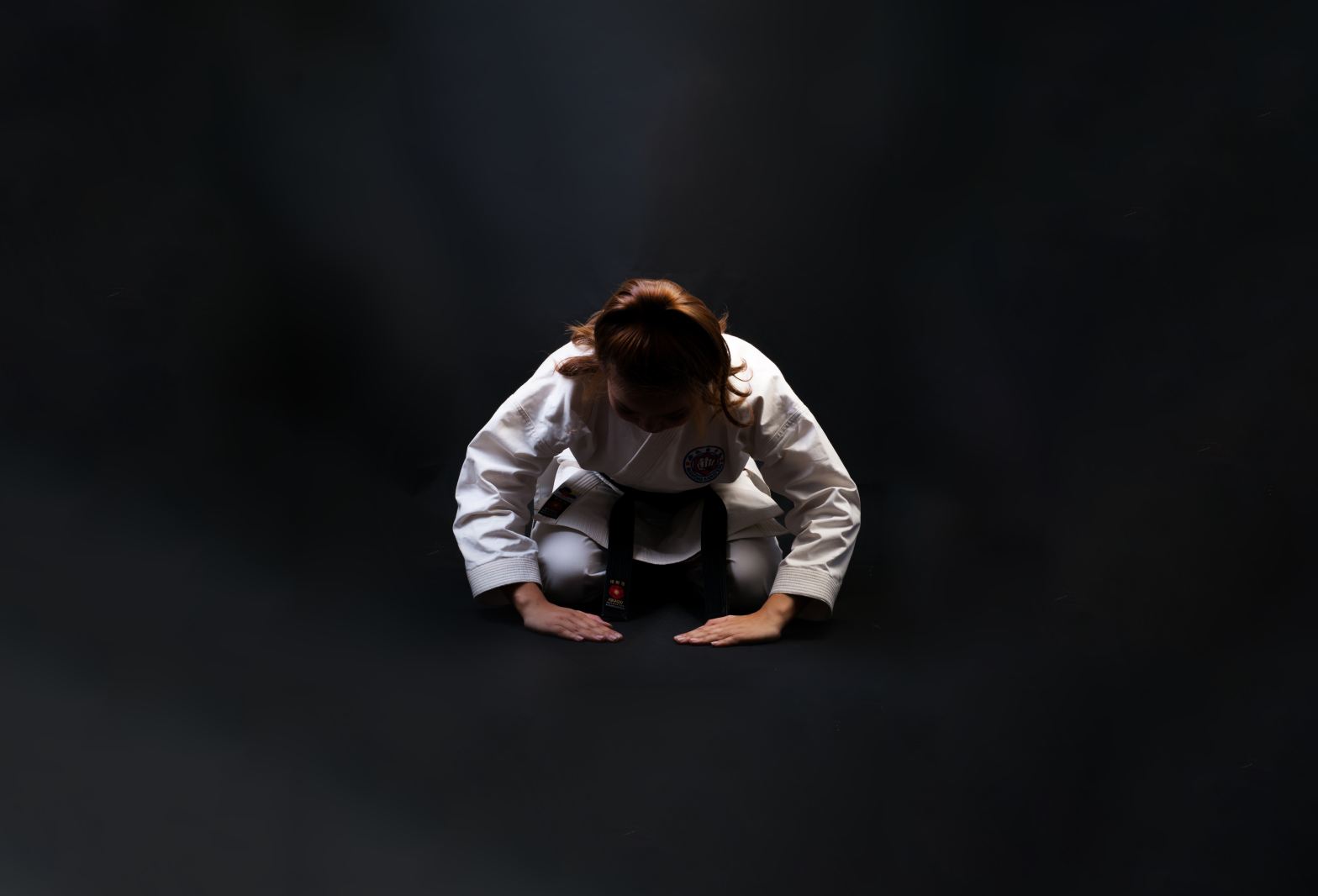
A young boy went to an old teacher to learn martial arts. That teacher was one of the best teachers in the country at that time.
“Teacher, can I be the best martial artist in the country if I trained under you?” asked the student.
“Certainly …” replies the teacher.
“How many years would it take?”
“About ten years.“
“That’s too long. If I practice with you daily, how many years would it take?”
“Twenty years.”
“If I train with you three times a day on each day, how many years would it take?“
“Thirty years.“
“How could it be … If I am training longer, it must be shortened.” the student asked with wonder.
“You are watching your final goal with one eye. So, how could you go along your journey with one single eye only?”
What would you learn from this story? Let me know!


 Crisbie Coach