
Strengthen the Body and Mind with Pilates

Do you know Pilates? It is a complete physical exercise that strengthens the muscles and the mind at the same time. During a Pilates session, the mind controls the movements of the body and the breathing allows the movements to be amplified. It’s not complicated, is it? Although it is a rather simple discipline, Pilates is an intense sport that helps to regain physical and mental well-being.

Through the sequence of fluid postures, Pilates allows you to work the strength and flexibility of the whole body. Pilates is an excellent exercise to recover your shape, and the benefits go beyond the loss of a few extra pounds and a flat stomach.

The stressful rhythm of modern life does not always allow us to take care of ourselves, of our body and our mind. Too often, we spend all day sitting in front of the computer, busy finding solutions to different problems. As a result, it is not rare to suffer from muscle contractions, back pain and stress in general. Focusing on the present moment and strengthening the abdominal muscles (the so-called Power House), Pilates is an exceptional antidote to the tensions of your body and mind.

Building a New Habit

Habits represent a great strength, perhaps the greatest in absolute.

Usually in life, a success or a failure that happened only once, don’t make a difference. Studies have shown that some winners to the lottery run short of money a few years later because of their bad habits.

If you eat a big slice of cake from time to time, you won’t get fat. But eating every day biscuits containing much butter, you may become fat.

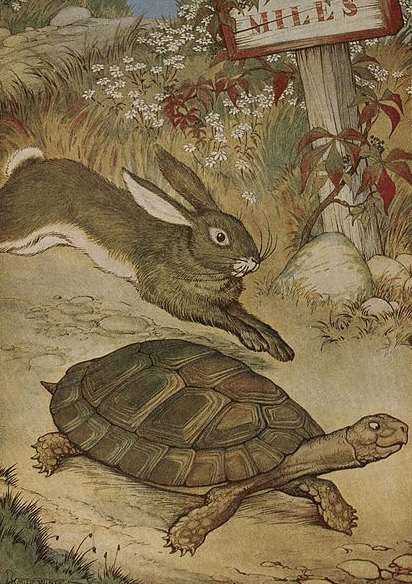
Then success is a habit, not a one time off event. The tortoise always wins although the hare always brags about being the winner.

Do you know the famous fable of Esopo where a Hare ridicules a slow-moving Tortoise? Tired of the Hare’s arrogant behavior, the Tortoise challenges him to a race. The Hare soon leaves the Tortoise behind and, confident of winning, takes a nap midway through the race. When the Hare awakes however, he finds that his competitor, crawling slowly but steadily, has arrived before him.

It is never too late never to adopt a new habit. Since habits are so powerful, you will begin to see immediately great results, once that you will have acquired yours that will bring you toward the realization of your goal.

Then, how to build a new habit?

First thing, decide what you can make more often in order to reach your goal.

Obviously, it depends on your goal. 

Do you want to acquire a specific skill? A new competence, or knowledge? Eating  healthier? You shall establish your objective. The next important step will be deciding the time and the place. Every habit must come true within a certain time frame and in an established place.

From a scientific study carried out by Philippa Lally, it results that acquiring a new habit takes 66 days. Actually, some people can make it in shorter time (18 days) and others need more time (8 months). Then, being patience must become your mantra.

However there is a small technique that you can learn in order to make simpler the acquisition of a new habit.

I explain it better with a practical example.

Let’s imagine that you want to acquire the habit to go to gym regularly. Well, at the beginning it is not fun. You have to go to a place and make a big effort to train yourself. Going to the gym happily has to become an habit.

Then the first step is deciding about the time and the place, but don’t do anything yet!

I make it clearer: you schedule a day and a time to go to the gym but when you arrive, you don’t exercise. You can make a tour around, or maybe do some light exercise and for a short time. If the gym has a sauna, go to the sauna and then back home.

In this way, you establish the time and the place in your mind but you don’t complete the action, that is not so much amusing for the time being.

I know that it may seem strange to go around for the gym without training. You can think that it is a loss of time but it is not. This is the first step to build a habit, therefore be patient (be the Tortoise!)

After a few days, or a couple of weeks, your mind will associate the time and the place to the gym and not the effort of the physical exercise.  

Don’t think that this phase is a loss of time; actually, it is the most important part.

Are you ready for this challenge?

Locus of control – LoC

In psychology the Locus of Control is defined as the modality with which an individual believes that the events of her life are produced by her behaviours or actions, or that they are produced by external causes independent on her will.

The first case refers to a person that mainly considers that the events of her life are an effect of her actions and therefore a variable on which she can intervene as far as possible (LoC internal).

On the other hand, a person with primarily an external LoC attributes to fate the causes of all the events that happen. Therefore, they she believes that she cannot control what happens to her.

The Locus of Control represents therefore the mental attitude with which we feel being able to determine our actions and the corresponding results, contrasted to the control practiced by fate and by external circumstances.

Are you a person with prevalence of external Locus of Control?

Or are you rather a person with mainly internal Locus of Control?

Want to know more? Ask me!

Keeping Your 2019 Resolutions

We are still in January and many of us have decided about their objectives for 2019, the so-called resolutions. The new year brings with itself the desire of change, the need of renewal. We would like to spend more time with the family, to take that trip that we have been dreaming about for so long, to change job, to enrol in a gym club, to lose weight, to stop smoking…the main goal is feeling better with themselves and with the others.
Why does it happen then that along the way we forget about them or we abandon them?

Here are some questions you should ask yourself.

Are your objectives too much ambitious, vague or simply they are too many? In this case you are putting too much pressure to yourself. If you have decided to stop smoking or to lose 10 kilos, you must ask yourself why you have started smoking and why you are always hungry. Are they not ways for relieving the so many daily tensions?

Are you positive in comparison to the achievement of your objectives? If you think that you will never make it, it is sure that you will never make it. Henry Ford used to say: “If you believe you can make it or if you believe you cannot make it, you will be always right”.

Is your goal appealing? You have decided to lose weight or to stop smoking. As such, they are great objectives. But find a bigger reason for which you want to achieve these objectives. For instance, you want to stop smoking for being able to recover breath faster when you go jogging or you want to lose weight to put again on those beautiful pants that suited you very well.

Bad habits are difficult to lose, above all you need time. As I said before, if you have been sticking to them for years, you have your good reasons (to protect you from stress, for example). You cannot change your habits in some weeks. Some time ago, studies told us that you can take up a new habit in 21 days. Now, neuroscience has found out that you need at least 60 days! Take you your time then, establish a new habit with calm, don’t stretch your body too far, your body is comfortably used to the old habit and it doesn’t feel like to replace it. You must make it understand, day after day, that another way is possible and it is also healthier!

Besides, remember that the path won’t be always linear and you may find obstacles. There will be some easiest moments then others but losing a battle doesn’t mean losing the war. Accept the ups and downs: your body will learn to adapt slowly.

Choose an objective that won’t sound like an obligation, in the sense that it must represent a real choice, a thing that you want to do, not that you must do. Control your thoughts, remember what Henry Ford said. Don’t focus on what you still have to achieve, but celebrate what you have already achieved. List the small victories and congratulate yourself. Stay positive!

Think about the strength that a seed has to become grass. It must come out from the soil to be able to live and flourish. It works slowly under the soil, up to when one day it comes out and sees the light! For you it is a kind of the same thing. Work slowly and one day you will see the results, because you are stronger than you think.

And now the four tips:

1. set one objective at the time, but define it well, use the SMART model (specific, measurable, attainable, relevant and time bound). Even though this model has been created for organisations, it may be helpful also to individuals engaged in goal setting.

2. Adopt the strategy of small steps by dividing your objective in some smaller objectives.

3. Celebrate achievements: the first kilo you have lost, the first whole day without smoking. Put some post-it all over your place with your success on it. Tell yourself “Well done!”.

4. Inform your family and friends about your goals and ask them to help you with this. Getting their support will help you in achieving the results. Look for some groups on Facebook that share your same goals, participate in forums on the Internet. Remember that you are not alone, there are other thousands of people that may have your same goals and exchanging ideas with them can be helpful to you. You can create yourself a blog, that can become your journal (a journal on paper is also okay).

Always remember that you are stronger than you believe!

6 Tips To Meditate While Walking

Walking and meditating are two powerful anti-stress remedies. Practicing them together brings enormous physical and psychological benefits. Ten minutes a day are enough and you can practice meditation walking at any time of day and anywhere. No excuses, then! Do you want to try?

The meditative walk, both outdoor in the nature and in the chaos of the city, allows us to free ourselves from everyday stress.

Walking by itself is good for your health. It allows to eliminate cardiovascular diseases and back pain, for example. Why not combining this practice with meditation? Here are 6 tips on how to do it.

  1. Keep your back straight.
  2. Synchronise the breath on your steps, by keeping a quiet walking pace.
  3. Become aware of your body: focus on your feet, on your legs, on the movement, on the contact with the soil. Try to eliminate tensions and concentrate only on the steps.
  4. Focus on the feelings this practice gives you. Are they pleasant? Does your body relax? Does your mind relax?
  5. Then move your attention on your emotions. What do you feel? Do not judge the emotions you feel, let them go, observe them as a spectator.
  6. Finish your practice by standing, contemplating the feeling of fullness and thanking your body and mind for the beautiful meditative walk.

Do not try not to think. Thinking is the activity of the brain, it is impossible to stop it! On the other hand, try to take advantage of the moment of relaxation you are experiencing, to become aware of your body and your emotions without this affecting your mood and without judging.

By regularly practicing the meditative walk, you will feel more and more balanced and at peace with yourself.

Mind Mapping: What If Our Brain Looks Like A Walnut

Mind Mapping is a powerful graphic technique which provides a universal key to unlock the potential of the brain that was invented by Tony Buzan. I heard about it a long ago from a friend of mine who is a writer. He used it to make up the plot for his books. He could also get a license for free from Tony as he was one of the first user!

Mind Mapping takes inspiration from our brain that looks like a walnut and it help us to use both hemispheres to be more creative. Moreover, using it it’s fun and we do things better when we enjoy ourselves.

I attended a course recently, it has been long that I wanted to do it. Have a look at one of my first mind maps that explains you a bit what it is about:


MM_SpiderWhy I call it a spider? Because it is recommended to have maximum 8 branches, that I called legs. As each leg generates a topic, you can add other subtopics linked to the first one. Actually, this is a danger, as you wouldn’t know when to stop!

Mind Mapping will enable you to plan personal development paths, make choices and let you know where you are, where you are going and where you have been. That’s why I have decide to start using it!

Main advantages of this method are:

  • You can use colours to identify subjects: you will enjoy looking at it, read it over again and remember as it will catch and hold your eye;
  • You can use your creativity without limits and you will be able to see new solutions to old problems;
  • You can use images or draw yourself instead of writing: you will get a sense of fulfilment and reward;
  • Radiant thinking, helicopter view: with Mind Mapping you will have an overview of a large subject and you can also deal with a large amount of data.

There are some free softwares available on the Internet, just google for it. However, while you will be able to present information in a more structured way, you won’t be able to express your creativity. They are good for presentations you may want to do in front of a client or an audience. But draw very personal Mind Maps for your own use, feel free to use your imagination!