5 Effective Ways to Relax Yourself

Do you feel the need to relax but don’t know which relaxation method to choose? Here are some of my favourite ones! You have to just choose the one that inspires you the most.

Method 1: mindful breathing.
Obviously it is not our normal way of breathing, which consists of inhaling and exhaling without even realizing it. It is a conscious breathing, to which you have to pay attention.

How does it work? Sit where you want, on the floor, on a chair, on the sofa. Begin to inhale through your nose by inflating your belly. Slowly breathe out through your mouth, emptying your belly (it’s also a good exercise for your abs). Just focus on the air flow that passes through your body. You will see that your breathing slows down and your body slowly relaxes. The ideal would be to practice this type of breathing at least three times a day. You can do it everywhere, you always breath, you only need to do it mindfully. One minute of deep, conscious breathing will help you to relax.

Method 2: meditation.
I am not referring here to transcendental meditation, but to meditation in full consciousness (mindfulness), accessible and easy to apply. Meditation helps you take care of yourself and your mind, allowing you to be aware of the “here and now”, moving away from stress and problems.

How does it work? Close your eyes and concentrate on the sensation of the air going in and coming out from your nostrils. Try not to be distracted, and every time you notice that your mind is wandering, focus back your attention on the breath. A meditation session can last a few minutes for beginners and hours for the more experienced. If you are a super technological type, you can try apps that guide and follow you during your meditation journey. It would be ideal practising this type of meditation a few minutes several times a day.

Method 3: massage
Massage eliminates tension and provides a feeling of serenity and super pleasant well-being. So if you have the chance, get a massage. Your stress will disappear. If you don’t find anyone among your family or friends that can massage you (in these confinement times you cannot go to a wellness centre), you can take massage devices, which you can use for the neck, feet, back or head. There are also armchairs that do massages and even a mask that gently massages your eyes and makes you look and feel perfectly rested! A simple solution for the feet could be crushing and rolling tennis balls. It is almost like having a reflexology session. Give it a try!

Method 4: Yoga and Pilates
They are two similar disciplines and are both helpful for your physical and mental health. While Yoga focuses on the physical and mental connection, Pilates is more similar to a sport that, however, makes us use deeply the muscles of our body.

Method 5: aromatherapy
Aromatherapy uses the aromatic essence of plants to prevent, cure or relax. In the latter case, you can use an essential oil diffuser that allows the atomization of the oils and their diffusion in the home environment.

What oils can you use to relax? Here are some that I like very much:

  1. Lavender essential oil: it has sedative and calming properties and allows relaxation.
  2. Neroli essential oil: it reduces stress and fights insomnia and tension.
  3. Marjoram essential oil: it regulates emotions and protects you from fears.
  4. Grapefruit essential oil: it combats stress and helps you resolve doubts.
  5. Mandarin essential oil: it is relaxing and sedative.
  6. Scots pine essential oil: it helps you control emotions.

Here are my favourite relaxation methods. Choose the one you like most and, if you like, let me know. You can even choose more than one because taking care of yourself is the best thing you can do!

The Best Time to Practise Physical Activity

Have you ever wondered when is the best time to exercise? If it is better to eat before or after?

Recent studies state the importance of practicing moderate physical activity on an empty stomach.

Practicing physical activity in the morning on an empty stomach would favour a better response to insulin, better use of glucose by the muscles, better regulation of blood glucose and twice as effective fat disposal.

Ideally starting your day with 30 minutes of gentle exercises combined with endurance exercises would be really beneficial. Considering that it is not essential to eat shortly after waking up, prolonging the night fasting would also allow us to detoxify our intestines.

When can we eat then? The ideal would be eating after half an hour, or even better an hour after this short physical activity. Breakfast should be rich in animal and vegetable proteins to promote muscle recovery and anabolism, and also contain complex carbohydrates to obtain the energy needed to face the day. An example: low-fat yoghurt with muesli made with nuts and seeds.

What do you think about it? Would you be able to start your day like this? Honestly, my morning routine is different: I wake up, practise 10 minutes meditation, have breakfast, take a shower, make up, get dressed and finally I can go out. Total: one hour and 15 minutes. If I had to add another half hour at what time should I get up? Too early! But I was wondering whether I could start this morning practice during this confinement period, considering that I manage my time thanks to telework and I am not stressed by having to take public transport to go to the office.

Working Less, Could it Save the Planet?

A study by the University of Massachusetts states that “working less is good for the environment”. If we would spend 10% less of our time at work, our footprint on the earth would be reduced by 14.6%, mainly thanks to the decrease in travelling and daily expenses.

There are two contradictory theories on this idea:

  1. wages may remain unchanged and the economy would continue to grow thanks to the technological and energetic improvements despite the reduction in working time; this theory explains us that pollution could be reduced thanks to the change in daily habits, such as the preparation of your own meals at home instead of buying food already prepared or prepared by others;
  2. only by reducing wages we will achieve a significant reduction in the ecological footprint by 2050. This is the theory of degrowth that supports the fact that only with less money available the consumption of material goods can be reduced and consequently there will be a corresponding reduction of the pollution and use of resources. In practise, it means that by working four days, you would receive a salary equivalent to four days.

I would like to focus on degrowth because I support this approach. It seems clear to me that by continuing in this way the human kind will encounter a rapid depletion of available resources which will cause a sudden and uncontrollable decline of the population and of the productive capacity of the industries. The degrowth theory is certainly radical and to some it seems heretical. However, an OECD report says that consumption has increased by 50% in the past 30 years and that this goes hand in hand with an increase of the environmental footprint. The degrowth theory stipulates that a progressive decrease in consumption should begin by starting with a reduction in working time.

Serge Latouche, economist among the founding fathers of the degrowth theory, explains that degrowth does not mean weakening or suffering. It rather means transforming the concept of consumption into that of use: I buy something because I need it, if it breaks I have it repaired ( or repair it by myself) and, at the end of its lifecycle, I recycle it. It also means shifting attention from quantity to quality. The result will be a materially responsible society.

Degrowth is also a praise of slowness and duration; learning from the past; awareness that there is no progress without conservation; indifference to fashions and ephemeral; draw on the knowledge of tradition; not identifying the new with the best, the old with the outdated; do not call buyers the consumers , because the purpose of purchasing is not consumption but, as I said before, use.

So why working less and earning less? If the consumption for leisure or pleasure activities would increase thanks to a shorter working week, there would be a significant increase in the ecological footprint. This is why the reduction in working time must be accompanied by a reduction of wages. However, we would have more time for us, to dedicate to our personal growth, which does not only mean fun or leisure activities.

The crucial choice of our times, therefore, is between urgently committing ourselves to embark on the path of sobriety at all levels or going at full speed towards the depletion of resources and the global collapse of our system, which nobody hopes for.

In these difficult times, with the rapid spread of a virus that threatens our lives and frightens us, we could seriously begin to reflect on a different future for us all.

What do you think about it? Would you be willing to work less, gaining less and consuming less (but using more), thus starting a path towards a more committed society, different from the way we know it today?

Empathy: a Link Between Us and The Others

Relating to others may be difficult sometimes. Tensions may arise but they could be turned into opportunities to get to know each other better. The relationship can thus improve and become a source of joy and inspiration.

Empathy is not to show mercy, but it is the possibility that a person tries to put herself in other’s shoes and lives from the inside what the other feels at that moment.

An important thing to know is that empathy is not a talent with which you are born, but it can be learned. Being empathic means first of all feeling somehow involved towards the other from us. Surely it is easier to feel empathy for people who are similar to us than for people who we feel as antagonist.

If we want to be empathetic with our colleagues at work, we could try talking to them more often, asking them what they have been experiencing and the emotions they feel rather than imagining it, which could prove to be absolutely misleading.

A good empathy could allow us to feel the emotions that our interlocutors feel and we could thus anticipate their reactions. When people feel understood, the path of trust and good understanding opens up. True empathy allows you renewing a bond that could have seemed broken.

But be careful: empathy cannot be directed only towards others but it has to be directed also towards ourselves. In order to identify the emotions of others, we shall first know how to identify our emotions and not only the positive ones but also the negative ones such as, for instance, anger, bitterness, shame. The clearer our emotions are, the more we can accept and understand others’ emotions. Understanding why we experience certain emotions will allow us to put ourselves in others’ shoes and understand the reasons why one person was pushed to experience one emotion rather than another. The diversity of points of view can only be understood if we accept that we all are diverse.

9 Tips to Live a Better Life

Good habits and good mood have a close connection with good health and well-being.

Here are 9 tips that will help you find a bit of tranquility, improve your balance and get closer to the idea of ​​happiness that best suits you.

  1. Keep moving. Physical activity is one of the tools that most benefits our body. It can significantly reduce stress, control cholesterol levels, help you lose weight, oxygenate body tissues and eliminate toxins through sweating. In addition, it allows the development of endorphins that produce brain pleasure and decrease joint pain. If you can, don’t take the elevator but take the stairs, walk to work, or ride a bicycle. These are all activities you can do without necessarily going to the gym. Not only will your body benefit, but the environment will also be thankful.
  2. Improve nutrition. Pay attention to what you consume daily. Take time for each meal and choose healthy menus. Eat balanced and add fruit, vegetables and legumes to your diet. Try new recipes and prepare differently flavoured meals to discover new things. Avoid eating junk food, because it contains simple sugars and carbohydrates, which contribute to the slowdown of metabolism and obstruct the arteries. Also avoid fatty meals too.
  3. Drink plenty of water. The consumption of water, tea and juice allows you to eliminate free radicals. In addition, hydration is good for the skin, which will thus remain beautiful and healthy.
  4. Do something you enjoy. Take time to do an activity that you like during the day, which makes you relax, such as doing manual work, cooking, reading or learning to play a musical instrument.
  5. Disconnect yourself for a full day. Make an effort, put social media and cell phone aside for a day. It’s good to focus on yourself every now and then.
  6. Spend time outdoors. Walking in the forest, having a picnic, spending time outdoors are activities that make you reconnect with nature as well as being an opportunity to breathe some fresh air.
  7. Volunteering. Solidarity is one of the paths most used by people who seek tranquility and who want to be at peace with themselves. Good deeds will affect your life in a positive way.
  8. Stay positive. Look at things with pleasure, optimism and positive energy. Frustration brings negative consequences in life.
  9. Share moments with friends. Having a coffee with friends, talking about nothing, will help you feel much better.

What do you think? will you adopt one of these new habits?

March 8: the True Origin of Women’s Day

The fire in the Triangle factory in New York on March 25, 1911 was the most serious industrial accident in New York history. It caused the death of 146 people (123 women and 23 men). The event had a strong social and political echo, as a result of which new workplace safety laws were passed in the United States.

The New York fire is one of the events remembered as the origins of the International Women’s Day but it is not from this that it originates. The strongly political connotation of International Women’s Day, the political isolation of Russia and the communist movement and, finally, the events of the Second World War, contributed to the loss of the historical memory of the real origins of the event.

The Congress of the second Socialist International held in Stuttgart in 1907 set the foundations for starting to talk about the female question. A resolution was passed in which efforts were made to fight for universal suffrage. A few days later, the Information Office for Socialist Women was founded.

In May 1908, the President of the Office, Corinne Brown, presided over the Sunday socialist conference in Chicago – due to the unavailability of the usual speaker – a conference to which all women had been invited. From there we can start talking about a Women’s Day.

The following year, in the demonstration that the American Socialist Party organized on February 28, 1909 in support of women’s right to vote, there was an intense activation on the theme of social claims. They asked for a salary increase and improved working conditions. Thus was born the first Women’s Day in America.

In 1910, the American delegates proposed during the International Conference of Socialist Women in Copenhagen to establish a day dedicated to claiming women’s rights. In Denmark, Germany, Austria and Switzerland it was celebrated for the first time on March 19, 1911.

With the start of the First World War, the celebrations stopped to resume on March 8, 1917 when, in St. Petersburg, women led a demonstration for the end of the conflict.

Here is finally the fateful 8 March: in the Second International Conference of Communist Women of 1921, this date was set for Women’s Day.

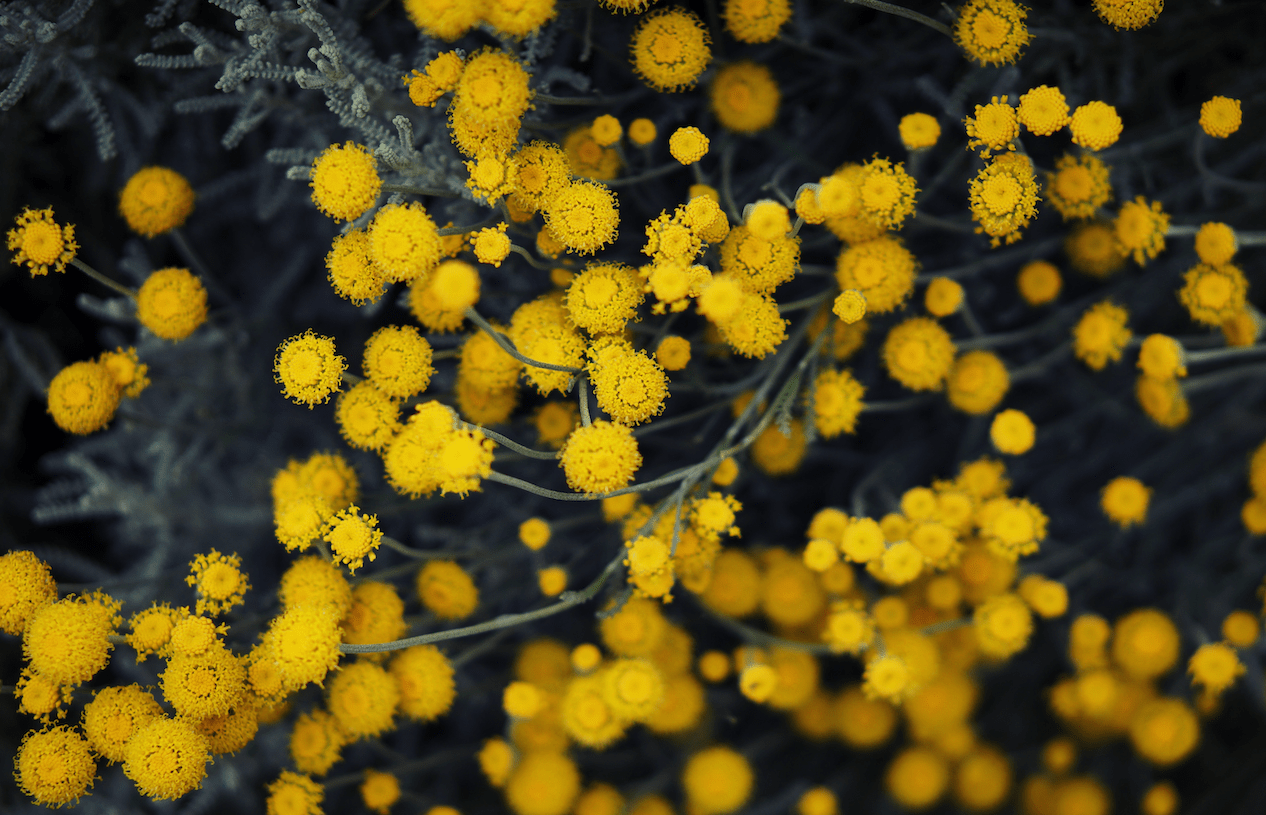
Mimosa was chosen as the flower symbol of Women’s Day because it blooms in early March.

9 Things to Let Go to Be Happier

It is said that being happy is a choice. But we have a tendency to complicate our lives to the point of not recognising it when we have it in front of our eyes.

What could we do to be happier?

Here are nine things we should let go to find more happiness in our lives:

1. Give up anger. Anger steals time and precious energy that we could use more usefully. Did you know that for a minute of anger you need an hour to recover?

2. Let go of things you can’t control. Control is an illusion. We live in a world that is out of control, we have to accept the fact that we cannot control everything.

3. Stop worrying about what others think of you. This also makes us waste time and energy. We could never please everyone, there will always be someone who doesn’t like us. It doesn’t matter what other people think of us. .

4. Try to be the best version of yourselves, to spontaneously attract people who are related to you.

5. Stop living in the past. We all have gone through difficult times. But we survived. Try to silence that little voice that tells you: “I should have done this”, “I shouldn’t have done that”, “if I went back I would change things”. The past is past and does not come back, so let’s accept it as it is. We can learn many lessons from the past that will help us manage the present and lay the foundations for the future.

6. Try to buy fewer useless things because they don’t make you happier but they empty your pockets. The less things we have, the happier we will be.

7. Stop gossiping. Those who share gossip with you today, will be the same gossiping on you tomorrow.

8. Don’t worry more than you should. Worrying means investing time and energy in something that has yet to happen. Again, let it go and try to trust life.

9. Stop taking things personally. People are just too busy thinking about their own lives to be able to think about others’ lives. The world does not turn around you. Most people’s reactions have nothing to do with you, don’t worry about it.

Are you ready to take on those tips?

Work-Life Balance

Our well-being should be our priority. But nowadays the society we live in often puts pressure on us so that we reverse priorities in a way that can seriously compromise our quality of life and our physical, mental and emotional health.

According to the international classification of diseases, burn-out is considered to be a work-related phenomenon but this is not the only cause.

With the increasing cost of living and the bills that accumulate, we are increasingly inclined to work harder and harder to earn a salary that allows us to live a decent life. However, this leads us to put aside other fundamental needs.

We spend many hours a day working for a company, or for ourselves, reducing the time for good meals, for resting, for spending time with our family and we do not understand the impact this can have on our life.

Certainly, many among us cannot afford to work less because they are responsible for their family and they shall provide for their needs.

However, even in such cases, a work-life balance should be found, because life is much more than our work.

The excessive time spent at work and the short time dedicated to ourselves practicing sports, walking in a forest or simply being lazy, in the long run will harm our health up to a level that it would be difficult to recover.

More and more often people suffer from post-traumatic stress, over-fatigue, nutrition problems, relationship difficulties due to exhausting and stressful days spent at work that do not leave us time to live and do activities that really make us happy.

If you think you are in this situation, you should understand one thing: no salary is worth your health, no benefit rewards you for the wear and tear you have at the end of a working day that has drained off your energy and your joy of living.

If you currently have no other choice than continuing with your present work, try to do something that is good for you every day to find your work-life balance. If everything you do daily is stressful and exhausting, the time will come when you won’t be able to go on any longer and the consequences will be more serious. It will take you longer to regain your optimal well-being.

Work is an important part of life but of course life is not just work. As you know, there is more: family, friends, health, in short, enjoying life. Don’t let work be your whole life!

Nothing is worth your being unhappy. Your work will continue even without you, while relationships and health must be taken care of, and followed up carefully.

You can find another job, but you cannot replace your family, your friends and above all your health. Remember to take care of yourself in order to live a better life.

The Triple Filter Test

This story is attributed to the famous philosopher Socrate but the source is not that sure. As I think that the message it puts forward is very important, especially nowadays in the age of fake news, I would like to share it with you.

One day in ancient Greece, Socrates was visited by an acquaintance of his. Eager to share some juicy gossip, the man asked if Socrates would like to know the story he’d just heard about a friend of theirs.

Socrates replied that before the man spoke, he needed to pass the “Triple-Filter” test.

The first filter, he explained, is Truth

Have you made absolutely sure that what you are about to say is true?”

The man shook his head.“No, I actually just heard about it, and …

Socrates cut him off.

“You don’t know for certain that it is true, then. Is what you want to say something good or kind?”

Again, the man shook his head.“No! Actually, just the opposite. You see …”

Socrates lifted his hand to stop the man speaking.

“So you are not certain that what you want to say is true, and it isn’t good or kind. One filter still remains, though, so you may yet still tell me. That is usefulness or necessity. Is this information useful or necessary to me?” 

A little defeated, the man replied,“No, not really.”

“Well, then,”Socrates said, turning on his heel.“If what you want to say is neither true, nor good or kind, nor useful or necessary, please don’t say anything at all.”

What do you think about it? Do you think it would be good doing this test before speaking about anything or anyone?

Working Very Hard: a Zen Story

A young boy went to an old teacher to learn martial arts. That teacher was one of the best teachers in the country at that time.

Teacher, can I be the best martial artist in the country if I trained under you?” asked the student.

Certainly …” replies the teacher.

How many years would it take?”

About ten years.

That’s too long. If I practice with you daily, how many years would it take?”

Twenty years.”

If I train with you three times a day on each day, how many years would it take?

Thirty years.

How could it be … If I am training longer, it must be shortened.” the student asked with wonder.

You are watching your final goal with one eye. So, how could you go along your journey with one single eye only?” 

What would you learn from this story? Let me know!