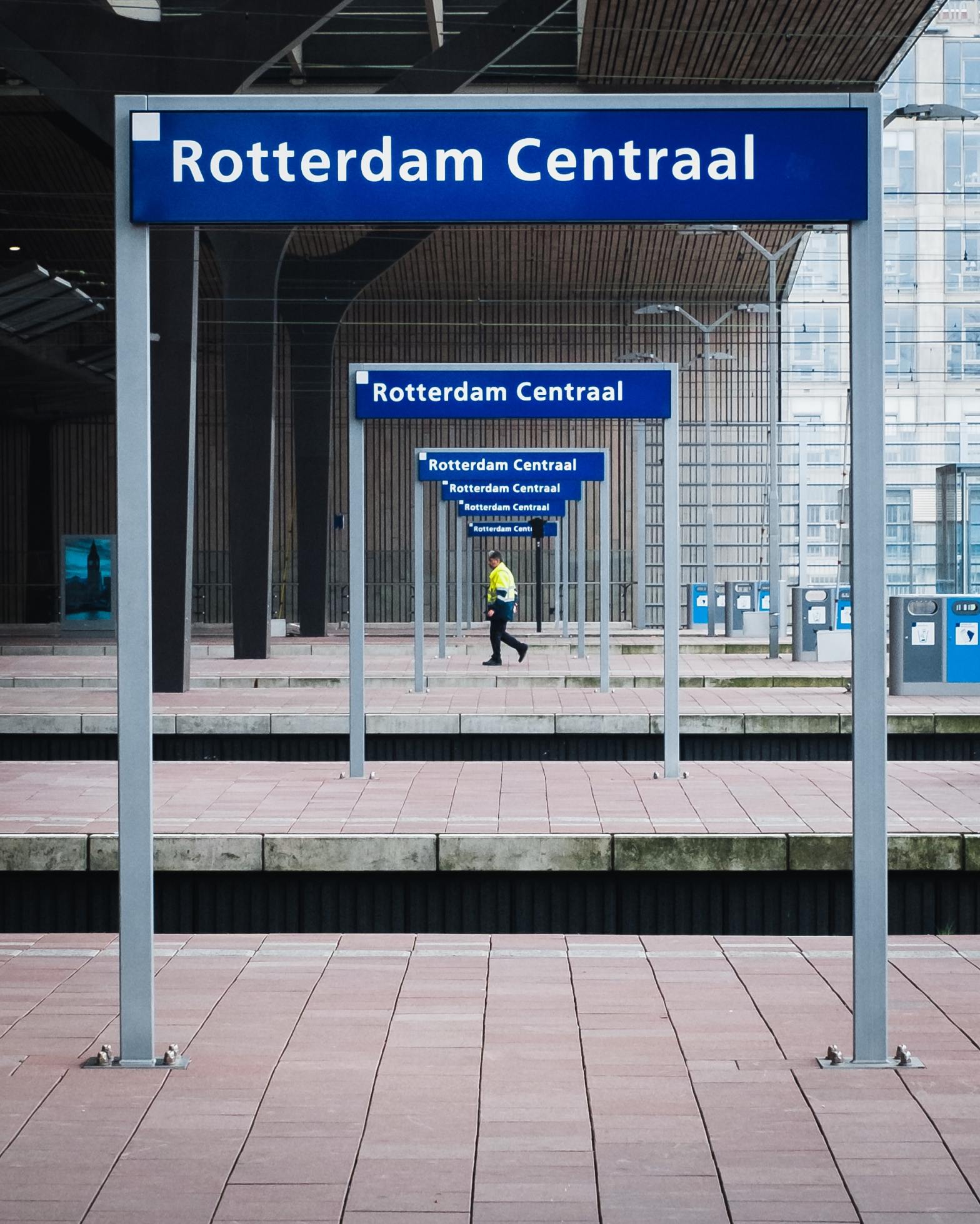
2009, The Netherlands. Some inhabitants of one Rotterdam’s neighbourhood receive a strange email: they have been watched while driving and are asked of not doing it any longer. Is it a threat or blackmail?
Absolutely not! The message comes for Rotterdam City and the company managing the highway that are allied to reduce traffic jams that has been polluting the cities day after day.
Wouldn’t it be easier to build bigger highways or built new ones?
Here comes the “Braess Paradox”. According to this theory, increasing the road capacity to reduce traffic jams would make the situation worse.
Actually, with a new road, people who have given up to the car before, would go back and use the car again. In addition, those who were avoiding using the car during the rush hours would try to do it again.
Photo by Iwona Castiello D’Antonio on Unsplash
However, by eliminating roads, the journey time can be reduced, because some motorists will be inclined to abandon the car. This is the paradox.
Rotterdam City tries also another thing: the positive toll, also known as the reverse toll.
What is it? If the citizens leave the car into their garage during the rush hours, they will receive a small amount of money. Of course, they will receive also a device to control if they indeed have left the car into the garage.
It works! In a couple of years, the volunteers applying to that scheme increase and traffic jams decrease. Also when the money stop, people keep up with their good habit. Rotterdam starts to better breath.
Summer 1959, Moscow. During an official meeting, the head of the Soviet Union, Nikita Khrushchev, drinks a Pepsi Cola. Yes, victory! A member of the meeting discreetly welcomes.
The happy man is a representative of the famous American brand of drinks, Donald Kendall. That evening, Kendall had one goal: to convince the Russians to sell their drink in that immense country.
But Kendall shouted victory too early. If Khrushchev likes Pepsi, we are still in the times of the “cold war”. We don’t really talk about consuming a product from capitalist America!
But a few years later, when relations between the two countries improve, Pepsi tries again. And this time the Russians also see an interest in them because they can sell vodka to the Americans.
The deal can only be done without using the currency: Russia rejects the dollars of the American capitalists and cannot bring out the rubles from the country.
Then we return to the oldest form of exchange: bartering. The Russians authorize Americans to sell their drink on their soil in exchange for selling vodka on American soil.
This Pepsi exchange for vodka has continued for years, but in 1979 the US no longer wants to exchange Pepsi for vodka.
So Pepsi finds an alternative. Instead of regulating trade in vodka, the Russians will be able to pay with their old warships. Pepsi thus resells the old scrap metal to make a good profit.
Photo by Nick Jio on Unsplash
What do you think about it? Have you ever exchanged items with your friends? Would you like to do it, like when you were a child and you exchanged stickers?
In times of crisis, it would be good to start applying new economic models, like the sharing economy, where individuals can hire out things like their cars, homes and time to others in a peer-to-peer modality. We exchanged our home for vacation for many years through a website called Home Based Holidays, and on the Web you can find many more. No worries about your belongings: they come to you place, but you go to theirs!
Once, at a second hand market I bought a sweater made by a famous French brand for 2 euros. I was astonished and the lady told me: What I don’t like any longer, you may like it.
Actually this is the principle: instead of buying things that we maybe use only once, or we get tired of soon, like children with their toys, we could start exchanging them.
It will be a step towards a more sustainable economy, that will bring us some benefits like reducing negative environmental impacts by decreasing the amount of goods needed to be produced, and cutting down on industry pollution. It will also increase recycling items and grant access to people who can’t afford buying certain types of goods or use them only from time to time.
All this is also in the perspective of the degrowth theory, that will let us go towards strengthening our belonging to our local community.
By the way, I have been using that sweater since then!
Some time ago I saw a nice pair of jeans in a shopping centre, which were not even expensive.
However, there was no label indicating its origin, no “made in”. Curios as I am, I decided to start a small investigation, first by asking to the shop owner, who had no idea. Then I pretended to be a member of a consumer association, I listed a whole series of regulations that he has been violating so that he gave me the address of the warehouse where he bought them.
Once home, I called that warehouse, always pretending to be an exponent of a consumer association. They started immediately to tell me the story of the jeans, without any problems, as some journalists have already made an investigation before. First of all, they were made with cotton from Benin. The cotton threads are then dyed in Spain, before being shipped to Taiwan to be woven into several separate pieces (pockets, legs, etc.).
The pieces are then sent to Tunisia to be sewn with Japanese polyester threads. The factory also adds buttons, zippers, rivets which are made in Japan with Australian metals.
So the jeans leave Tunisia for a warehouse in France from where they will be sold all over Europe. In short, the jeans traveled about 65,000 kilometres: once and a half the tour of the world.
The production of these jeans is definitely “globalized”: to sell jeans at the lowest possible price, manufactures look for the lowest cost of production at all levels. The manufacturer multiplies the steps to optimize its overall manufacturing cost. Dyeing is less expensive here, buttons are cheaper there, etc.
This causes several problems: the culture of cotton requires a lot of water for countries that do not have much, the working conditions of the workers are very bad, transport consumes a lot of oil and releases greenhouse gases.
At the end the jeans are very expensive for the planet, even if they are sold at an attractive final price for the consumer.
There are so many other examples like this. Danish prawns are cleaned in Morocco and then sent back to Denmark to be marketed. Scottish langoustines leave for Thailand to be decorticated by hand in a large multinational company and return to Scotland where they are cooked and then resold.
But is it worth? Wouldn’t it be better to bring production closer to places of sale, reducing energy and hydrocarbon consumption, finally doing some good to our planet?