

The Thought Landscape – An Alternative Way To Deal with Negative Thoughts

I have been receiving Miguel’s emails for some time, cannot really say how long. Recently, I received this article in my mail box that perfectly matches with the purpose of my blog. Actually Miguel, also published a video, in case you prefer watching to reading. Enjoy it!

Photo by Nick Fewings on Unsplash

Humans have a natural tendency to gravitate towards negative thinking.

We could assume that tendency is there because it gave our ancestors a small survival advantage.

Those that were happy-go-lucky optimists got eaten by wolves.

Those that were pessimists and hoping for the worst didn’t get eaten as much.

So here we are today with a lizard brain primed to expect the worst.

Although there might be an evolutionary advantage to being pessimistic, living your life pestered by gloomy doomy thoughts is no fun.

The truth is today we live in a much more safe environment than hundreds of thousands of years ago.

It’s very rare for people to succumb to hungry tooth sabre tigers and such.

Yet, we live in a constant state of alert and fear triggered in part by nature only exacerbated by the news and social media.

So how do we escape negative thoughts?

Besides recreational drugs, alcohol, mindless social media binging, and meditation, I dare to propose a new way to lead happier mental lives.

You could think of this method as a thought experiment, a new mental model to deal with pessimistic thinking.

I call it the thought landscape.

Disclaimer: if you have trouble using your imagination or suffer from aphantasia, it won’t be easy to implement this approach.

The concept is quite simple to understand but tricky to master.

It goes like this:

A: There is a large number of thoughts we can have (negative, positive, neutral)

B: However, at any given instant, we can only think of one thing.

C: We can choose what we think at any given instant (focus)

D: Therefore, we can choose to substitute any current thought with any other available thought from A.

These are vast assumptions so let me elaborate a bit on each point.

A: This one everyone should agree. The number of thoughts a human can have is between 0 and Many. Many could be thousands or millions, a lot.

If you have a working brain, A should always be many. 0 is only for dead people.

B: This could be debated. However, we could safely assume that we can only hold one thought at a time. Thinking two thoughts simultaneously is not possible. I.e., you cannot think blue or black simultaneously (“Bluk” is not a colour!)

C: This could be more debatable, but If I tell you to think of a white elephant, usually you’ll think of a white elephant, not of a purple platypus. So you were able to change your thinking deliberately.

D: If the three statements above hold true, then it has to be true that we can control what we think at any given moment.

And if D is true, then it is good news for all of us!

This means that thinking negatively is, for the most part, a choice.

So, if you catch yourself stuck on negative thinking, now you know it’s because you chose to do so.

Great, and then what?

Then you can discard that thought, take a step back and look at what other thoughts are available from A.

The goal of taking this imaginary step back is to gain a new perspective.

Is to gain some altitude and contemplate which other thoughts you could choose from.

In A., we established that there could be many other thoughts you could have.

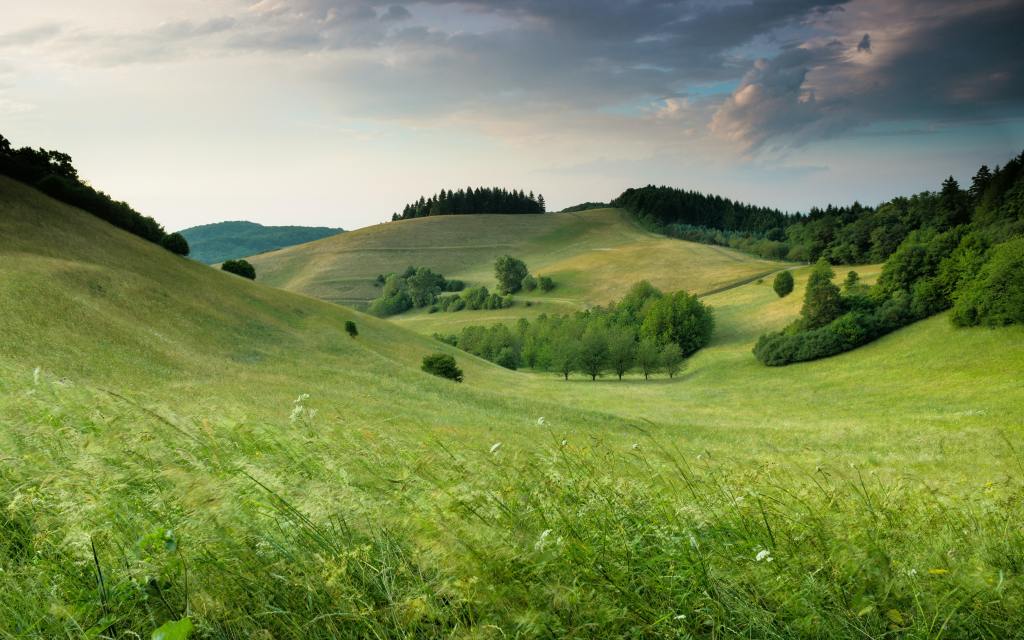
The range of available thoughts is what I call the thought landscape.

Like a physical landscape, you’ll see valleys and hills.

Photo by Claudio Testa on Unsplash

Now that you’ve momentarily elevated yourself over your thought landscape, it’s time to choose.

What other thoughts do you see that you could choose to think next?

Let me give you a concrete example of how this would play out for me.

So here I am, thinking I’m not good enough, smart enough, that people suck, that the pandemic sucks, that politicians are hypocrites, etc.

I’m feeling like shit. This is no fun. Then I realize I can choose what to think.

I take a step back and look at what other thoughts are currently available across my thought landscape.

In the beginning, it’s hard to see past a few meters because all the negative thoughts are fighting for attention, clouding my vision.

I try to rise a bit higher, past the dark fog.

I know there are other thoughts across the dark valley of shitty thoughts.

There you go… I see some light.

About 2 km away, I see a couple of green hills peeking through the clouds.

I take a closer look.

I see my family on one of them.

They love me. I feel happy to know they are alive and they love me.

I see food. Yum! I can see I have plenty of food, and I can afford more if I need to.

That makes me happy.

Another hill. Wow! I’m relatively healthy. How lucky I am! I can still walk, play sports, dance, use my body. My hands work… I can build things!

Another hill further away.

I see people in need. People whose lives I could make better. It makes me happy I could help other people. That’s important.

This exercise took only a couple of minutes, and my outlook has completely changed.

I feel gratitude. I feel alive. I feel happy.

My thought landscape is full of wonderful thoughts to choose from.

I don’t want to discriminate against negative thoughts. I just don’t want them to dictate how I feel 90% of the time.

I don’t know about you, but I don’t remember a single day of my life where I didn’t have a moment where my mind wasn’t imprisoned by negative thinking.

Negative thinking is inevitable. It’s there for our survival. We just need to learn how to keep it at bay.

The thought landscape will always offer you plenty of alternative thoughts, equally or even more valid than the negative thoughts you currently hold in your mind.

Give your positive thoughts a chance to live.

They deserve some attention too.

Peace. Love. Happy-Cookies.

Miguel @ Grumo.com
Come cambiare i pensieri negativi: il panorama del pensiero

Gli esseri umani hanno una tendenza naturale a gravitare verso il pensiero negativo.

Potremmo presumere che la tendenza sia presente perché ha dato ai nostri antenati un piccolo vantaggio di sopravvivenza.

Gli ottimisti spensierati sono stati mangiati dalle belve.

I pessimisti che pensavano al peggio sono stati mangiati meno spesso.

Sebbene possa esserci un vantaggio evolutivo nell’essere pessimisti, vivere la tua vita popolata da pensieri cupi non è divertente.

La verità è che oggi viviamo in un ambiente molto più sicuro rispetto a centinaia di migliaia di anni fa.

È molto raro che le persone soccombano a tigri o altri animali feroci.

Tuttavia, viviamo in un costante stato di allerta e paura innescato solo in parte dalla natura ma esacerbato dalle notizie e dai social media.

Allora come possiamo cambiare i pensieri negativi?

Ricorrere a droghe, alcol, o diventare dipendenti dai social media non sono soluzioni.

Vediamo questo metodo proposto da Miguel Hernandez.

Potresti pensare a questo metodo come a un esperimento mentale, un nuovo modello mentale per affrontare il pensiero negativo.

Miguel lo chiama il paesaggio del pensiero.

Attenzione: se hai problemi a usare la tua immaginazione o soffri di afantasia, non sarà facile implementare questo approccio.

Il concetto è abbastanza semplice da capire ma più difficile da padroneggiare.

Funziona così:

A: Tutti i giorni i abbiamo tanti tipi di pensieri (negativi, positivi, neutri).

B: In un dato istante, possiamo pensare solo a una cosa.

C: Possiamo scegliere cosa pensare in quell’istante (focus).

D: Pertanto, possiamo scegliere di sostituire qualsiasi pensiero di quel momento con qualsiasi altro pensiero disponibile.

Elaboriamo un po’ ogni punto.

A: Su questo dovremmo essere tutti d’accordo. Il numero di pensieri che un essere umano può avere è compreso tra zero e molti. Molti potrebbero essere migliaia o milioni, tantissimi.

Se hai un cervello funzionante, dovresti sempre avere molti pensieri.

B: Questo potrebbe essere discutibile. Tuttavia, possiamo tranquillamente presumere che ci si possa concentrare solo su un pensiero alla volta. Non è possibile pensare a due cose contemporaneamente. Ad esempio, non puoi pensare simultaneamente al blu o al nero.

C: Questo potrebbe essere ancora di più discutibile, ma se ti dico di pensare a un elefante bianco, di solito penserai a un elefante bianco, non a un ornitorinco viola. Quindi sei stato in grado di cambiare il tuo pensiero deliberatamente.

D: Se le tre affermazioni precedenti sono vere, allora deve essere vero che possiamo controllare ciò che pensiamo in un dato momento.

E se D è vero, allora è una buona notizia per tutti noi!

Ciò significa che pensare in modo negativo è, nella maggior parte dei casi, una scelta.

Quindi, se ti ritrovi bloccato su pensieri negativi, ora sai che è perché hai scelto di farlo.

Bene, e quindi?

Quindi puoi scartare il pensiero negativo, fare un passo indietro e guardare quali altri pensieri sono disponibili nella tua mente.

L’obiettivo di fare questo passo indietro è acquisire una nuova prospettiva per vedere quali altri pensieri potresti scegliere.

In A, abbiamo stabilito che potrebbero esserci molti altri pensieri disponibili. Questa gamma di pensieri è ciò Miguel chiama il paesaggio del pensiero.

Foto di Claudio Testa su Unsplash

Come in un paesaggio reale, potrai vedere valli e colline.

Cosa vedi? Ora è il momento di scegliere.

Vediamo un esempio concreto.

Sto pensando di non essere abbastanza bravo, abbastanza intelligente, che la gente fa schifo, che la pandemia fa schifo, che i politici fanno schifo, ecc.

Mi sento una merda. Non è divertente. Poi mi rendo conto che posso scegliere cosa pensare.

Faccio un passo indietro e guardo quali altri pensieri sono attualmente disponibili nel mio panorama di pensiero.

All’inizio è difficile vedere oltre pochi metri perché i pensieri negativi sono prevalenti e offuscano la vista.

Cerco allora di salire un po’ più in alto e di guardare oltre questa nebbia scura di pensieri negativi. So che ci sono altri pensieri nell’oscura valle dei pensieri di merda.

Ecco qua … vedo un po’di luce.

A circa 2 km di distanza, vedo un paio di verdi colline che fanno capolino tra le nuvole.

Guardo più da vicino.

Vedo la mia famiglia. Mi amano. Sono felice di sapere che sono vivi e che mi amano.

Vedo del cibo. Vedo che ho cibo in abbondanza e potrei permettermene anche di più se ne avessi bisogno.

Questo mi rende felice.

Un’altra collina. Wow! Sto bene, godo di buona salute. Quanto sono fortunato! Posso ancora camminare, fare sport, ballare, usare il mio corpo. Le mie mani lavorano … posso costruire cose!

Un’altra collina più lontana.

Vedo persone bisognose. Persone che potrei aiutare. Mi rende felice poter aiutare altre persone. È importante.

Questo esercizio ha richiesto solo un paio di minuti e la mia prospettiva è completamente cambiata.

Provo gratitudine. Mi sento vivo. Mi sento felice.

Il mio panorama di pensieri è pieno di pensieri meravigliosi tra cui scegliere.

Non voglio discriminare i pensieri negativi. Semplicemente non voglio che dettino come mi sento il 90% delle volte.

Non so tu, ma non ricordo un solo giorno della mia vita in cui non ho avuto un momento in cui la mia mente non fosse imprigionata dal pensiero negativo.

Il pensiero negativo è inevitabile. È lì per la nostra sopravvivenza. Dobbiamo solo imparare a tenerlo a bada.

Il panorama del pensiero ti offrirà sempre molti pensieri alternativi, altrettanto validi o anche più validi dei pensieri negativi che hai in quel momento nella tua mente.

Dai ai tuoi pensieri positivi una possibilità di vivere.

Meritano anche loro un po’ di attenzione.

Peace. Love. Happy-Cookies.

Miguel @ Grumo.com

Traduzione e editing a cura di Cristiana Branchini

Clicca qui per l’Articolo originale

Foto di Nick Fewings su Unsplash