
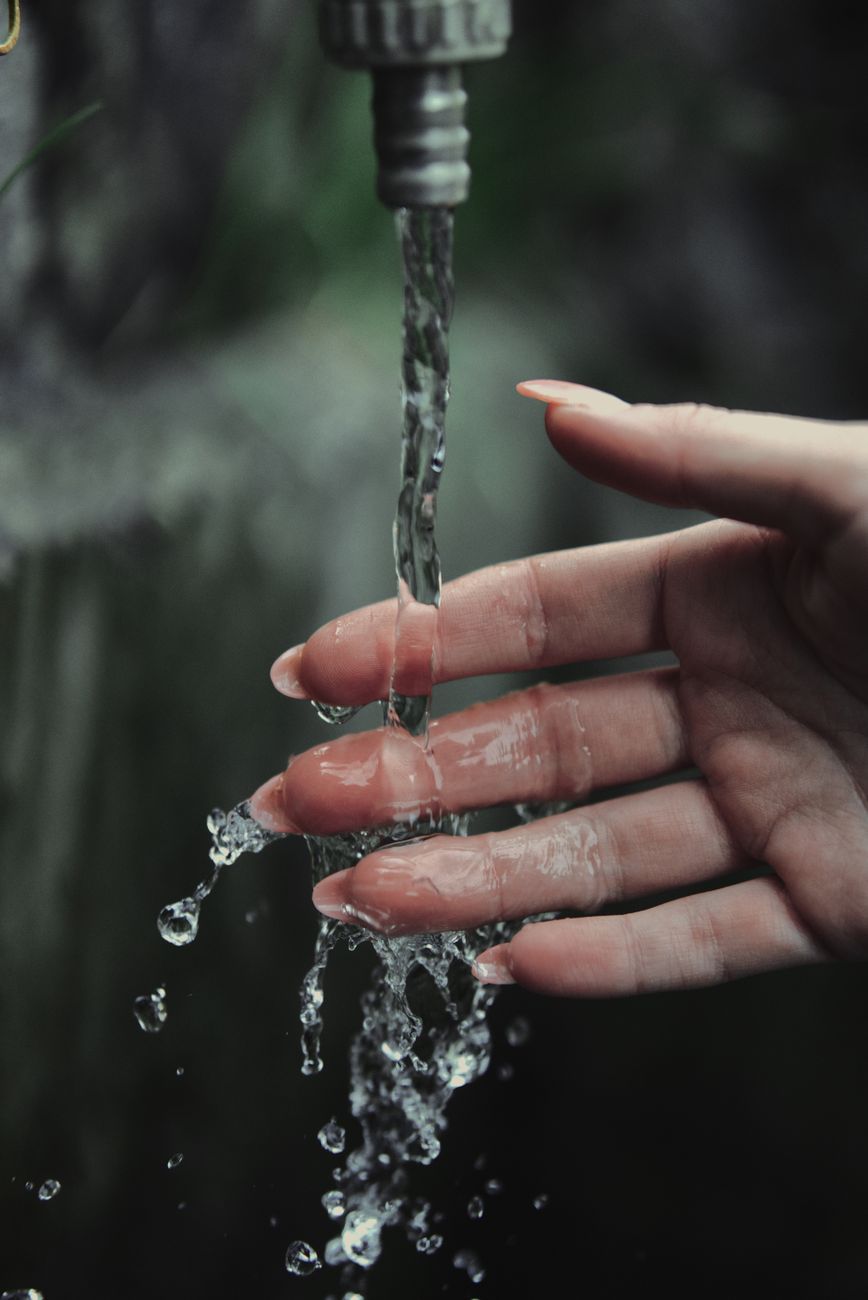
Freshwater stress is no longer a niche environmental issue or a problem confined to arid regions. It is a structural risk to food systems, public health, energy production and social stability. According to UN-Water, around 2.2 billion people lack safely managed drinking water services, while 3.5 billion lack safely managed sanitation. At the same time, climate change is making rainfall more erratic, intensifying drought in some regions and flooding in others. The result is not a single global “water crisis”, but a web of connected water problems: depletion, pollution, unequal access and weak governance.
A recent Science News article on World’s Water Problems highlights a useful shift in framing: the challenge is serious, but it is also solvable when policy, technology and local action work together. For an environmentally conscious audience, that matters. Alarm alone does not fix aquifers, upgrade pipes or clean polluted rivers. Evidence-based choices do.
The scale of the problem
Groundwater is being used faster than it can recover
Groundwater supplies roughly half of the world’s drinking water and a large share of irrigation. Yet in many regions, aquifers are being pumped faster than they recharge. Research published in Nature has documented accelerating groundwater decline in major agricultural zones, including parts of India, the United States and the Mediterranean.
This matters because groundwater often acts as a buffer during drought. When that reserve is overdrawn, communities become more vulnerable to crop failure, water restrictions and land subsidence. In some places, over-pumping also pulls saltwater into coastal aquifers, making freshwater harder and more expensive to treat.
Pollution is reducing the usable supply
Water scarcity is not only about quantity. It is also about quality. Agricultural runoff, untreated sewage, industrial discharge and emerging contaminants such as PFAS can make water unusable or unsafe. The UN estimates that globally, billions of cubic metres of wastewater are released into the environment with inadequate treatment.
This creates a policy blind spot: a region may appear to have enough water on paper, while households, ecosystems and farms face shortages in practice because local sources are contaminated.
Climate change is reshaping water risk
The IPCC has repeatedly warned that warming intensifies the water cycle. That means more frequent and severe drought in some areas, heavier rainfall in others, reduced snowpack, shifting river flows and greater uncertainty for planners. Water infrastructure built for 20th-century conditions is increasingly misaligned with 21st-century climate realities.
Misconceptions that get in the way
Misconception 1: Water scarcity is only a developing-world issue
Not true. High-income countries also face severe water stress. Europe has experienced recurring droughts, and the European Environment Agency has warned that water scarcity now affects a significant share of EU territory each year. In the western United States, aquifer depletion and shrinking reservoirs have exposed how vulnerable even wealthy regions can be.
Misconception 2: Household conservation is enough
Efficient showers, leak repairs and lower-consumption appliances matter, especially in water-stressed cities. But household use is only one part of the picture. Globally, agriculture and animal farming account for about 70% of freshwater withdrawals. Industry and energy systems also consume large volumes. Real progress depends on improving irrigation, pricing water more rationally, reducing pollution and modernising infrastructure.
Misconception 3: More dams or desalination will solve everything
Large infrastructure can help, but neither is a universal fix. Dams can disrupt ecosystems and displace communities. Desalination can provide reliable supply in coastal areas, but it is energy-intensive and creates brine disposal challenges. The strongest strategies usually combine demand reduction, wastewater reuse, watershed protection and targeted infrastructure upgrades.
Proven solutions that deserve more attention
Wastewater recycling is more practical than many people assume
Treated wastewater can be reused for agriculture, industry and, with advanced treatment, even drinking water. Countries such as Singapore and regions such as Orange County, California, have shown that water reuse can reduce pressure on rivers and aquifers while improving resilience during drought.
The public often reacts sceptically at first, but acceptance rises when reuse projects are transparent, well-regulated and clearly explained. The science is strong: high-quality treatment systems can deliver safe water when standards and monitoring are robust.
Smarter irrigation can cut waste without cutting yields
Agriculture remains the biggest lever for water savings. Drip irrigation, soil moisture monitoring, better crop selection and revised irrigation schedules can significantly reduce withdrawals. Yet technology alone is not enough. Subsidies, water pricing and extension services shape whether farmers can adopt more efficient methods.
Policy design matters here. In some cases, efficiency gains have led to a “rebound effect”, where saved water is used to expand irrigated land rather than reduce overall withdrawals. That is why reforms need enforceable limits and basin-level planning, not just new equipment.
Nature-based solutions can improve both water quality and resilience
Wetland restoration, floodplain reconnection, upstream forest protection and urban green infrastructure can store water, filter pollutants and reduce flood risk. These approaches are often cheaper over the long term than relying only on concrete-heavy engineering.
They also offer co-benefits: biodiversity gains, cooler cities and healthier soils. For European readers, this aligns closely with climate adaptation and river restoration debates already under way across the EU.
Better governance is often the missing piece
Many water problems are governance failures as much as hydrological ones. Weak monitoring, underpriced extraction, fragmented regulation and inequitable access can turn manageable stress into crisis. Successful case studies tend to share a few features: transparent data, local participation, enforcement of pollution rules and long-term planning across sectors.
What you can do beyond “use less water”
Individual action matters most when it connects personal habits to broader systems.
At home
- Check for leaks, especially toilets and outdoor taps.
- Replace high-water-use landscaping with climate-appropriate planting.
- Reduce food waste; wasted food also wastes the water used to produce it.
- If possible, install efficient appliances and fixtures with verified performance labels.
In your community
- Support local investment in pipe repair and wastewater treatment.
- Ask your municipality to publish water loss data and drought plans.
- Back wetland, river and watershed restoration projects.
- Push for green infrastructure in schools, streets and public buildings.
As a consumer and citizen
- Pay attention to the water footprint of what you buy, especially food and textiles.
- Cut back on meat or get rid of it completely.
- Support policies that regulate agricultural runoff and industrial pollution.
- Vote for local and regional leaders who treat water as core infrastructure, not an afterthought.
- Follow river basin, groundwater and climate adaptation plans in your area and submit comments when consultations open.
Conclusion: the answer is systemic, not symbolic
Water scarcity is usually about how societies allocate, pollute, price and govern water. That means the response must be bigger than personal guilt and broader than emergency restrictions during drought.
What works is already visible: water reuse, efficient irrigation, wetland restoration, stronger regulation and public investment in resilient infrastructure. The task now is scaling those tools fairly and quickly.
Are there any ideas you would like to add to help facing the global water crisis?
Thank you for reading! Please sign up for my blog crisbiecoach so you don’t miss out on any posts.


Love the tips of what we can do. Thanks, Cristiana!
"Mi piace"Piace a 1 persona