My Trip to India, part 1 – A Day in Bangalore: Chaos, Connection, and the Taste of Tradition

My husband and I spent our first day in India in Bangalore, to meet with Monisha, a student that I met remotely during the running of a scientific project.

Bangalore doesn’t just wake up, actually it never sleeps. We arrived at 3 a.m. and there was already heavy traffic. In the morning, it exploded of life. The city’s energy is a living thing, a whirlwind of everyone having two, three, four and even more wheels honking, the scent of jasmine garlands, and the hum of a million conversations in Kannada, Hindi, and English. I arrived expecting what you may expect from India: traffic, people and animals everywhere, and maybe filter coffees, even though I prefer tea (and I must admit that it was difficult to find a good one despite the fact that India is a tea producer). What I found was a day so vivid, so unexpectedly human, that it’s still imprinted on my senses.

It started with a message from Monisha. “I am in your hotel lobby. Take your time and when you are ready I call a cab.” she texted. An hour later, we were squeezed into the back of a car, driving through lanes packed with vendors selling marigolds, steaming idlis, fabrics, clothes and all you can think about. Monisha told me that her mother would join us for lunch. “Excellent”, I said. The cab let us off in a shopping area (Bangalore doesn’t really have a city center, you are always in the center of something going on…). While waiting for her, we walked around looking the livelihood of the people. Everyone has something to sell, and everyone is smiling and welcoming. Finally Monisha’s mother, Shantha, arrived and greeted me with a smile that cut through the chaos. “Today, you eat like us,” she declared, and just like that, I was no longer a visitor but a guest in their world.

The Art of Eating with Your Hands

We stopped at a restaurant where they used to go when Monisha was a child and she had very good memories about that place. It was a kind of place where tourists would never go because they won’t be able to find it. You have to enter through a gate next to a shop, go up a stairs and then a door opens up for you. We didn’t order: food was brought with confidence by the waiters. I don’t remember what we ate, I just remember that it was excellent! All the food was served on a banana leaf and no cutlery is needed. You eat with your hands. There is what they call “wash room” where you can wash up your hands before eating. I watched as they deftly mixed food with their fingers, shaping it into a perfect bite. Hesitant at first, I followed suit but I have to admit that it was not easy. I don’t tell you about the stains I still have on my t-shirt and that they will never go away. But eating with my hands wasn’t just about taste. It was about texture, temperature, and the unspoken intimacy of sharing a meal.

Bangalore Palace: A Whisper of Royalty

With stomachs full and spirits high, we headed to the Bangalore Palace. Built in 1878 and inspired by England’s Windsor Castle, the palace is a surreal blend of Tudor towers, Gothic windows, and vine-covered walls. Inside, the Durbar Hall gleamed with gold leaf, while the ballroom felt like a set from a film. Monisha pointed out at the different paintings by Raja Ravi Varma. The gardens, lush and sprawling, offered a quiet escape from the city’s frenzy.

ISKCON Temple: Serenity in the City

Our final stop was the ISKCON Sri Radha Krishna-Chandra Temple. The moment we stepped inside, the city’s noise faded. The temple’s gold-plated spires and marble floors reflected the afternoon light, and the air smelled of incense and fresh flowers. Devotees chanted, their voices rising in harmony. Shantha had her hands folded in prayer, while Monisha explained the meaning of the different statues in the temple. There was also some music performed alive. On going out, they offered us food, but I didn’t feel like to eat. Shantha told me that I shouldn’t refuse sacred food so I just took a little from her.

We ended up the day eating in a finger food truck, where we could taste other specialties of the city. They also gave us a bottle of water and some sweets. We were ready to go on with our trip the day after.

Why This Day Mattered

What made this day unforgettable wasn’t the checklist of sights but the people who brought them to life. Monisha and Shantha didn’t just show us Bangalore; they let us feel it: the warmth of a shared meal, the pride in showing us their city, and the quiet moments of connection in a place that never stops moving. Bangalore, I learned, isn’t just about its reputation as India’s Tech. It’s a city of layers: the chaos of its streets, the grace of its temples, and the generosity of its people.

Tags & Links for the Curious

Karnataka Cuisine

Bangalore’s Cultural Experiences


Have you ever had a travel experience that changed how you see a place? Or a meal that became a memory? I’d love to hear your stories.

This is the first part of my trip to India. If you liked it, stay tuned for the next episodes by signing up for my blog crisbiecoach 
Would Degrowth Be a Sustainable Shift for a Greener Tomorrow?

In a groundbreaking study, the University of Massachusetts reveals that reducing working hours can contribute significantly to environmental conservation. Trimming just 10% of our work time could lead to a remarkable 14.6% reduction in our ecological footprint, primarily due to decreased travel and daily expenses.

This idea sparks a debate between two contrasting theories:

  1. Technological Advancements and Unchanged Wages: Some believe that despite reduced working hours, technological and energy improvements could sustain economic growth. Changes in daily habits, like preparing meals at home, could further reduce pollution.
  2. Degrowth Theory: Advocates of degrowth argue that a substantial reduction in ecological footprint by 2050 is achievable only by decreasing wages. This theory contends that with less disposable income, material consumption would decrease, subsequently reducing pollution and resource use. Essentially, earning a salary equivalent to the actual days worked, such as a four-day workweek, aligns with this approach.

Personally, I lean towards the degrowth theory. The current trajectory seems unsustainable, risking a rapid depletion of resources and an uncontrollable decline in population and industrial productivity. Despite its radical nature, an OECD report indicates a 50% increase in consumption over the past 30 years, correlating with a rise in environmental footprint. Degrowth proposes a gradual reduction in consumption, starting with a cut in working hours.

Economist Serge Latouche, a key proponent of degrowth, clarifies that it’s not about weakness or suffering but a transformation from consumption to use. This involves buying based on necessity, repairing items, and recycling at the end of their lifecycle—a shift towards a materially responsible society.

Degrowth advocates a celebration of slowness, drawing on tradition, and a shift from quantity to quality. It emphasizes that progress requires conservation and challenges the notion of new equating to better and old to outdated.

So, why work less and earn less? The reduction in working hours must be accompanied by a decrease in wages to avoid an increase in the ecological footprint due to leisure activities. However, this shift would allow more time for personal growth, extending beyond mere leisure.

In the face of our crucial choice between embracing sobriety across all levels or hurtling towards resource depletion and a global system collapse, it’s time to reflect on a different future. Especially in these challenging times marked by a threat of an increase of the planet’s temperature by over 1.5 degrees, we should choose a more sustainable and committed behavior as the path forward. Everyone should be ready to make some efforts to reduce their own consumption.

What are your thoughts? Would you consider working less, earning less, and consuming less, while embracing a more purposeful and conscientious way of life?

You can find more on the environment on my blog and also on the Boomer Eco Crusade blog, a blogger who is really engaged in making small changes towards a positive impact.

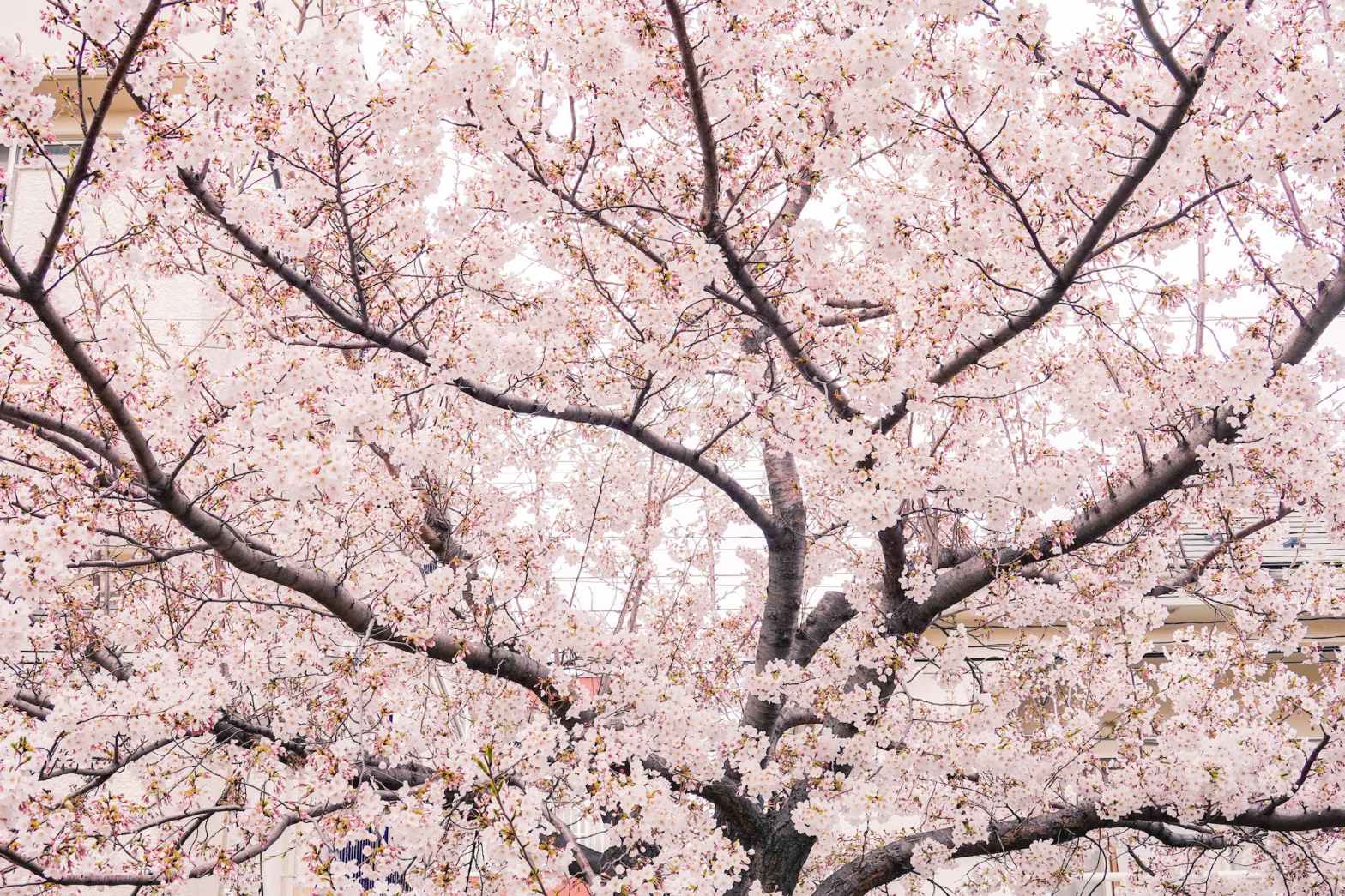
Hanami, a Japanese tradition also known as cherry blossom contemplation

In the shade of cherry blossoms, there are no more strangers.

Kobayashi Issa, Poet

Have you ever heard of the beautifully simple Japanese tradition of Hanami, also known as “flower contemplation”, better known as “cherry blossom contemplation”? It is an ancient practice of contemplating the flowers.

Life is beautiful yet fleeting. This is the feeling behind the Japanese celebration of Hanami. Every spring, friends and families gather to organize picnics and parties under the beautiful cherry blossoms. Otherwise known as Sakura, the flowers appear for a very short period between March and May, embellishing the Japanese landscape with their delicately fragrant presence.

Sakura bloom for only two weeks before the wind spreads them in nature, so the flowers symbolize the beauty and ephemerality of life. As we admire these beautiful flowers, we remind ourselves that every moment is a gift and should be celebrated as such. In this way, we learn to let our lives flourish and to appreciate every moment of joy, love and wonder that the wind brings us.

“Sa”, which means “god” (神), refers to the god of the rice fields. “Kura” represents the stand used to honor a god with offerings of food and saké.

THE HISTORY OF SAKURA

The Hanami tradition is centuries old, with references dating back between 710 and 794, and it is inspired by the Chinese custom of admiring plum blossoms. Sakura were worshipped as gods in Japan, and when the cherry blossoms bloomed, it was a sign that the god had come down from the mountain and it was time to plant rice. Emperor Saga (Heian period from 794 to 1185) was the first to throw a real party on that occasion – with food, drink, music, and poems – after having admired a cherry tree at Jishu Shrine located in Kiyomizu Temple.

HANAMI IN MODERN TIMES

This activity is so popular – and has been for so long – that the Japan Meteorological Agency is even involved in forecasting tree blooms. Cherry blossom contemplation is one of the best experiences in Japan, but it can also be practiced in many other countries. There are famous cherry blossom parks in the United States, Canada, South Korea, Brazil, Europe, Taiwan and China.

ABOUT CHERRY BLOSSOMS

  • There are nine types of cherry trees in Japan and more than 100 varieties according to the Japan Cherry Blossom Association.
  • In addition, there are 200 other cultivated varieties.
  • Their colors range from white to dark pink, and the size and number of petals can also vary.
  • Some trees can reach up to 20 meters tall.
  • A tree can also be a national monument. The Miharu Takizakura in Miharu City is believed to be more than a thousand years old and 13.5 meters high and about 25 meters wide.

Do you like this flowers’ contemplation tradition?

Senbazuru: How 1000 Origami Cranes Can Let Happiness Unfold

Folding 1000 origami cranes is believed to bring good fortune. Today, this ancient Japanese practice has spread around the world, embodying faith, hope and peace. 

According to an ancient Japanese belief, folding 1000 paper cranes can bring good fortune in your life. According to the legend, the crane may live for a thousand years; each paper crane represents one year in the majestic bird’s life. After you complete 1000 origami cranes, your wish will become truth. The 1000 origami cranes suspended in the air are often made by groups of people who join forces to achieve this goal. This tradition often supports a good cause or a special occasion like a marriage. The latter is popular with the Japanese American community, which assigns meanings to different colours: red is love, white is purity, gold is wealth, green is health, yellow is creativity, blue is loyalty, and purple is spirituality.

The custom has spread all over the world thanks to Sadako Sasaki, who was just two years old when the atomic bomb was dropped on Hiroshima. She developed leukaemia and, inspired by the senbazuru story, began folding cranes – first for her health, then, when she realised that she would not survive, for world peace. She made 644 origami, and her family and classmates completed the task and folded the missing cranes in her honour. To remember Sadako and the other children victims of the nuclear bomb, the Children’s Peace Monument has been built within the Hiroshima’s Peace Memorial Park. Around 10 million paper cranes are sent to the monument from all around the world every year – proof of how Sadako’s message of peace has widely flown, and an example of how one person can make a difference.

Enjoy a Moment of Paper-folding

The beauty of origami is not only a practice. Ultimately, you will make something personal that you can give to someone you care about. Moreover, not only you can share the physical gift of origami, but also you can use the making process to think of your beloved ones.

What do you think about it? Would you try it?