Would Degrowth Be a Sustainable Shift for a Greener Tomorrow?

In a groundbreaking study, the University of Massachusetts reveals that reducing working hours can contribute significantly to environmental conservation. Trimming just 10% of our work time could lead to a remarkable 14.6% reduction in our ecological footprint, primarily due to decreased travel and daily expenses.

This idea sparks a debate between two contrasting theories:

  1. Technological Advancements and Unchanged Wages: Some believe that despite reduced working hours, technological and energy improvements could sustain economic growth. Changes in daily habits, like preparing meals at home, could further reduce pollution.
  2. Degrowth Theory: Advocates of degrowth argue that a substantial reduction in ecological footprint by 2050 is achievable only by decreasing wages. This theory contends that with less disposable income, material consumption would decrease, subsequently reducing pollution and resource use. Essentially, earning a salary equivalent to the actual days worked, such as a four-day workweek, aligns with this approach.

Personally, I lean towards the degrowth theory. The current trajectory seems unsustainable, risking a rapid depletion of resources and an uncontrollable decline in population and industrial productivity. Despite its radical nature, an OECD report indicates a 50% increase in consumption over the past 30 years, correlating with a rise in environmental footprint. Degrowth proposes a gradual reduction in consumption, starting with a cut in working hours.

Economist Serge Latouche, a key proponent of degrowth, clarifies that it’s not about weakness or suffering but a transformation from consumption to use. This involves buying based on necessity, repairing items, and recycling at the end of their lifecycle—a shift towards a materially responsible society.

Degrowth advocates a celebration of slowness, drawing on tradition, and a shift from quantity to quality. It emphasizes that progress requires conservation and challenges the notion of new equating to better and old to outdated.

So, why work less and earn less? The reduction in working hours must be accompanied by a decrease in wages to avoid an increase in the ecological footprint due to leisure activities. However, this shift would allow more time for personal growth, extending beyond mere leisure.

In the face of our crucial choice between embracing sobriety across all levels or hurtling towards resource depletion and a global system collapse, it’s time to reflect on a different future. Especially in these challenging times marked by a threat of an increase of the planet’s temperature by over 1.5 degrees, we should choose a more sustainable and committed behavior as the path forward. Everyone should be ready to make some efforts to reduce their own consumption.

What are your thoughts? Would you consider working less, earning less, and consuming less, while embracing a more purposeful and conscientious way of life?

You can find more on the environment on my blog and also on the Boomer Eco Crusade blog, a blogger who is really engaged in making small changes towards a positive impact.
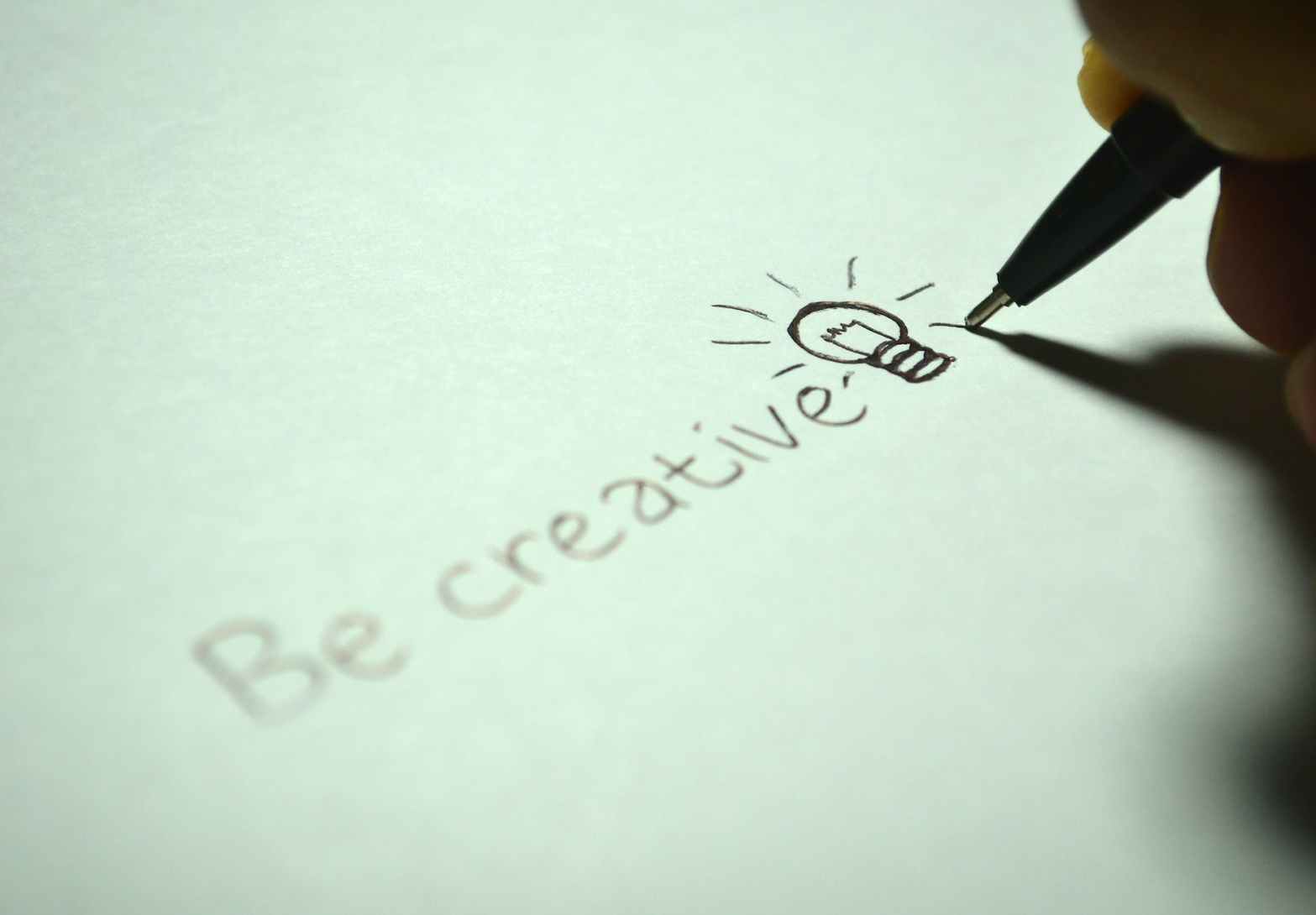
Nurturing Creativity: Unleashing the Vital Skill for the Future

In the fast-paced world of tomorrow, creativity stands tall as one of the essential skills. In this article, I aim to demystify the concept of creativity and provide you with valuable resources to delve deeper into this skill.

Beyond the conventional perception of creativity being limited to artists and innovators, I explore its universal relevance, the process it entails, and how anyone can harness and enhance their creative capabilities.

Unveiling the Real Essence of Creativity

Commonly, creativity is associated with individuals possessing extraordinary artistic or inventive talents. However, this narrow view is debunked by creativity expert Sir Ken Robinson. In his immensely popular TED talk, Robinson reshapes our understanding of creativity, emphasizing:i

  • Creativity’s significance across all spheres of life and work.
  • The inherent creativity we are born with but tend to outgrow.
  • The misconception that creativity thrives only when boundaries are absent; in reality, it often thrives within constraints.
  • Viewing creativity as an ongoing process, not a singular event, and thus, acquirable by all.

Creativity, Imagination, and Innovation Distilled

Distinguishing creativity from imagination and innovation is crucial. The following definition outlines the two fundamental phases of the creative process:

  • Generating ideas.
  • Making judgments to evaluate the value of those ideas.

This dual-phase approach sheds light on the myriad factors that foster creativity, including cognitive abilities, knowledge, thinking styles, motivation, personality traits, and environment.

Fostering Creativity: Techniques and Strategies

While no foolproof formula exists to boost creativity, several techniques can be beneficial:

Empowering Resources for Unleashing Creativity

A wealth of online resources awaits those seeking to enhance their creative prowess:

Embrace the exciting journey of nurturing your creativity, a skill pivotal for the future. Shedding the misconception of creativity being exclusive, the universal relevance is unveiled and the process demystified. With an array of techniques and resources at your disposal, you’re empowered to unlock your creative potential and contribute meaningfully to the ever-evolving world. So, dive in, explore, and enjoy the transformative power of creativity!

How And Why Reinventing Yourself. Find It Out by Following These 6 Steps

Have you ever wanted to reinvent your life? Have you tried several times but failed? Reinventing yourself professionally or personally can be a challenge but also a great adventure. Follow these 6 steps to succeed.

First step: find or wake up one of your passion.

Photo by Braden Collum on Unsplash

Concluding one phase and starting another one is not easy. Reinventing yourself requires more commitment than a simple change. Consequences may impact vital aspects of your daily life and a lot of courage and determination are needed.

The pandemic phase has forced all of us to look within and it is possible that many of us are dealing with the need of reinventing ourselves. There will be some who feel empty and need to do something to fill the empty spaces, others who have been forced to reinvent themselves due to the loss of a family member or a friend, others due to difficulties with their work.

For one reason or another, these are times when you need to stop to reflect and make decisions. Let’s see how to deal with this situation.

Reinventing yourself in a satisfactory way presupposes confronting yourself with one of the most uncomfortable emotions that exist: fear. You will be forced to leave your comfort zone and take a leap in the dark. The best antidote to fear is passion. It is the first success factor in a “reinvention” phase. Finding your passion, or awakening it, is only possible if you are honest with yourself. You have to ask yourself questions like:

  1. who I really am;
  2. what I want to do;
  3. which of my passions can help me in this moment.

An honest reflection and re-discovery your old dreams are the fundamental ingredients to neutralize fear and not fearing the future.

The second factor that will help you is not to assess uncertainty as a danger but as an opportunity. It is a question of letting go nostalgia and opening up to the experience of the “new”, so that to focus on what you want and not on what you fear.

To achieve this, you must be willing to learn with humility. If you think you already know everything, it is difficult to be able to start over in any area of ​​your life in a satisfactory way. The success of those who are successful is only the tip of the iceberg, behind there are hours and hours of training and mistakes that are barely seen.

Facing the future and uncertainty also requires a great deal of creativity and imagination. When reinventing yourself, it is important to keep a compass to map the path you are taking. The future is not written anywhere, it is up to you to create it and to do so you need our imagination and hard work.

Photo by Jamie Street on Unsplash

Reinventing yourself means knowing yourself from another perspective and being surprised by the opportunities that suddenly begin to present themselves. If we want your new self to be successful, you need to go out and make yourself known. For this, it is essential to strengthen your network of contacts.

The final ingredient for your success is to be self-confident, because you are capable of doing things you do not even imagine. But you need to learn to use the resources you have and find others available around you.

To conclude, here are the six ingredients to successfully reinvent yourself:

  1. find / awaken your passion to neutralize fear;
  2. transform difficulties into opportunities;
  3. learn, learn, learn;
  4. use great creativity and imagination;
  5. make yourself known;
  6. be self-confident.

Are you ready to reinvent yourself now?

Photo by Ahmad Odeh on Unsplash

Working Less, Could it Save the Planet?

A study by the University of Massachusetts states that “working less is good for the environment”. If we would spend 10% less of our time at work, our footprint on the earth would be reduced by 14.6%, mainly thanks to the decrease in travelling and daily expenses.

There are two contradictory theories on this idea:

  1. wages may remain unchanged and the economy would continue to grow thanks to the technological and energetic improvements despite the reduction in working time; this theory explains us that pollution could be reduced thanks to the change in daily habits, such as the preparation of your own meals at home instead of buying food already prepared or prepared by others;
  2. only by reducing wages we will achieve a significant reduction in the ecological footprint by 2050. This is the theory of degrowth that supports the fact that only with less money available the consumption of material goods can be reduced and consequently there will be a corresponding reduction of the pollution and use of resources. In practise, it means that by working four days, you would receive a salary equivalent to four days.

I would like to focus on degrowth because I support this approach. It seems clear to me that by continuing in this way the human kind will encounter a rapid depletion of available resources which will cause a sudden and uncontrollable decline of the population and of the productive capacity of the industries. The degrowth theory is certainly radical and to some it seems heretical. However, an OECD report says that consumption has increased by 50% in the past 30 years and that this goes hand in hand with an increase of the environmental footprint. The degrowth theory stipulates that a progressive decrease in consumption should begin by starting with a reduction in working time.

Serge Latouche, economist among the founding fathers of the degrowth theory, explains that degrowth does not mean weakening or suffering. It rather means transforming the concept of consumption into that of use: I buy something because I need it, if it breaks I have it repaired ( or repair it by myself) and, at the end of its lifecycle, I recycle it. It also means shifting attention from quantity to quality. The result will be a materially responsible society.

Degrowth is also a praise of slowness and duration; learning from the past; awareness that there is no progress without conservation; indifference to fashions and ephemeral; draw on the knowledge of tradition; not identifying the new with the best, the old with the outdated; do not call buyers the consumers , because the purpose of purchasing is not consumption but, as I said before, use.

So why working less and earning less? If the consumption for leisure or pleasure activities would increase thanks to a shorter working week, there would be a significant increase in the ecological footprint. This is why the reduction in working time must be accompanied by a reduction of wages. However, we would have more time for us, to dedicate to our personal growth, which does not only mean fun or leisure activities.

The crucial choice of our times, therefore, is between urgently committing ourselves to embark on the path of sobriety at all levels or going at full speed towards the depletion of resources and the global collapse of our system, which nobody hopes for.

In these difficult times, with the rapid spread of a virus that threatens our lives and frightens us, we could seriously begin to reflect on a different future for us all.

What do you think about it? Would you be willing to work less, gaining less and consuming less (but using more), thus starting a path towards a more committed society, different from the way we know it today?