
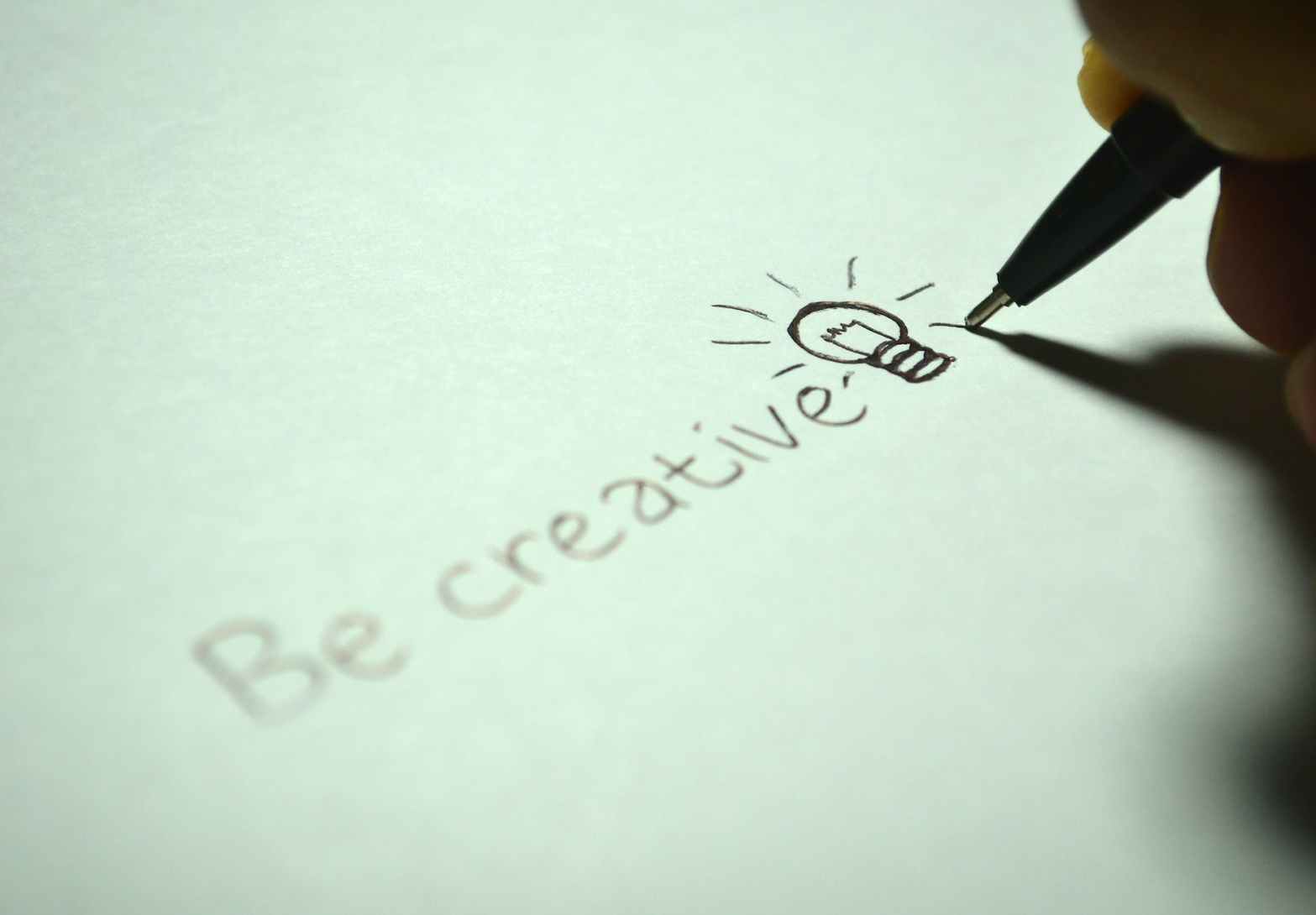
Nurturing Creativity: Unleashing the Vital Skill for the Future

In the fast-paced world of tomorrow, creativity stands tall as one of the essential skills. In this article, I aim to demystify the concept of creativity and provide you with valuable resources to delve deeper into this skill.

Beyond the conventional perception of creativity being limited to artists and innovators, I explore its universal relevance, the process it entails, and how anyone can harness and enhance their creative capabilities.

Unveiling the Real Essence of Creativity

Commonly, creativity is associated with individuals possessing extraordinary artistic or inventive talents. However, this narrow view is debunked by creativity expert Sir Ken Robinson. In his immensely popular TED talk, Robinson reshapes our understanding of creativity, emphasizing:i

  • Creativity’s significance across all spheres of life and work.
  • The inherent creativity we are born with but tend to outgrow.
  • The misconception that creativity thrives only when boundaries are absent; in reality, it often thrives within constraints.
  • Viewing creativity as an ongoing process, not a singular event, and thus, acquirable by all.

Creativity, Imagination, and Innovation Distilled

Distinguishing creativity from imagination and innovation is crucial. The following definition outlines the two fundamental phases of the creative process:

  • Generating ideas.
  • Making judgments to evaluate the value of those ideas.

This dual-phase approach sheds light on the myriad factors that foster creativity, including cognitive abilities, knowledge, thinking styles, motivation, personality traits, and environment.

Fostering Creativity: Techniques and Strategies

While no foolproof formula exists to boost creativity, several techniques can be beneficial:

Empowering Resources for Unleashing Creativity

A wealth of online resources awaits those seeking to enhance their creative prowess:

Embrace the exciting journey of nurturing your creativity, a skill pivotal for the future. Shedding the misconception of creativity being exclusive, the universal relevance is unveiled and the process demystified. With an array of techniques and resources at your disposal, you’re empowered to unlock your creative potential and contribute meaningfully to the ever-evolving world. So, dive in, explore, and enjoy the transformative power of creativity!

How to Identify a Narcissistic Personality

The common definition of narcissism is the pursuit of gratification from vanity or egotistic admiration of one’s idealised self-image and attributes.

Narcissists are people who believe be unique, superior to others and masters of a wonderful existence that no one can imagine. As a result, they may be bully and arrogant. They need constant admiration and always want to be the best. Therefore, they may become extremely competitive. In their view, they are the only ones capable of achieving results in life.

They also think their experience is more valuable than that of others and feel they need to set an example for those around them. They do not do it to give advice but to be at the centre of the attention. Because of that, their social relationships deteriorate fast and they need new people to admire them, even if, over time, they will be left alone.

The world of narcissists is small, it is limited to what they think and do. In their their mind there are echoes of their thoughts. They do not listen to others because they don’t care about anything. Their greed for admiration leads them to believe that there are no ordinary events happening in their life, their existence is just wonderful and successful.

Photo by NASA on Unsplash

Envy prevails in their personal and social relationships, both what they feel about others’ success and what they think other people feel about their fantastic life.

Caution is the norm if a narcissist approaches you, because they want to excel and they will not hesitate to crush you. They are the worst acquaintances you can have because their lack of empathy makes them unable to help and support.

They live in a parallel reality, in a dream world where they want to exert power over others. Whatever they do is addressed to achieve success at any costs.

They have a vivid imagination that leads them to lie often, and they may tell amazing things they have done, even though they are difficult to prove. Remember that they cannot fail, failure does not belong to their world.

Narcissists need to hide their flaws and turn their insecurity into a false security. In order not to show their vulnerability, they will do anything necessary, such as talking excessively, changing the subject in order to shift attention to them, and belittle others by pointing out their flaws.

Narcissists are control freaks and try to bring every situation to their own ground, where they feel safe. If they are managers, they will micromanage.

They must constantly feel euphoria not to show their discomfort, because the narcissistic person do not want to feel frustrated. A common way to avoid frustration is addiction, whether it is shopping, alcohol, drugs, sports, sex, or gambling.

Another characteristic of narcissists is that they tend to take advantage of others. For example, they will partner with well-positioned people to earn their trust and use them to help them grow. They will also take credits of others’ success to advance their career or social ladder.

Narcissists master the subtle art of manipulation. They are always on an alert mode, ready to redirect those who try to say or do something they do not like, or that does not allow them to show their greatness and power in front of others.

If after reading this article you think you are a narcissist, don’t worry as a true narcissist will never identify with these traits. For a narcissistic person, aspirations are never excessive. If they are the centre of attention it is because they think they deserve it. It is ridiculous for these people to try to identify themselves in any profile. The narcissist is unique, in no way you can compete with him or her.

Have you ever dealt with a narcissist?

Photo by Marina Lakotka on Unsplash

How And Why Reinventing Yourself. Find It Out by Following These 6 Steps

Have you ever wanted to reinvent your life? Have you tried several times but failed? Reinventing yourself professionally or personally can be a challenge but also a great adventure. Follow these 6 steps to succeed.

First step: find or wake up one of your passion.

Photo by Braden Collum on Unsplash

Concluding one phase and starting another one is not easy. Reinventing yourself requires more commitment than a simple change. Consequences may impact vital aspects of your daily life and a lot of courage and determination are needed.

The pandemic phase has forced all of us to look within and it is possible that many of us are dealing with the need of reinventing ourselves. There will be some who feel empty and need to do something to fill the empty spaces, others who have been forced to reinvent themselves due to the loss of a family member or a friend, others due to difficulties with their work.

For one reason or another, these are times when you need to stop to reflect and make decisions. Let’s see how to deal with this situation.

Reinventing yourself in a satisfactory way presupposes confronting yourself with one of the most uncomfortable emotions that exist: fear. You will be forced to leave your comfort zone and take a leap in the dark. The best antidote to fear is passion. It is the first success factor in a “reinvention” phase. Finding your passion, or awakening it, is only possible if you are honest with yourself. You have to ask yourself questions like:

  1. who I really am;
  2. what I want to do;
  3. which of my passions can help me in this moment.

An honest reflection and re-discovery your old dreams are the fundamental ingredients to neutralize fear and not fearing the future.

The second factor that will help you is not to assess uncertainty as a danger but as an opportunity. It is a question of letting go nostalgia and opening up to the experience of the “new”, so that to focus on what you want and not on what you fear.

To achieve this, you must be willing to learn with humility. If you think you already know everything, it is difficult to be able to start over in any area of ​​your life in a satisfactory way. The success of those who are successful is only the tip of the iceberg, behind there are hours and hours of training and mistakes that are barely seen.

Facing the future and uncertainty also requires a great deal of creativity and imagination. When reinventing yourself, it is important to keep a compass to map the path you are taking. The future is not written anywhere, it is up to you to create it and to do so you need our imagination and hard work.

Photo by Jamie Street on Unsplash

Reinventing yourself means knowing yourself from another perspective and being surprised by the opportunities that suddenly begin to present themselves. If we want your new self to be successful, you need to go out and make yourself known. For this, it is essential to strengthen your network of contacts.

The final ingredient for your success is to be self-confident, because you are capable of doing things you do not even imagine. But you need to learn to use the resources you have and find others available around you.

To conclude, here are the six ingredients to successfully reinvent yourself:

  1. find / awaken your passion to neutralize fear;
  2. transform difficulties into opportunities;
  3. learn, learn, learn;
  4. use great creativity and imagination;
  5. make yourself known;
  6. be self-confident.

Are you ready to reinvent yourself now?

Photo by Ahmad Odeh on Unsplash

Creativity: the skill of the future

Creativity is among the top three skills of the future.  I try to clarify this concept and give you more resources to explore it further.

We often associate creativity with artistic or innovational abilities, that only certain special people have. Those people are supposed to live a life of free expression and to produce ingenious works of arts or invent something useful for the human kind.

However, according to creativity expert, Sir Ken Robinson, this view of creativity is erroneous. Robinson, whose talk on this subject remains the most viewed video on Ted.com, states that:

  • creativity is essential for all spheres of work and life, not just the arts,
  • we are all born creative, but grow out of it,
  • creativity does not require freedom from boundaries and usually takes place within a given framework,
  • creativity is a process, rather than an event, and consequently,
  • it can be learned by all.

Creativity is closely linked to, but different from imagination and innovation. This definition of the concept identifies two phases of the creative process:

  1. generating ideas,
  2. making judgements (evaluating the value of those ideas).

This helps explain why so many different factors may be conducive to creativity, such as intellectual abilities, knowledge, styles of thinking, motivation, certain personality traits and environment.

Even though there is limited scientifically sound conclusions on how to become more creative, a number of techniques may help:

There are a lot of resources available on the Internet that will help you boosting your capacity to create original and useful work:

Have fun!