
How And Why Haters Act

A “hater” can be defined as a person who, on the Internet and in particular on social networks, usually taking advantage of anonymity, uses racist expressions of hatred and violently insults individuals, especially if known or famous, or entire segments of the population (foreigners and immigrants, women, non-Caucasian people, homosexuals, believers of other religions, disabled people, etc.).

Some researchers have identified the following characteristics as typical of haters:

1. predominantly express negative opinions in an aggressive manner;

2. make cynical or cruel comments and look for susceptible people;

3. they try to be ingenious to gain visibility in the media thanks to the fruit of their provocations;

4. usually, they deal with current issues to attract the attention of the general public.

The energy that the haters invest in their destructive action may have two reasons:

1. envy and desire to become famous. The haters believe that the person to whom they turn their hatred does not deserve the fame or prestige they have. The indignation is stronger when the person carries out an activity in the same field as the hater, obtaining, however, a recognition that the hater does not receive.

2. psychological projection. Identified by Freud in 1895, psychological projection is a defence mechanism by which someone attributes their shortcomings or defects to others.

In general, researchers found narcissistic and psychopathic personality traits, antisocial and sometimes even sadistic personalities in the haters who participated in the studies. Certainly, it is not easy to find haters willing to participate in research because they obviously prefer to remain anonymous. Furthermore, wanting to participate in a study would mean an awareness of the problem from the side of the hater, which is also quite difficult to find.  

The haters phenomenon can happen in two ways.

On the one hand, if haters are ignored, and the recipients of the offences do not respond to their attacks, they tend to get bored and leave the online context where they were trying to find consent and visibility. 

On the other hand, however, persistent hating behaviours can be an indication of truly harmful, antisocial and physically aggressive intentions that reflect genuinely disturbed personalities.  

In conclusion, if a person has aggressive and offensive behaviours that cease if they do not find an audience and therefore visibility, the problem arises from the side of those who exploit this kind of behaviour. If, on the other hand, online behaviour were a reflection of real personality problems, it would be necessary to analyse the character of the individual, which is in any case independent on the use of social media.  

What do you think of haters? Have you ever been attacked in the social networks?
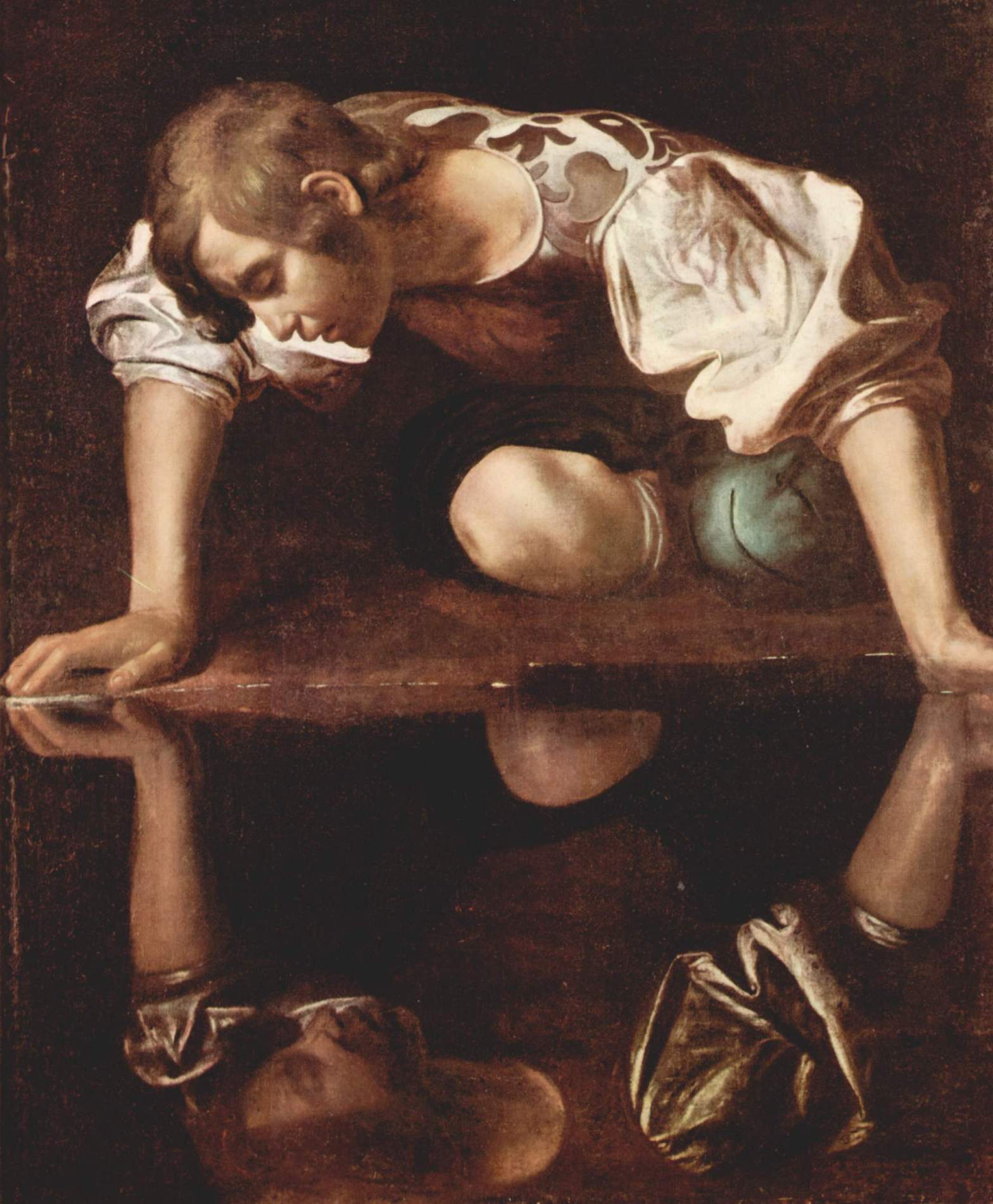
How to Identify a Narcissistic Personality

The common definition of narcissism is the pursuit of gratification from vanity or egotistic admiration of one’s idealised self-image and attributes.

Narcissists are people who believe be unique, superior to others and masters of a wonderful existence that no one can imagine. As a result, they may be bully and arrogant. They need constant admiration and always want to be the best. Therefore, they may become extremely competitive. In their view, they are the only ones capable of achieving results in life.

They also think their experience is more valuable than that of others and feel they need to set an example for those around them. They do not do it to give advice but to be at the centre of the attention. Because of that, their social relationships deteriorate fast and they need new people to admire them, even if, over time, they will be left alone.

The world of narcissists is small, it is limited to what they think and do. In their their mind there are echoes of their thoughts. They do not listen to others because they don’t care about anything. Their greed for admiration leads them to believe that there are no ordinary events happening in their life, their existence is just wonderful and successful.

Photo by NASA on Unsplash

Envy prevails in their personal and social relationships, both what they feel about others’ success and what they think other people feel about their fantastic life.

Caution is the norm if a narcissist approaches you, because they want to excel and they will not hesitate to crush you. They are the worst acquaintances you can have because their lack of empathy makes them unable to help and support.

They live in a parallel reality, in a dream world where they want to exert power over others. Whatever they do is addressed to achieve success at any costs.

They have a vivid imagination that leads them to lie often, and they may tell amazing things they have done, even though they are difficult to prove. Remember that they cannot fail, failure does not belong to their world.

Narcissists need to hide their flaws and turn their insecurity into a false security. In order not to show their vulnerability, they will do anything necessary, such as talking excessively, changing the subject in order to shift attention to them, and belittle others by pointing out their flaws.

Narcissists are control freaks and try to bring every situation to their own ground, where they feel safe. If they are managers, they will micromanage.

They must constantly feel euphoria not to show their discomfort, because the narcissistic person do not want to feel frustrated. A common way to avoid frustration is addiction, whether it is shopping, alcohol, drugs, sports, sex, or gambling.

Another characteristic of narcissists is that they tend to take advantage of others. For example, they will partner with well-positioned people to earn their trust and use them to help them grow. They will also take credits of others’ success to advance their career or social ladder.

Narcissists master the subtle art of manipulation. They are always on an alert mode, ready to redirect those who try to say or do something they do not like, or that does not allow them to show their greatness and power in front of others.

If after reading this article you think you are a narcissist, don’t worry as a true narcissist will never identify with these traits. For a narcissistic person, aspirations are never excessive. If they are the centre of attention it is because they think they deserve it. It is ridiculous for these people to try to identify themselves in any profile. The narcissist is unique, in no way you can compete with him or her.

Have you ever dealt with a narcissist?

Photo by Marina Lakotka on Unsplash

The Wonderful Rooster: a Fable from Africa

It was about sunset, the time when the sky gets orange-coloured. Close to a little river, an old man next to death called his son and told him: “Listen my sweet creature, I will leave soon this world to re-join my ancestors. As a legacy, you will receive this wonderful rooster that made my father’s fortune as well as mine. It can secure your wealth too. Thanks to it you will have a happy life, lack nothing and also help the poorest. It is not a common rooster. For generations, it has been handed over from father to son. You will watch over it with great care from now on”. Then he died. The son organised the funeral and he invited relatives and friends.

The mourning period passed, the young man decided to participate with his rooster to fighting tournaments and for many years the rooster won all the fights, giving his owner luck and consideration. All the kings wanted that rooster, but the man did not want to get rid of it even though they would pay gold. He became powerful and rich and built a huge palace, where many servants worked. He also gave work to those who could not make their living. He built up schools where children could learn many disciplines.

His success aroused much jealousy and one of his neighbour, envious of his happiness, decided to make his life harder.  She had the idea of giving her corn to the rooster. She fed it so much that it became so fat that after some time it could barely walk.

It was at that point that the cruel woman went to visit her neighbour and told him: “Your rooster stole my corn and I have nothing left to eat”.

The young man, embarrassed, replied: “Dear friend, calm down, I will pay you for your corn!”

She reacted angrily saying: “No, no, no! I want my corn back, the corn that your rooster has eaten. Kill it and give me back my corn.”

The atmosphere was tense, full of electricity, like when a storm is about to break out. The woman was full of anger, blinded by greed, and adamant. The young man offered her all his wealth, his palace, his gold, his diamonds and jewels but the woman did not change her mind. She considered her decision non-negotiable. The problem was brought before the Jury of Wise Men, and they listened to the discussion. Jealous as they all were, the members of the Jury condemned to death the poor rooster that was sleeping in the garden with a full stomach. They went there, they got it and they killed it.

The corn grains were returned to the woman. The young man suffered from this injustice and perished very fast. Struck by grief, he was devastated and became sadder day after day. He buried secretly the body of his rooster behind his palace and, wounded in the depths of his soul, he locked himself up for a long time in his palace. One day, in the place where the roosted was buried, a mango with beautiful fruits was born. The envious neighbour, who was greedy and bold, went to ask the young man one of the mango fruit. The man did not refuse but the woman called also his son and wanted him to eat those tasty fruits too. They took a lot of fruits instead of some, as she had asked.

The next day, at sunrise, the woman’s son went back to the mango tree and started to eat as many mangoes as he could, without asking permission to the owner. He climbed up the tree, chose the more mature ones and ate them. The tree owner saw her neighbour’s son up on a branch tree eating his mango fruits. He chewed and let the kernels and the peels fall on the ground, indifferent to his presence. Suddenly a mango, fell off from his hands and hit the owner’s head. Furious and thirsty for revenge, the man called for justice and gathered the village people and the Jury together.

As soon as they gathered, he declared threatening: ”Whoever ate my mangoes, must return them to me!”, All the presents approved, also the Jury. The culprit’s mother appeared completely breathless and said to the owner: “ I will give you back your fruits”. But he remembered the unfair death of his rooster and replied: “ Oh woman, since your justice was good for the past, it will be good again today. I claim back the fruits that your child has eaten”.

The Jury of Wise Men decided that the man was entitled to ask for fair justice. Crying and pleading with her neighbour, the woman offered him all her possessions in exchange for her son’s life. Though, according to the decision, the boy had to suffer the same fate as the poor rooster. 

However, the man declared that he was ready to forgive all the past wickedness. Then, he went back to his palace, leaving his neighbour’s son alive.

Shocked by all the confusion, spared by fate but ashamed, the woman realised that her son owed his life to that man. She then pleaded with heaven to free her from her jealously and her past misdeeds. Destiny had given her a painful lesson and she finally understood that envy destroys those who feed it.