
Windows

Windows are thresholds for the human mind.

Windows are thresholds for the human mind. Looking out the window, leaving your gaze suspended beyond a glass pane is not synonymous with wasting your time.  

Sometimes, the person looking beyond this threshold doesn’t want to see the outside world. They simply want to cross their reflection to navigate through the waves of introspection and reach inner worlds in search of new possibilities. In reality, there are few mental exercises that can be more useful than this one.

Windows are often indispensable resources for any dreamer. And also for that person who needs to rest after a stressful day and leans their head against the icy glass of a subway window. It is at this moment that the gaze relaxes and the imagination begins. At this time, we start to daydream and our brain finally finds relief, freedom, and well-being.

Windows allow daydreaming

Expert psychologists in the world of creativity like Scott Barry Kaufman and Jerome L. Singer, explain in one of their studies that today daydreaming is almost considered a stigma. Whoever chooses to look out the window for half an hour instead of continuing to work on their computer is nothing but lazy.

In addition, in another study by these psychologists, they showed that 80% of business leaders believe that creativity is enhanced by work and continuous activity. Thus, the person who, at some point, chooses to go for coffee in front of a window is someone who cannot stand the pressure, someone who may also be unproductive.

Today, we continue to associate action with productivity and passivity with laziness. We shall change these old and rusty ideas. Daydreaming is the art of going in search of the wonders hidden in our brain. It means training our mind to develop a little more introspection, curiosity, and imagination.

As Art, one of the authors of Wise and Shine, would say: Dare to dream.

Are you a daydreamer?
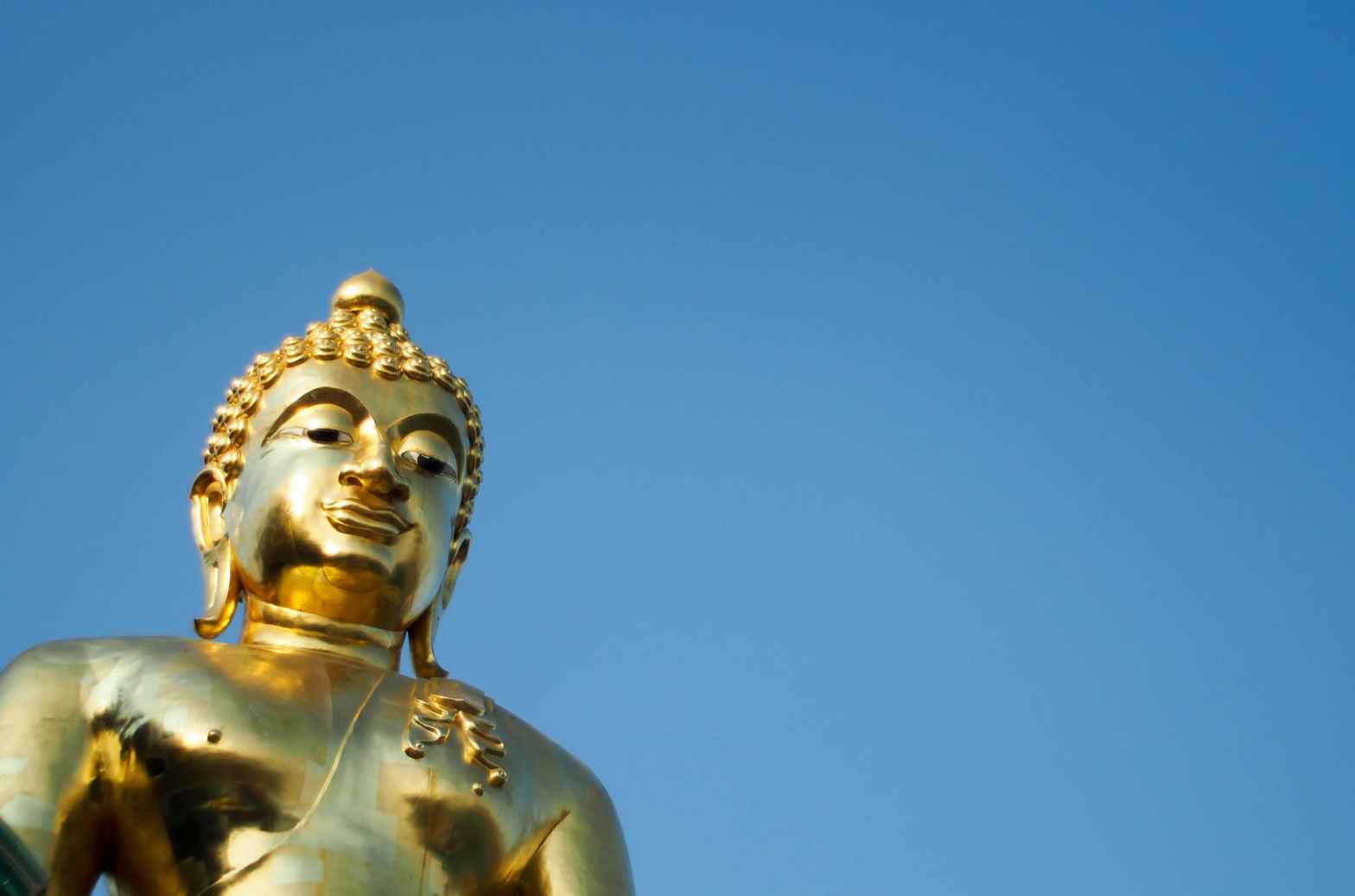
The Golden Buddha

I found this beautiful story about a Buddha statue and would like you to share it with you. I do not know if it is true or not but I think it is very meaningful.

The mud Buddha statue was nearly three meters high. For generations it had been considered sacred by the locals. One day, due to the growth of the city, they decided to move it to a more appropriate place. This delicate operation was entrusted to a recognized monk, who, after careful planning, began the move. His luck was so bad that, in moving the statue, it slipped and fell, breaking into several parts.

Mortified, the monk and his collaborators decided to spend the night pondering the possible solutions. They were long and dark hours. The monk, instead of despairing, aimed to find a way out. Suddenly, observing the shattered sculpture, he noticed that the light from his candle was reflected through the cracks in the statue. He thought it was the raindrops, as it had rained in the afternoon. He approached the crack and noticed that there was something under the mud, but was not sure what it was.

He consulted with his colleagues and decided to take a risk that seemed crazy: he asked for a hammer and began to break the mud, discovering that under it, a nearly three meters high gold Buddha was hidden.

For centuries, this beautiful treasure had been covered under ordinary mud. They carried out a research and found out that the village was about to be attacked by bandits. Therefore, to protect their treasure, the inhabitants covered it with mud to make it seem common. The people were attacked and pillaged, but the bandits ignored the Buddha. Afterward, the inhabitants thought it was best to keep hiding it under the mud.

Over time, people began to think that the Golden Buddha was a legend or an invention of the old people. Finally, everyone forgot about the real treasure because they thought that something so beautiful could not be true.

However, eventually, they discovered a real treasure!

I think that it is the same for us. You can find some treasures under the surface. Your treasures may be your ability to give, to enjoy, to thank, to laugh, to forgive, to dream big, to pass over the little things, and to value what is important in yourself and in others .

Learn to see your life through the mud and you will realize that you also are a treasure surrounded by other treasures.

What is this story teaching you? Would you agree with my interpretation of this story?

red and black wooden chest on white sand
Photo by Suzy Hazelwood on Pexels.com

What I Have Learned From Leonardo da Vinci

Leonardo da Vinci was the most creative genius in history. Of course, saying that I learned things from Leonardo is perhaps a bit risky, because in fact Leonardo is the very embodiment of genius.

As we know, Leonardo lived in a particular era for humanity, the Renaissance, when literature, philosophy, science and the fine arts experienced an unprecedented splendour. Italy was in full economic momentum and Florence became the capital of fine arts.

Leonardo was born not far from Florence, in Vinci in 1452. In Florence, he learned painting, sculpture, architecture, music, nature, science, geography, poetry and who knows what else. After all, we know he was a genius, right?

Let’s see some of his main masterpieces:

1. The Last Supper, a mythical painting, difficult to preserve because Leonardo used a technique of his own invention that, however, proved to be inappropriate.

2. The Vitruvian Man, a drawing that illustrates the proportions of the human body.

3. The Gioconda, also known as the Mona Lisa, one of the most famous and seen artworks in the world.

Photo by Markuns Baumeler on Pixabay

Other works are less famous but not less important:

  1. The Codex Atlanticus, which brings together the largest collection of Leonardo’s writings and drawings.
  2. His futurist inventions such as the helicopter, the plane and the submarine.
  3. The huge statue depicting a horse: 70 tons of bronze and 7 metres high.

Why Leonardo wanted to make these works, so different from each other?

I think he was mainly driven by the curiosity to experiment and discover new horizons. He loved creating and doing things with his hands. He loved dreaming, designing, building and putting wings to his ideas.

Taking care of all his projects, one after the other and sometimes even in parallel, represented for Leonardo his life’s purpose.

The lesson that Leonardo taught me is that in life you have to try, make mistakes, do not give up and start over again to move forward. It does not matter how many difficulties you may face. Surely, Leonardo had to go through a series of failures to achieve his project. I am sure that determination and perseverance were also some of his skills. Look at what he left us, all the works that gave him the title of genius of all time.

You may not forget your failures, but to progress you can learn from them.

What are the lessons learned from your life?

Photo by Bessy on Pixabay