Why Mango is Known as the Fruit of Wisdom. A Story.

The mango is known as the symbol of wisdom. A Vedic story tells us why mango became the fruit of wisdom.  

Here’s the story.

The protagonist is Ganesha, typically depicted with an elephant’s head with a single tusk, pronounced belly and four arms. In this case Ganesha is in his guise as a child (Bala Ganapathi)  and in his four hands he holds: a sugar cane, a sweet, a branch and a mango, that is at the center of the story.

That day little Ganesha was at home with his brother Kartikeya, a handsome young man who rides a wonderful Indian peacock, and his parents, his father Shiva and mother Parvati, when the traveler Narada came to visit the family.

Narada was a wise traveler, often being a bit meddlesome and sometimes provoking conflicts between the gods just to have fun. Seeing him coming, Shiva and Parvati immediately felt the air of trouble, but the duty of welcome required them to open their home.

“Thank you for welcoming me! In return I will offer you this beautiful fruit,” said Narada, pulling a wonderful mango out of his pocket  and offering it to Shiva. “Thank you wise Narada,” replied Shiva, “but let me give it to the woman I love, Parvati.” Shiva thus handed the fruit to his wife, who, however, seeing that her two sons seemed very intrigued by that beautiful fruit, said, “Thank you, but this gift would make me much happier if my children receive it.”

She then took the fruit and was about to cut it into equal parts, when Narada stopped her. “This fruit cannot be divided! It must be eaten by one person only.” Shiva and Parvati understood Narada’s trick, but both their sons wanted the fruit at that point.

“Why don’t we make a race,” Narada suggested, “and the winner will get the fruit.” Shiva and Parvati, sighing, accepted the proposal.

The race

“The race will be like that. The first of the two children who will run 3 times around the whole world, will win the precious mango”. Upon hearing these words of Narada, little Ganesha saw himself doomed. How could he, with his small legs, compete with his brother Kartikeya, so agile, slender and able to ride that very fast peacock? 

But it was decided so, and Narada gave the go-ahead. Kartikeya set off as fast as the wind to quickly make 3 rounds around the world and went back home. 

But once there, he found his brother Ganesha holding the mango. Astonished, he exclaimed “How could Ganesha win the fruit?” You see Kartikeya,” his mother Parvati replied, “while you were running fast around the world, Ganesha made three little turns around me and your father Shiva, because we are his whole world.”

It is from this wise victory of Ganesha that the mango became known as the Fruit of Wisdom.

What do you think of this story?

How And Why Haters Act

A “hater” can be defined as a person who, on the Internet and in particular on social networks, usually taking advantage of anonymity, uses racist expressions of hatred and violently insults individuals, especially if known or famous, or entire segments of the population (foreigners and immigrants, women, non-Caucasian people, homosexuals, believers of other religions, disabled people, etc.).

Some researchers have identified the following characteristics as typical of haters:

1. predominantly express negative opinions in an aggressive manner;

2. make cynical or cruel comments and look for susceptible people;

3. they try to be ingenious to gain visibility in the media thanks to the fruit of their provocations;

4. usually, they deal with current issues to attract the attention of the general public.

The energy that the haters invest in their destructive action may have two reasons:

1. envy and desire to become famous. The haters believe that the person to whom they turn their hatred does not deserve the fame or prestige they have. The indignation is stronger when the person carries out an activity in the same field as the hater, obtaining, however, a recognition that the hater does not receive.

2. psychological projection. Identified by Freud in 1895, psychological projection is a defence mechanism by which someone attributes their shortcomings or defects to others.

In general, researchers found narcissistic and psychopathic personality traits, antisocial and sometimes even sadistic personalities in the haters who participated in the studies. Certainly, it is not easy to find haters willing to participate in research because they obviously prefer to remain anonymous. Furthermore, wanting to participate in a study would mean an awareness of the problem from the side of the hater, which is also quite difficult to find.  

The haters phenomenon can happen in two ways.

On the one hand, if haters are ignored, and the recipients of the offences do not respond to their attacks, they tend to get bored and leave the online context where they were trying to find consent and visibility. 

On the other hand, however, persistent hating behaviours can be an indication of truly harmful, antisocial and physically aggressive intentions that reflect genuinely disturbed personalities.  

In conclusion, if a person has aggressive and offensive behaviours that cease if they do not find an audience and therefore visibility, the problem arises from the side of those who exploit this kind of behaviour. If, on the other hand, online behaviour were a reflection of real personality problems, it would be necessary to analyse the character of the individual, which is in any case independent on the use of social media.  

What do you think of haters? Have you ever been attacked in the social networks?

How to Identify a Narcissistic Personality

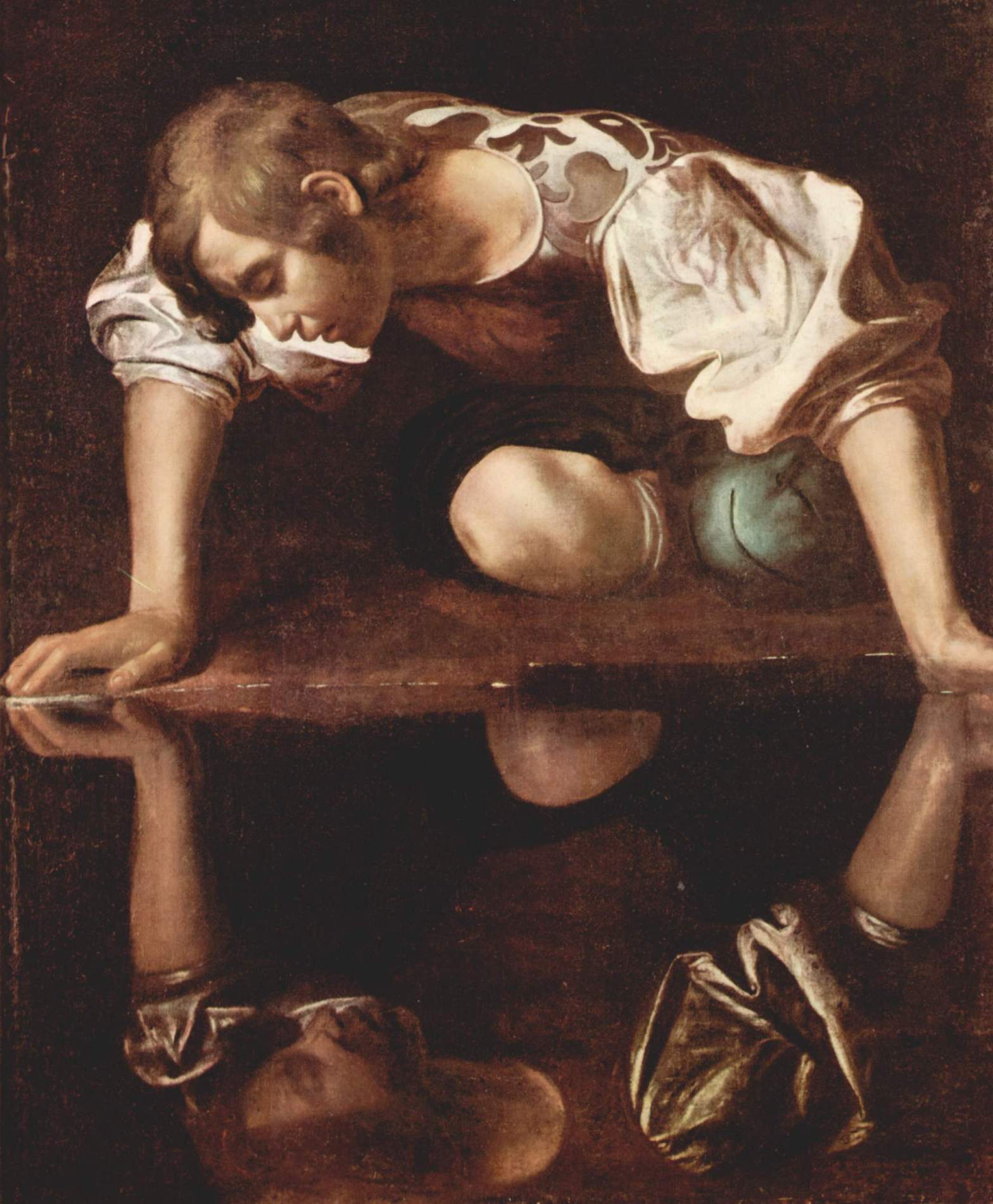
The common definition of narcissism is the pursuit of gratification from vanity or egotistic admiration of one’s idealised self-image and attributes.

Narcissists are people who believe be unique, superior to others and masters of a wonderful existence that no one can imagine. As a result, they may be bully and arrogant. They need constant admiration and always want to be the best. Therefore, they may become extremely competitive. In their view, they are the only ones capable of achieving results in life.

They also think their experience is more valuable than that of others and feel they need to set an example for those around them. They do not do it to give advice but to be at the centre of the attention. Because of that, their social relationships deteriorate fast and they need new people to admire them, even if, over time, they will be left alone.

The world of narcissists is small, it is limited to what they think and do. In their their mind there are echoes of their thoughts. They do not listen to others because they don’t care about anything. Their greed for admiration leads them to believe that there are no ordinary events happening in their life, their existence is just wonderful and successful.

Photo by NASA on Unsplash

Envy prevails in their personal and social relationships, both what they feel about others’ success and what they think other people feel about their fantastic life.

Caution is the norm if a narcissist approaches you, because they want to excel and they will not hesitate to crush you. They are the worst acquaintances you can have because their lack of empathy makes them unable to help and support.

They live in a parallel reality, in a dream world where they want to exert power over others. Whatever they do is addressed to achieve success at any costs.

They have a vivid imagination that leads them to lie often, and they may tell amazing things they have done, even though they are difficult to prove. Remember that they cannot fail, failure does not belong to their world.

Narcissists need to hide their flaws and turn their insecurity into a false security. In order not to show their vulnerability, they will do anything necessary, such as talking excessively, changing the subject in order to shift attention to them, and belittle others by pointing out their flaws.

Narcissists are control freaks and try to bring every situation to their own ground, where they feel safe. If they are managers, they will micromanage.

They must constantly feel euphoria not to show their discomfort, because the narcissistic person do not want to feel frustrated. A common way to avoid frustration is addiction, whether it is shopping, alcohol, drugs, sports, sex, or gambling.

Another characteristic of narcissists is that they tend to take advantage of others. For example, they will partner with well-positioned people to earn their trust and use them to help them grow. They will also take credits of others’ success to advance their career or social ladder.

Narcissists master the subtle art of manipulation. They are always on an alert mode, ready to redirect those who try to say or do something they do not like, or that does not allow them to show their greatness and power in front of others.

If after reading this article you think you are a narcissist, don’t worry as a true narcissist will never identify with these traits. For a narcissistic person, aspirations are never excessive. If they are the centre of attention it is because they think they deserve it. It is ridiculous for these people to try to identify themselves in any profile. The narcissist is unique, in no way you can compete with him or her.

Have you ever dealt with a narcissist?

Photo by Marina Lakotka on Unsplash

Three Tips to Fight Frustration

The pandemic has put us in front of an uncertain future and left us with negative emotions.

We have all experienced as children the disappointment of asking for something that was then denied. It could also happen that we started crying and this drove our parents crazy. They labelled this behaviour as a whim.

Actually, frustration is present in all stages of life and our success also depends a little on how we manage this typical human emotion.

A Zen master summarizes happiness in a simple formula: happiness is the reality that we live less than what we want or hope to achieve.

When what you want outweighs what you have, then you are faced with what Carl Gustav Jung used to say: “Life not lived is a disease from which you can die.”

In our society where competition and instant satisfaction prevail, frustration necessarily accompanies us more or less always, because as soon as we have satisfied a wish, another one comes.

This period of pandemic has made us move from unbridled consumerism to a culture of cancellation (cancellation of holidays, cancellation of dinners with friends, cancellation of medical appointments, etc.).

Has this sudden change affected your life? See if you have any of the symptoms listed below to understand if you have become a frustrated person:

  1. you are often melancholic;
  2. you experience increased irritability, tension and stress. Things that didn’t bother you before now make you jump up;
  3. you have negative thoughts that come back all the time, stealing you energy and sometimes sleep;
  4. you have increased consumption of alcohol and medicines taken without medical advice;
  5. you want to run away.
Photo by Oscar Aguilar Elías on Unsplash

If you recognize yourself in one or two of these characteristics, then it means that frustration has taken over part of your life.

Here are some tips that will help you get through this moment:

  1. cultivate patience. It may seem obvious, but it is very effective. As a child as well as an adult, frustration occurs when you don’t get what you want. If the parents don’t buy you the toy you want when you ask for it, but they tell you they will offer it to you over your birthday, that doesn’t make you feel better. In times of crisis, if we do not know when the situation that creates frustration will end (as now, which the spread of Covid has resumed in a rather important way) we could lose hope. Against this view, only a long-term perspective will help you. Although you don’t know how long the situation will last, knowing that there is light at the end of the tunnel helps you to live in the present moment.
  2. analyse what you get from it. Just as energy is not created or destroyed, but it is transformed, even losses can bring you gains. If you could not leave for that trip you wanted so much, think that you have saved some money and as soon as you can leave again, you will have greater financial availability. If you have lost your job because the company where you used to work has closed down, you will be forced to evaluate other possibilities, to get back into the game and maybe you can start an independent business that you never would have thought of before and that finally it is worthy. To fight frustration you have to ask yourself: What do I gain from this loss?
  3. think that everything changes. Nothing we have will last for ever. Even if we could satisfy all our wishes, it would always be a temporary satisfaction. If nothing remains as it is but everything changes, then the frustration loses its meaning.

The following thought is attributed to the painter Eugéne Delacroix: “Desire the best, avoid the worst and take what comes”. If you follow this motto, instead of holding on to expectations, you will take things as they happen. You will feel more in the flow of events, even chaotic, that life sometimes offers you.

Do you feel frustrated in this period of pandemic that is not over yet nor do you know when it will end?

Photo by Steve Johnson on Unsplash